Quick Verdict: A Standout Hybrid SUV With Limited Availability
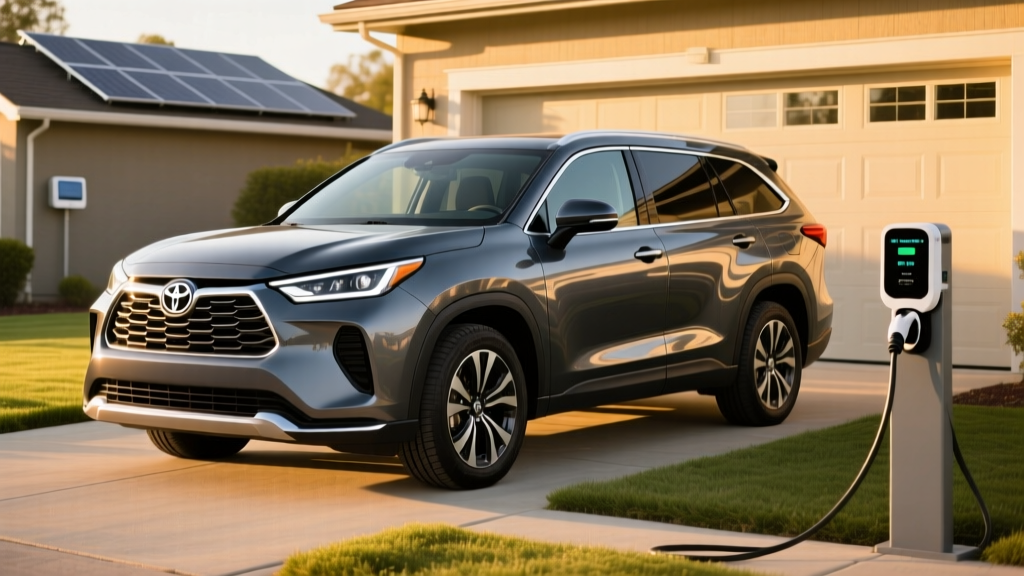
The 2023 Toyota Highlander Hybrid Bronze Edition occupies a narrow but appealing niche: it's a three-row, all-wheel-drive hybrid SUV that returns an EPA-estimated 35 MPG combined while wearing exclusive styling cues that set it apart from the standard lineup. Built on Toyota's proven fourth-generation hybrid system, it delivers 243 combined horsepower through a 2.5-liter four-cylinder engine paired with three electric motors — no plug required.
As a conventional hybrid electric vehicle (HEV), the Highlander Hybrid Bronze Edition never needs to be plugged in. It generates and recovers all its electricity internally through regenerative braking and the gasoline engine. This makes it fundamentally different from a plug-in hybrid (PHEV) like the Toyota RAV4 Prime, which offers 42 miles of electric-only range but requires regular charging to maximize its benefit.
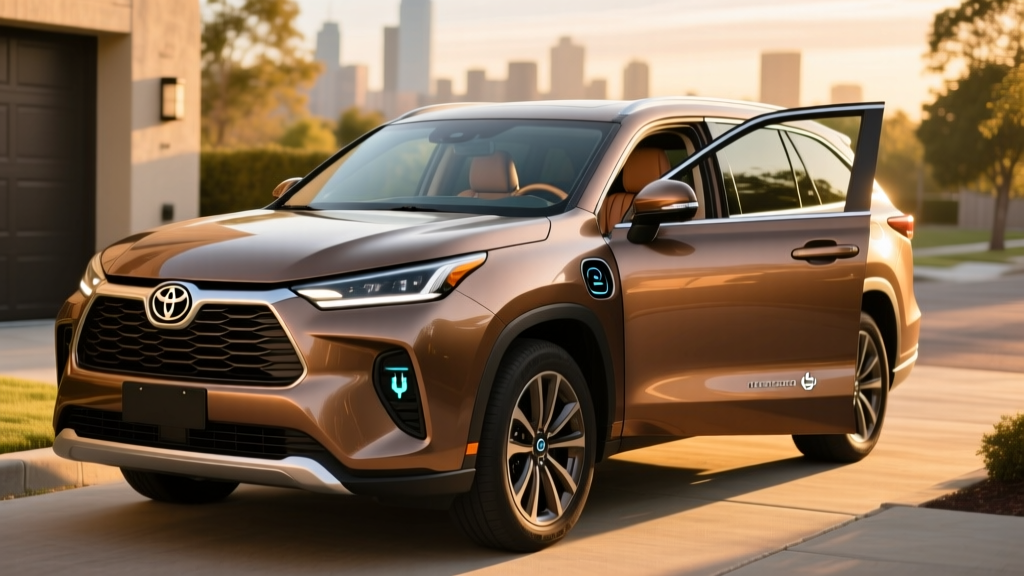
The Bronze Edition was a limited-run appearance package for the 2023 model year, based on the XLE trim with unique exterior and interior accents. If you're shopping the used market in 2026 or comparing it to newer Highlander Hybrid trims, the mechanical package remains identical — and that's a strong point given Toyota's hybrid reliability record.
| Spec | Value |
|---|---|
| Powertrain | 2.5L 4-cyl + 3 electric motors (AWD-i) |
| Combined Horsepower | 243 HP |
| EPA MPG (City / Hwy / Combined) | 35 / 35 / 35 |
| Fuel Tank Capacity | 17.1 gallons |
| Total Driving Range | ~598 miles (EPA) |
| Drivetrain | Electronic AWD (AWD-i) |
| 0–60 MPH | ~7.7 seconds |
| Towing Capacity | 3,500 lbs |
| Cargo Volume (behind 3rd / 2nd / 1st row) | 16.1 / 48.4 / 84.3 cu ft |
| Hybrid Battery | Nickel-metal hydride (NiMH), ~1.6 kWh |
| Original MSRP (Bronze Edition) | ~$46,665 (incl. destination) |
| Hybrid Battery Warranty | 10 years / 150,000 miles |
| Federal Tax Credit (§30D) | Not eligible (HEV) |
Understanding the HEV vs. PHEV Distinction
Before evaluating the Highlander Hybrid, it's essential to understand what type of electrified vehicle it is — and what it is not.
| Feature | HEV (Highlander Hybrid) | PHEV (e.g., RAV4 Prime) | BEV (e.g., Tesla Model X) |
|---|---|---|---|
| Plugs in? | No | Yes | Yes |
| Electric-only range | ~1 mile at low speed | 20–42 miles typical | 250–350+ miles |
| Gasoline engine? | Yes | Yes | No |
| Federal tax credit | None | Up to $7,500 (if eligible) | Up to $7,500 (if eligible) |
| Home charging needed? | No | Recommended | Required |
| Best for | No plug access, want MPG gains | Short commutes + plug access | Full electric, home charging |
The Highlander Hybrid is a conventional hybrid (HEV). Its small NiMH battery (approximately 1.6 kWh) is charged exclusively by the gasoline engine and regenerative braking. You cannot plug it in, and it offers no meaningful electric-only driving range. The electric motors assist the engine during acceleration and enable brief low-speed electric-only creeping — typically under 1 mile at parking-lot speeds — but the gas engine is always the primary energy source.
This is a deliberate design choice: HEVs like the Highlander Hybrid eliminate range anxiety entirely, require zero lifestyle changes, and deliver meaningful fuel economy improvements over a gas-only equivalent. The trade-off is that you cannot drive on electricity alone for your daily commute the way a PHEV owner with a home charger can.
Fuel Economy: EPA Numbers and Real-World MPG
| Driving Cycle | EPA Estimate |
|---|---|
| City | 35 MPG |
| Highway | 35 MPG |
| Combined | 35 MPG |
Source: fueleconomy.gov
The 35/35/35 MPG rating is notable for its symmetry — most hybrids favor city driving because regenerative braking and electric-motor assist shine in stop-and-go traffic. Toyota's AWD-i system and the Highlander's aerodynamic profile keep highway efficiency on par with city numbers, which is uncommon for a three-row SUV.
Real-World MPG Expectations
Owner-reported data on platforms like Fuelly consistently shows the Highlander Hybrid averaging between 30 and 38 MPG in mixed real-world driving, with a median around 33–34 MPG. Several factors influence where you'll land:
- City-dominant driving: Expect 36–38 MPG. The hybrid system recovers energy at every stop light and uses the electric motor for low-speed propulsion.
- Highway cruising at 70–80 MPH: Expect 30–33 MPG. Aerodynamic drag dominates at higher speeds, and the gasoline engine does most of the work.
- Cold weather (below 30°F): Expect a 10–15% reduction, putting you in the 28–32 MPG range. The engine runs more frequently to heat the cabin and maintain battery temperature.
- Mountainous terrain with full loads: Expect 26–30 MPG on steep grades, though regenerative braking on descents partially offsets the uphill penalty.
Compared to the gas-only 2023 Highlander (rated at 24 MPG combined with the turbocharged 2.4L four-cylinder), the hybrid delivers roughly 45% better fuel economy. Over 15,000 miles per year at $3.50/gallon, that translates to approximately $850 in annual fuel savings.
Powertrain and Performance: How the Hybrid System Works
The 2023 Highlander Hybrid uses Toyota's fourth-generation hybrid synergy drive, configured as follows:
- Gasoline engine: 2.5-liter DOHC 4-cylinder with VVT-iE, producing 186 HP and 186 lb-ft of torque on its own
- Front electric motor: Integrated into the transaxle, contributing to a combined system output of 243 HP
- Rear electric motors (AWD-i): A separate 54 HP electric motor on the rear axle provides all-wheel-drive capability without a mechanical driveshaft
- Transmission: Electronically controlled continuously variable transmission (eCVT)
The AWD-i system is worth highlighting. Unlike traditional mechanical AWD that adds weight and drivetrain losses, the Highlander Hybrid's rear axle is driven entirely by electricity. The rear motor engages only when the system detects front-wheel slip or when extra traction is needed — during acceleration from a stop, in rain, or on loose surfaces. This means the vehicle operates as a front-wheel-drive hybrid most of the time, preserving efficiency.
The 0–60 MPH time of approximately 7.7 seconds is adequate for a 4,500-pound family SUV. The eCVT delivers smooth, linear acceleration without the shift shock of a conventional automatic. However, under hard acceleration the engine note becomes prominent — a common characteristic of Toyota's planetary-gear hybrid systems. If you prioritize spirited driving, this is a trade-off to accept.
Towing capacity is rated at 3,500 pounds — sufficient for a small boat trailer or lightweight camper, but notably less than the gas-only Highlander's former 5,000-pound rating (the gas model switched to a turbo four-cylinder for 2023 that also tows 3,500 lbs).
What Made the Bronze Edition Unique
The Bronze Edition was a limited-production appearance package available only for the 2023 model year. It was based on the XLE trim and added:
- Exterior: Bronze-finished 18-inch alloy wheels, bronze-accented badging, and a choice of Cement or Wind Chill Pearl exterior paint
- Interior: Bronze-stitched SofTex synthetic leather seats, bronze-colored interior trim accents, and unique floor mats with bronze-colored stitching
- Standard XLE features included: 8-inch touchscreen with wireless Apple CarPlay and Android Auto, Toyota Safety Sense 2.5+ suite, heated front seats, power liftgate, second-row captain's chairs (7-passenger), and a 12.3-inch digital driver display
Mechanically, the Bronze Edition is identical to every other 2023 Highlander Hybrid AWD trim. The powertrain, battery, fuel economy, and warranty are unchanged. The value proposition was cosmetic exclusivity at a modest premium — the Bronze Edition carried an MSRP of approximately $46,665, roughly $1,600 above the equivalently equipped XLE Hybrid AWD.
For 2026 used-market shoppers, the Bronze Edition commands a modest premium over standard XLE Hybrids due to its limited production run. Expect to pay between $34,000 and $40,000 depending on mileage, condition, and region, based on current market listings.
Hybrid Battery Longevity, Warranty, and Replacement Cost
Hybrid Battery Warranty
Toyota covers the 2023 Highlander Hybrid's battery with a 10-year / 150,000-mile warranty (whichever comes first) in all 50 states. This warranty covers battery capacity loss below a defined threshold and any manufacturing defects. Additionally, all hybrid-system components — including the inverter, electric motors, and eCVT — are covered under the same 10-year/150,000-mile hybrid system warranty.
Toyota's hybrid battery longevity is among the best-documented in the industry. The company has been selling hybrid vehicles since the 1997 Prius in Japan and 2000 in the US, providing decades of real-world data. Key points for Highlander Hybrid owners:
- NiMH chemistry: The Highlander Hybrid uses a nickel-metal hydride battery, not lithium-ion. NiMH is a mature, well-understood chemistry that degrades slowly and predictably. It's less energy-dense than lithium-ion but extremely durable for the small-capacity application in a conventional hybrid.
- Real-world lifespan: Data from fleet operators, taxi services, and long-term owners shows Toyota hybrid batteries commonly lasting 150,000 to 200,000+ miles before significant degradation. Many first-generation Prius batteries exceeded 200,000 miles with original packs.
- Replacement cost: If the hybrid battery does fail outside warranty, a new OEM replacement from Toyota costs approximately $2,500 to $4,000 including labor. Refurbished or remanufactured units are available for $1,500 to $2,500. Individual cell modules can sometimes be replaced for under $500 by specialized hybrid repair shops.
- What kills hybrid batteries: Extreme heat is the primary degradation factor. If you live in Phoenix or Las Vegas, parking in shade or a garage extends battery life. The Highlander Hybrid's battery is located under the second-row seat, which provides some thermal insulation from the cabin HVAC system.
For context, the hybrid battery in the Highlander Hybrid stores only about 1.6 kWh — roughly 1/50th the capacity of a typical BEV battery. The small size means replacement costs are a fraction of what an EV owner might face.
Tax Credits and Incentives: What the Highlander Hybrid Qualifies For
The 2023 Toyota Highlander Hybrid is a conventional hybrid (HEV), which means it does not qualify for the federal §30D clean vehicle tax credit. That credit — worth up to $7,500 — is reserved for plug-in electric vehicles (BEVs and PHEVs) that meet specific battery sourcing, MSRP, and buyer income requirements under current IRS rules.
However, hybrid buyers should check for:
- State-level incentives: A handful of states offer rebates or tax credits for hybrid vehicles, though these are increasingly rare as states shift incentives toward BEVs and PHEVs. Check your state's energy or environmental agency website for current programs.
- Manufacturer incentives: Toyota periodically offers cash-back or low-APR financing on Highlander Hybrid trims. These vary by region and month.
- Insurance discounts: Some insurers offer "green vehicle" discounts for hybrids, typically 5–10% off premiums. Worth checking with your provider.
- HOV lane access: Most states have phased out HOV lane stickers for conventional hybrids, but a few jurisdictions still offer them. Verify with your local DMV.
If federal tax credit eligibility is a priority, you would need to look at a PHEV like the Toyota RAV4 Prime (up to $7,500 credit, if sourcing and income requirements are met) or a BEV. The Highlander Hybrid's financial case rests on fuel savings and Toyota's resale value, not incentive offsets.
Who Should Choose the Highlander Hybrid vs. a PHEV or Full EV?
Choose the Highlander Hybrid (HEV) if:
- You cannot install a home charger (apartment, street parking, condo without EV infrastructure)
- You want three rows and AWD without the complexity of plug-in charging
- You drive a mix of city and highway miles and want consistent fuel savings everywhere
- You frequently take long road trips and don't want to plan around charging stops
- You value Toyota's reliability track record and plan to keep the vehicle 8+ years
Choose a PHEV (like the RAV4 Prime or Chrysler Pacifica Hybrid) if:
- Your daily commute is under 30–40 miles and you can charge at home overnight
- You want to drive on electricity most days but need gas flexibility for longer trips
- You want to qualify for the federal §30D tax credit (verify eligibility on IRS.gov)
- You don't need three rows (most PHEV SUVs are two-row)
Choose a full EV (like the Kia EV9 or Tesla Model X) if:
- You have reliable home Level 2 charging
- Your daily driving is under 250 miles and you can plan road trips around DC fast charging
- You want zero tailpipe emissions and the lowest per-mile fuel cost
- You want maximum federal and state incentives
The Highlander Hybrid's strongest competitive position is as a no-compromise family hauler for buyers who lack charging access. It asks nothing of you behaviorally — just fill up with gas and drive — while delivering fuel economy that embarrasses many compact sedans. The trade-off is that you'll never drive on grid electricity, so your per-mile fuel cost, while low, won't match a BEV charging on off-peak residential rates.
Pros
- 35 MPG combined in a 3-row AWD SUV — exceptional efficiency
- No plug-in charging required — zero lifestyle adjustment
- Toyota's industry-leading hybrid reliability and 10yr/150k battery warranty
- ~598 miles of total range per tank — excellent for road trips
- Strong resale value; Bronze Edition adds collectibility
- Toyota Safety Sense 2.5+ standard (pre-collision, lane tracing, adaptive cruise)
Cons
- No federal tax credit eligibility (HEV, not PHEV/BEV)
- eCVT drone under hard acceleration — not a sporty drive
- Third row is tight for adults; cargo space behind 3rd row is modest (16.1 cu ft)
- Bronze Edition is discontinued — limited used-market availability
- 3,500-lb tow rating is adequate but not class-leading
- Infotainment system (8-inch screen) is dated vs. competitors
Frequently Asked Questions
How many MPG does the 2023 Toyota Highlander Hybrid Bronze Edition get?
The EPA rates it at 35 MPG city, 35 MPG highway, and 35 MPG combined. Real-world owner averages typically fall between 30 and 38 MPG depending on driving conditions, with city-dominant driving yielding the highest numbers and sustained highway speeds at 75+ MPH yielding the lowest. Cold weather can reduce efficiency by 10–15%.
Does the Highlander Hybrid need to be plugged in?
No. The Highlander Hybrid is a conventional hybrid (HEV). It charges its small battery entirely through regenerative braking and the gasoline engine. There is no plug, no charging port, and no electric-only driving range beyond brief low-speed creeping. You fuel it exactly like a conventional gas car.
Is the 2023 Highlander Hybrid reliable, and what does battery replacement cost?
Toyota's hybrid systems are among the most reliable powertrains in the automotive industry, with decades of field data supporting this claim. The hybrid battery is warrantied for 10 years or 150,000 miles. If replacement is needed out of warranty, expect to pay approximately $2,500–$4,000 for a new OEM battery, or $1,500–$2,500 for a refurbished unit. Many Toyota hybrid batteries exceed 200,000 miles without replacement.
Does the 2023 Highlander Hybrid qualify for any federal tax credit?
No. The federal §30D clean vehicle credit applies only to plug-in electric vehicles (BEVs and PHEVs) that meet battery sourcing, MSRP, and buyer income requirements. The Highlander Hybrid is a conventional HEV and does not qualify. Some states may offer minor incentives for hybrids — check your state's energy office for current programs.
What's the difference between the Highlander Hybrid and a PHEV like the RAV4 Prime?
The Highlander Hybrid (HEV) cannot be plugged in and has no meaningful electric-only range. It delivers consistent fuel savings without any charging infrastructure. The RAV4 Prime (PHEV) can be plugged in, offers 42 miles of electric-only range, and qualifies for the federal tax credit — but it requires home charging access to maximize its benefit and only seats five. They serve different use cases: the Highlander Hybrid is for families who want three rows and zero charging hassle; the RAV4 Prime is for shorter-commute households with charging access who don't need a third row.
How does the Highlander Hybrid perform in snow and ice?
The AWD-i system provides competent all-weather traction. The rear electric motor engages automatically when front-wheel slip is detected, providing torque to the rear axle within milliseconds. It's not a substitute for dedicated winter tires in severe conditions, but it outperforms front-wheel-drive SUVs on snow-covered roads. The hybrid system's instant electric torque also helps with low-traction launches.
What is the 2026 used-market price for a Bronze Edition?
Based on current market data, expect to pay between $34,000 and $40,000 for a 2023 Highlander Hybrid Bronze Edition with 20,000–50,000 miles. Pricing varies by region, condition, and color. The Bronze Edition commands a $1,000–$2,500 premium over a standard XLE Hybrid AWD due to its limited production and unique styling elements.