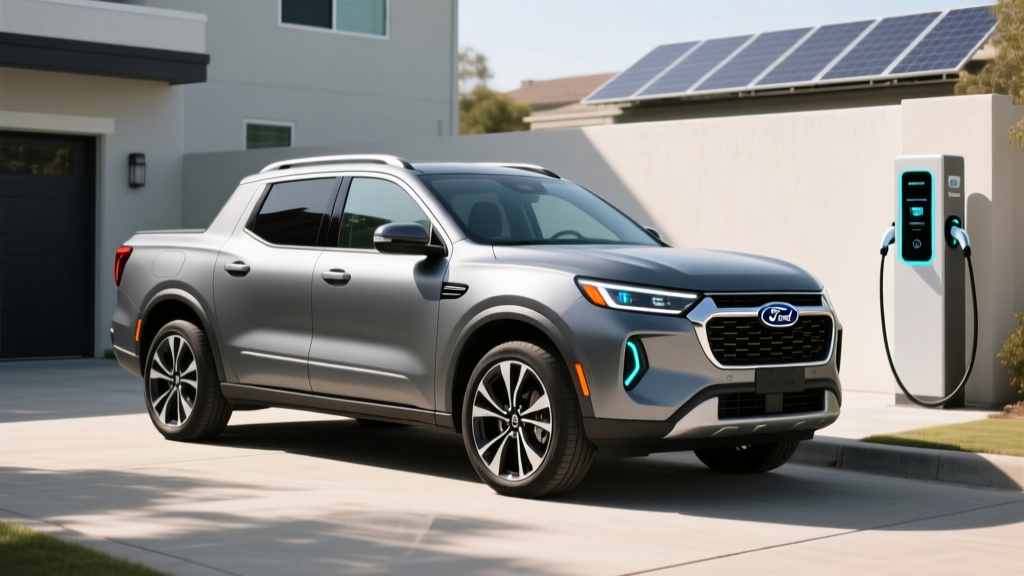
The 2023 Ford Maverick Hybrid carved out a unique niche as the most affordable hybrid pickup in America when it launched. Even now, shopping the used and remaining new-inventory market for this compact truck, buyers are drawn by one promise: genuine truck utility wrapped around a hybrid powertrain that sips fuel like a compact sedan. But does the real-world data back up the EPA sticker? And with Ford's hybrid battery track record, what does long-term ownership actually look like? This guide breaks down every number that matters.
HEV vs PHEV: What the Maverick Hybrid Actually Is
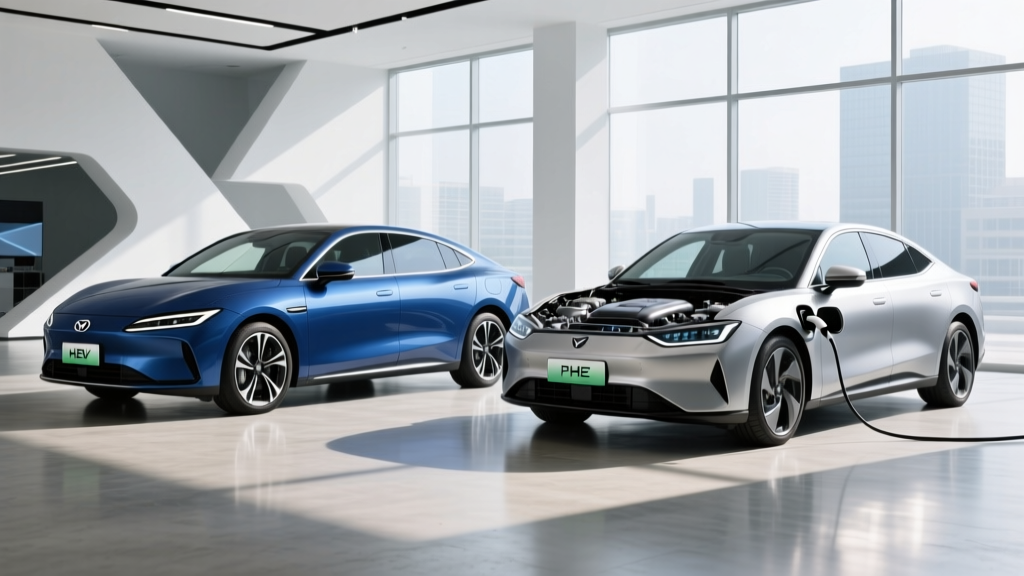
Before diving into specs, it's critical to understand that the 2023 Ford Maverick Hybrid is a conventional hybrid electric vehicle (HEV), not a plug-in hybrid (PHEV). This distinction shapes everything about ownership:
Conventional Hybrid (HEV) — Maverick Hybrid
- No plug, no charging cable needed
- Small battery (~1.1 kWh) charged by regenerative braking and the engine
- Electric motor assists the gas engine; cannot drive on electric-only power at meaningful speeds
- No federal EV tax credit eligibility under IRS §30D
- Lower upfront cost, simpler ownership
Plug-In Hybrid (PHEV) — e.g., Toyota RAV4 Prime
- Plugs into a wall outlet or Level 2 charger
- Larger battery (18–20+ kWh) for 25–42 miles of electric-only driving
- Can operate as a full EV for daily commutes, then switches to hybrid mode
- May qualify for up to $7,500 federal tax credit (subject to §30D rules)
- Higher purchase price, requires charging access to maximize value
The Maverick Hybrid requires zero behavior change from a gas-car owner. You fuel it at a gas station, the hybrid system manages itself, and you simply enjoy lower fuel consumption — particularly in stop-and-go city driving where the electric motor does its heaviest lifting.
Powertrain Specs: Engine, Motor, and Combined Output
| Specification | 2023 Ford Maverick Hybrid |
|---|---|
| Engine | 2.5L Atkinson-cycle inline-4 |
| Engine Output | 162 hp / 155 lb-ft torque |
| Electric Motor | Permanent-magnet synchronous AC motor |
| Motor Output | 126 hp / 176 lb-ft torque |
| Combined System Output | 191 hp |
| Transmission | eCVT (power-split device) |
| Drivetrain | Front-wheel drive (FWD) only |
| Hybrid Battery | ~1.1 kWh lithium-ion |
| Towing Capacity (Hybrid) | 2,000 lbs (up to 4,000 lbs with gas AWD EcoBoost) |
| Payload Capacity | ~1,500 lbs |
| 0–60 mph | ~8.5 seconds (est.) |
The 2.5L Atkinson-cycle four-cylinder is the same proven architecture Ford uses in the Escape Hybrid and the previous-generation Fusion Hybrid. It prioritizes thermal efficiency over peak power, which is exactly the right trade-off for a truck that will spend most of its life commuting and running errands rather than towing heavy loads. The eCVT is not a traditional belt-and-cone CVT — it's a planetary gear set that blends engine and motor power seamlessly, with no rubber-band sensation.
One critical limitation: the 2023 Maverick Hybrid is FWD only. If you need all-wheel drive, you must step up to the 2.0L EcoBoost gas model with AWD (which forfeits the hybrid fuel-economy advantage). For buyers in snow-belt states, this is a genuine deal-breaker worth flagging early in the shopping process.
Fuel Economy: EPA Ratings vs. Real-World MPG
Fuel economy is the Maverick Hybrid's headline act. Here's the official EPA breakdown per fueleconomy.gov:
| Driving Cycle | EPA Rating | Real-World Expectation |
|---|---|---|
| City | 42 MPG | 40–45 MPG (hybrids often exceed EPA in city) |
| Highway | 33 MPG | 29–33 MPG (aerodynamic drag hurts at 70+ mph) |
| Combined | 37 MPG | 34–39 MPG depending on driving mix |
The city number is where the Maverick Hybrid shines brightest. Conventional hybrids recapture energy during braking and low-speed crawling — exactly the conditions that destroy a gas truck's fuel economy. Owners who do 70%+ of their driving in urban and suburban environments routinely report 40–44 MPG over thousands of miles, sometimes beating the EPA city estimate.
Highway driving tells a different story. The Atkinson-cycle engine is optimized for efficiency at low-to-moderate loads, and the truck's boxy shape generates real aerodynamic drag above 65 mph. Sustained 75–80 mph interstate driving will pull economy down to 28–31 MPG. If your commute is 90% highway, the hybrid's advantage over the EcoBoost gas model narrows considerably — though it still wins by 5–8 MPG combined.
Cold weather impacts the hybrid less dramatically than a full EV (no range loss from battery chemistry), but expect a 5–10% fuel-economy dip in sub-freezing temperatures as the engine runs more frequently to provide cabin heat and the battery operates less efficiently.
Pricing, Trims, and Tax Credit Eligibility
When the 2023 Maverick Hybrid was available new, pricing broke down as follows:
| Trim | Base MSRP (2023) | Hybrid Availability |
|---|---|---|
| XL | ~$22,595 | Available (hybrid +$1,000 option) |
| XLT | ~$24,780 | Available (hybrid +$1,000 option) |
| Lariat | ~$27,995 | Available (hybrid +$1,000 option) |
The hybrid powertrain was a $1,000 upcharge across all trims in 2023 — a remarkably small premium that paid for itself in fuel savings within roughly 18–24 months for an average driver covering 12,000–15,000 miles annually.
Federal Tax Credit: Not Eligible
The 2023 Ford Maverick Hybrid is a conventional HEV, not a plug-in vehicle. Under IRS §30D clean vehicle credit rules, only plug-in electric vehicles (BEVs and PHEVs with sufficient battery capacity) qualify for the federal tax credit of up to $7,500. The Maverick Hybrid does not qualify for any federal purchase incentive.
Some states and municipalities offer rebates or HOV-lane access for hybrids — check your state's energy office or AFDC state incentive database for current local programs.
On the used market in 2026, 2023 Maverick Hybrids typically list between $23,000 and $31,000 depending on trim, mileage, and condition — holding value well due to sustained demand and limited supply (Ford capped hybrid production in early model years). Note that the used clean vehicle credit (§25E) also applies only to plug-in vehicles, so no federal incentive applies to a used Maverick Hybrid purchase either.
Battery Warranty, Reliability, and Replacement Cost
The hybrid battery is the single biggest concern for any used-hybrid buyer. Here's what Ford covers:
Ford Hybrid Battery Warranty
- Duration: 8 years / 100,000 miles (whichever comes first)
- Coverage: Defects and capacity loss below 70% of original capacity
- Transferable: Yes — warranty follows the vehicle, not the original owner
- Hybrid Components: Electric motor, eCVT, power electronics also covered under 8-year/100,000-mile hybrid component warranty
Ford's hybrid battery track record is solid. The 2.5L Atkinson-cycle hybrid system has been in production since the 2010 Fusion Hybrid, with hundreds of thousands of units on the road. Catastrophic battery failures are rare. The small ~1.1 kWh battery pack operates within a conservative state-of-charge window (typically 40–60% SoC), which dramatically reduces degradation compared to a full EV battery that cycles between 10–90%.
Out-of-warranty replacement cost for the Maverick Hybrid battery is estimated at $2,500–$4,000 including labor — a fraction of a full EV battery replacement. Given that the battery is small and the system is proven, most owners will never face this expense. The hybrid system's reliability has been rated favorably by Consumer Reports and J.D. Power across Ford's hybrid lineup.
Who Should Buy the Maverick Hybrid (and Who Shouldn't)
Pros
- 42 MPG city — best-in-class for any pickup
- Lowest entry price for a hybrid truck
- 4.5-foot bed with genuine utility (1,500-lb payload)
- No charging infrastructure needed
- Proven 2.5L hybrid powertrain with strong reliability record
- 8-year/100,000-mile hybrid warranty, transferable
Cons
- FWD only — no AWD hybrid option for 2023
- 2,000-lb towing limit (half the EcoBoost AWD capacity)
- Highway MPG drops noticeably at 75+ mph
- No federal tax credit eligibility
- Long waitlists when new; used inventory commands premium pricing
- Rear seat space is tight for taller passengers
Choose the Maverick Hybrid If:
- Your daily driving is primarily city/suburban (stop-and-go maximizes hybrid benefit)
- You want truck-cargo versatility without truck-fuel costs
- You don't need AWD or heavy towing (over 2,000 lbs)
- You want hybrid simplicity — no plug, no charging, no range planning
- You're buying used and want a proven, warranty-backed hybrid system
Choose a Full EV (e.g., Ford F-150 Lightning, Rivian R1T) If:
- You have home Level 2 charging and want $0 gas spend
- You need AWD and higher towing capacity
- You qualify for the $7,500 federal tax credit (income and sourcing rules apply)
- Your daily mileage is under 250 miles and you rarely tow long-distance
Choose the Maverick EcoBoost Gas AWD If:
- You need all-wheel drive for snow or off-road conditions
- You plan to tow 2,001–4,000 lbs regularly
- Your driving is overwhelmingly highway (the hybrid advantage narrows)
Maverick Hybrid vs. the Competition
The Maverick Hybrid occupies a nearly uncontested space. The only direct competitor is the Hyundai Santa Cruz, which does not offer a hybrid powertrain (28 MPG combined on its best gas setup). The Toyota Tacoma Hybrid (i-FORCE MAX) is a midsize truck in a higher price bracket (~$40,000+), delivering only ~24 MPG combined. The Maverick Hybrid's 37 MPG combined at a sub-$25,000 starting price remains unmatched in the truck segment.
For cross-shoppers considering an SUV hybrid instead: the Toyota RAV4 Hybrid achieves 40 MPG combined with AWD availability, but sacrifices the open bed. The Honda CR-V Hybrid posts 40/35/37 MPG (city/hwy/combined) with more rear-seat room but no truck capability. If you need a bed, the Maverick Hybrid stands alone at this price and efficiency level.
Frequently Asked Questions
How many MPG does the 2023 Ford Maverick Hybrid get?
The EPA rates the 2023 Maverick Hybrid at 42 MPG city, 33 MPG highway, and 37 MPG combined. Real-world owners commonly report 40–44 MPG in city-heavy driving and 29–33 MPG on sustained highway trips at 70+ mph.
Does the Maverick Hybrid need to be plugged in?
No. The Maverick Hybrid is a conventional HEV. Its small battery recharges through regenerative braking and the gasoline engine. You never plug it in — just fill it with regular unleaded gasoline.
Does the 2023 Maverick Hybrid qualify for any tax credit?
No. Under IRS §30D rules, only plug-in electric vehicles (BEVs and PHEVs) qualify for the federal clean vehicle credit. The Maverick Hybrid, as a conventional HEV, is not eligible for the $7,500 federal credit or the up-to-$4,000 used EV credit (§25E). Some state or local utility rebates for hybrids may apply — check your state's incentive database.
Is the Maverick Hybrid reliable long-term?
Ford's 2.5L hybrid system has been in continuous production since 2010, with strong reliability data across the Fusion Hybrid, Escape Hybrid, and Maverick Hybrid. The battery is covered for 8 years/100,000 miles and operates within a conservative charge window that minimizes degradation. Out-of-warranty battery replacement is estimated at $2,500–$4,000 — far less than a full EV battery.
Can the Maverick Hybrid tow?
Yes, but with limits. The hybrid is rated for 2,000 lbs of towing capacity — sufficient for a small utility trailer, a pair of dirt bikes, or a light popup camper. If you need to tow up to 4,000 lbs, you must choose the 2.0L EcoBoost gas engine with AWD and the 4K Tow Package.
Is AWD available on the Maverick Hybrid?
No. For the 2023 model year, the Maverick Hybrid is FWD only. AWD is exclusively available on the 2.0L EcoBoost gas model. Ford has not announced a hybrid AWD variant as of early 2026.
Hybrid vs. PHEV vs. full EV — which is right for me?
HEV (Maverick Hybrid): Best if you want zero behavior change, no plug, lower upfront cost, and primarily drive in mixed/city conditions. No tax credit.
PHEV: Best if you have home charging, a short commute (under 40 miles), and want to drive mostly on electricity while keeping a gas engine for road trips. May qualify for up to $7,500 federal credit.
Full EV: Best if you have reliable home charging, want the lowest per-mile fuel cost, need AWD/towing, and your daily driving is within the vehicle's range. Qualifies for up to $7,500 federal credit (subject to MSRP caps, income limits, and battery-sourcing requirements under §30D).