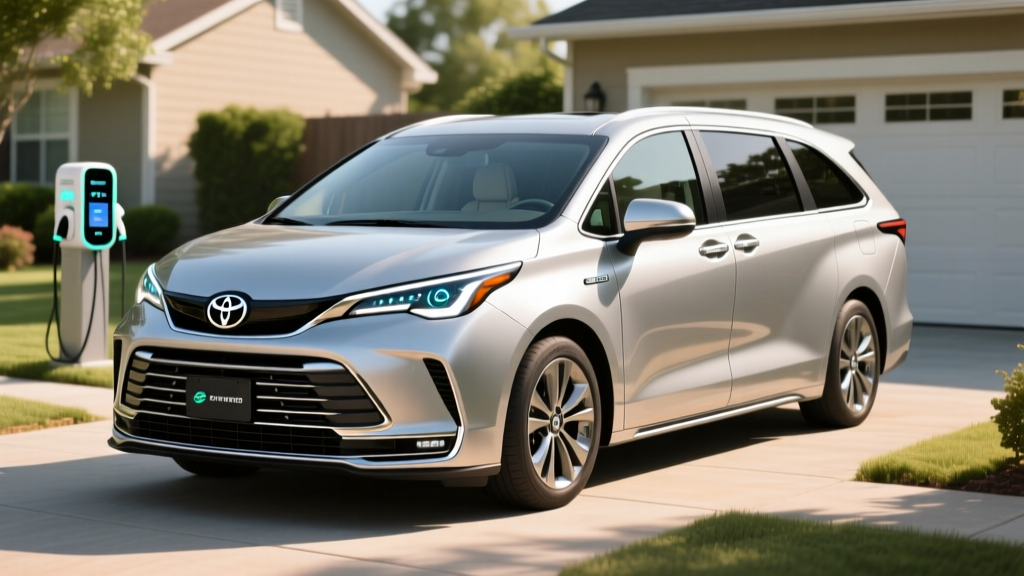
Quick Verdict: The 2022 Sienna Hybrid at a Glance
The 2022 Toyota Sienna is a conventional hybrid electric vehicle (HEV) — not a plug-in. It pairs a 2.5-liter four-cylinder engine with two electric motors (three on AWD trims) to deliver 245 combined horsepower and an EPA-estimated 36 MPG combined. There is no electric-only driving mode and no plug; the Sienna charges its small traction battery through regenerative braking and the gasoline engine. For families who want minivan space without the fuel cost penalty of a traditional V6, the 2022 Sienna hybrid remains one of the most efficient three-row vehicles on the road.
| Spec | FWD | AWD |
|---|---|---|
| Powertrain | 2.5L I4 + 2 electric motors | 2.5L I4 + 3 electric motors |
| Combined HP | 245 hp | 245 hp |
| EPA City MPG | 36 | 35 |
| EPA Highway MPG | 36 | 36 |
| EPA Combined MPG | 36 | 36 |
| Fuel Tank | 14.5 gal | 14.5 gal |
| Total Range (est.) | ~522 mi | ~522 mi |
| 0–60 mph | ~7.1 sec | ~7.3 sec |
| Hybrid Battery | 1.9 kWh (NiMH, sealed) | 1.9 kWh (NiMH, sealed) |
| Towing Capacity | 3,500 lbs | 3,500 lbs |
| Base MSRP (LE) | $34,710 | $35,510 |
| Top Trim MSRP (Platinum) | $50,460 | $51,260 |
| Hybrid Battery Warranty | 10 years / 150,000 miles | |
How Many MPG Does the 2022 Sienna Hybrid Get?
The EPA rates both FWD and AWD variants of the 2022 Sienna at 36 MPG combined. The FWD model earns 36 city / 36 highway, while the AWD drops to 35 city / 36 highway. These figures are sourced from fueleconomy.gov and apply to all trims — LE, XLE, XSE, Limited, and Platinum — since they share the same hybrid powertrain.
| Drivetrain | City | Highway | Combined |
|---|---|---|---|
| FWD | 36 MPG | 36 MPG | 36 MPG |
| AWD (electronic rear motor) | 35 MPG | 36 MPG | 36 MPG |
Real-World MPG vs. EPA Estimates
Toyota's hybrid synergy drive system excels in stop-and-go traffic, where the electric motors shoulder more of the load. In real-world suburban and city driving, many owners report 37–40 MPG on mixed routes with frequent stops. Highway-only driving at 75+ mph tends to return 32–34 MPG because the gasoline engine runs more continuously and aerodynamic drag increases. Cold-weather operation (below 30°F) can knock 2–4 MPG off combined figures due to longer engine warm-up cycles and reduced regenerative braking efficiency. In short: expect to match or slightly beat the EPA number in the city, and fall a few MPG short on sustained highway runs.
HEV vs. PHEV vs. EV: Where the Sienna Fits
The 2022 Sienna is a conventional hybrid (HEV), meaning it cannot be plugged in and has no meaningful electric-only range. It is fundamentally different from a plug-in hybrid (PHEV) like the Toyota RAV4 Prime or a full battery-electric vehicle (BEV). Here is how the three categories compare for a family-hauler buyer:
| Factor | HEV (Sienna) | PHEV (e.g., Pacifica Hybrid) | BEV (e.g., EV SUV) |
|---|---|---|---|
| Plug-in Required? | No | Yes (for EV range) | Yes |
| Electric-Only Range | 0 mi (motor assist only) | 30–32 mi | 250–350+ mi |
| Total Range | ~522 mi | ~430 mi combined | 250–350 mi |
| Home Charging Needed | No | Recommended (Level 2) | Essential |
| Federal Tax Credit (§30D) | Not eligible | Up to $7,500 (if eligible) | Up to $7,500 (if eligible) |
| Best For | No plug access; long trips | Short commute + plug access | Home charging + daily driving |
Who should choose the Sienna HEV: Families without reliable home or workplace charging who want maximum range and minimum refueling hassle. The Sienna hybrid is ideal for road trips, suburban school runs, and owners who prefer not to think about charging infrastructure.
Who should look at a PHEV or BEV instead: If you have Level 2 home charging and most daily trips fall under 30 miles, a PHEV minivan like the Chrysler Pacifica Hybrid (32 miles electric-only) can eliminate most gasoline use on school-and-grocery runs. If your household is ready for full electrification and you have charging access, a BEV three-row SUV eliminates tailpipe emissions entirely — though the minivan BEV segment remains extremely limited as of 2026.
Powertrain Deep Dive: 245 HP Hybrid System
The 2022 Sienna uses Toyota's fourth-generation Hybrid Synergy Drive. A 2.5-liter Atkinson-cycle inline-four produces 189 hp and 176 lb-ft of torque on its own. Two front-mounted electric motor-generators (MG1 and MG2) add supplemental torque, bringing the net combined system output to 245 hp. On AWD trims, a third independent electric motor drives the rear axle — there is no mechanical driveshaft connecting the engine to the rear wheels. This "electronic AWD" engages automatically under acceleration, in low-traction conditions, and during cornering, then disengages to save fuel during steady-state cruising.
The hybrid battery pack is a 1.9 kWh nickel-metal hydride (NiMH) unit mounted under the front seats. This is a small buffer — it exists to capture regenerative braking energy and provide short bursts of electric assist, not to power the vehicle independently. Toyota chose NiMH over lithium-ion for this application due to proven long-term durability across millions of hybrid vehicles in the field. The battery is sealed and requires no maintenance.
Battery Warranty, Lifespan, and Replacement Cost
Hybrid battery longevity is the single most common concern among used-hybrid buyers. Toyota addresses this with one of the strongest warranties in the segment.
2022 Sienna Hybrid Battery Warranty
- Coverage: 10 years or 150,000 miles (whichever comes first) — applies to all 50 states.
- What's covered: Hybrid battery pack, hybrid control module, and associated hybrid-system components.
- Capacity threshold: Toyota warrants the battery against defects and abnormal degradation. There is no published minimum capacity-retention percentage (unlike BEV warranties); coverage triggers on failure or significant performance loss.
- Transferable: Yes — the warranty transfers to subsequent owners automatically.
How Long Will the Sienna Hybrid Battery Last?
Toyota's NiMH hybrid batteries have a demonstrated track record of lasting 150,000–200,000+ miles with gradual capacity loss. The Prius fleet, which uses similar chemistry and management, shows that most hybrid batteries retain sufficient function well past 150,000 miles. The Sienna's battery is smaller and under less stress than a PHEV or BEV pack because it never deep-cycles — it operates in a narrow state-of-charge window (roughly 40–80%) managed by the hybrid control system.
Hybrid Battery Replacement Cost
If the hybrid battery fails outside warranty, a new OEM replacement from Toyota costs approximately $3,000–$4,500 including parts and labor at a dealership. Independent hybrid specialists often offer refurbished or reconditioned packs for $1,500–$2,500. Given the 10-year/150,000-mile warranty and the proven longevity of Toyota NiMH packs, most owners will never face this expense.
Pricing, Trims, and Tax Credit Eligibility
The 2022 Sienna launched with five trims, all sharing the identical hybrid powertrain. Pricing below reflects original MSRP at launch:
| Trim | FWD MSRP | AWD MSRP |
|---|---|---|
| LE (base) | $34,710 | $35,510 |
| XLE | $39,850 | $40,650 |
| XSE | $42,150 | $42,950 |
| Limited | $47,060 | $47,860 |
| Platinum | $50,460 | $51,260 |
Does the 2022 Sienna Hybrid Qualify for a Federal Tax Credit?
No. The Sienna is a conventional hybrid (HEV), not a plug-in vehicle. The federal §30D clean vehicle credit applies only to battery-electric vehicles (BEVs) and plug-in hybrids (PHEVs) that meet battery-capacity, critical-mineral sourcing, MSRP cap, and buyer income requirements as outlined on IRS.gov. Conventional hybrids like the Sienna do not qualify for §30D or the §25E used-EV credit.
Some states and local utilities offer rebates or HOV-lane access for conventional hybrids, but these programs vary widely by jurisdiction. Check your state energy office or utility provider for current programs.
Who Should Buy the 2022 Sienna Hybrid?
Pros
- 36 MPG combined — best-in-class for a three-row vehicle
- No plug-in charging required; 522+ mile total range
- Standard Toyota Safety Sense 2.0 (pre-collision, lane tracing, adaptive cruise)
- AWD available without significant MPG penalty
- 10-year/150,000-mile hybrid battery warranty
- Sliding doors, 7–8 seats, strong cargo versatility
- 3,500-lb towing capacity adequate for light trailers
Cons
- No electric-only driving — always burns gasoline
- No federal tax credit eligibility
- Engine noise under hard acceleration (CVT drone)
- AWD is electronic, not a true off-road system
- Infotainment feels dated vs. rivals (2022 model year)
- Third-row space tighter than some full-size competitors
Decision Framework
Choose the 2022 Sienna Hybrid if: You need a three-row family vehicle, lack home charging, take regular road trips, and want the lowest possible fuel cost without plugging in. It's also the right call if you plan to keep the vehicle 10+ years — Toyota's hybrid reliability data is extensive.
Consider a PHEV minivan instead if: You have Level 2 home charging and your daily driving is mostly under 30 miles. The Chrysler Pacifica Hybrid can handle school runs and errands on electricity alone, though its total range and highway MPG trail the Sienna.
Consider a full BEV if: You have reliable home charging, want zero tailpipe emissions, and can accept current three-row EV SUV limitations on range and price. The BEV minivan segment is still developing.
Frequently Asked Questions
How many MPG does the 2022 Sienna hybrid get in real-world driving?
The EPA rates it at 36 MPG combined. In real-world city and suburban driving, owners commonly see 37–40 MPG thanks to frequent regenerative braking. Sustained highway driving at 75+ mph typically returns 32–34 MPG. Cold weather (below 30°F) reduces efficiency by roughly 2–4 MPG due to extended engine warm-up and reduced regen effectiveness.
Can the 2022 Sienna hybrid drive on electric power alone?
Not meaningfully. The Sienna's 1.9 kWh NiMH battery provides brief electric assist at low speeds (such as creeping in a parking lot), but it cannot sustain electric-only driving at any practical speed or distance. It is a conventional hybrid, not a plug-in.
Does the 2022 Sienna hybrid qualify for any federal tax credit?
No. The §30D federal clean vehicle credit is limited to plug-in vehicles (BEVs and PHEVs) that meet battery sourcing, MSRP, and income requirements. The Sienna HEV does not have a plug and is ineligible. Some state or utility programs may offer hybrid incentives — check local sources.
Is the 2022 Sienna hybrid reliable? What about battery replacement cost?
Toyota's hybrid system has an extensive reliability track record spanning two decades and millions of vehicles. The hybrid battery is covered for 10 years / 150,000 miles. If replacement is needed out of warranty, expect $3,000–$4,500 for a new OEM pack or $1,500–$2,500 for a refurbished unit from an independent specialist. Most Toyota NiMH hybrid batteries last well beyond 150,000 miles.
What is the difference between the Sienna HEV and a plug-in hybrid like the Pacifica Hybrid?
The Sienna is a self-charging conventional hybrid — you never plug it in, and it runs on gasoline with electric motor assist for 36 MPG combined. The Chrysler Pacifica Hybrid is a PHEV with a larger 16 kWh battery that provides 32 miles of electric-only driving before the gas engine engages. The Pacifica Hybrid requires plug-in charging to realize its EV benefits and qualifies for federal tax credits (subject to eligibility rules), but its combined gas-only MPG (30) is lower than the Sienna's.
How does the Sienna AWD system work?
The AWD Sienna uses an independent rear electric motor — there is no mechanical driveshaft from the engine to the rear wheels. The rear motor engages during acceleration, on slippery surfaces, and during cornering to improve traction. During steady highway cruising, the rear motor disengages entirely to preserve fuel economy, which is why the AWD model loses only 1 MPG in the city compared to FWD.
What is the total driving range of the 2022 Sienna hybrid?
With a 14.5-gallon fuel tank and 36 MPG combined, the Sienna delivers approximately 522 miles of total range per tank. Real-world range depends on driving conditions — conservative highway driving can stretch this to 540+ miles, while aggressive or cold-weather driving may reduce it to around 460–480 miles.
Sources: EPA fuel economy data from fueleconomy.gov; federal tax credit rules from IRS.gov §30D; vehicle specifications from Toyota Motor North America.