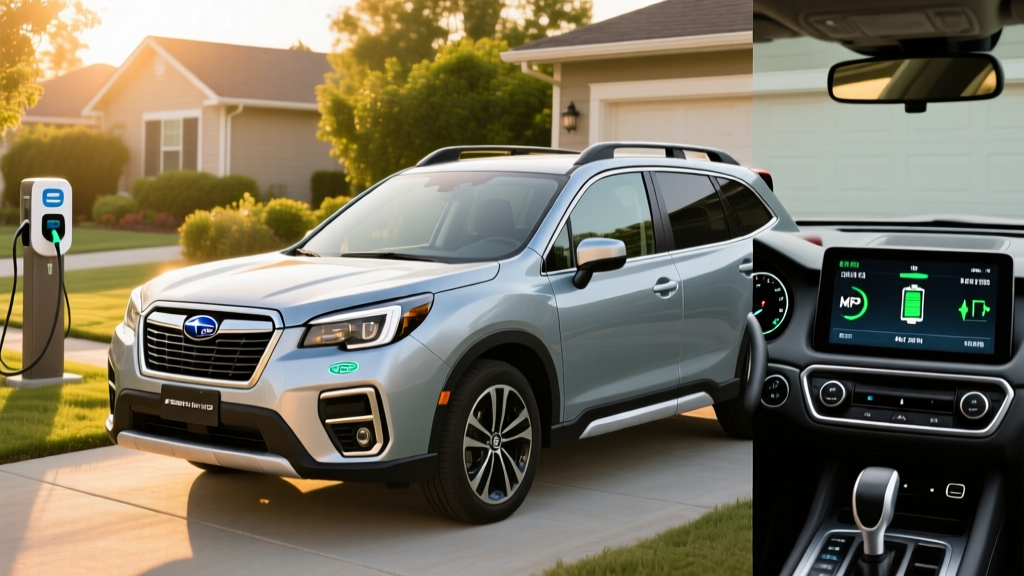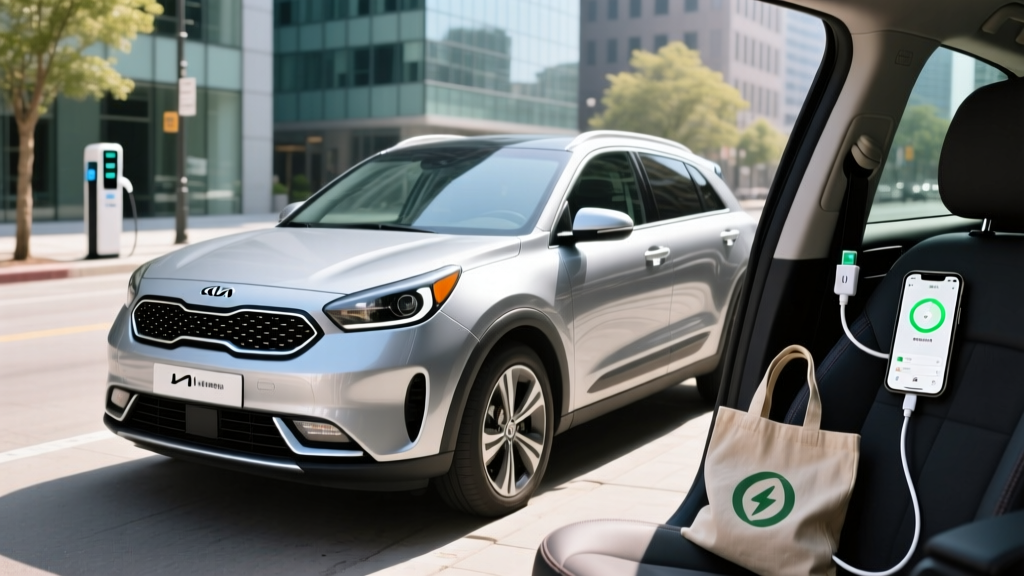
The 2022 Kia Niro Plug-In Hybrid occupies a narrow but practical slot in the electrified-vehicle market: a subcompact crossover that delivers genuine electric-only commuting range without the range anxiety of a full battery-electric vehicle. With 26 miles of EPA-rated electric range and a combined 105 MPGe, it targets buyers who want to plug in for daily errands but keep a gas engine for road trips. Now available on the used market, it also presents an interesting value proposition under the federal used-EV tax credit rules.
This guide covers the 2022 Kia Niro Plug-In Hybrid's real-world efficiency, powertrain specs, battery longevity, charging logistics, and whether it still makes sense in a market that has moved on to its redesigned successor. If you're cross-shopping this model against a conventional hybrid or a full EV, the numbers below should clarify which powertrain fits your driving pattern.
HEV vs PHEV: Which Niro Are We Talking About?
Before diving into specs, it's critical to distinguish the two Niro variants Kia sold in 2022, because their ownership experiences differ substantially:
| Attribute | 2022 Niro Hybrid (HEV) | 2022 Niro Plug-In Hybrid (PHEV) |
|---|---|---|
| Plug-in required? | No — charges via regen and engine | Yes — plug in to access electric range |
| Electric-only range | None (EV assist only) | 26 miles (EPA) |
| Battery capacity | 1.56 kWh | 8.9 kWh |
| Combined MPG (gas) | 49 MPG | 32 MPG (charge-sustaining) |
| MPGe (electric+gas) | N/A | 105 MPGe |
| Starting MSRP (2022) | ~$27,790 | ~$34,490 |
The conventional HEV never plugs in and operates like a Toyota Prius — the battery is small, charged by regenerative braking and the gasoline engine, and provides electric assist at low speeds. The PHEV has a significantly larger battery pack that you charge from an outlet, enabling full electric propulsion for short trips. If you never plug the PHEV in, it functions as a heavier, less efficient conventional hybrid — defeating its purpose entirely.
Electric Range and Total Range: What to Expect
The 2022 Kia Niro PHEV carries an 8.9 kWh lithium-ion polymer battery pack, of which approximately 7.0 kWh is usable capacity (the rest is buffer to protect battery longevity). That translates to:
EPA Electric-Only Range: 26 miles
Real-World Expectation: 20–24 miles in mixed driving; 15–18 miles in cold weather or sustained highway speeds above 65 mph. The relatively small battery and modest 111-kW electric motor mean highway-speed electric driving drains the pack quickly.
Total Combined Range (Electric + Gas): Approximately 560 miles per the EPA, assuming a full charge and a full 11.4-gallon fuel tank.
For context, 26 miles covers the average American's one-way commute. According to the Bureau of Transportation Statistics, the median daily round-trip commute is roughly 30 miles, so the Niro PHEV can handle many commutes entirely on electricity — provided you plug in every night. On days when you exceed the electric range, the 1.6-liter four-cylinder engine seamlessly takes over, and you drive it like any other hybrid.
Fuel Economy: EPA Numbers and Real-World MPG
| Mode | City | Highway | Combined |
|---|---|---|---|
| Electric + Gas (MPGe) | 112 MPGe | 99 MPGe | 105 MPGe |
| Gas Only (charge-sustaining) | 35 MPG | 31 MPG | 32 MPG |
The EPA's official figures show the Niro PHEV at 105 MPGe combined when starting with a full charge and blending electric and gas operation. Once the battery is depleted and the car operates in charge-sustaining (hybrid) mode, it returns 32 MPG combined.
Real-world notes: Hybrid vehicles often exceed their EPA city ratings because stop-and-go traffic maximizes regenerative braking. Owners who plug in nightly and drive fewer than 26 miles per day may go weeks without visiting a gas station, effectively achieving infinite MPG for daily use. Conversely, if you never plug in, expect 30–33 MPG combined — respectable but not class-leading compared to the Niro HEV's 49 MPG or a Toyota Prius Prime's 54 MPG in hybrid mode.
Powertrain and Performance Specs
| Specification | Detail |
|---|---|
| Engine | 1.6L GDI 4-cylinder (104 hp / 109 lb-ft) |
| Electric Motor | Permanent-magnet synchronous (61 hp / 125 lb-ft) |
| Combined System Output | 139 hp / 195 lb-ft torque |
| Transmission | 6-speed dual-clutch automatic (DCT) |
| Drivetrain | Front-wheel drive |
| 0–60 mph | ~9.7 seconds |
| Battery Chemistry | Lithium-ion polymer (NMC) |
| Battery Capacity | 8.9 kWh gross / ~7.0 kWh usable |
| Cargo Volume | 19.4 cu ft (rear seats up) / 54.5 cu ft (folded) |
| Curb Weight | ~3,465 lbs |
The Niro PHEV uses a 6-speed dual-clutch transmission rather than the continuously variable transmission (CVT) found in most Toyota and Honda hybrids. This gives it a more conventional, stepped-gear acceleration feel that some drivers prefer, though the DCT can exhibit minor hesitation from a stop. The combined 139 horsepower is adequate for city and suburban driving but feels strained during highway merging or mountain passes. This is an efficiency-first vehicle, not a performance one.
Charging: Times, Levels, and What You Need at Home
| Charging Level | Power | Time (0–100%) | Notes |
|---|---|---|---|
| Level 1 (120V household outlet) | ~1.2 kW | ~7–8 hours | Adequate for overnight; use the included portable cord |
| Level 2 (240V home/public) | ~3.3 kW (onboard charger max) | ~2.5–3 hours | Requires a J1772 connector; a dedicated 240V circuit speeds this up |
| DC Fast Charging | Not supported | N/A | The 2022 Niro PHEV has no DC fast-charge capability |
This is a critical limitation to understand: the 2022 Niro PHEV cannot DC fast charge. Its onboard charger maxes out at 3.3 kW, meaning even on a Level 2 station, you're limited to roughly 3 hours for a full charge. For nightly home charging, this is perfectly fine — plug in when you get home, wake up to a full battery. But you won't be topping up at a DC fast charger on a road trip. Once the battery is depleted on a long drive, you're running on the gasoline engine for the remainder.
The charge port uses a standard J1772 connector, which is universal for Level 1 and Level 2 AC charging in North America. Kia includes a 120V portable charging cord with the vehicle. For faster Level 2 home charging, you'll need to install a 240V outlet or hardwired EVSE — expect $300–$800 for a quality Level 2 unit (such as a ChargePoint Home Flex or Emporia Vue) plus $500–$2,000 for electrician installation depending on your panel capacity and wiring distance.
Pricing, Trim Levels, and Tax Credit Eligibility
The 2022 Niro PHEV was offered in three trims when new:
- LX: ~$34,490 MSRP — base trim with 8-inch touchscreen, Apple CarPlay/Android Auto, cloth seats
- EX: ~$36,090 MSRP — added leatherette, heated front seats, smart cruise control, 10.25-inch display
- SX Touring: ~$38,490 MSRP — leather, ventilated front seats, Harman Kardon audio, wireless charging, highway driving assist
Federal tax credit (new, in 2022): When purchased new in 2022, the Niro PHEV qualified for a partial federal tax credit under the pre-Inflation Reduction Act rules — typically around $4,543 based on its battery capacity. That credit structure no longer applies.
Federal used-EV tax credit (current rules): Under the IRS §25E used clean vehicle credit, buyers purchasing a qualifying used Niro PHEV from a licensed dealer may be eligible for up to $4,000 (30% of the sale price, capped at $4,000). Eligibility requirements include:
- Sale price must be $25,000 or less
- Buyer income caps: $75,000 (single), $112,500 (head of household), $150,000 (joint)
- Vehicle must be at least 2 model years old (2022 qualifies in 2024+)
- Must purchase from a licensed dealer (private-party sales do not qualify)
- Credit is non-refundable but can be transferred to the dealer as a point-of-sale discount
As of 2026, used Niro PHEVs typically list between $18,000–$24,000 depending on mileage and condition, meaning many will fall under the $25,000 cap. Consult a tax professional to confirm your personal eligibility before relying on this credit.
Battery Warranty, Reliability, and Replacement Cost
Hybrid/PHEV Battery Warranty: 10 years / 100,000 miles (whichever comes first), covering defects and capacity loss below a specified threshold (typically 70% of original capacity). This warranty is transferable to subsequent owners but may reduce to 8 years/80,000 miles depending on state and transfer conditions — verify with Kia or your dealer.
Powertrain Warranty: 10 years / 100,000 miles (original owner); 5 years / 60,000 miles (subsequent owners).
Kia's hybrid battery packs have proven durable in practice. The Niro uses an NMC (nickel-manganese-cobalt) lithium-ion polymer battery that is liquid-cooled, which helps manage thermal stress and slow degradation. Most PHEV batteries lose roughly 1–2% of capacity per year under normal use, meaning a 5-year-old Niro PHEV might retain 90–95% of its original electric range. Cold weather temporarily reduces range but does not cause permanent degradation.
Battery replacement cost: If the battery fails outside warranty coverage, a replacement pack for the Niro PHEV typically runs $3,500–$5,500 including parts and labor. This is considerably less than full-EV battery replacements (which can exceed $10,000–$15,000) because the PHEV pack is much smaller. That said, out-of-warranty failures are rare before 150,000+ miles based on industry data from similar Hyundai/Kia PHEV platforms.
In terms of overall reliability, the 2022 Niro PHEV earned average to above-average marks from major evaluators. The dual-clutch transmission is the component most likely to generate complaints (rough shifts, hesitation), while the hybrid powertrain itself has been largely trouble-free across the Kia/Hyundai family. Check for any outstanding recalls related to the 12V auxiliary battery or fuel system before purchasing a used example.
Who Should Choose the Niro PHEV Over a Full EV or Gas Car?
Pros
- 26-mile electric range covers most daily commutes without gas
- No range anxiety — gas engine provides 560+ total miles
- Lower purchase price than a full EV; used market offers strong value
- No home charger upgrade urgency — Level 1 (120V) works overnight
- Practical hatchback cargo area (54.5 cu ft with seats folded)
- Strong 10-year/100,000-mile battery warranty
Cons
- No DC fast charging — road trips are gas-only once battery depletes
- 32 MPG in hybrid mode trails the Niro HEV (49 MPG) and Prius Prime (54 MPG)
- Modest 139 hp feels underpowered on highways
- Dual-clutch transmission can hesitate from stops
- Only front-wheel drive — no AWD option
- Previous-generation platform (redesigned Niro arrived for 2023)
Choose the 2022 Niro PHEV if: Your daily round-trip commute is under 25 miles, you can plug in at home nightly, you take occasional road trips where charging infrastructure is sparse, and you want to reduce gas consumption without committing to a full EV. It's ideal as a second car or for apartment dwellers with access to a Level 1 outlet.
Choose a full EV instead if: You have reliable home Level 2 charging, your daily driving rarely exceeds 200 miles, and you want to eliminate oil changes and gas entirely. Vehicles like the Chevrolet Bolt EUV or Hyundai Kona Electric offer 240+ miles of range at comparable used prices.
Choose the conventional Niro HEV instead if: You cannot plug in at home or work. Without regular plug-in charging, the PHEV's extra cost and weight provide no benefit — the HEV delivers 49 MPG combined without ever needing an outlet.
Frequently Asked Questions
How many MPG does the 2022 Kia Niro Plug-In Hybrid get?
With a full charge, it achieves 105 MPGe combined. Once the battery is depleted and it operates as a conventional hybrid, it returns 32 MPG combined (35 city / 31 highway). In practice, if you plug in nightly and drive less than 26 miles daily, your effective fuel consumption can be near zero for weeks at a time.
How far can the Niro PHEV go on electric power alone?
The EPA rates it at 26 miles of electric-only range. In real-world driving, expect 20–24 miles in moderate temperatures and mixed city/suburban conditions. Cold weather (below 40°F) and sustained highway speeds can reduce this to 15–18 miles. The electric motor produces 61 hp, so electric-only acceleration is modest — adequate for city driving but not highway merging.
Does the 2022 Niro PHEV qualify for any tax credit in 2026?
The original new-vehicle federal tax credit structure that applied in 2022 has been superseded by the Inflation Reduction Act. However, purchasing a used 2022 Niro PHEV from a licensed dealer for $25,000 or less may qualify you for the §25E used clean vehicle credit of up to $4,000, subject to buyer income limits. Verify eligibility with a tax professional and the IRS's current guidance before purchasing.
Is the Niro PHEV battery reliable, and what does replacement cost?
Kia covers the PHEV battery with a 10-year/100,000-mile warranty. Real-world degradation for Hyundai/Kia NMC PHEV packs is typically 1–2% per year, meaning most owners retain 90%+ of electric range after five years. Out-of-warranty replacement runs approximately $3,500–$5,500. Failures before 150,000 miles are uncommon based on fleet and owner-report data.
Can I charge the Niro PHEV at a public DC fast charger?
No. The 2022 Niro PHEV only supports Level 1 (120V) and Level 2 (240V) AC charging via its J1772 port. It does not have a DC fast-charge port. The onboard charger maxes out at 3.3 kW, so even on a Level 2 public charger, a full charge takes approximately 2.5–3 hours.
How does the Niro PHEV compare to the Toyota Prius Prime?
The 2022 Prius Prime offered 25 miles of electric range, 54 MPG in hybrid mode, and a similarly sized battery. It edges out the Niro PHEV in hybrid-mode efficiency but offers less cargo space and a lower seating position. The Niro PHEV's advantage is its crossover ride height and more usable cargo area. The redesigned 2023+ Prius Prime significantly outperforms both with 44 miles of electric range.
Is the 2022 model year different from 2021 or 2023?
The 2022 Niro PHEV is the final year of the first-generation platform. The 2021 model is mechanically identical with minor feature differences. The 2023 model year introduced a complete redesign with a larger battery (11.1 kWh), 33 miles of electric range, updated styling, and a more modern interior. If budget allows, the 2023+ generation is a meaningful upgrade.