Quick Verdict: Who Should Consider the 2022 Kia Niro PHEV?
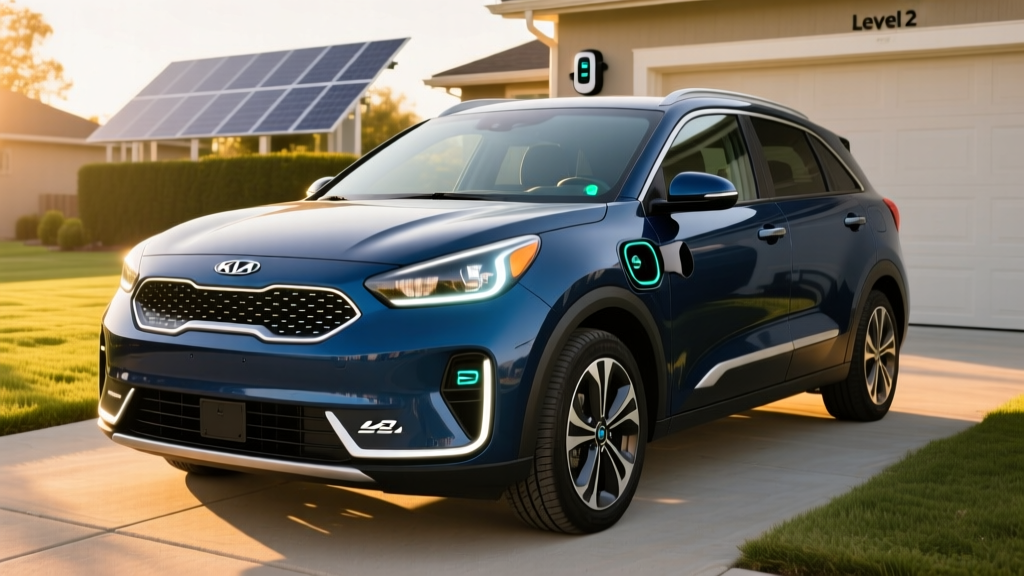
The 2022 Kia Niro Plug-In Hybrid occupies a narrow but useful lane: it's a compact crossover that handles most daily commutes on electricity alone while retaining a gas engine for road trips. With an EPA-rated 26 miles of electric-only range and 46 MPG combined once the battery depletes, it rewards owners who can charge at home or work without demanding the full commitment of a battery-electric vehicle. On the used market in 2026, well-maintained examples typically list between $19,000 and $25,000 depending on trim and mileage — a meaningful discount from its original $33,090–$37,090 MSRP window.
This guide covers everything a prospective buyer or current owner needs: exact efficiency numbers, the distinction between this PHEV and the conventional Niro Hybrid, battery longevity expectations, and whether this model still qualifies for any incentives on the secondary market.
HEV vs PHEV: Understanding the Two Niro Variants
Kia sold the 2022 Niro in two electrified flavors, and confusing them is the most common buyer mistake. Here's the fundamental split:
| Attribute | 2022 Niro Hybrid (HEV) | 2022 Niro Plug-In Hybrid (PHEV) |
|---|---|---|
| Plug-in charging required? | No — charges via regen and engine | Yes — plug in for max electric range |
| Battery capacity | 1.56 kWh | 8.9 kWh (usable ~7.4 kWh) |
| Electric-only range | ~1 mile at low speed | 26 miles (EPA) |
| Combined horsepower | 139 hp | 139 hp |
| EPA combined MPG (gas mode) | 53 MPG combined | 46 MPG combined (charge-depleted) |
| MPGe (electric mode) | N/A | 105 MPGe |
| DC fast charging | No | No — Level 2 AC only |
| Original MSRP (base) | ~$27,790 | ~$33,090 |
The conventional HEV is simpler and cheaper upfront; it never needs a plug and achieves outstanding fuel economy through regenerative braking and engine optimization. The PHEV costs more initially but lets you drive most weekday commutes without burning a drop of fuel — provided you charge regularly. If you lack access to a plug at home or work, the HEV is the more rational choice.
Fuel Economy and Electric-Only Range
The EPA rates the 2022 Niro PHEV as follows (source: fueleconomy.gov):
| Metric | EPA Rating | Real-World Expectation |
|---|---|---|
| Electric-only range | 26 miles | 22–28 mi (varies with temp and terrain) |
| MPGe (electric mode) | 105 MPGe | 90–110 MPGe typical |
| City MPG (gas, depleted) | 46 MPG | 44–50 MPG (hybrids often beat EPA in city) |
| Highway MPG (gas, depleted) | 46 MPG | 40–44 MPG (aerodynamic drag at 70+ mph) |
| Combined MPG (gas, depleted) | 46 MPG | 42–47 MPG |
| Total combined range | 560 miles | 500–560 mi depending on driving mix |
Real-world nuance: Hybrid powertrains tend to exceed their EPA city estimates because stop-and-go traffic maximizes regenerative braking. Highway driving is where you'll see numbers dip below the sticker, especially above 70 mph or in headwinds. In cold weather (below 40°F), expect electric-only range to drop 20–30% due to cabin heating demands and reduced battery efficiency. Owners in northern climates report 18–22 miles of electric range in January versus 27+ miles in mild spring weather.
Powertrain and Performance
| Specification | 2022 Niro PHEV |
|---|---|
| Engine | 1.6L GDI 4-cylinder (104 hp / 109 lb-ft) |
| Electric motor | Permanent-magnet synchronous (43 kW / 60 hp) |
| Combined system output | 139 hp / 195 lb-ft torque |
| Transmission | 6-speed dual-clutch automatic (DCT) |
| Drivetrain | Front-wheel drive |
| Battery pack | 8.9 kWh lithium-ion polymer |
| 0–60 mph | ~9.7 seconds |
| Cargo volume | 19.4 cu ft (rear seats up) / 54.5 cu ft (folded) |
| Curb weight | ~3,450 lbs |
The 1.6-liter Atkinson-cycle engine is designed for efficiency over power. Combined with the electric motor, the 139-hp system output is adequate for suburban and highway merging but won't thrill anyone. The 6-speed DCT is a notable choice — unlike the CVTs or single-speed reducers found in the Toyota Prius Prime or RAV4 Prime, the Kia's dual-clutch delivers more natural shift feel, though it can occasionally hesitate from a stop before the clutch engages.
Charging: What to Expect at Home and on the Road
The 2022 Niro PHEV charges exclusively via AC — it has no DC fast-charging capability. This is typical for PHEVs in this class, where the smaller battery makes DC hardware cost-prohibitive.
| Charging Level | Power | Time (0–100%) | Connector |
|---|---|---|---|
| Level 1 (120V household) | ~1.4 kW | ~6–7 hours | J1772 |
| Level 2 (240V home/public) | ~3.3 kW (onboard charger max) | ~2.5 hours | J1772 |
The onboard charger is limited to 3.3 kW, meaning even a 7.2 kW or 11.5 kW Level 2 station will only deliver 3.3 kW to the Niro's battery. For most PHEV owners, this is perfectly adequate — plug in overnight and you'll wake to a full charge every morning. A standard 120V outlet can replenish the pack in one long night, which is a genuine advantage for apartment dwellers or those without dedicated 240V circuits.
Charging cost reality: At the US average electricity rate of ~$0.16/kWh, fully charging the Niro PHEV's usable ~7.4 kWh costs approximately $1.18. That buys you roughly 26 miles of driving — equivalent to about $0.045 per mile on electricity. Compare that to $0.12–$0.14/mile on gasoline at current prices, and the electric mode delivers meaningful per-mile savings.
Battery Longevity, Warranty, and Replacement Cost
| Coverage | Terms |
|---|---|
| Hybrid battery warranty | 10 years / 100,000 miles (original owner) |
| Hybrid battery warranty (second owner) | Varies by state; often 10 yr/100k transfers in CARB states, 5 yr/60k elsewhere |
| Hybrid system components | 10 years / 100,000 miles |
| Basic vehicle warranty | 5 years / 60,000 miles |
| Capacity retention threshold | Kia covers if battery falls below ~70% of original capacity |
PHEV batteries experience less stress than full BEV packs because the system maintains a buffer — you never truly drain to 0% or charge to 100% at the cell level, which slows degradation. Real-world data from Kia Niro PHEV owners at 80,000+ miles commonly shows 5–10% capacity loss, meaning an original 26-mile range might settle to 23–25 miles after five years of daily use.
Battery replacement cost: If the hybrid battery fails outside warranty, a new OEM replacement pack runs approximately $4,000–$6,500 including labor. Independent hybrid specialists sometimes offer refurbished packs for $2,500–$3,500. However, given the 10-year/100,000-mile warranty and the relatively low stress PHEV batteries endure, most owners will never face this expense. According to IIHS, the 2022 Niro performed well in crash testing, giving buyers additional peace of mind on the overall vehicle.
Pricing and Tax Credit Eligibility (2026 Used Market)
When new, the 2022 Niro PHEV started at $33,090 for the LX trim and reached ~$37,090 for the EX Premium. In 2026, used-market pricing typically falls in these ranges:
- LX (base): $19,000–$22,000
- EX: $21,000–$24,000
- EX Premium: $23,000–$26,000
Federal tax credit: The 2022 Niro PHEV originally qualified for a partial federal tax credit (up to $4,543 under pre-IRA rules based on its 8.9 kWh battery). Under current IRS §30D rules, this credit is no longer available for the 2022 model year purchased new. However, buyers purchasing a used 2022 Niro PHEV from a dealer in 2026 may qualify for the Used Clean Vehicle Credit — up to $4,000 or 30% of the sale price (whichever is less), subject to these requirements:
- Sale price must be $25,000 or less
- Buyer income caps: $75,000 single / $112,500 head of household / $150,000 joint
- Vehicle must be at least 2 model years old (2022 qualifies in 2026)
- Must purchase from a licensed dealer (private sales excluded)
- Buyer must not have claimed the used-EV credit in the prior 3 years
- Credit is non-refundable (you must have tax liability to use it)
Many used Niro PHEV listings fall right at the $25,000 threshold, so trim and mileage matter for eligibility. Consult a tax professional to confirm your specific situation — state incentives may also apply, and these vary significantly by jurisdiction.
Hybrid vs PHEV vs EV: Which Powertrain Fits Your Life?
Choose the 2022 Niro PHEV if: Your daily driving is under 30 miles round-trip, you have reliable access to a 120V or 240V outlet at home, and you want the option of gas-powered road trips without range anxiety. This is the bridge vehicle for drivers not yet ready to commit to a full BEV.
Choose the conventional Niro HEV instead if: You cannot charge at home or work, you drive mostly highway miles (where the PHEV's electric range provides minimal benefit), or your budget is tighter and the $3,000–$5,000 used-market premium for the PHEV isn't justified by your driving pattern.
Consider a full BEV (like the Kia Niro EV or Hyundai Ioniq 5) if: Your daily range needs exceed 30 miles but stay under 230, you have Level 2 home charging, and you want to eliminate oil changes, spark plugs, and gas stations entirely. A BEV delivers lower per-mile fuel costs and less mechanical complexity, but requires confidence in your charging access and willingness to plan for longer road trips.
Pros, Cons, and Ownership Realities
Pros
- 26-mile electric range covers most commutes gas-free
- 46 MPG combined in gas mode is excellent for a crossover
- Charges on a standard 120V outlet overnight
- 10-year/100,000-mile hybrid battery warranty
- Practical hatchback cargo area (54.5 cu ft max)
- Lower used-market price opens access to the used-EV tax credit
Cons
- No DC fast charging — road trips run on gas only
- 9.7-second 0–60 time means leisurely acceleration
- DCT can hesitate from a stop
- Electric range drops significantly in cold weather
- Rear seat and cargo space tighter than RAV4 Prime or Sportage PHEV
- Infotainment and driver-assist tech feel dated vs 2025+ models
Frequently Asked Questions
How many MPG does the 2022 Kia Niro Plug-In Hybrid get?
The EPA rates it at 46 MPG combined (46 city / 46 highway) in charge-depleted gas mode, and 105 MPGe when operating on electricity. In real-world city driving, many owners report 48–52 MPG thanks to regenerative braking, while sustained highway driving at 75+ mph may yield 40–43 MPG.
How far can the 2022 Niro PHEV go on electric only?
The EPA rates it for 26 miles of electric-only range. Real-world results vary from about 22 miles in cold weather or hilly terrain to 28+ miles in mild, flat conditions. This is sufficient for most daily commutes but shorter than competitors like the Toyota RAV4 Prime (42 mi) or Prius Prime (44 mi).
Is the 2022 Kia Niro PHEV reliable?
Kia's hybrid powertrain has proven durable. The 1.6L GDI engine and electric motor combination has few failure points compared to conventional automatic transmissions, and the DCT is generally reliable when maintained. The hybrid battery is covered for 10 years/100,000 miles, and degradation data from high-mileage owners shows only modest capacity loss. Common complaints center on infotainment glitches and minor interior rattles rather than powertrain issues.
Does the 2022 Niro PHEV qualify for any tax credit in 2026?
The new-vehicle federal credit is no longer available. However, purchasing one used from a dealer in 2026 may qualify you for the Used Clean Vehicle Credit of up to $4,000, provided the sale price is $25,000 or less and you meet income requirements. Always verify eligibility with a tax professional and check your state's incentive programs, which vary widely.
What does it cost to charge a Niro PHEV at home?
A full charge uses about 7.4 kWh of usable energy, costing roughly $1.18 at the national average of $0.16/kWh. Over a year of daily charging (365 cycles), you'd spend approximately $430 on electricity to drive ~9,500 electric miles — a significant savings over the ~$1,100–$1,300 you'd spend on gasoline for the same distance.
Can I use a DC fast charger with the Niro PHEV?
No. The 2022 Niro PHEV only accepts AC charging via a J1772 connector at up to 3.3 kW. It cannot connect to DC fast-charging stations (CCS, CHAdeMO, or NACS). For a PHEV with this battery size, Level 2 charging over 2–3 hours or Level 1 overnight is the intended use case.
What's the battery replacement cost if it fails out of warranty?
An OEM replacement hybrid battery runs approximately $4,000–$6,500 installed at a Kia dealer. Refurbished or aftermarket packs may be available from independent hybrid specialists for $2,500–$3,500. Given the 10-year warranty and low degradation rates observed in PHEV packs, most owners will trade or sell the vehicle before facing this expense.