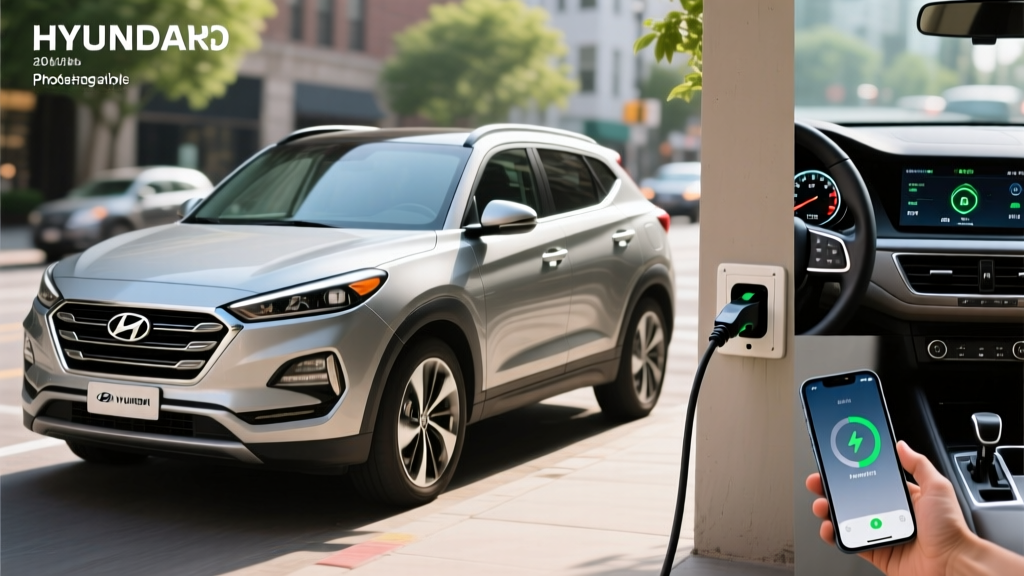
The 2022 Hyundai Tucson Hybrid arrived as a full redesign for Hyundai's compact SUV lineup, pairing a turbocharged 1.6-liter engine with an electric motor for a combined 226 horsepower and an EPA-estimated 38 MPG combined. For buyers who want electric-motor efficiency without plugging in, the Tucson HEV (hybrid electric vehicle) remains one of the most compelling options in the compact crossover segment — even as we evaluate it from a 2026 ownership perspective.
This guide breaks down the exact fuel economy figures, powertrain specs, battery longevity data, and real-world ownership considerations you need before purchasing a 2022 Tucson Hybrid on the used market or comparing it against newer alternatives.
HEV vs PHEV: Which Tucson Hybrid Are We Talking About?
Hyundai offered two electrified Tucson variants for the 2022 model year, and confusing them is the single most common buyer mistake. Here is the fundamental distinction:
2022 Tucson Hybrid (HEV)
- No plug required. The 1.49 kWh battery recharges through regenerative braking and the gasoline engine.
- EPA 38 MPG combined (37 city / 38 highway).
- 226 HP / 258 lb-ft torque combined output.
- No federal tax credit — §30D applies only to plug-in vehicles with ≥7 kWh batteries.
- Base MSRP at launch: $32,600 (Blue trim, including destination).
2022 Tucson Plug-In Hybrid (PHEV)
- Plugs in. The 13.8 kWh battery provides an EPA-estimated 33 miles of electric-only range.
- EPA 80 MPGe combined (electric+gas); 35 MPG combined on gas alone.
- 261 HP / 258 lb-ft torque combined output.
- Eligible for up to $7,500 federal tax credit (subject to §30D income, MSRP, and battery-sourcing rules at time of purchase).
- Base MSRP at launch: $36,190 (SEL Convenience, including destination).
The rest of this article focuses primarily on the conventional HEV, with PHEV data included where comparisons are useful. If you're specifically researching the plug-in variant, note that the PHEV was only available in SEL Convenience and Limited trims, while the HEV spanned Blue, SEL Convenience, and Limited.
Fuel Economy: EPA Ratings vs Real-World MPG
The 2022 Tucson Hybrid's EPA ratings, as published on fueleconomy.gov, break down as follows:
| Trim | City MPG | Highway MPG | Combined MPG | Annual Fuel Cost* |
|---|---|---|---|---|
| Blue | 38 | 38 | 38 | $1,650 |
| SEL Convenience / Limited | 37 | 36 | 37 | $1,700 |
*Based on 15,000 miles/year at $3.50/gallon. Actual costs vary by region and driving habits.
Real-World MPG: What Owners Actually See
Hyundai's hybrid system uses a conventional 6-speed automatic transmission rather than a CVT or planetary gearset (like Toyota's e-CVT), which creates a distinct driving character and efficiency profile:
- City driving: Many owners report exceeding the EPA city estimate, seeing 39–42 MPG in stop-and-go traffic. Regenerative braking and low-speed electric assist shine here.
- Highway driving (65–75 mph): Expect 33–36 MPG. The turbo engine works harder at sustained speed, and the aerodynamic profile of a compact SUV creates more drag than a sedan.
- Cold weather (below 30°F): Plan for a 5–8 MPG drop. The engine runs more frequently to provide cabin heat and maintain battery temperature.
- Mixed real-world average: Most owners land between 34–38 MPG combined, consistent with or slightly below the EPA sticker depending on terrain and climate.
The Blue trim's 1 MPG advantage comes from lighter wheels (18-inch vs 19-inch on upper trims) and slightly lower curb weight. If maximum efficiency matters, the Blue trim is the spec to target.
Powertrain: 226 HP With Turbo-Hybrid Torque
| Specification | 2022 Tucson Hybrid (HEV) |
|---|---|
| Engine | 1.6L turbocharged 4-cylinder (178 HP / 195 lb-ft) |
| Electric Motor | 44.2 kW (59 HP / 195 lb-ft) |
| Combined Output | 226 HP / 258 lb-ft torque |
| Transmission | 6-speed automatic |
| Drivetrain | HTRAC AWD (standard on all trims) |
| Battery Capacity | 1.49 kWh (lithium-ion polymer) |
| 0–60 mph | ~7.1 seconds (tested) |
| Curb Weight | 3,819–3,935 lbs |
| Towing Capacity | 2,000 lbs |
| Cargo Volume | 38.7 cu ft (rear seats up) / 80.3 cu ft (folded) |
The combined 258 lb-ft of torque is available low in the rev range thanks to the electric motor's instant contribution, making the Tucson Hybrid feel notably quicker off the line than its 226 HP figure suggests. The 6-speed automatic delivers more natural shift feel than the rubber-band sensation of CVT-equipped competitors, though it sacrifices a fraction of efficiency at steady cruise.
Standard HTRAC all-wheel drive means there is no FWD-only base model — every 2022 Tucson Hybrid sends power to all four wheels, which is a value advantage versus competitors that charge extra for AWD.
Battery Longevity, Warranty, and Replacement Cost
2022 Tucson Hybrid Battery Warranty
- Hybrid/EV battery: 10 years / 100,000 miles (original owner); 10 years / 100,000 miles in CARB states for subsequent owners
- Hybrid system components: 10 years / 100,000 miles
- Capacity retention threshold: Hyundai replaces if battery falls below approximately 70% of original capacity during warranty period
- Standard powertrain warranty: 10 years / 100,000 miles
Is the Tucson Hybrid Reliable?
The 1.49 kWh battery in the HEV is small and operates within a narrow state-of-charge window (roughly 40–60%), which significantly reduces degradation stress compared to full EVs that cycle through 80–100% of capacity. Hyundai's lithium-ion polymer cells have demonstrated strong longevity across the Ioniq and Sonata Hybrid lineups, with most batteries retaining 90%+ capacity after 100,000 miles.
For the 2022 model year specifically, the Tucson Hybrid has accumulated enough real-world mileage data (as of 2026) to show no systemic battery failure patterns. The primary reliability concerns reported by owners involve the infotainment system and occasional transmission shift hesitation — not the hybrid battery itself.
Battery Replacement Cost
If the hybrid battery does fail outside warranty, replacement costs for the Tucson HEV's 1.49 kWh pack typically range from $2,000 to $3,500 (parts and labor) at a Hyundai dealer. This is substantially less than full EV battery replacements ($8,000–$20,000+) because the pack is small and modular. Independent hybrid specialists can often source refurbished cells for $1,200–$2,000.
The PHEV's larger 13.8 kWh battery would cost significantly more to replace — roughly $5,000–$8,000 — but carries the same 10-year/100,000-mile warranty.
Tax Credits and Purchase Pricing (2022 Model)
Does the Tucson Hybrid Qualify for a Federal Tax Credit?
The conventional Tucson HEV does not qualify for the federal §30D Clean Vehicle Credit. IRS rules require a plug-in vehicle with a battery capacity of at least 4 kWh (and, under current rules, at least 7 kWh to access the full credit structure). The Tucson HEV's 1.49 kWh battery is far below this threshold. You cannot plug it in, and the IRS does not recognize it as a qualified plug-in electric vehicle.
The Tucson PHEV, however, did qualify for up to $7,500 under §30D rules applicable at the time of its sale (2022–2023 model years), subject to:
- Buyer adjusted gross income below $150,000 (single) / $300,000 (joint)
- Vehicle MSRP below $80,000 (SUV cap — both PHEV trims cleared this easily)
- Battery critical-mineral and component sourcing requirements (which tightened significantly after the Inflation Reduction Act provisions took effect in 2023)
If you are purchasing a used 2022 Tucson Hybrid (HEV or PHEV) from a dealer in 2026, the Used Clean Vehicle Credit (§25E) may apply: up to $4,000 or 30% of the sale price (whichever is lower), provided the used vehicle sale price is $25,000 or below, the buyer's income falls below the threshold ($75,000 single / $150,000 joint), and the vehicle is purchased from a licensed dealer. Check current eligibility on IRS.gov before finalizing a purchase, as used-vehicle credit rules and eligible model lists update periodically.
Original MSRP and Current Used Pricing
| Trim (HEV) | 2022 MSRP | Approx. 2026 Used Price* |
|---|---|---|
| Blue | $32,600 | $21,000–$24,500 |
| SEL Convenience | $34,050 | $23,000–$26,500 |
| Limited | $37,350 | $25,500–$29,000 |
*Used prices vary by mileage, condition, and region. Data reflects typical dealer listings as of early 2026.
2022 Tucson PHEV: Electric-Only Range and Charging
For buyers specifically considering the plug-in variant, here are the critical electric-driving figures:
| Specification | 2022 Tucson PHEV |
|---|---|
| Battery Capacity | 13.8 kWh (lithium-ion polymer) |
| EPA Electric-Only Range | 33 miles |
| Total Combined Range (EV + Gas) | ~400 miles |
| MPGe (Electric + Gas) | 80 MPGe combined |
| MPG (Gas Only, Battery Depleted) | 35 MPG combined |
| Level 2 Charge Time (0–100%) | ~1 hour 50 minutes (at 7.2 kW) |
| DC Fast Charging | Not available — no DC port |
| Onboard Charger | 7.2 kW |
| Combined Horsepower | 261 HP |
The PHEV's 33-mile electric range covers most daily commutes without using gasoline, and the 7.2 kW onboard charger means a full recharge in under two hours on a Level 2 home charger. However, the lack of DC fast charging is a notable limitation — on road trips, you cannot top up the battery at highway charging stations and must rely on the gasoline engine once the battery depletes.
Real-world electric range typically lands at 28–33 miles in mild weather, dropping to 22–26 miles in freezing temperatures when cabin heating draws additional power from the pack.
Who Should Choose the Tucson Hybrid vs a Full EV or Gas Car?
Choose the 2022 Tucson Hybrid (HEV) if:
- You want better fuel economy without changing your refueling habits — no charger installation, no route planning around charging stations.
- You drive 12,000–18,000 miles per year in mixed city/highway conditions and want to save $500–$800 annually on fuel versus the gas-only Tucson (EPA 26 MPG combined).
- You live in an apartment or lack access to home/workplace charging, making a plug-in vehicle impractical.
- You need AWD as standard equipment in a compact SUV under $25,000 on the used market.
Choose the Tucson PHEV if:
- You have reliable Level 2 charging at home or work and your daily commute is under 30 miles — you could drive months between fill-ups.
- You want the option of electric-only driving for school runs and errands while retaining gas flexibility for road trips.
- You purchased new when the $7,500 federal credit was available, effectively reducing the price to near HEV levels.
Choose a Full EV (e.g., Hyundai Ioniq 5, Kia EV6) if:
- You have home Level 2 charging and want to eliminate gasoline entirely.
- Your daily driving is under 250 miles and you're comfortable with public DC fast charging for road trips.
- You want lower per-mile fuel costs (~$0.04–$0.06/mile on electricity vs ~$0.10–$0.12/mile on gas at 38 MPG) and reduced maintenance (no oil changes, fewer brake replacements due to regen).
Stick with the Gas-Only Tucson if:
- Your budget is strictly under $18,000 and you can't stretch to a used hybrid.
- You drive fewer than 8,000 miles per year — the fuel savings of a hybrid won't offset the purchase premium within a reasonable timeframe.
Pros and Cons at a Glance
Pros
- 38 MPG combined EPA — strong for an AWD compact SUV
- 226 HP provides confident acceleration (7.1s 0–60)
- Standard AWD on every trim — no FWD penalty model
- 10-year/100,000-mile hybrid battery and powertrain warranty
- Spacious interior with 38.7 cu ft cargo behind rear seats
- Real-world city MPG often exceeds EPA estimate
- Conventional 6-speed automatic avoids CVT drone
Cons
- Highway MPG drops to 33–36 — less impressive than city figures
- Small 1.49 kWh battery limits electric-only driving to low-speed creep
- No federal tax credit for the HEV variant
- Infotainment system (2022 generation) can be laggy versus 2024+ updates
- Cold-weather fuel economy drops 5–8 MPG
- PHEV variant lacks DC fast charging
- Upper trims (Limited) approach PHEV pricing, reducing value proposition
Frequently Asked Questions
How many MPG does the 2022 Hyundai Tucson Hybrid get?
The EPA rates the Tucson Hybrid Blue trim at 38 city / 38 highway / 38 combined. SEL Convenience and Limited trims are rated at 37 city / 36 highway / 37 combined. Real-world owners typically see 34–38 MPG combined, with city driving often exceeding the EPA estimate and sustained highway driving falling a few MPG short.
How far can the Tucson PHEV go on electric only?
The EPA rates the 2022 Tucson PHEV at 33 miles of electric-only range. In real-world conditions, expect 28–33 miles in mild weather and 22–26 miles in freezing temperatures. Once the battery depletes, the vehicle operates as a conventional hybrid at 35 MPG combined.
Is the 2022 Tucson Hybrid reliable, and what does a battery replacement cost?
The Tucson Hybrid's powertrain has shown no systemic reliability issues through four years of real-world use. The hybrid battery is covered by a 10-year/100,000-mile warranty, and replacement cost (if needed outside warranty) runs $2,000–$3,500 for the HEV's small 1.49 kWh pack. The larger PHEV battery costs approximately $5,000–$8,000 to replace.
Does the 2022 Tucson Hybrid qualify for any tax credit?
The conventional HEV does not qualify for any federal tax credit because it is not a plug-in vehicle. The PHEV qualified for up to $7,500 under §30D when purchased new, subject to income and sourcing rules. Used buyers in 2026 may qualify for the §25E Used Clean Vehicle Credit (up to $4,000) if the sale price is $25,000 or below and income limits are met. Always verify current rules at IRS.gov.
Do I need to plug in the Tucson Hybrid?
No. The conventional Tucson HEV charges its small battery entirely through regenerative braking and the gasoline engine. You fuel it like any other gas car. Only the Tucson PHEV requires (or benefits from) plugging in.
How does the Tucson Hybrid compare to the Toyota RAV4 Hybrid?
The 2022 RAV4 Hybrid is rated at 41 city / 38 highway / 40 combined — 2 MPG higher on the combined cycle — and uses Toyota's proven e-CVT system. However, the Tucson Hybrid offers more standard horsepower (226 vs 219), a more conventional shift feel from its 6-speed automatic, and a more modern interior design. The RAV4 Hybrid has a longer track record for reliability, while the Hyundai's 10-year warranty provides comparable peace of mind.
What is the Tucson Hybrid's towing capacity?
The 2022 Tucson Hybrid is rated to tow up to 2,000 pounds when properly equipped — sufficient for a small utility trailer or a pair of jet skis, but not enough for most campers or boat trailers. Towing will reduce fuel economy by approximately 30–40%.
For the most current EPA data, visit fueleconomy.gov. For safety ratings, check the NHTSA ratings database and IIHS. All tax credit information should be verified against current IRS guidance before purchase.