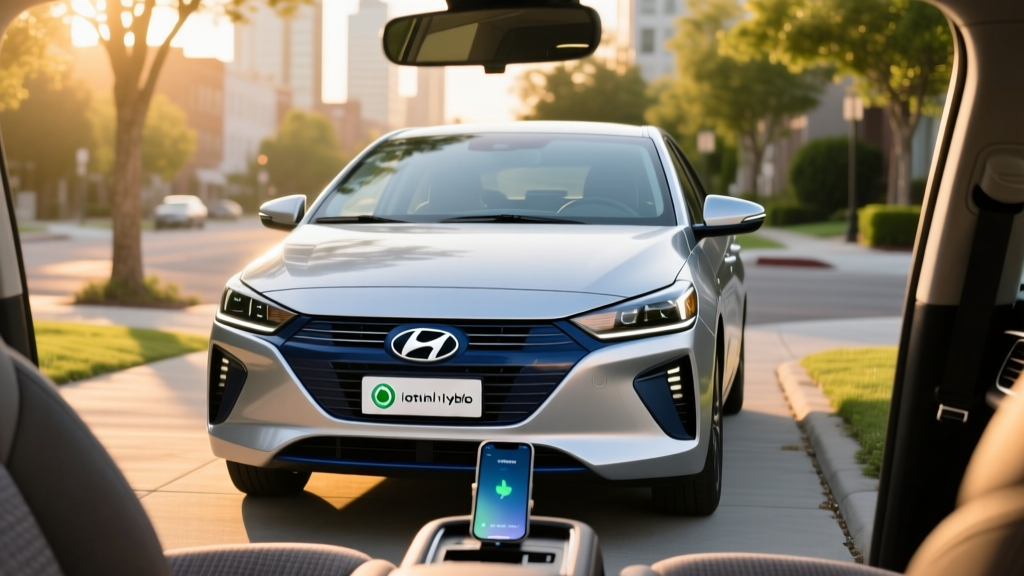
The 2022 Hyundai Ioniq Hybrid was the final model year for one of the most fuel-efficient vehicles ever sold in the United States. Discontinued after 2022 to make way for Hyundai's Ioniq 5 and Ioniq 6 electric vehicles, the Ioniq Hybrid remains a compelling option on the used market for buyers who want maximum fuel economy without plugging in. With an EPA-estimated 58 MPG combined in its Blue trim, it rivals and often beats the Toyota Prius in real-world city driving. This guide covers everything a 2026 used-car buyer needs to know about the 2022 Hyundai Ioniq Hybrid, from real-world MPG and battery longevity to ownership costs and how it stacks up against PHEVs and full EVs.
2022 Hyundai Ioniq Hybrid: Quick Specs at a Glance
| Specification | Blue Trim | SE / SEL / Limited Trim |
|---|---|---|
| EPA City MPG | 58 | 54 |
| EPA Highway MPG | 57 | 53 |
| EPA Combined MPG | 58 | 54 |
| Combined Horsepower | 139 hp | 139 hp |
| Engine | 1.6L GDI 4-cyl + electric motor | 1.6L GDI 4-cyl + electric motor |
| Transmission | 6-speed dual-clutch auto | 6-speed dual-clutch auto |
| Hybrid Battery | 1.56 kWh lithium-ion polymer | 1.56 kWh lithium-ion polymer |
| 0–60 mph | ~8.5 seconds | ~8.5 seconds |
| Cargo Volume | 26.5 cu ft (rear seats up) | 26.5 cu ft (rear seats up) |
| Original MSRP (2022) | $23,600 | $25,200 – $32,100 |
| Typical Used Price (2026) | $17,000 – $22,000 | $18,500 – $26,000 |
The trim level matters significantly for fuel economy. The Blue trim's lighter weight, lower-resistance tires, and aerodynamic tweaks give it a 4-MPG advantage over the SE, SEL, and Limited trims. If maximum efficiency is your priority, the Blue is the one to find.
Real-World MPG: What Owners Actually See
The EPA numbers are impressive, but hybrids have a well-documented tendency to exceed their EPA city estimates in real-world stop-and-go driving, while sometimes falling slightly short on sustained highway runs. Here's what to expect from the 2022 Hyundai Ioniq Hybrid based on owner reports and independent testing:
| Driving Scenario | Blue Trim | SE/SEL/Limited |
|---|---|---|
| City (stop-and-go, moderate climate) | 58 – 65 MPG | 54 – 60 MPG |
| Highway (65–70 mph, flat terrain) | 50 – 55 MPG | 47 – 52 MPG |
| Mixed commuting | 54 – 58 MPG | 50 – 54 MPG |
| Cold weather (below 32°F) | 45 – 52 MPG | 42 – 48 MPG |
Why do hybrids beat their EPA city numbers in practice? Regenerative braking recovers energy in stop-and-go traffic that gas-only cars waste as heat. The electric motor handles low-speed launches, where internal combustion engines are least efficient. On the highway, the gas engine does most of the work and aerodynamic drag dominates, so the hybrid advantage narrows.
Cold weather reduces MPG in all vehicles, but hybrids take a larger hit because the engine must run more frequently to generate cabin heat and maintain battery temperature. Expect a 10–15% drop in winter months. According to fueleconomy.gov, the Ioniq Hybrid Blue achieves its 58/57/58 city/highway/combined rating officially.
Hybrid (HEV) vs. Plug-In Hybrid (PHEV): What the Ioniq Was — and Wasn't
The 2022 Hyundai Ioniq was sold in three distinct powertrain variants. Confusing them is common, so here's the breakdown:
HEV — Hybrid Electric Vehicle (Ioniq Hybrid): The conventional hybrid. It has a small 1.56 kWh battery charged entirely by the gas engine and regenerative braking. You never plug it in. It cannot drive on electric power alone for meaningful distances. This is the model this article covers.
PHEV — Plug-In Hybrid (Ioniq Plug-In Hybrid): A larger 8.9 kWh battery that you plug in to charge. It offered an EPA-estimated 29 miles of electric-only range before the gas engine kicked in. Total range exceeded 600 miles. This variant was discontinued after the 2022 model year as well.
BEV — Battery Electric Vehicle (Ioniq Electric): Fully electric, with a 38.3 kWh battery and 170 miles of EPA range. Discontinued after 2021 in the US.
| Feature | Ioniq Hybrid (HEV) | Ioniq Plug-In Hybrid (PHEV) | Ioniq Electric (BEV, 2021) |
|---|---|---|---|
| Plug-in Required? | No | Yes | Yes |
| Battery Size | 1.56 kWh | 8.9 kWh | 38.3 kWh |
| Electric-Only Range | ~1 mile (low speed) | 29 miles (EPA) | 170 miles (EPA) |
| Total Range | ~690 miles | ~630 miles | 170 miles |
| Fuel Economy | 58 MPG combined | 52 MPGe / 119 MPGe (elec) | 133 MPGe |
| DC Fast Charge? | N/A | No (Level 2 only) | Yes (50 kW CCS) |
If you're reading this article about the Ioniq Hybrid specifically, you're looking at the no-plug, fill-up-at-any-gas-station option. That's its core appeal: zero behavior change from a gas car, with dramatically lower fuel consumption.
Powertrain Details: How the Hybrid System Works
The 2022 Ioniq Hybrid pairs a 1.6-liter gasoline direct-injection (GDI) four-cylinder engine producing 104 hp with a 43-hp electric motor integrated into the transmission housing. Combined system output is 139 horsepower and 195 lb-ft of torque.
Unlike the Toyota Prius, which uses a continuously variable transmission (CVT) via a planetary gearset, the Ioniq Hybrid uses a 6-speed dual-clutch automatic transmission (DCT). This is a deliberate engineering choice: the DCT provides more direct, traditional shift feel and better highway efficiency, though it can occasionally feel less smooth at very low speeds compared to a CVT.
The 1.56 kWh lithium-ion polymer battery pack sits beneath the rear seats. It's small by design — conventional hybrids don't need large batteries because they're constantly being recharged by the engine and regen braking. The battery's job is to buffer energy for acceleration assist, regenerative capture, and brief electric-only creep at low speeds.
Battery Longevity, Warranty, and Replacement Cost
Hybrid Battery Warranty: Hyundai covers the Ioniq Hybrid's battery for 10 years / 100,000 miles (whichever comes first) for the original owner. For subsequent owners, coverage transfers but is reduced to 5 years / 60,000 miles in most states. California-emissions states may offer extended coverage.
Hybrid System Warranty: The hybrid system components (motor, inverter, control electronics) are covered under the same 10-year/100,000-mile powertrain warranty for the original owner.
Hybrid battery degradation in conventional HEVs like the Ioniq is rarely a concern during normal ownership. Unlike full EVs, where the battery is the sole energy source and degradation directly reduces range, a hybrid's small battery is cycled within a narrow state-of-charge window (roughly 40–80%) by the vehicle's battery management system. This shallow cycling dramatically extends cell life.
Based on long-term data from Hyundai and Kia hybrid platforms (which share the same powertrain architecture), hybrid battery failures before 150,000 miles are uncommon. When replacement is eventually needed, expect the following costs:
| Option | Estimated Cost | Notes |
|---|---|---|
| New OEM battery (dealer) | $2,500 – $4,000 | Full warranty, factory-spec |
| Refurbished / remanufactured | $1,200 – $2,200 | Varies by supplier; warranty typically 1–3 years |
| Individual cell/module repair | $500 – $1,200 | Requires specialist; not all shops offer this |
For comparison, the 12V auxiliary battery (the standard car battery that powers electronics) will need replacement every 3–5 years at roughly $150–$250, same as any conventional vehicle.
The general powertrain warranty (engine, transmission) covers 10 years / 100,000 miles for the original owner, one of the longest in the industry. For a used 2022 model purchased in 2026, verify remaining warranty by checking the vehicle's in-service date with a Hyundai dealer using the VIN.
Tax Credits and Incentives: What Applies in 2026?
Because the 2022 Hyundai Ioniq Hybrid is a conventional hybrid (HEV), not a plug-in vehicle, it does not qualify for the federal §30D Clean Vehicle Credit. That credit — up to $7,500 for new EVs and PHEVs, or up to $4,000 for used EVs and PHEVs — is reserved for vehicles with a plug and a minimum battery capacity of 7 kWh (for new) or 4 kWh (for used). The Ioniq Hybrid's 1.56 kWh battery doesn't meet that threshold.
The Ioniq Plug-In Hybrid (PHEV variant) would have qualified for a portion of the federal credit when purchased new, but that credit was specific to the original buyer and does not transfer on resale. The used-EV credit under §25E (up to $4,000) applies only to used PHEVs and BEVs, not conventional hybrids.
Some states and local utilities offer rebates or incentives for hybrid purchases, but these vary widely by jurisdiction. Check your state energy office or utility provider for current programs. For definitive federal credit rules, consult the IRS Clean Vehicle Credits page.
Who Should Buy the 2022 Ioniq Hybrid vs. a PHEV or Full EV?
Choose the Ioniq Hybrid If:
- You lack access to home or workplace charging
- You want maximum MPG with zero behavior change
- Your budget is under $25,000 on the used market
- You drive a mix of city and highway and want 58 MPG combined
- You want low maintenance costs (no oil changes are more frequent than standard, but the hybrid system is proven)
Consider a PHEV Instead If:
- You can charge at home (even a standard 120V outlet works for PHEVs)
- Your daily commute is under 30 miles and you want electric-only driving most days
- You want the option of zero-emission driving while keeping gas flexibility for road trips
- You're buying new and want to access the §30D tax credit
Consider a Full EV Instead If:
- You have reliable Level 2 home charging
- You want the lowest per-mile "fuel" cost (electricity vs. gas)
- You want minimal maintenance (no engine oil, filters, spark plugs, or exhaust system)
- You're eligible for the full $7,500 federal credit on a new EV or $4,000 on a used EV
The Ioniq Hybrid's sweet spot is the buyer who wants exceptional fuel economy but cannot charge at home. Apartment dwellers, street parkers, and those in regions with sparse public charging infrastructure benefit most from a conventional hybrid's no-plug convenience.
Pros and Cons of the 2022 Hyundai Ioniq Hybrid
Pros
- Best-in-class 58 MPG combined (Blue trim)
- No plug-in required — works with existing gas station infrastructure
- Industry-leading 10-year/100,000-mile powertrain and hybrid battery warranty (original owner)
- Dual-clutch transmission feels more natural than CVT on highways
- Strong safety ratings (IIHS Top Safety Pick)
- Generous cargo space (26.5 cu ft) for a compact hatchback
- Lower used prices as buyers shift toward EVs
Cons
- Discontinued — no new units available; used supply is finite
- Modest 139 hp; acceleration is adequate, not quick (~8.5 sec 0–60)
- No all-wheel-drive option
- Infotainment is functional but dated compared to 2025+ Hyundai models
- No federal tax credit eligibility (conventional hybrid)
- Reduced warranty coverage for second owners (5yr/60k on battery)
- Road noise is noticeable at highway speeds
Frequently Asked Questions
How many MPG does the 2022 Hyundai Ioniq Hybrid get?
The Blue trim is EPA-rated at 58 city / 57 highway / 58 combined. The SE, SEL, and Limited trims are rated at 54 city / 53 highway / 54 combined. In real-world city driving, many owners report exceeding the EPA city estimate, reaching 60–65 MPG. Highway fuel economy tends to run slightly below the EPA sticker at sustained speeds above 70 mph. See official ratings at fueleconomy.gov.
Does the 2022 Ioniq Hybrid need to be plugged in?
No. The Ioniq Hybrid is a conventional hybrid (HEV). Its 1.56 kWh battery charges entirely through the gasoline engine and regenerative braking. You fuel it like any other car at a gas station. Do not confuse it with the Ioniq Plug-In Hybrid (PHEV), which was a separate model that did require plugging in.
Is the 2022 Ioniq Hybrid reliable?
Yes. Hyundai's 1.6L hybrid powertrain has been in production since 2017 across the Ioniq, Kia Niro, and related models. Long-term reliability data is favorable, with no widespread pattern of hybrid system failures. The dual-clutch transmission has drawn occasional complaints about low-speed shudder in early model years, but Hyundai addressed most of these through software updates. The hybrid battery warranty provides strong long-term protection.
What does a replacement hybrid battery cost for the Ioniq?
A new OEM hybrid battery from a Hyundai dealer typically costs $2,500–$4,000 including labor. Refurbished units are available for $1,200–$2,200. However, hybrid battery replacement is rarely needed before 150,000+ miles due to the shallow charge-discharge cycling managed by the battery management system. Most owners will never need this service.
Does the 2022 Ioniq Hybrid qualify for any tax credits?
No. As a conventional hybrid, it does not qualify for the federal §30D Clean Vehicle Credit or the §25E used clean vehicle credit. Those credits require plug-in capability and a minimum battery capacity. Some state or utility incentives may apply — check your local programs. The Ioniq Plug-In Hybrid variant (a different model) was eligible for federal credits when new.
How does the Ioniq Hybrid compare to the Toyota Prius?
The 2022 Ioniq Hybrid Blue (58 MPG combined) slightly edges out the 2022 Toyota Prius Eco (56 MPG combined). The Ioniq's dual-clutch transmission provides a more traditional driving feel than the Prius CVT, but the Prius offers available all-wheel drive and a slightly more spacious rear seat. Both have excellent reliability records. On the used market, the Ioniq typically costs less because it lacks the Prius name recognition.
What should I check when buying a used 2022 Ioniq Hybrid?
Verify the remaining warranty by providing the VIN to a Hyundai dealer. Check for any outstanding recalls or software updates (particularly for the DCT). Review the maintenance history — while hybrids require less engine use, oil changes, brake fluid, and cabin air filter replacements should still be documented. The regenerative braking system extends brake pad life significantly (many owners report 80,000+ miles on original pads), but confirm pad and rotor condition during a pre-purchase inspection.