Quick Verdict: The 2022 Honda Hybrid Lineup at a Glance
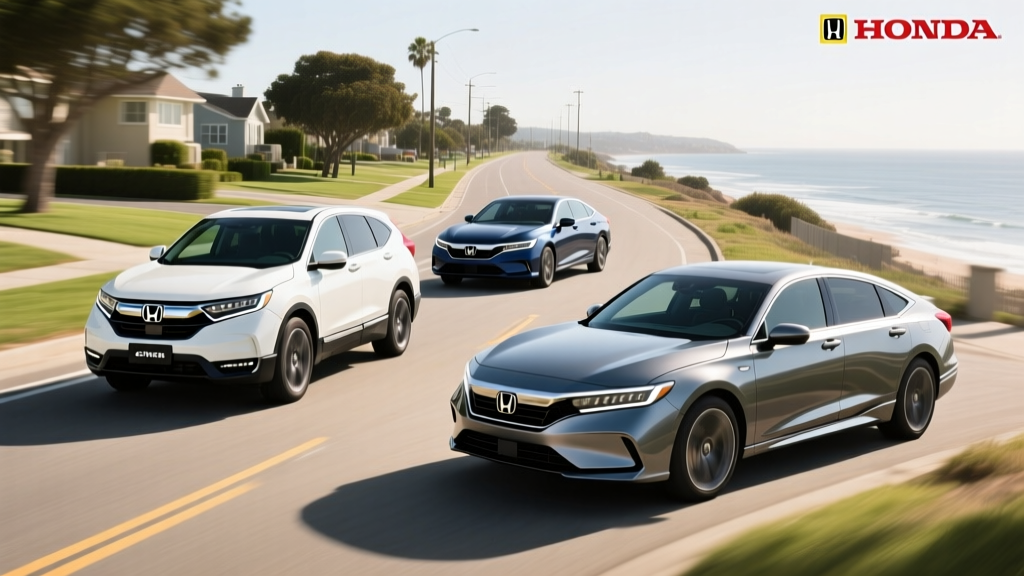
Honda's 2022 hybrid strategy spans three distinct vehicles — the CR-V Hybrid compact SUV, the Accord Hybrid midsize sedan, and the Insight compact sedan — all using Honda's two-motor hybrid system without plug-in capability. These are conventional hybrids (HEVs), meaning you never plug them in. They recover energy through regenerative braking and engine-driven generation, storing it in a small lithium-ion pack that assists acceleration and enables brief electric-only driving at low speeds.
For 2026 buyers shopping the used market or comparing against current Honda hybrids, the 2022 lineup remains relevant: these models established the powertrain architecture that Honda continues refining today. The Accord Hybrid's two-motor system now underpins the current-generation Accord Hybrid, and the CR-V Hybrid's platform carries forward into the latest model year.
HEV vs PHEV: Where the 2022 Honda Hybrids Fit
Conventional Hybrid (HEV): All three 2022 Honda hybrids are HEVs. They use a small battery (1.0–1.4 kWh) that charges via regenerative braking and the gasoline engine. You never plug them in. They deliver 40–48 MPG combined — roughly double a comparable gas-only model — with no behavioral change required from the driver.
Plug-in Hybrid (PHEV): Honda did not offer any PHEV models in the US for 2022. If you need plug-in electric range (20–40 miles electric-only before the gas engine engages), you'd need to look at competitors like the Toyota RAV4 Prime or Hyundai Tucson PHEV. Honda's US PHEV offering remains limited as of 2026.
Fuel Economy: EPA MPG for Every 2022 Honda Hybrid
Honda's two-motor hybrid system excels in city driving, where the electric motor handles most low-speed propulsion and the engine acts primarily as a generator. Highway MPG drops slightly because the system locks into direct engine drive at sustained speeds — efficient, but without the electric assist advantage seen in stop-and-go traffic.
| Model | City MPG | Highway MPG | Combined MPG | Fuel Tank | Total Range |
|---|---|---|---|---|---|
| 2022 Accord Hybrid (Sport/Touring) | 44 | 38 | 42 | 12.8 gal | ~537 mi |
| 2022 Accord Hybrid (EX-L) | 48 | 41 | 44 | 12.8 gal | ~563 mi |
| 2022 CR-V Hybrid (AWD) | 40 | 35 | 38 | 14.0 gal | ~532 mi |
| 2022 Insight (EX/Touring) | 55 | 49 | 52 | 10.6 gal | ~551 mi |
| 2022 Insight (LX) | 55 | 47 | 51 | 10.6 gal | ~541 mi |
Source: fueleconomy.gov (EPA estimates). Actual mileage varies with driving conditions, tire pressure, and climate control use.
Real-World MPG vs. EPA Stickers
Honda hybrids consistently match or exceed EPA city estimates in real-world driving because city conditions maximize regenerative braking and electric-motor propulsion. Owner-reported data on Fuelly shows the Accord Hybrid averaging 42–46 MPG in mixed suburban commuting, while the Insight regularly returns 53–58 MPG in urban driving.
Highway efficiency is where hybrids lose their edge. Expect the CR-V Hybrid to return 32–34 MPG at sustained 75 mph speeds — below its 35 MPG EPA highway rating. Cold weather further reduces efficiency by 10–15% due to increased engine operation for cabin heat and reduced battery performance. If your commute is 80%+ highway miles, the fuel-economy advantage over a modern turbocharged gas engine narrows considerably.
Powertrain Details: Honda's Two-Motor Hybrid System
All three 2022 Honda hybrids use a variation of the same two-motor hybrid architecture, but with different engine displacements and power outputs tuned to each vehicle's size and purpose.
| Specification | Accord Hybrid | CR-V Hybrid | Insight |
|---|---|---|---|
| Engine | 2.0L Atkinson-cycle I4 | 2.0L Atkinson-cycle I4 | 1.5L Atkinson-cycle I4 |
| Combined System HP | 212 hp | 212 hp | 151 hp |
| Combined Torque | 232 lb-ft | 232 lb-ft | 197 lb-ft |
| Drive Motor Output | 181 hp / 232 lb-ft | 181 hp / 232 lb-ft | 129 hp / 197 lb-ft |
| Transmission | e-CVT (no traditional gears) | e-CVT | e-CVT |
| Drivetrain | FWD | AWD (rear motor) | FWD |
| Hybrid Battery | 1.3 kWh Li-ion | 1.3 kWh Li-ion | 1.2 kWh Li-ion |
| 0–60 mph | ~6.7 sec | ~7.8 sec | ~7.7 sec |
The e-CVT here is not a belt-and-pulley continuously variable transmission like those in some competitors. Honda's system uses two electric motors and a lock-up clutch: at low speeds, the drive motor propels the wheels while the engine spins a generator motor to produce electricity. At highway speeds, the clutch engages to connect the engine directly to the wheels for maximum efficiency. This design eliminates the "rubber-band" feel of traditional CVTs and delivers linear, responsive acceleration.
The CR-V Hybrid's AWD system uses a dedicated rear-mounted electric motor rather than a mechanical driveshaft, reducing weight and drivetrain losses. It activates automatically under acceleration or low-traction conditions but does not provide the continuous torque-vectoring of a mechanical AWD system.
Pricing and Tax Credit Eligibility
As 2022 models, these vehicles are now available only on the used market. Original MSRP figures provide a baseline for depreciation tracking and used-car valuation.
| Model / Trim | 2022 MSRP (New) | Typical Used Price (2026) |
|---|---|---|
| Accord Hybrid Sport | $28,490 | $19,500–$22,000 |
| Accord Hybrid EX-L | $31,190 | $21,000–$24,000 |
| Accord Hybrid Touring | $37,190 | $23,500–$27,000 |
| CR-V Hybrid EX | $31,770 | $21,500–$24,500 |
| CR-V Hybrid Touring | $37,270 | $24,000–$28,000 |
| Insight EX | $25,760 | $17,000–$19,500 |
| Insight Touring | $29,690 | $19,000–$22,000 |
Federal Tax Credit: What Applies
New vehicle purchase (2022): Conventional hybrids like these do not qualify for the federal §30D clean vehicle credit, which applies only to plug-in electric vehicles (BEVs and PHEVs) with sufficient battery capacity. Honda's 2022 HEVs have battery packs far below the 4 kWh minimum threshold.
Used vehicle purchase (2026): The IRS used clean vehicle credit (§25E) also applies only to qualified plug-in EVs and fuel-cell vehicles — not conventional hybrids. However, some states and local utilities offer rebates for hybrid purchases; check your state energy office or utility provider for current programs.
Tax credit rules are subject to change. Always verify current eligibility at irs.gov and consult a tax professional before making purchase decisions based on incentive assumptions.
Battery Longevity, Warranty, and Replacement Costs
Honda's hybrid battery packs are compact lithium-ion units designed for shallow cycling — they never fully charge or fully discharge, which significantly extends cell life compared to the deeper cycles seen in plug-in EVs.
Honda Hybrid Battery Warranty
- Standard coverage: 8 years / 100,000 miles (whichever comes first) in most states
- CARB states: 10 years / 150,000 miles in California and states adopting California Air Resources Board emissions standards (CT, ME, MD, MA, NJ, NY, OR, RI, VT, WA, and others)
- What's covered: Battery capacity loss below a defined threshold, cell failure, and hybrid system component defects
- What's not covered: Normal gradual capacity reduction that doesn't affect vehicle operation, damage from accidents or modifications
Replacement cost reality: A new OEM hybrid battery for the Accord Hybrid or CR-V Hybrid runs approximately $2,000–$3,500 for the battery module itself, plus $300–$600 in labor, totaling roughly $2,500–$4,000 out of warranty. The Insight's smaller battery is slightly less expensive at $1,800–$2,800 total. Independent hybrid specialists often offer refurbished or reconditioned battery packs for 40–60% less than OEM pricing.
Real-world longevity: Honda's hybrid batteries have proven remarkably durable. Taxi fleets and high-mileage owners report the Accord Hybrid reaching 200,000+ miles on the original battery pack with minimal capacity degradation. The shallow charge/discharge cycles (typically operating between 40–70% state of charge) place far less stress on cells than the deep cycles in a BEV. Battery failure before 150,000 miles is uncommon based on owner forum data and repair shop reports.
Reliability and Ownership Costs
Honda's hybrid system has fewer wear components than a conventional automatic transmission. The e-CVT design eliminates clutch packs, torque converters, and traditional gear sets. Regenerative braking reduces wear on friction brake pads — many hybrid owners report 80,000–100,000 miles on original brake pads.
According to IIHS, the 2022 Accord and CR-V both earned Top Safety Pick+ ratings, while the Insight received a Top Safety Pick designation. NHTSA awarded the Accord and CR-V 5-star overall safety ratings.
Maintenance costs are comparable to a gas-only Honda: standard oil changes (the engine still requires them at the same intervals), tire rotations, and fluid checks. The hybrid system adds no routine maintenance items. Honda's standard 3-year/36,000-mile bumper-to-bumper warranty and 5-year/60,000-mile powertrain warranty apply across the lineup.
Who Should Choose a 2022 Honda Hybrid vs. a Full EV or Gas Car
Reasons to Choose the 2022 Honda Hybrid
- You want 40–52 MPG without changing any driving or fueling habits
- No access to home or workplace charging for a plug-in vehicle
- Long road trips are frequent — 530+ mile range with 3-minute gas fill-ups
- Lower purchase price than a comparable BEV (even used)
- Proven reliability with minimal maintenance complexity
- Strong city MPG for stop-and-go commuting
Reasons to Look Elsewhere
- You want zero tailpipe emissions — consider a full BEV
- Your daily commute is under 30 miles and you have home charging — a PHEV or BEV offers lower operating costs
- You want the quiet, instant-torque driving feel of electric propulsion
- Fuel savings alone won't offset the purchase premium over a gas-only Civic or Accord within your ownership timeline
- You want AWD with a sedan — the Accord Hybrid is FWD only
Decision Framework
Choose the 2022 Accord Hybrid if: You want a spacious midsize sedan with strong acceleration (212 hp), 42–44 MPG, and a comfortable highway cruiser that costs $20K–$24K on the used market.
Choose the 2022 CR-V Hybrid if: You need SUV cargo space (33.7 cu ft behind rear seats), AWD for snow or rain, and 38 MPG in a practical family vehicle.
Choose the 2022 Insight if: Maximum fuel economy (52 MPG combined) is your priority and you accept a smaller cabin and the model's discontinuation (Honda ended Insight production after 2022, replacing it with the Civic Hybrid).
Choose a full EV instead if: You have reliable home Level 2 charging, your daily driving is under 250 miles, and you want to eliminate gasoline costs entirely while benefiting from available federal tax credits on new or qualifying used BEVs.
Frequently Asked Questions
How many MPG does the 2022 Honda hybrid get?
The 2022 Accord Hybrid returns 42–44 MPG combined depending on trim, the CR-V Hybrid achieves 38 MPG combined, and the Insight leads the lineup at 51–52 MPG combined. City MPG is higher than highway for all three because the hybrid system leverages electric-motor propulsion and regenerative braking most effectively at lower speeds.
Do 2022 Honda hybrids need to be plugged in?
No. All three models are conventional hybrids (HEVs), not plug-in hybrids. The battery charges entirely through regenerative braking and engine-driven generation. You fuel them with gasoline exactly like a conventional car — there is no charging port, no plug, and no electric-only driving range beyond brief low-speed maneuvers.
Is the 2022 Honda hybrid reliable, and what does battery replacement cost?
Honda's two-motor hybrid system has a strong reliability record, with many examples exceeding 200,000 miles on the original battery. The hybrid battery is warranted for 8 years/100,000 miles (10 years/150,000 miles in CARB states). Out-of-warranty battery replacement costs $2,500–$4,000 for the Accord and CR-V, and $1,800–$2,800 for the Insight, including labor.
Does the 2022 Honda hybrid qualify for any tax credit?
No federal tax credit applies to conventional hybrids. The IRS §30D clean vehicle credit and the §25E used vehicle credit both require plug-in capability (BEV or PHEV) with minimum battery capacity. Some state and utility programs may offer hybrid incentives — check your local programs. Always verify eligibility on irs.gov before purchasing.
Hybrid vs PHEV vs EV — which is right for me?
A conventional hybrid (HEV) like the 2022 Honda lineup suits drivers who want better MPG with zero lifestyle changes — no plugging in, no range planning. A plug-in hybrid (PHEV) is ideal if you have home charging and a short commute (20–40 miles) that can be covered entirely on electricity, with a gas engine for longer trips. A full EV (BEV) makes sense if you have reliable charging access, want zero tailpipe emissions, and your daily driving fits within 250–350 miles of range.
Was 2022 the last year for the Honda Insight?
Yes. Honda discontinued the Insight after the 2022 model year. Its role as Honda's most fuel-efficient compact was absorbed by the Civic Hybrid, which debuted for the 2025 model year with an updated two-motor system and improved performance.
How does the CR-V Hybrid AWD system work?
The CR-V Hybrid uses a rear-mounted electric motor to power the rear wheels when additional traction is needed — during hard acceleration, on slippery surfaces, or when the front wheels lose grip. There is no mechanical driveshaft connecting the engine to the rear axle. This reduces weight and parasitic losses compared to traditional AWD, but the rear motor provides less continuous torque than a mechanical system in sustained off-road or deep-snow conditions.
For official EPA fuel economy data, visit fueleconomy.gov. For current Honda hybrid specifications and model availability, see automobiles.honda.com. Federal tax credit rules are published at irs.gov.