Quick Verdict: A Proven Hybrid SUV With Few Compromises
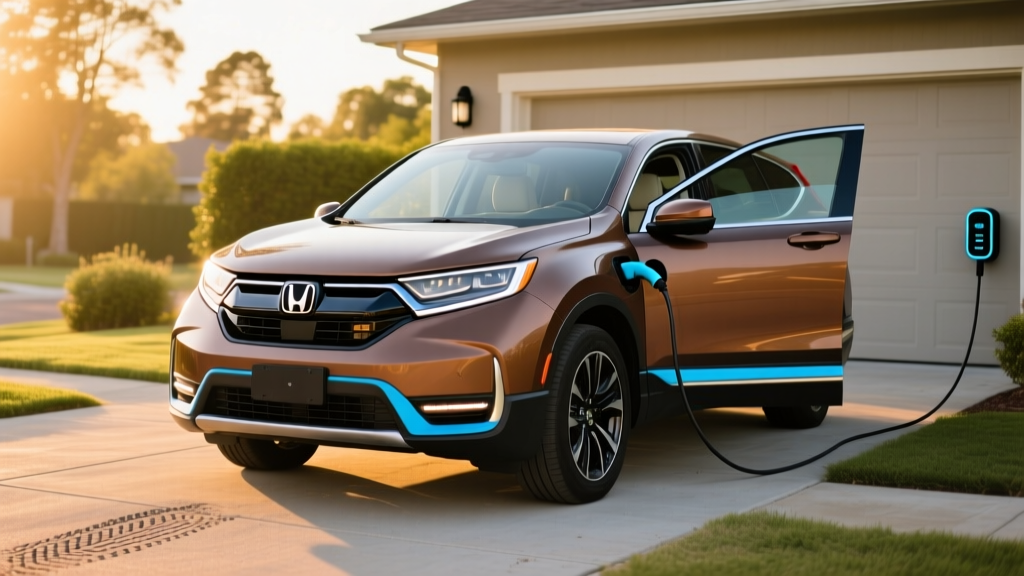
The 2022 Honda CR-V Hybrid pairs a 2.0-liter Atkinson-cycle engine with a two-motor hybrid system to deliver 212 combined horsepower and an EPA-estimated 40 MPG combined. Unlike a plug-in hybrid (PHEV) or battery-electric vehicle (BEV), this is a conventional hybrid electric vehicle (HEV) — it recovers energy through regenerative braking and engine optimization, never requiring a charging cable. For buyers who want meaningful fuel savings without changing their refueling habits, the 2022 CR-V Hybrid remains one of the strongest compact SUV choices on the used market.
As of 2026, the 2022 model year is available only through pre-owned channels, with typical asking prices ranging from $24,000 to $32,000 depending on trim and mileage. That positions it as a high-value entry point for hybrid-curious buyers who aren't ready to commit to a plug-in vehicle.
HEV vs PHEV: What the 2022 CR-V Hybrid Actually Is
Honda did not offer a plug-in hybrid version of the CR-V in the US market for the 2022 model year. The 2022 CR-V Hybrid is strictly a conventional hybrid (HEV). Understanding the distinction is essential before shopping:
| Feature | HEV (2022 CR-V Hybrid) | PHEV (e.g., Toyota RAV4 Prime) | BEV (e.g., Tesla Model Y) |
|---|---|---|---|
| Plugs in to charge? | No | Yes | Yes |
| Electric-only range | ~1 mi at low speed | 25–42 mi typical | 250–330 mi typical |
| Gasoline engine? | Yes | Yes | No |
| Home charger needed? | No | Recommended (Level 2) | Required (Level 2) |
| Federal tax credit (§30D)? | No | Up to $7,500 (if eligible) | Up to $7,500 (if eligible) |
| Battery size | ~1.3 kWh (small buffer) | 13–18 kWh usable | 60–82 kWh usable |
The CR-V Hybrid's small lithium-ion battery pack (approximately 1.3 kWh) serves as a buffer — it captures energy from regenerative braking and engine excess, then deploys it for electric motor assist during acceleration and low-speed driving. You never plug it in. You simply fuel it with gasoline and drive.
Fuel Economy: EPA Ratings vs Real-World MPG
The EPA rates the 2022 Honda CR-V Hybrid with all-wheel drive (the only drivetrain offered on Hybrid trims) at:
| Cycle | EPA Rating |
|---|---|
| City | 40 MPG |
| Highway | 35 MPG |
| Combined | 38 MPG |
Source: fueleconomy.gov
Note: front-wheel-drive Hybrid trims were available for 2022 and carry slightly higher EPA ratings (40 city / 35 highway / 38 combined for AWD; FWD matches or is marginally higher). All Hybrid trims come standard with AWD for the 2022 model year in most configurations.
Real-World MPG: What Owners Actually See
Honda's two-motor hybrid system excels in stop-and-go city driving, where the electric motors handle low-speed propulsion and the engine operates only in its most efficient RPM range. Real-world data from owner forums and long-term testing shows:
- City driving: 38–44 MPG (many owners exceed the EPA city estimate)
- Highway cruising (70–80 mph): 31–35 MPG (hybrids lose their advantage at sustained high speed)
- Mixed commuting: 35–40 MPG
- Cold weather (below 32°F): Expect a 10–15% drop, landing around 32–35 MPG combined due to increased engine runtime for cabin heat and reduced battery efficiency
The hybrid system's city advantage is genuine. If your commute involves frequent stops, school runs, and suburban errands, the CR-V Hybrid will likely beat its EPA sticker. Sustained interstate driving narrows the gap with the conventional gas CR-V (EPA 30 MPG combined AWD), though the Hybrid still maintains a 5–8 MPG edge.
Powertrain: Two-Motor Hybrid System Explained
The 2022 CR-V Hybrid uses Honda's two-motor hybrid system, which operates differently from a traditional parallel hybrid like Toyota's setup. Here's how the components break down:
| Specification | Value |
|---|---|
| Engine | 2.0L Atkinson-cycle 4-cylinder |
| Engine horsepower | 143 hp @ 6,200 rpm |
| Engine torque | 129 lb-ft @ 3,500 rpm |
| Electric motors | Two (one propulsion, one generator) |
| Propulsion motor output | 181 hp / 232 lb-ft |
| Combined system output | 212 hp |
| Transmission | Direct-drive (no conventional transmission) |
| Drivetrain | AWD standard (rear motor-driven) |
| 0–60 mph | ~8.0 seconds (tested) |
At low speeds and under light loads, the CR-V Hybrid runs primarily on its electric propulsion motor, drawing from the small battery buffer. When more power is needed, the gasoline engine starts and acts as a generator, sending electricity directly to the propulsion motor. Only at sustained highway speeds does the engine mechanically connect to the wheels through a lock-up clutch — this is the "direct drive" mode. The result is seamless, stepless acceleration with no gear shifts, similar to the feel of an EV at city speeds.
The AWD system is noteworthy: the rear axle is driven by a separate electric motor that engages only when traction is needed or under hard acceleration. There is no mechanical driveshaft connecting the front and rear axles, reducing weight and parasitic loss.
Hybrid Battery: Warranty, Lifespan, and Replacement Cost
- Coverage: 8 years / 80,000 miles (10 years / 150,000 miles in CARB states including CA, NY, MA, and others)
- What's covered: Hybrid battery pack and hybrid system components (inverter, motor, control unit)
- Capacity threshold: Honda does not publish a specific degradation percentage for warranty replacement; coverage applies to defects and failure
The 2022 CR-V Hybrid's lithium-ion battery pack is small (~1.3 kWh) and operates within a narrow state-of-charge window — typically between 20% and 80%. This shallow cycling is the primary reason hybrid batteries experience minimal degradation compared to BEV or PHEV batteries, which cycle through much larger portions of their capacity daily.
Expected lifespan: Based on Honda's track record with the Accord Hybrid, Insight, and earlier CR-V Hybrid models, the battery pack is designed to last the life of the vehicle. Failures before 150,000 miles are uncommon. Toyota and Honda hybrid systems have demonstrated 200,000+ mile longevity in fleet and owner data.
Replacement cost if out of warranty: A new OEM hybrid battery pack for the CR-V Hybrid runs approximately $2,000–$4,000 including labor. This is dramatically less than a BEV traction battery replacement ($8,000–$20,000+), because the hybrid pack is small and modular. Third-party refurbished packs are available for $1,200–$2,500.
Pricing, Trims, and Tax Credit Eligibility
The 2022 Honda CR-V Hybrid was offered in three trims when new. Here's the original MSRP and the current used-market range as of early 2026:
| Trim | Original MSRP | Used Market (2026 est.) |
|---|---|---|
| EX | $32,010 | $24,000–$27,000 |
| EX-L | $34,610 | $26,000–$29,500 |
| Touring | $37,810 | $29,000–$32,000 |
Federal Tax Credit: Does the 2022 CR-V Hybrid Qualify?
No. The 2022 Honda CR-V Hybrid is a conventional hybrid (HEV) and does not qualify for the federal §30D clean vehicle tax credit. Under current IRS rules, only plug-in electric vehicles (BEVs and PHEVs with at least 7 kWh of battery capacity) are eligible for the up-to-$7,500 credit. The CR-V Hybrid's ~1.3 kWh battery falls far below this threshold.
When purchased new in 2022, the CR-V Hybrid also did not qualify for the federal credit (the rules at that time also excluded conventional hybrids). Some states offered their own hybrid incentives — check your state's energy office or DMV for current programs, as these vary widely and change frequently.
Used EV credit consideration: The §25E used clean vehicle credit (up to $4,000) also applies only to plug-in vehicles. The CR-V Hybrid does not qualify for this credit either.
Reliability, Safety, and Ownership Costs
The 2022 CR-V Hybrid benefits from Honda's long-standing hybrid powertrain experience. The two-motor system has been in production since the 2014 Accord Hybrid and has proven durable across hundreds of thousands of units. Key reliability factors:
- Engine: The 2.0L Atkinson-cycle engine is naturally aspirated and lightly stressed — fewer failure points than turbocharged alternatives
- No conventional transmission: The direct-drive system eliminates CVT belt/chain wear and traditional automatic transmission fluid changes
- Brake wear: Regenerative braking significantly reduces pad and rotor wear; owners commonly report 60,000–80,000+ miles on original brake pads
- NHTSA safety rating: The 2022 CR-V earned a 5-star overall rating from NHTSA
- IIHS rating: Named a Top Safety Pick by IIHS when equipped with specific headlights
5-Year Ownership Cost Snapshot
Compared to the gas-only 2022 CR-V AWD (EPA 30 MPG combined), the Hybrid saves approximately $1,500–$2,200 in fuel over 5 years at 15,000 miles/year and $3.50/gallon regular unleaded. The Hybrid's higher initial purchase price (typically $1,200–$1,500 more when new) is usually recovered within 3–4 years of average driving.
Insurance premiums for the Hybrid trim are comparable to gas CR-V models — typically within $50–$100/year difference. Maintenance costs are lower than the gas model due to reduced brake wear and the absence of a conventional transmission service.
Pros
- 40 MPG city EPA — exceeds sticker in real-world stop-and-go
- No plug-in charging required — zero lifestyle change
- Strong reliability record; battery designed for vehicle life
- AWD standard on all Hybrid trims
- Lower brake and transmission maintenance costs
- 212 hp provides confident merging power
Cons
- No federal tax credit eligibility (HEV, not PHEV/BEV)
- Highway MPG advantage over gas model narrows to ~5 MPG
- Small cargo area reduction vs gas CR-V (battery packaging)
- Engine drone under hard acceleration (Atkinson-cycle characteristic)
- No spare tire — tire inflator kit only
- Infotainment system dated vs 2023+ redesign
Who Should Choose the 2022 CR-V Hybrid vs a PHEV or Full EV?
Decision Framework
Choose the 2022 CR-V Hybrid if:
- You lack access to home or workplace charging (apartment, street parking, no garage outlet)
- You want fuel savings without any change to your refueling routine
- Your budget is under $30,000 and you want a proven, reliable compact SUV
- You drive 12,000–18,000 miles/year with a mix of city and highway
Choose a PHEV (e.g., Toyota RAV4 Prime) if:
- You can install a Level 2 home charger and want 25–42 miles of electric-only commuting
- Your daily commute is under 40 miles round-trip (you'd rarely use gas)
- You want federal tax credit eligibility (up to $7,500, subject to income and sourcing rules)
Choose a full BEV (e.g., Tesla Model Y, Hyundai Ioniq 5) if:
- You have reliable home Level 2 charging access
- Your daily driving is under 250 miles and you take occasional road trips
- You want to eliminate gasoline purchases entirely and minimize drivetrain maintenance
- You qualify for the full §30D credit, making the effective price competitive
Frequently Asked Questions
How many MPG does the 2022 Honda CR-V Hybrid get?
The EPA rates it at 40 MPG city, 35 MPG highway, and 38 MPG combined (AWD). In real-world city driving, many owners report 38–44 MPG. Highway cruising at 75+ mph typically returns 31–35 MPG. Cold weather reduces combined efficiency by 10–15%.
Does the 2022 CR-V Hybrid need to be plugged in?
No. The 2022 CR-V Hybrid is a conventional hybrid (HEV). It charges its small battery through regenerative braking and the gasoline engine. You never plug it in — you simply fill it with regular unleaded gasoline.
Is the 2022 CR-V Hybrid reliable, and what does battery replacement cost?
Honda's two-motor hybrid system has a strong reliability track record since 2014. The hybrid battery is warrantied for 8 years/80,000 miles (10 years/150,000 miles in CARB states). Out-of-warranty replacement costs approximately $2,000–$4,000 for a new OEM pack, or $1,200–$2,500 for a refurbished unit. Battery failures before 150,000 miles are rare.
Does the 2022 CR-V Hybrid qualify for any tax credit?
No. Federal §30D and §25E tax credits apply only to plug-in vehicles (BEVs and PHEVs). The CR-V Hybrid, as a conventional HEV with a ~1.3 kWh battery, does not qualify for any federal purchase incentive. Some states may offer separate hybrid incentives — check your state energy office.
How does the CR-V Hybrid compare to the gas CR-V?
The Hybrid delivers approximately 8–10 MPG more in combined driving (38 vs 30 MPG EPA), adds 20 horsepower (212 vs 190 hp), and includes standard AWD. The trade-off is a slightly higher purchase price, marginally less cargo space, and no spare tire. Over 5 years of average driving, the Hybrid typically saves $1,500–$2,200 in fuel costs.
Is there a plug-in hybrid (PHEV) version of the 2022 CR-V?
No. Honda did not offer a PHEV variant of the CR-V in the US market for 2022. If you need a plug-in hybrid compact SUV, the Toyota RAV4 Prime (42 miles electric-only range), Hyundai Tucson PHEV (33 miles), or Kia Sportage PHEV (34 miles) are the primary alternatives in this segment.