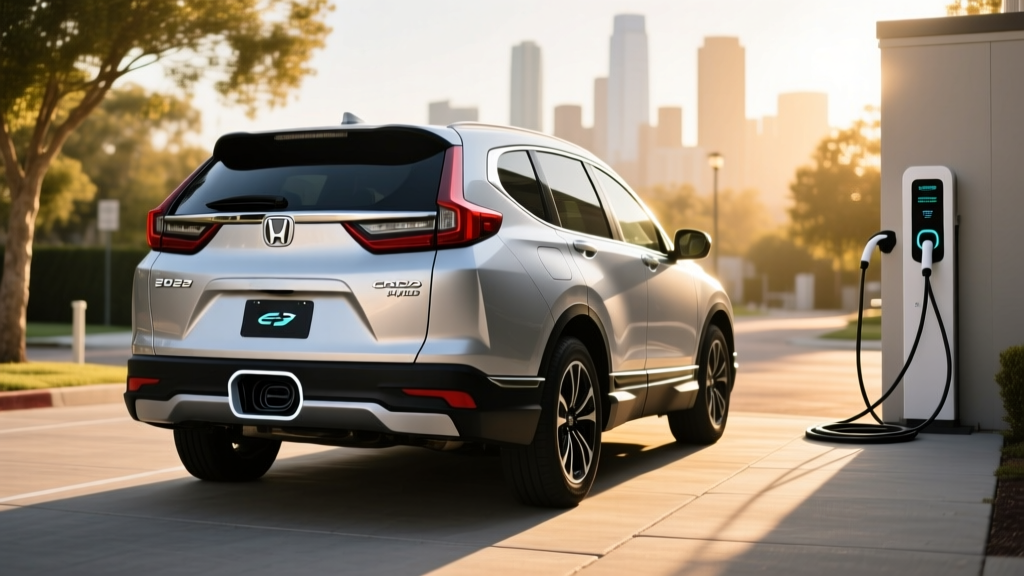
The 2022 Honda CR-V Hybrid occupies a sweet spot for buyers who want electrified efficiency without plugging in. As a conventional hybrid (HEV), it pairs a 2.0-liter Atkinson-cycle engine with a two-motor system to deliver strong city fuel economy, standard all-wheel drive, and Honda's reputation for long-term reliability. With the model year now several years behind us, used and certified pre-owned examples are abundant — making this a practical moment to evaluate what ownership actually looks like in 2026.
This guide covers the exact EPA figures, real-world MPG expectations, battery longevity data, and how the 2022 CR-V Hybrid stacks up against plug-in hybrids and full EVs for different driving lifestyles.
HEV vs PHEV vs EV: Where the CR-V Hybrid Fits
Before diving into specs, it's essential to understand what the 2022 CR-V Hybrid is — and isn't. Honda offered the 2022 CR-V exclusively as a conventional hybrid (HEV). There is no plug-in hybrid (PHEV) variant of the 2022 CR-V. You never plug it in; the battery charges through regenerative braking and the gasoline engine.
HEV vs PHEV vs BEV — Quick Distinction
| Feature | HEV (CR-V Hybrid) | PHEV (e.g., RAV4 Prime) | BEV (e.g., Ioniq 5) |
|---|---|---|---|
| Plugs in? | No | Yes (120V/240V) | Yes (120V/240V/DC) |
| Electric-only range | ~1-2 mi at low speed | 25-42 mi typical | 200-350+ mi |
| Battery size | ~1.3 kWh (small) | 13-18 kWh | 58-77+ kWh |
| Federal tax credit (§30D) | No | Up to $7,500 if eligible | Up to $7,500 if eligible |
| Home charging needed? | No | Recommended (Level 2) | Essential (Level 2) |
Note: The 2022 CR-V Hybrid is an HEV only. Honda introduced the CR-V e:PHEV in select international markets but not in the US for 2022.
Fuel Economy: EPA Ratings and Real-World MPG
The 2022 Honda CR-V Hybrid comes standard with Real Time AWD (all-wheel drive), which slightly affects efficiency compared to a hypothetical FWD-only setup. Here are the official EPA fuel economy figures from fueleconomy.gov:
| Driving Cycle | EPA Rating | Real-World Expectation |
|---|---|---|
| City | 40 MPG | 38-43 MPG (hybrids often exceed EPA in stop-and-go) |
| Highway | 35 MPG | 31-34 MPG (aerodynamic drag hurts hybrids at speed) |
| Combined | 38 MPG | 35-39 MPG depending on driving mix |
Why Hybrids Often Beat EPA in the City
The CR-V Hybrid's two-motor system operates primarily in electric drive at low speeds, with the gasoline engine acting as a generator rather than directly turning the wheels. This means stop-and-go traffic — where a conventional gas car wastes fuel idling and braking — is exactly where the hybrid system shines. Many owners report 40-43 MPG in urban commutes during mild weather.
Where Real-World MPG Drops
Highway driving at 75+ MPH, cold temperatures below 30°F, and mountainous terrain all reduce efficiency. In sustained cold-weather driving, expect combined figures closer to 32-34 MPG as the engine runs more frequently for cabin heat and the battery's charge-discharge efficiency drops. On a flat, 65-MPH highway cruise in 70°F weather, 36-37 MPG is achievable.
Powertrain Specs: What Moves the CR-V Hybrid
| Specification | 2022 CR-V Hybrid |
|---|---|
| Engine | 2.0L Atkinson-cycle inline-4 |
| Engine output | 143 HP / 129 lb-ft torque |
| Electric motors | Two-motor system (traction + generator) |
| Traction motor output | 181 HP / 232 lb-ft torque |
| Combined system output | 212 HP |
| Drivetrain | Real Time AWD (standard on all trims) |
| Transmission | e-CVT (no traditional gears) |
| Hybrid battery | ~1.3 kWh lithium-ion (under rear seats) |
| 0-60 MPH | ~7.5 seconds (est.) |
| Towing capacity | Not rated for towing (unlike gas CR-V: 1,500 lbs) |
| Fuel tank | 14.0 gallons |
| Total range | ~530 miles (combined EPA) |
The two-motor hybrid system is fundamentally different from Toyota's planetary-gear Hybrid Synergy Drive. Honda's system uses the traction motor to drive the wheels most of the time, with the engine engaging a lock-up clutch for direct drive only at steady highway cruising speeds. This gives the CR-V Hybrid a more responsive, EV-like feel around town.
Battery Warranty, Lifespan, and Replacement Cost
Hybrid Battery Warranty
Honda covers the 2022 CR-V Hybrid's lithium-ion battery pack for 8 years / 100,000 miles (whichever comes first) under the federal emissions warranty. In California Air Resources Board (CARB) states — including California, Colorado, Connecticut, Maine, Maryland, Massachusetts, New Jersey, New York, Oregon, Rhode Island, Vermont, and Washington — coverage extends to 10 years / 150,000 miles.
This warranty covers battery capacity loss below a functional threshold and any manufacturing defects. It transfers to subsequent owners.
How Long Do CR-V Hybrid Batteries Actually Last?
Honda's two-motor system is relatively conservative with battery management — the ~1.3 kWh pack is never fully charged or fully depleted, which reduces stress on the cells. Based on long-term data from Honda's earlier hybrid systems (Insight, Accord Hybrid), hybrid battery packs routinely exceed 150,000 miles before significant degradation. Many reach 200,000+ miles with usable capacity.
That said, lithium-ion batteries degrade with time as well as mileage. A 2022 model in 2026 is already four years old. Expect gradual capacity loss of roughly 1-2% per year under normal conditions. This manifests as slightly reduced electric-only assist at low speeds and marginally lower MPG — not a sudden failure.
Battery Replacement Cost
If the hybrid battery does require replacement out of warranty, expect:
- OEM replacement pack: $2,000–$4,000 (parts) plus $500–$1,000 labor
- Refurbished/remanufactured pack: $1,200–$2,500 installed
- Individual cell module replacement: $500–$1,200 at specialized hybrid repair shops
Compared to a full EV battery replacement ($5,000–$20,000+), the CR-V Hybrid's small battery is relatively affordable to service.
Pricing and Tax Credit Eligibility
The 2022 CR-V Hybrid was offered in three trims. Original MSRP figures and current 2026 used-market estimates:
| Trim | 2022 MSRP (incl. destination) | 2026 Used/CPO Estimate |
|---|---|---|
| EX | $32,010 | $22,000–$26,000 |
| EX-L | $34,610 | $24,500–$28,500 |
| Touring | $37,810 | $27,000–$31,000 |
Does the 2022 CR-V Hybrid Qualify for a Federal Tax Credit?
No. The federal §30D Clean Vehicle Credit applies only to plug-in electric vehicles — battery electric vehicles (BEVs) and plug-in hybrids (PHEVs) with a minimum battery capacity of 7 kWh. The CR-V Hybrid's ~1.3 kWh battery does not qualify. This has always been the case; conventional hybrids have not been eligible for the federal EV tax credit since the original Toyota Prius credits expired years ago.
Some states offer their own incentives for hybrids, but these are increasingly rare as state programs shift focus to PHEVs and BEVs. Check your state's energy office or the DOE's Alternative Fuels Data Center for current local incentives.
Reliability Ratings and Safety Scores
The 2022 CR-V Hybrid benefits from Honda's strong reliability track record. Key data points:
- IIHS: Named a Top Safety Pick when equipped with specific headlights (LED projector on EX-L and Touring trims). The base EX trim's reflector headlights earned a lower rating, preventing the top-tier Top Safety Pick+ award. Check the IIHS rating page for detailed crash-test scores.
- NHTSA: 5-star overall safety rating.
- Consumer Reports: The CR-V Hybrid historically scores well in predicted reliability, with the hybrid powertrain showing fewer issues than some competitors' turbocharged gas engines.
The e-CVT transmission has no traditional belts, clutches, or gear sets to wear out — it's essentially two motor-generators connected through a planetary gearset. This design has proven highly durable across Honda's hybrid lineup. The main reliability concern for the 2022 model year has been occasional reports of infotainment system lag, which Honda addressed through software updates.
CR-V Hybrid vs PHEV vs EV: Which Should You Choose?
Decision Framework
Choose the 2022 CR-V Hybrid (HEV) if:
- You don't have access to home or workplace charging
- You want better MPG without changing your fueling habits
- Your budget is $22,000–$31,000 (used market)
- You drive a mix of city and highway and value AWD
- You plan to keep the vehicle 8+ years and want proven reliability
Choose a PHEV (e.g., Toyota RAV4 Prime, Hyundai Tucson PHEV) if:
- You can install a Level 2 charger at home
- Your daily commute is under 35 miles round-trip (covering most driving on electricity)
- You want the $7,500 federal tax credit (subject to IRS §30D eligibility rules including income caps, MSRP caps, and battery sourcing requirements)
- You still want gas-engine flexibility for road trips
Choose a full BEV (e.g., Hyundai Ioniq 5, Tesla Model Y) if:
- You have reliable home Level 2 charging
- You want the lowest per-mile "fuel" cost (electricity at $0.12–0.16/kWh ≈ $0.04–0.05/mile vs. gas at $0.09–0.12/mile)
- You want minimal maintenance (no oil changes, no transmission fluid, fewer moving parts)
- Your household has a second vehicle or your daily driving is under 250 miles
Pros and Cons at a Glance
Pros
- 40 MPG city — excellent for stop-and-go commuting
- Standard AWD on every trim (no FWD-only base model)
- EV-like low-speed driving feel with strong torque (232 lb-ft from motor)
- No plug-in charging required — works with existing gas-station habits
- 8-year/100,000-mile hybrid battery warranty (10/150k in CARB states)
- Spacious cargo area: 33.0 cu ft behind rear seats, 68.7 cu ft folded
- Strong IIHS/NHTSA safety scores
Cons
- Highway MPG (35) trails some competitors (RAV4 Hybrid: 41/38/40)
- No federal tax credit eligibility
- Not rated for towing (gas CR-V tows 1,500 lbs)
- Base EX trim's halogen/reflector headlights hurt IIHS rating
- Road noise at highway speeds is noticeable
- Infotainment screen is 7 inches — small by 2026 standards
- No DC fast charging (irrelevant for HEV, but battery is small)
Frequently Asked Questions
How many MPG does the 2022 CR-V Hybrid get?
The EPA rates it at 40 MPG city, 35 MPG highway, and 38 MPG combined. In real-world driving, city commuters often see 38-43 MPG, while sustained highway driving at 70+ MPH typically yields 31-34 MPG. Cold weather and mountainous terrain reduce these figures by 3-5 MPG.
Can I plug in the 2022 CR-V Hybrid to charge?
No. The 2022 CR-V Hybrid is a conventional hybrid (HEV), not a plug-in hybrid. It has no charging port. The ~1.3 kWh battery charges exclusively through regenerative braking and the gasoline engine. You fuel it like any other car at a gas station.
Does the 2022 CR-V Hybrid qualify for any tax credit?
Not the federal §30D Clean Vehicle Credit — that program requires a plug-in vehicle with at least 7 kWh of battery capacity. The CR-V Hybrid's 1.3 kWh pack falls well short. Some states may offer minor hybrid incentives, but these are uncommon as of 2026. Consult a tax professional or your state's energy office for specifics.
How long will the hybrid battery last, and what does replacement cost?
Honda warrants the hybrid battery for 8 years/100,000 miles (10 years/150,000 miles in CARB states). Real-world data from Honda's hybrid lineup suggests these packs routinely last 150,000-200,000+ miles. If replacement is needed, expect $2,000-$4,000 for an OEM pack, or $1,200-$2,500 for a refurbished unit, plus labor.
Is the 2022 CR-V Hybrid reliable?
Yes. Honda's two-motor hybrid system has proven durable across multiple model lines. The e-CVT has no traditional wear components. The main ownership complaints center on infotainment responsiveness (addressed via updates) and road noise, not powertrain issues. The CR-V earned 5 stars from NHTSA and strong IIHS scores.
How does the CR-V Hybrid compare to the Toyota RAV4 Hybrid?
The RAV4 Hybrid posts stronger EPA numbers — 41/38/40 MPG (city/highway/combined) vs. the CR-V's 40/35/38. The RAV4 also offers a PHEV variant (RAV4 Prime) with 42 miles of electric range and tax credit eligibility. However, the CR-V Hybrid's interior materials, cargo space, and driving dynamics are competitive. If highway MPG is your top priority, the RAV4 Hybrid edges ahead.
Should I buy a used 2022 CR-V Hybrid in 2026?
If you want an efficient AWD crossover without plugging in and can find a well-maintained example within the remaining battery warranty period, yes. Certified pre-owned (CPO) units extend the powertrain warranty and typically include a multi-point inspection. Verify the hybrid battery's state of health through a Honda dealer diagnostic scan before purchase.