Quick Verdict: The 2022 CR-V Hybrid Still Earns Its Spot
Even as Honda has moved the CR-V into its sixth generation for 2023 and beyond, the 2022 CR-V Hybrid remains one of the most sought-after used compact SUVs for buyers who want electric-like efficiency without plugging in. With an EPA-rated 40 MPG combined, standard all-wheel drive, and Honda's proven two-motor hybrid system, this fifth-generation model delivers real-world fuel savings that frequently exceed its sticker numbers — particularly in city driving where the electric motors do the heavy lifting.
This guide breaks down everything a current buyer or owner needs to know: exact EPA and real-world MPG figures, the hybrid powertrain specs, battery longevity and replacement costs, tax credit eligibility, and how the 2022 CR-V Hybrid stacks up against plug-in hybrids and full battery-electric vehicles in 2026.
HEV vs PHEV: What the 2022 CR-V Hybrid Actually Is
Conventional Hybrid (HEV) — This Is the 2022 CR-V Hybrid
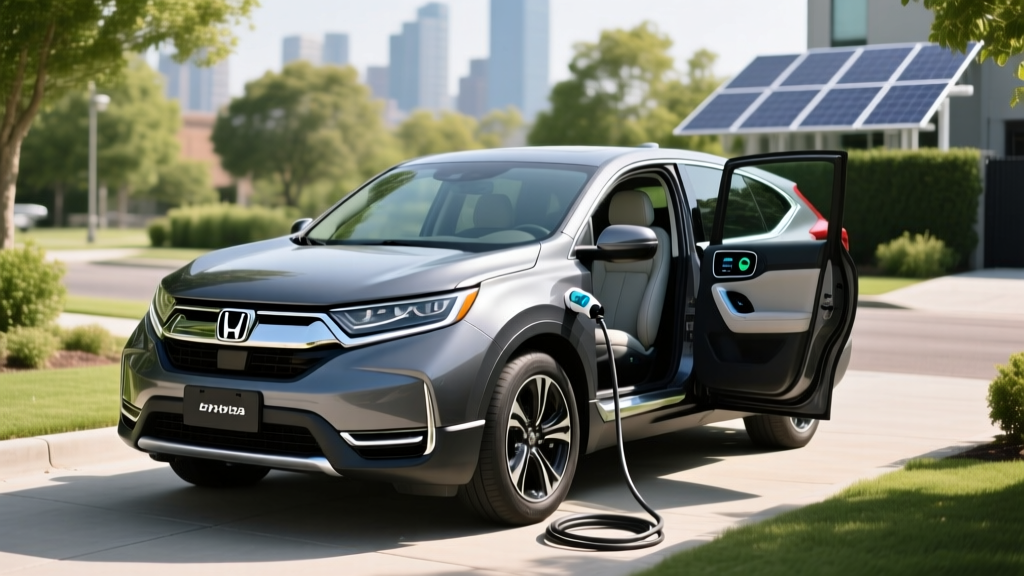
The 2022 CR-V Hybrid is a conventional hybrid electric vehicle (HEV). It does not have a plug. You never need to charge it from a wall outlet or public station. The system recovers energy through regenerative braking and the gasoline engine to keep its small 1.3 kWh lithium-ion battery topped up. This is fundamentally different from a plug-in hybrid (PHEV) like the Toyota RAV4 Prime, which offers 42 miles of electric-only range and requires plug-in charging to access its full efficiency benefit.
Key distinction: If you see "CR-V Hybrid" listed anywhere, it is an HEV. Honda did not offer a plug-in hybrid version of the fifth-generation CR-V in the US market. For 2023+, Honda introduced a revised hybrid system, but still no US-market PHEV variant.
Fuel Economy: EPA Ratings and Real-World MPG
| Metric | EPA Rating | Real-World Expectation |
|---|---|---|
| City | 40 MPG | 41–44 MPG |
| Highway | 35 MPG | 32–36 MPG |
| Combined | 40 MPG | 37–41 MPG |
| Fuel Tank | 14.0 gallons | ~520–560 mi total range |
| Non-Hybrid CR-V AWD (2022) | 29 MPG combined | 27–30 MPG combined |
Source: EPA Fuel Economy Guide — 2022 Honda CR-V Hybrid AWD
Powertrain Specs: Two-Motor Hybrid System
| Specification | 2022 CR-V Hybrid |
|---|---|
| Engine | 2.0L Atkinson-cycle 4-cylinder |
| Engine Output | 143 HP / 129 lb-ft torque |
| Electric Motors | Two-motor system (propulsion + generator) |
| Motor Output | 181 HP / 232 lb-ft torque |
| Combined System Output | 212 HP |
| Hybrid Battery | 1.3 kWh lithium-ion (gross) |
| Drivetrain | AWD (standard on all hybrid trims) |
| Transmission | e-CVT (no traditional gears) |
| 0–60 MPH | ~7.5 seconds |
| Towing Capacity | 1,000 lbs |
| Cargo Volume | 33.2 cu ft (rear seats up) / 68.7 cu ft (folded) |
Honda's two-motor hybrid system operates differently from a conventional transmission. At low speeds, the electric propulsion motor drives the wheels while the gasoline engine spins the generator motor to produce electricity. At highway speeds, a lock-up clutch engages to connect the engine directly to the wheels for efficiency. The result is seamless acceleration with no shift shock — and the 232 lb-ft of electric torque gives the CR-V Hybrid noticeably stronger off-the-line response than the non-hybrid's 1.5L turbo.
2022 CR-V Hybrid Pricing in 2026 and Tax Credit Eligibility
The 2022 CR-V Hybrid was offered in three trims when new. As a used vehicle in 2026, here's what buyers should expect:
| Trim | Original MSRP (2022) | Typical Used Price (2026) |
|---|---|---|
| EX Hybrid | $31,910 | $22,000–$25,000 |
| EX-L Hybrid | $34,510 | $24,000–$28,000 |
| Touring Hybrid | $37,310 | $26,000–$31,000 |
Note: The 2022 CR-V Hybrid does not qualify for the new-vehicle §30D credit (that applies to new purchases of eligible EVs and PHEVs). As a conventional HEV bought used, §25E is the relevant incentive. Some states also offer additional hybrid rebates — check your state energy office for current programs.
Battery Longevity, Warranty, and Replacement Cost
Honda Hybrid Battery Warranty
- Coverage: 8 years / 100,000 miles (whichever comes first)
- In CARB states: 10 years / 150,000 miles (California, Colorado, Connecticut, Maine, Maryland, Massachusetts, New Jersey, New York, Oregon, Pennsylvania, Rhode Island, Vermont, Virginia, Washington, and others adopting CARB standards)
- What's covered: Battery capacity loss below a defined threshold, cell failure, and hybrid system components including the IPU (Intelligent Power Unit) and inverter
Real-world battery lifespan: Honda's hybrid battery packs have proven exceptionally durable. The 1.3 kWh lithium-ion pack in the 2022 CR-V Hybrid is relatively small and operates within a narrow state-of-charge window — Honda's battery management system never allows a full 100% charge or deep discharge, which significantly reduces degradation stress. Based on long-term data from Honda hybrid owners across the Accord, Insight, and CR-V lineups, most hybrid batteries show minimal capacity loss at 150,000+ miles. Premature failures are rare and typically covered under warranty.
Replacement cost if out of warranty: A replacement IPU (hybrid battery pack) for the 2022 CR-V Hybrid typically runs $2,000–$4,000 for the part, plus $500–$1,000 in labor at a dealership. Independent hybrid specialists and refurbished battery options can reduce this to $1,500–$2,500 total. This is substantially less than a full EV battery replacement ($8,000–$20,000+) because the hybrid pack is small.
For a 2022 model purchased in 2026 with 40,000–60,000 miles, the factory 8-year/100,000-mile hybrid warranty still has several years of coverage remaining — a significant ownership advantage over buying a used gas-only vehicle with no powertrain warranty left.
Reliability Track Record
The fifth-generation CR-V (2017–2022) has compiled a strong reliability record. The hybrid variant uses Honda's third-generation two-motor system, which debuted in the 2014 Accord Hybrid and has been iteratively refined across multiple models. Key reliability points:
- Hybrid system: No widespread reports of motor, inverter, or battery failures specific to the 2022 CR-V Hybrid. The e-CVT has no traditional gears, belts, or clutch packs to wear out.
- Engine: The 2.0L Atkinson-cycle engine is naturally aspirated (no turbo), reducing complexity and heat stress compared to the non-hybrid's 1.5L turbocharged unit, which had early-model-year oil dilution concerns in 2017–2018 that Honda addressed via software updates.
- NHTSA safety: The 2022 CR-V earned a 5-star overall safety rating from NHTSA. The IIHS named it a Top Safety Pick.
- Common complaints: Some owners report minor infotainment lag and road noise — neither is hybrid-specific. Brake feel can be slightly unusual due to the regen-to-friction blending, typical of all hybrids.
2022 CR-V Hybrid vs. PHEV vs. Full EV: Which Fits You?
| Factor | 2022 CR-V Hybrid (HEV) | RAV4 Prime (PHEV) | EV (e.g., IONIQ 5) |
|---|---|---|---|
| Fuel Cost (annual, 15k mi) | ~$1,300 (gas) | ~$600–$900 (gas + electric) | ~$500–$700 (electric) |
| Plug Required? | No | Yes (for max benefit) | Yes (always) |
| Electric-Only Range | N/A (~1 mi at low speed) | 42 miles | 250–300+ miles |
| Road Trip Simplicity | Gas station, 5 min | Gas station, 5 min | DC fast charge, 20–40 min |
| Home Charging Needed? | No | Strongly recommended | Essential |
| Maintenance | Oil changes + standard | Oil changes + standard | Minimal (no oil, fewer fluids) |
Choose the 2022 CR-V Hybrid If:
- You lack access to home or workplace charging (apartment, street parking, no garage outlet)
- You want significantly better fuel economy than a gas SUV without changing your refueling habits
- You frequently take long road trips and don't want to plan around charging stops
- Your budget is $22,000–$30,000 for a used compact SUV
- You want AWD as standard equipment
Consider a PHEV (RAV4 Prime, CR-V Hybrid isn't available as PHEV) If:
- You can install a Level 2 charger at home and your daily commute is under 40 miles
- You want electric-only driving for errands but gas flexibility for road trips
- You qualify for the $7,500 §30D new-vehicle credit (PHEVs must be purchased new)
Consider a Full EV If:
- You have reliable home Level 2 charging and your daily driving is under 250 miles
- You want the lowest per-mile fuel cost and minimal maintenance
- You want the latest tech, one-pedal driving, and instant torque
Pros and Cons at a Glance
Pros
- 40 MPG combined EPA; often exceeds 42 MPG in city driving
- Standard AWD on every hybrid trim
- Strong electric torque (232 lb-ft) for confident merging
- No plug-in charging required — zero behavior change from gas
- Proven Honda hybrid reliability with 8yr/100k battery warranty
- 5-star NHTSA safety rating, IIHS Top Safety Pick
- Eligible for up to $4,000 used clean vehicle credit (§25E)
Cons
- Highway MPG drops to low-to-mid 30s at 75+ MPH
- 1,000-lb towing capacity (lower than some competitors)
- Infotainment system feels dated vs. 2023+ generation
- No PHEV option — cannot drive on electric-only for commutes
- Road noise is noticeable on coarse pavement
- Cargo space slightly reduced vs. non-hybrid (battery under floor)
- Brake pedal feel takes adjustment (regen blending)
Frequently Asked Questions
How many MPG does the 2022 CR-V Hybrid get?
The EPA rates the 2022 CR-V Hybrid AWD at 40 MPG city / 35 MPG highway / 40 MPG combined. In real-world city and suburban driving, many owners report 41–44 MPG thanks to frequent regenerative braking. Highway driving at sustained high speeds typically yields 32–36 MPG. This represents a ~38% fuel economy improvement over the non-hybrid 2022 CR-V AWD (29 MPG combined).
Does the 2022 CR-V Hybrid need to be plugged in?
No. The 2022 CR-V Hybrid is a conventional hybrid (HEV), not a plug-in hybrid. It charges its 1.3 kWh battery entirely through regenerative braking and the gasoline engine. You refuel it at any gas station with regular unleaded fuel (87 octane). There is no charging port and no electric-only driving range to manage.
Is the 2022 CR-V Hybrid reliable, and what does a battery replacement cost?
The 2022 CR-V Hybrid has a strong reliability record, backed by Honda's mature third-generation two-motor hybrid system. The hybrid battery is covered by an 8-year/100,000-mile warranty (10 years/150,000 miles in CARB states). Out-of-warranty replacement costs range from $2,000–$4,000 for the battery pack plus $500–$1,000 labor at a dealer, or $1,500–$2,500 through independent hybrid specialists. Actual battery failures before 150,000 miles are uncommon.
Does the 2022 CR-V Hybrid qualify for any tax credit?
As a used vehicle in 2026, the 2022 CR-V Hybrid may qualify for the IRS §25E used clean vehicle credit — up to $4,000 or 30% of the sale price, whichever is less. Eligibility requires: purchase from a licensed dealer, sale price at or below $25,000, buyer AGI under $75,000 (single) or $150,000 (joint), and the vehicle must be at least two model years old. It does not qualify for the §30D new-vehicle credit. Confirm eligibility with a tax professional and check the IRS used vehicle credit page for current rules.
How does the 2022 CR-V Hybrid compare to the newer 2023+ CR-V Hybrid?
The sixth-generation CR-V Hybrid (2023+) uses an updated two-motor system with slightly more torque (247 lb-ft vs. 232 lb-ft) and a marginally larger battery. EPA ratings are similar at 40/34/37 MPG for AWD models. The newer model offers a more modern interior, larger touchscreen, and updated Honda Sensing suite. However, the 2022 model typically costs $5,000–$8,000 less on the used market, making it a strong value proposition for buyers who prioritize fuel savings over the latest infotainment tech.
Hybrid vs PHEV vs EV — which should I choose?
If you cannot charge at home, the 2022 CR-V Hybrid (HEV) is the right choice — it requires zero infrastructure change and delivers 40 MPG. If you have home charging and a short commute, a PHEV like the RAV4 Prime offers 42 miles of electric-only driving before the gas engine kicks in. If you have reliable home charging and rarely drive more than 250 miles in a day, a full EV like the Hyundai IONIQ 5 or Tesla Model Y offers the lowest operating costs and zero tailpipe emissions. The hybrid is the most flexible option for buyers uncertain about charging access.