Quick Verdict: The 2022 Honda CR-V Hybrid Touring at a Glance
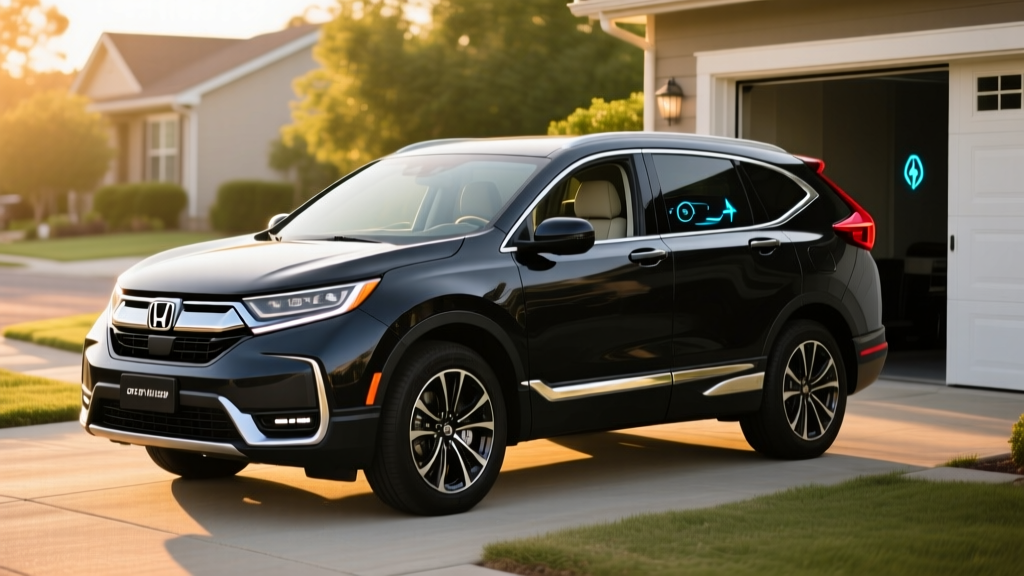
The 2022 Honda CR-V Hybrid Touring sits at the top of Honda's compact hybrid SUV lineup, pairing a 2.0-liter Atkinson-cycle four-cylinder with a two-motor hybrid system for a combined 212 horsepower and an EPA-estimated 40 MPG combined. As a conventional hybrid (HEV) — not a plug-in — it requires no behavioral change from a gas car: you fill it with gasoline and the hybrid system handles the rest. For buyers who want SUV practicality with meaningful fuel savings but aren't ready to deal with charging infrastructure, this powertrain remains one of the most proven in the segment.
From a 2026 ownership perspective, the 2022 model year CR-V Hybrid has accumulated enough real-world data to confirm that Honda's hybrid system is durable, efficient, and largely trouble-free. The Touring trim adds premium features like a hands-free power tailgate, heated rear seats, wireless Apple CarPlay/Android Auto, and Honda's full Honda Sensing ADAS suite. Let's break down exactly what you're getting.
| Specification | 2022 CR-V Hybrid Touring |
|---|---|
| Powertrain | 2.0L I-4 Atkinson + 2-motor hybrid (AWD) |
| Combined Horsepower | 212 HP |
| EPA MPG (City / Hwy / Combined) | 40 / 35 / 38 |
| Fuel Tank Capacity | 14.0 gallons |
| Total Range (EPA Est.) | ~532 miles |
| 0-60 mph | ~7.8 seconds |
| Cargo Volume (behind rear seats) | 33.2 cu ft |
| Cargo Volume (rear seats folded) | 68.7 cu ft |
| Towing Capacity | 1,500 lbs |
| Original MSRP (Touring AWD) | $38,600 |
| Hybrid Battery Warranty | 8 years / 100,000 miles (10 yr/150k in CARB states) |
HEV vs PHEV vs EV: Where the CR-V Hybrid Fits
Before evaluating the CR-V Hybrid, it's worth clarifying the three electrified vehicle categories, because confusion here leads to mismatched expectations.
| Feature | HEV (CR-V Hybrid) | PHEV (e.g., Toyota RAV4 Prime) | BEV (e.g., Tesla Model Y) |
|---|---|---|---|
| Plugs In? | No | Yes | Yes |
| Electric-Only Range | ~1 mile at low speed | 25-42 miles typical | 250-330+ miles |
| Fuel/Energy | Gasoline only | Gasoline + electricity | Electricity only |
| Home Charging Needed? | No | Recommended (Level 2) | Required |
| Federal Tax Credit | None | Up to $7,500 (if eligible) | Up to $7,500 (if eligible) |
| Best For | No charging access, simplicity | Short commutes + road trips | Home charging + low running cost |
The 2022 Honda CR-V Hybrid is strictly a conventional hybrid (HEV). It has a small ~1.4 kWh lithium-ion battery that is recharged entirely through regenerative braking and the gasoline engine. You never plug it in. This is fundamentally different from a plug-in hybrid (PHEV) like the Toyota RAV4 Prime or the Honda Clarity Plug-In (discontinued), which offer 25-48 miles of electric-only driving before the gas engine engages.
If you have reliable home charging and a commute under 40 miles, a PHEV or BEV will save you more on fuel. But if you live in an apartment, park on the street, or simply want zero lifestyle change from your current gas car, the HEV architecture of the CR-V Hybrid is the path of least resistance.
Fuel Economy: EPA Ratings vs Real-World MPG
The EPA rates the 2022 CR-V Hybrid AWD at 40 MPG city, 35 MPG highway, and 38 MPG combined (per fueleconomy.gov). The front-wheel-drive variant bumps highway to 35 and combined to 38, but the Touring trim is exclusively AWD.
| Driving Scenario | EPA Estimate | Real-World Expectation |
|---|---|---|
| City / Suburban | 40 MPG | 38-44 MPG (hybrids excel in stop-and-go) |
| Highway (70-80 mph) | 35 MPG | 30-34 MPG (aero drag limits hybrid advantage) |
| Combined (mixed driving) | 38 MPG | 34-40 MPG depending on terrain and climate |
| Cold Weather (below 32°F) | Not rated separately | 30-35 MPG (engine runs more for cabin heat) |
Hybrids typically exceed their EPA city rating in real-world suburban driving because regenerative braking recovers energy at every stoplight. Owners reporting on forums and fuel-tracking apps like Fuelly commonly log 39-42 MPG in mixed suburban use. Highway driving is where the hybrid advantage narrows — at sustained 75-80 mph speeds, the gasoline engine does nearly all the work, and aerodynamic drag dominates.
Cold weather reduces MPG in any vehicle, but hybrids are particularly affected because the engine must run more frequently to generate cabin heat (there's no electric heater element powerful enough to heat the cabin alone without a dedicated heat pump). Expect a 10-15% fuel economy drop in sustained sub-freezing temperatures.
Powertrain Deep Dive: How Honda's Two-Motor Hybrid Works
The 2022 CR-V Hybrid uses Honda's third-generation two-motor hybrid system. Here's how it breaks down:
- Gasoline Engine: 2.0-liter Atkinson-cycle inline-4, producing 143 HP and 129 lb-ft of torque. The Atkinson cycle sacrifices low-RPM torque for higher thermal efficiency.
- Propulsion Motor: AC permanent-magnet electric motor producing 181 HP and 232 lb-ft of torque. This motor drives the front wheels directly in most driving scenarios.
- Generator Motor: A second motor acts as a generator, converting engine output to electricity or providing engine braking.
- Combined System Output: 212 HP (the engine and motor don't peak simultaneously, so the combined figure is less than the sum of individual outputs).
- AWD System: A rear-mounted electric motor provides torque to the rear axle when slip is detected or under hard acceleration. This is not a mechanical driveshaft — it's an electrically actuated rear differential.
The result is a vehicle that drives more like an EV in city conditions (the electric motor handles most low-speed propulsion) and seamlessly transitions to engine power at highway speeds. The transition is managed by a lock-up clutch rather than a traditional transmission, so there are no shift shocks. Acceleration to 60 mph takes approximately 7.8 seconds — adequate for merging and passing, though not sporty.
The hybrid battery is a ~1.4 kWh lithium-ion pack located under the cargo floor. It's small by PHEV or BEV standards, but it only needs to buffer energy for regenerative braking and short electric-assist bursts — not store miles of range.
Battery Longevity, Warranty, and Replacement Cost
Battery reliability is the single most common concern among hybrid shoppers, and it's the area where Honda has the strongest track record alongside Toyota.
Honda Hybrid Battery Warranty:
- Standard: 8 years / 100,000 miles
- CARB states (CA, NY, MA, CT, ME, MD, NJ, OR, VT, WA, CO, RI, NM, NV): 10 years / 150,000 miles
- Coverage: Defects and capacity loss below functional threshold
Honda's hybrid battery packs use lithium-ion cells that are far less stressed than those in a BEV. Because the pack is small (~1.4 kWh) and the system never fully depletes or fully charges it (operating in a narrow state-of-charge window), degradation is minimal. Real-world data from high-mileage Honda and Toyota hybrids shows battery packs routinely lasting 150,000-200,000+ miles before any capacity-related issues arise.
If a replacement is needed out of warranty, a new OEM hybrid battery for the CR-V Hybrid costs approximately $3,000-$4,500 including installation at a dealership. Independent hybrid battery specialists offer refurbished packs for $1,500-$2,500. Individual cell replacement is sometimes possible for $500-$1,000 if only a single module has failed.
For context, this is a fraction of BEV battery replacement costs (which can exceed $15,000-$20,000 for a large pack) because the hybrid battery is so much smaller. The risk-reward math heavily favors the hybrid for buyers who plan to keep the vehicle 10+ years.
Pricing, Tax Credits, and Total Cost of Ownership
The 2022 Honda CR-V Hybrid Touring carried an original MSRP of $38,600 (AWD, destination included). On the used market in early 2026, well-maintained examples with 25,000-45,000 miles typically list between $26,000-$31,000 depending on condition and region.
Federal Tax Credit: The CR-V Hybrid is a conventional HEV and does not qualify for the federal §30D new clean vehicle credit or the §25E used clean vehicle credit. These credits are reserved for plug-in vehicles (PHEVs and BEVs) that meet battery sourcing, MSRP cap, and buyer income requirements as outlined by the IRS. If tax incentives are a priority, you would need to look at a PHEV like the Toyota RAV4 Prime or a BEV to qualify.
Some states offer their own rebates for hybrid vehicles, though these are increasingly rare as incentive programs shift toward plug-in vehicles. Check your state's energy or environmental agency for current programs.
| 5-Year Ownership Cost Estimate | CR-V Hybrid Touring (HEV) | CR-V EX-L (Gas, AWD) | RAV4 Prime (PHEV) |
|---|---|---|---|
| Purchase Price (est. 2026 used/equiv.) | ~$28,500 | ~$26,000 | ~$38,000 |
| Fuel (15k mi/yr, $3.40/gal avg) | ~$6,400 | ~$8,500 | ~$3,800 (with home charging) |
| Federal Tax Credit | $0 | $0 | Up to $7,500* |
| Maintenance (5 yr) | ~$2,800 | ~$3,000 | ~$2,500 |
| Insurance (5 yr avg) | ~$8,500 | ~$7,800 | ~$9,200 |
| Estimated 5-Year Net Cost | ~$46,200 | ~$45,300 | ~$46,000 (after credit) |
*RAV4 Prime §30D eligibility depends on battery sourcing, buyer income, and MSRP cap. Verify current rules at irs.gov.
The CR-V Hybrid's fuel savings over a gas-only CR-V amount to roughly $2,100 over five years at 15,000 miles per year. That nearly offsets the higher purchase price of the hybrid trim. The PHEV path saves more on fuel but demands access to home or workplace charging to realize those savings — and carries a higher upfront cost.
Touring Trim Features and Technology
As the top-of-line trim for 2022, the Touring includes:
- Honda Sensing suite: adaptive cruise control with low-speed follow, lane-keeping assist, road departure mitigation, collision mitigation braking
- 9-speaker premium audio system
- Wireless Apple CarPlay and Android Auto
- Wireless phone charging pad
- Heated front and rear seats
- Heated steering wheel
- Hands-free power tailgate
- LED headlights with auto high-beam
- Rain-sensing windshield wipers
- Navigation system with 7-inch touchscreen
The Honda Sensing suite is an SAE Level 2 driver-assistance system. It can manage steering and speed on well-marked highways, but the driver must remain fully engaged with hands on the wheel and eyes on the road at all times. This is not autonomous driving — it's an assist system that reduces fatigue on long trips.
Pros, Cons, and Who Should Buy
Pros
- 40 MPG city EPA — real-world owners often match or exceed it
- No plug-in charging required; zero lifestyle change from gas
- Proven Honda hybrid reliability with 8-10 year battery warranty
- AWD standard on Touring for all-weather confidence
- Spacious cargo area (33.2 cu ft) with no battery intrusion
- Smooth, quiet powertrain with seamless engine/motor transitions
Cons
- No federal tax credit eligibility (HEV, not PHEV/BEV)
- Highway MPG drops to 30-34 at sustained 75-80 mph
- 7-inch infotainment screen feels dated for the Touring price point
- Towing limited to 1,500 lbs (insufficient for most trailers)
- Electric-only driving limited to ~1 mile at very low speeds
- Cold-weather fuel economy drops 10-15%
Choose the 2022 CR-V Hybrid Touring if:
- You want SUV fuel efficiency without changing your fueling habits
- You don't have access to home or workplace charging
- You plan to keep the vehicle 8+ years and value proven reliability
- Your driving is primarily city and suburban (where hybrids shine)
Look at a PHEV or BEV instead if:
- You have home charging and want to maximize fuel savings
- Your commute is under 40 miles and you want electric-only driving
- Federal tax credits ($7,500) are a major factor in your purchase
- You want to eliminate gasoline use for daily driving entirely
Frequently Asked Questions
How many MPG does the 2022 Honda CR-V Hybrid get?
The EPA rates the 2022 CR-V Hybrid AWD (Touring trim) at 40 MPG city, 35 MPG highway, and 38 MPG combined. Real-world city and suburban driving often yields 38-44 MPG, while sustained highway driving at 75+ mph typically returns 30-34 MPG. Cold weather can reduce combined MPG to the low 30s.
Is the 2022 CR-V Hybrid a plug-in hybrid?
No. The 2022 CR-V Hybrid is a conventional hybrid (HEV). It cannot be plugged in and has no meaningful electric-only range. The small ~1.4 kWh battery recharges through regenerative braking and the gasoline engine. Honda did not offer a plug-in version of this generation CR-V in the US market.
Does the 2022 CR-V Hybrid qualify for any federal tax credit?
No. The federal §30D clean vehicle credit and §25E used vehicle credit apply only to plug-in vehicles (PHEVs and BEVs) that meet specific battery sourcing, MSRP, and buyer income requirements. Conventional hybrids like the CR-V Hybrid are not eligible. Check your state's energy agency for any local hybrid incentives, though these are uncommon.
How long will the hybrid battery last and what does replacement cost?
Honda covers the hybrid battery for 8 years/100,000 miles (10 years/150,000 miles in CARB states). Real-world data from Honda and Toyota hybrid systems shows these packs routinely lasting 150,000-200,000+ miles. If replacement is needed out of warranty, expect $3,000-$4,500 for a new OEM pack or $1,500-$2,500 for a refurbished unit from an independent specialist.
Is the CR-V Hybrid reliable compared to the gas-only CR-V?
Honda's two-motor hybrid system has been in production since 2014 (Accord Hybrid) and is considered one of the most reliable hybrid architectures available. The hybrid system actually reduces wear on the gasoline engine (it runs less often) and on the brake pads (regenerative braking handles much of the deceleration). According to NHTSA and long-term owner reports, the hybrid CR-V has no systemic reliability issues beyond what's typical for the model.
Hybrid vs PHEV vs EV — which should I choose?
Choose the HEV (CR-V Hybrid) if you have no charging access and want maximum simplicity. Choose a PHEV (like the RAV4 Prime) if you have home charging, a short commute, and want electric-only daily driving with gas-engine backup for road trips. Choose a BEV (like the Model Y or Ioniq 5) if you have reliable home charging, want the lowest per-mile fuel cost, and are comfortable planning around DC fast charging on long trips. The EPA's fueleconomy.gov comparison tool lets you run the numbers for your specific driving patterns.
What is the towing capacity of the 2022 CR-V Hybrid?
The 2022 CR-V Hybrid is rated for 1,500 lbs of towing capacity. This is sufficient for a small utility trailer or a pair of dirt bikes but not enough for most boat trailers, campers, or horse trailers. If you need 3,500+ lbs of towing, you'll need to look at a midsize SUV or truck.