Quick Verdict: The 2022 Ford Escape SEL Plug-In Hybrid at a Glance
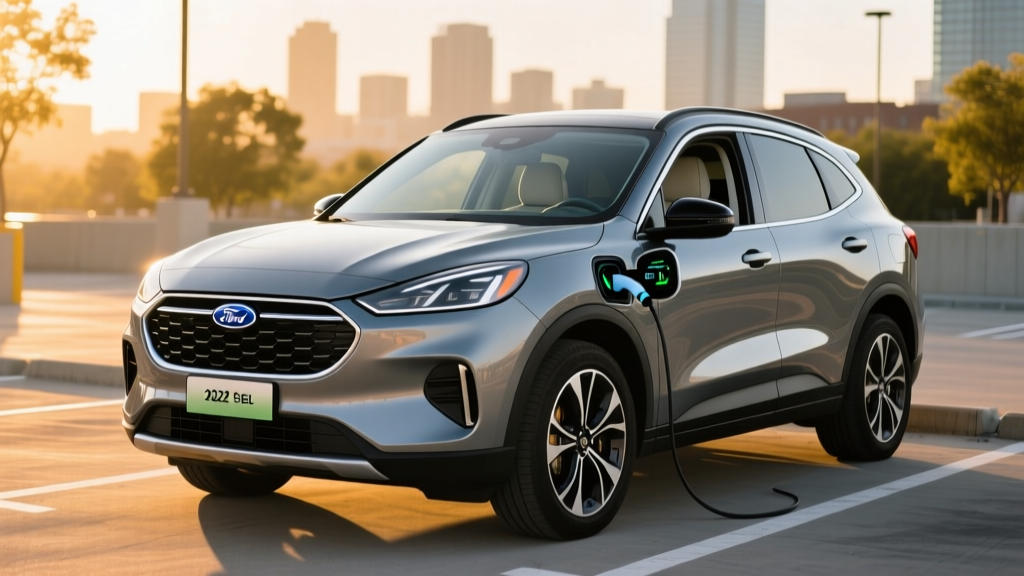
The 2022 Ford Escape SEL Plug-In Hybrid occupies a specific niche: compact SUV buyers who want meaningful electric-only commuting range without surrendering the flexibility of a gas engine for longer trips. With an EPA-rated 37 miles of all-electric driving and a total combined range exceeding 400 miles, it solves the range-anxiety problem that keeps many shoppers from going fully electric. But in 2026's crowded PHEV market, how does this now-discontinued model hold up on the used market?
This guide covers every number that matters — from the 14.4 kWh battery pack and 210 combined horsepower to real-world fuel economy, charging logistics, battery warranty coverage, and whether the federal tax credit applies to a used purchase today.
| Specification | Value |
|---|---|
| EPA Electric-Only Range | 37 miles |
| EPA Combined MPGe (electric + gas) | 105 MPGe |
| EPA MPG (gas-only, combined) | 40 MPG combined (42 city / 37 highway) |
| Battery Capacity (Gross / Usable) | 14.4 kWh gross / ~10.8 kWh usable |
| Battery Chemistry | NMC (Nickel Manganese Cobalt) |
| Combined System Horsepower | 210 hp |
| Engine | 2.5L Atkinson-cycle 4-cylinder |
| Electric Motor Output | 131 hp (98 kW) |
| Level 1 Charging (120V) | ~10–11 hours (0–100%) |
| Level 2 Charging (240V) | ~3.5 hours (0–100%) |
| DC Fast Charging | Not supported |
| 0–60 mph | ~8.5 seconds |
| Drivetrain | FWD (eCVT) |
| Original MSRP (SEL PHEV) | $34,075 (before destination) |
| Battery Warranty (original) | 8 years / 100,000 miles |
HEV vs. PHEV: What the Escape Plug-In Actually Is
Before diving into numbers, it's critical to distinguish between the two electrified Escape variants Ford offered in 2022, because they serve fundamentally different use cases:
| Feature | Escape Hybrid (HEV) | Escape Plug-In Hybrid (PHEV) |
|---|---|---|
| Plug-in Charging Required? | No — charges via regen and engine | Yes — plug in for electric-only miles |
| Electric-Only Range | ~1–2 miles at low speed | 37 miles (EPA) |
| Battery Size | 1.1 kWh | 14.4 kWh |
| Combined HP | 200 hp | 210 hp |
| EPA Combined MPG | 41 MPG | 40 MPG (gas) / 105 MPGe (combined) |
| Drivetrain | AWD available | FWD only |
| Starting MSRP (2022) | ~$29,000 | ~$34,075 |
| Federal Tax Credit (new, 2022) | None | Up to $7,500 (if eligible) |
The conventional Escape Hybrid is a self-charging system — you never plug it in. It uses a small battery and regenerative braking to assist the gas engine, boosting MPG without any lifestyle change. The Escape Plug-In Hybrid (PHEV), by contrast, carries a much larger 14.4 kWh battery that enables genuine zero-emission commuting for most daily drives. You plug it in at home (or at work) to recharge that battery, and once it's depleted, the car seamlessly transitions to hybrid mode.
The tradeoff: the PHEV is FWD-only (no AWD option), costs more upfront, and requires access to a charging outlet to realize its efficiency advantage. If you can't plug in regularly, you're carrying 500+ pounds of extra battery weight for nothing — and the conventional HEV is the smarter buy.
Fuel Economy Breakdown: EPA Ratings vs. Real-World MPG
The EPA rates the 2022 Escape SEL PHEV at 105 MPGe combined when operating in electric mode (using a blend of grid electricity and gasoline), and 40 MPG combined (42 city / 37 highway) once the battery is depleted and the car runs as a conventional hybrid. Here's the full breakdown:
| Mode | City | Highway | Combined |
|---|---|---|---|
| Charge-Depleting (EV mode) | — | — | 105 MPGe |
| Charge-Sustaining (hybrid mode) | 42 MPG | 37 MPG | 40 MPG |
Real-World MPG: What Owners Actually See
EPA figures are tested under controlled conditions, and real-world results vary. Based on owner-reported data from fueleconomy.gov's My MPG tracker and PHEV owner forums, here's what to expect:
- City driving (warm weather, sub-35 mph): 44–48 MPG in hybrid mode — Atkinson-cycle engines excel in stop-and-go because regenerative braking recaptures energy and the engine runs less frequently.
- Highway driving (70+ mph, sustained): 34–37 MPG in hybrid mode — higher speeds reduce regen benefit and increase aerodynamic drag. Expect the EPA highway figure or slightly below.
- Cold weather (below 35°F): 30–35 MPG in hybrid mode, with electric-only range dropping to 25–30 miles. The battery's usable capacity shrinks in cold temperatures, and the engine runs more often for cabin heat.
- Electric-only range in practice: The EPA's 37-mile figure is achievable in mild weather at moderate speeds. Expect 30–33 miles on the highway, and 25–28 miles in freezing conditions with the heater running.
The key insight for PHEV ownership: if your daily round-trip commute is under 35 miles and you charge nightly, you may go weeks without visiting a gas station. Owners who charge diligently report annual gasoline consumption of 100–200 gallons — a fraction of what a gas-only SUV requires.
Battery, Charging, and Powertrain Details
The 2022 Escape PHEV's 14.4 kWh gross battery pack (approximately 10.8 kWh usable, with the remainder reserved as a top/bottom buffer to protect longevity) uses NMC (nickel manganese cobalt) lithium-ion cells. Ford does not support DC fast charging on this model — all charging is AC-only, via the onboard 3.3 kW charger.
Charging Times
- Level 1 (120V household outlet): Approximately 10–11 hours from empty to full. This works fine for overnight charging if your daily electric-only use is within the 37-mile range — you'll replenish 30 miles of use in roughly 8–9 hours.
- Level 2 (240V, home wallbox or public AC station): Approximately 3.5 hours from empty to full at the car's maximum 3.3 kW acceptance rate. Note: even if you plug into a 7.2 kW or 11.5 kW Level 2 station, the Escape PHEV will only draw 3.3 kW because that's the limit of its onboard charger.
This 3.3 kW onboard charger is the Escape PHEV's most significant charging limitation. It's perfectly adequate for overnight home charging but means you won't benefit from faster public Level 2 stations during midday top-ups. A 30-minute stop at a 7 kW public charger adds only about 1.6 kWh — roughly 5–6 miles of electric range.
Powertrain Architecture
The Escape PHEV pairs a 2.5-liter Atkinson-cycle four-cylinder engine (producing approximately 163 hp on its own) with a 131 hp (98 kW) electric motor integrated into the electronically controlled continuously variable transmission (eCVT). Combined system output is 210 horsepower, delivered to the front wheels only. The eCVT is not a traditional belt-and-cone CVT — it's a planetary gearset (Ford's "powersplit" architecture, shared with the Fusion Energi before it) that blends engine and motor power seamlessly.
The result is adequate acceleration (0–60 mph in roughly 8.5 seconds) and smooth, quiet operation in EV mode. The engine engages audibly under hard acceleration or when the battery is depleted, but NVH (noise, vibration, harshness) is well-managed for the class.
Battery Warranty, Reliability, and Replacement Cost
Ford PHEV Battery Warranty Coverage
- Duration: 8 years or 100,000 miles (whichever comes first)
- Capacity Retention Threshold: Ford warrants the high-voltage battery against defects and excessive capacity loss. While Ford does not publish a specific degradation percentage trigger, industry practice and California/LEV-state mandates typically require replacement if capacity drops below 60–70% within the warranty period.
- Transferability: The warranty transfers to subsequent owners automatically — important for used buyers in 2026.
- 12V Battery: Covered under the standard 3-year/36,000-mile bumper-to-bumper warranty (separate from the traction battery).
Reliability Track Record
The 2022 Escape PHEV's powersplit hybrid system is one of the most proven architectures in the industry — Ford has used variants of this system since the 2005 Escape Hybrid, and the 2.5L Atkinson-cycle engine is shared across the Ford/Mazda ecosystem. The high-voltage battery pack in Ford PHEVs has historically shown modest degradation; owners of the 2013–2019 Fusion Energi (which used a similar but earlier pack) reported 10–15% capacity loss over 8–10 years of use.
For a 2022 model purchased used in 2026, the battery is approximately 4 years old with likely 4–6 years of warranty coverage remaining. This is a favorable position — you're buying into a proven system with significant warranty runway left.
Battery Replacement Cost
If the high-voltage battery requires replacement outside of warranty, expect a dealer-installed cost in the range of $6,000–$9,000 (parts and labor) based on current Ford parts pricing and labor rates. Independent hybrid-battery specialists may offer refurbished packs for $3,500–$5,000. However, given the warranty coverage and historically low failure rates, this is a low-probability expense for most owners.
Pricing, Tax Credits, and Used-Market Value in 2026
The 2022 Ford Escape SEL Plug-In Hybrid carried an original MSRP of $34,075 (plus $1,295 destination), for a sticker of approximately $35,370. The Premium trim sat higher at roughly $38,000. These figures are relevant for understanding the used market and tax credit mechanics.
Federal Tax Credit: New vs. Used
When purchased new in 2022, the Escape PHEV qualified for up to $7,500 under IRS §30D, subject to the buyer's tax liability and the phase-out rules that applied at that time. However, the Inflation Reduction Act (IRA), signed in August 2022, fundamentally restructured credit eligibility with new battery-sourcing, critical-mineral, MSRP-cap, and buyer-income requirements.
For used PHEV purchases in 2026, a different credit applies: the Used Clean Vehicle Credit (§25E), which provides up to $4,000 (or 30% of the sale price, whichever is less) for qualified used EVs and PHEVs. Key eligibility requirements include:
- The vehicle must be at least 2 model years old (2022 qualifies in 2026).
- Sale price must be $25,000 or less.
- Buyer income caps: $75,000 single / $112,500 head of household / $150,000 joint (modified AGI).
- The vehicle's battery must be at least 7 kWh (the Escape PHEV's 14.4 kWh qualifies).
- Must be purchased from a licensed dealer (private-party sales do not qualify).
- Point-of-sale transfer is available — you can apply the credit as a down-payment reduction at the dealership.
Always verify current eligibility against the IRS Used Clean Vehicle Credit page and consult a tax professional before relying on credit amounts for purchase decisions. Rules and eligible vehicle lists can change.
Used Market Pricing (2026 Estimates)
As of early 2026, a used 2022 Ford Escape SEL PHEV with 30,000–50,000 miles typically lists between $20,000 and $25,000, depending on condition, mileage, and region. This pricing puts it squarely within the §25E used-vehicle credit threshold, potentially bringing the effective purchase price as low as $16,000–$21,000 for income-eligible buyers.
Who Should Buy the 2022 Escape SEL PHEV — and Who Shouldn't
Pros
- 37 miles of electric-only range covers most commutes
- 40 MPG in hybrid mode — competitive with dedicated hybrids
- No range anxiety — gas engine provides 400+ total miles
- Proven powersplit powertrain with strong reliability history
- 8-year/100,000-mile battery warranty (transferable to used buyers)
- Eligible for up to $4,000 used-vehicle tax credit (§25E)
- Comfortable ride, spacious cargo area for the class
Cons
- FWD only — no AWD option (deal-breaker in snow-belt states)
- 3.3 kW onboard charger limits Level 2 charging speed
- No DC fast charging capability
- Discontinued after 2022 — limited new inventory, parts availability long-term
- Electric-only range drops significantly in cold weather
- Modest 210 hp — adequate but not sporty
- Infotainment and ADAS tech dated compared to 2025–2026 competitors
The Decision Framework
Choose the 2022 Escape SEL PHEV if:
- Your daily round-trip commute is under 35 miles and you can charge at home overnight (even a standard 120V outlet works).
- You take occasional road trips beyond EV charging infrastructure and want gas-engine flexibility.
- You live in a mild-to-moderate climate where cold-weather range loss won't gut your electric commute.
- You don't need AWD.
- You want to minimize fuel costs without committing to full EV ownership.
Look elsewhere if:
- You need AWD — consider the Toyota RAV4 Prime (PHEV, AWD, 42 miles electric) or a conventional Escape Hybrid with AWD.
- You can't plug in at home or work — buy the conventional Escape Hybrid instead and save $5,000+ upfront.
- You want faster charging — the Toyota RAV4 Prime accepts 6.6 kW on Level 2, nearly halving charge time.
- You're ready to go fully electric — the Hyundai Ioniq 5, Tesla Model Y, or Ford Mustang Mach-E offer 250–320 miles of range with DC fast charging and lower operating costs (if your lifestyle supports it).
Hybrid vs. PHEV vs. Full EV: Which Is Right for You?
The 2022 Escape SEL Plug-In Hybrid exists in a middle ground that deserves explicit comparison against both conventional hybrids and full battery-electric vehicles:
| Factor | Conventional Hybrid (HEV) | Plug-In Hybrid (PHEV) | Battery Electric (BEV) |
|---|---|---|---|
| Plug in Required? | No | Yes (for max benefit) | Yes (always) |
| Electric-Only Range | ~1–2 miles | 25–42 miles (model-dependent) | 200–400+ miles |
| Home Charging Needed? | No | Recommended | Essential |
| Road-Trip Flexibility | Excellent (gas only) | Excellent (gas backup) | Requires DC fast-charging planning |
| Fuel Cost (annual, 12K mi) | ~$1,200–$1,500 | ~$400–$900 (depends on charging) | ~$400–$700 (home charging) |
| Maintenance Cost | Moderate | Moderate | Low (no oil, fewer moving parts) |
| Upfront Cost | Lowest | Mid-range | Highest (but declining) |
| Best For | No plug-in access, want better MPG | Short commute + road trips | Home charging + mostly local/regional driving |
The PHEV sweet spot is narrow but real: you need reliable home charging access, a commute within the electric-only range, and regular trips that exceed what a BEV can handle without inconvenient charging stops. If any of those three conditions isn't met, you're better served by either a conventional hybrid or a full EV.
Frequently Asked Questions
How many MPG does the 2022 Ford Escape SEL Plug-In Hybrid get?
The EPA rates it at 105 MPGe combined when using both electric and gas power, and 40 MPG combined (42 city / 37 highway) in hybrid mode after the battery is depleted. Real-world results vary: expect 44–48 MPG in city driving, 34–37 MPG on the highway, and 30–35 MPG in cold weather. Source: fueleconomy.gov.
How far can the 2022 Escape PHEV go on electric only?
The EPA rates it at 37 miles of all-electric range. In real-world conditions, expect 30–33 miles at highway speeds, 35–37 miles in mild-weather city driving, and 25–28 miles in freezing temperatures with cabin heating active. The total combined range (electric + full gas tank) exceeds 400 miles.
Does the 2022 Escape PHEV qualify for any tax credit in 2026?
As a used vehicle in 2026, it may qualify for the §25E Used Clean Vehicle Credit of up to $4,000 (30% of sale price, capped at $4,000). Requirements include a sale price of $25,000 or less, buyer income below $75K single / $150K joint, purchase from a licensed dealer, and the vehicle being at least 2 model years old. The credit can be transferred at the point of sale as a down-payment reduction. Verify current rules at irs.gov and consult a tax professional.
Is the 2022 Escape PHEV reliable, and what does battery replacement cost?
Ford's powersplit hybrid system is among the most proven in the industry, with over 15 years of real-world deployment. The high-voltage battery is warrantied for 8 years / 100,000 miles, and this transfers to subsequent owners. Historical data from similar Ford PHEV packs (Fusion Energi) shows 10–15% degradation over 8–10 years. Out-of-warranty replacement costs approximately $6,000–$9,000 at a dealer, or $3,500–$5,000 through independent hybrid specialists.
Can the 2022 Escape PHEV use DC fast chargers?
No. The 2022 Escape PHEV supports only AC charging: Level 1 (120V, ~10–11 hours) and Level 2 (240V, ~3.5 hours). The onboard charger is limited to 3.3 kW, meaning even higher-power Level 2 stations will only deliver 3.3 kW to the vehicle. DC fast charging (CCS, NACS, CHAdeMO) is not supported.
Should I buy the Escape PHEV or a full EV like the Mustang Mach-E?
If you can charge at home, your commute is under 35 miles, and you regularly drive beyond charging infrastructure (rural road trips, towing, etc.), the PHEV is the pragmatic choice. If you rarely exceed 250 miles between stops, have reliable home charging, and want lower long-term maintenance costs, a used Mustang Mach-E (230–314 miles range) or similar BEV will cost less per mile to operate. The PHEV is a bridge solution — excellent for the right use case, but a compromise if you're ready to commit to electric.