Quick Verdict: The Highlander Hybrid XLE Still Holds Up in 2026
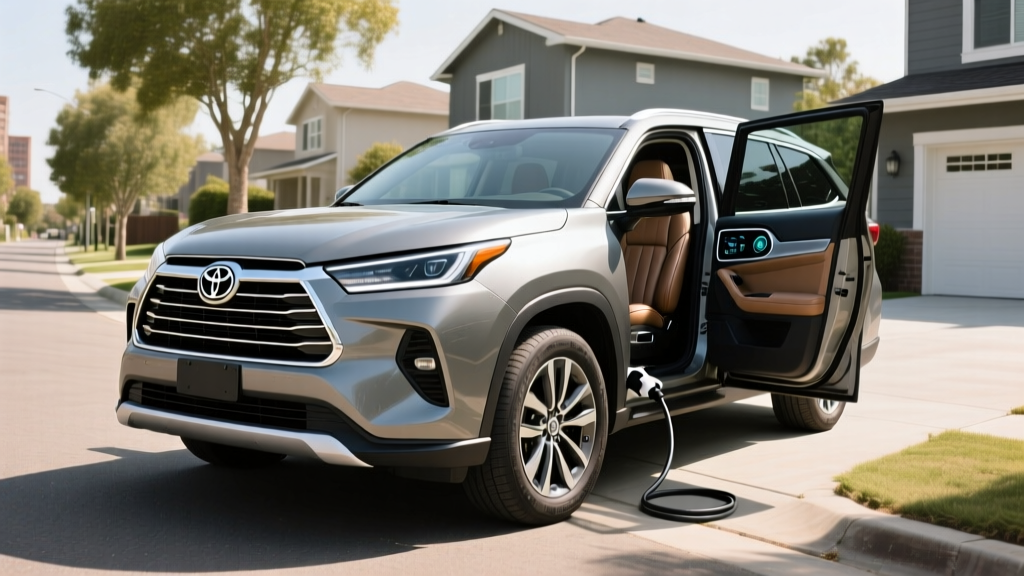
The 2021 Toyota Highlander Hybrid XLE occupies a specific niche that remains hard to fill: a three-row family hauler that delivers midsize-sedan fuel economy without requiring a plug, a charging routine, or any change in driving habits. Five years into its lifecycle, this fourth-generation Highlander Hybrid continues to serve as a benchmark for conventional hybrid (HEV) SUVs — and a practical alternative for buyers who aren't ready to commit to a full battery-electric vehicle.
The XLE trim sits in the middle of the Highlander Hybrid lineup, adding leatherette upholstery, a power liftgate, wireless phone charging, and second-row captain's chairs over the base LE. It's the volume trim for a reason: it delivers the features most families want without the premium attached to the Limited or Platinum.
| Spec | Value |
|---|---|
| Powertrain | 2.5L 4-cyl + 3 electric motors (AWD-i) |
| Combined Horsepower | 243 HP |
| EPA Fuel Economy (City / Hwy / Combined) | 35 / 35 / 35 MPG |
| Fuel Tank Capacity | 17.1 gallons |
| Total Range | ~598 miles |
| Drivetrain | Electronic AWD (AWD-i) |
| 0–60 MPH | ~7.8 seconds |
| Seating | 7 passengers (captain's chairs standard on XLE) |
| Cargo Volume (behind 3rd / 2nd / 1st row) | 16.1 / 48.4 / 84.3 cu ft |
| Towing Capacity | 3,500 lbs |
| Original MSRP (XLE AWD) | $42,260 |
| Hybrid Battery Warranty | 10 years / 150,000 miles |
HEV vs. PHEV: Where the Highlander Hybrid Fits
A common point of confusion for SUV shoppers is the difference between a conventional hybrid (HEV) and a plug-in hybrid (PHEV). The 2021 Highlander Hybrid is strictly an HEV. Here's what that means in practice:
| Feature | Conventional Hybrid (HEV) | Plug-In Hybrid (PHEV) |
|---|---|---|
| Plug-in charging? | No — refuels via gas + regenerative braking | Yes — plugs into Level 1/Level 2 charger |
| Electric-only range | Less than 1 mile at low speed | Typically 20–45 miles |
| Battery size | ~1.6 kWh (small, self-charging) | 13–20+ kWh |
| Federal tax credit (§30D) | Not eligible | Up to $7,500 if requirements met |
| Driving change required? | None — drives like a gas car | Benefits from regular home charging |
| Example | Toyota Highlander Hybrid | Toyota RAV4 Prime, Chrysler Pacifica PHEV |
Toyota does not currently offer a plug-in hybrid version of the Highlander. If you want PHEV capability in a Toyota SUV, the RAV4 Prime (42 miles electric-only, 94 MPGe) is the closest option — but it seats five, not seven or eight. For three-row PHEV options, you'd look at competitors like the Chrysler Pacifica Hybrid or the Mazda CX-90 PHEV, both of which sacrifice some cargo versatility or require a different trade-off.
Fuel Economy: EPA Numbers and Real-World MPG
The 2021 Highlander Hybrid AWD carries an EPA rating of 35 MPG city, 35 MPG highway, and 35 MPG combined, according to fueleconomy.gov. This is a remarkable figure for a 4,600-pound, three-row SUV. For comparison, the non-hybrid 2021 Highlander V6 AWD is rated at 20/27/23 MPG — the hybrid delivers roughly 52% better combined fuel economy.
| Driving Condition | EPA Rating | Real-World Expectation |
|---|---|---|
| City | 35 MPG | 34–38 MPG (hybrids often exceed EPA in stop-and-go) |
| Highway (70 mph) | 35 MPG | 30–33 MPG (aero drag hurts at sustained speed) |
| Combined | 35 MPG | 32–36 MPG depending on driving mix |
| Cold Weather (below 30°F) | — | 28–32 MPG (engine runs more for cabin heat) |
Real-world note: Toyota's hybrid system excels in city and suburban driving, where regenerative braking and frequent engine-off coasting maximize efficiency. Owners who do mostly city driving regularly report 36–38 MPG. Highway-heavy drivers at 75–80 mph should expect a drop to roughly 30–32 MPG — the boxy SUV shape and 4,600-lb curb weight work against it at sustained speeds. In cold weather, expect a further 10–15% reduction as the gasoline engine runs more frequently to provide cabin heat and maintain battery temperature.
With a 17.1-gallon fuel tank, real-world total range typically falls between 530 and 610 miles depending on your driving mix — enough for most families to visit the gas station once every two weeks.
Powertrain and Driving Experience
The Highlander Hybrid pairs a 2.5-liter Atkinson-cycle four-cylinder engine with three electric motors — two on the front axle and one on the rear axle, providing electronic all-wheel drive (AWD-i). Combined system output is 243 horsepower. The gasoline engine produces 186 HP and 175 lb-ft of torque on its own, supplemented by the electric motor system.
The rear axle has no mechanical connection to the engine. Instead, a dedicated 54-HP electric motor engages the rear wheels when traction is needed or during hard acceleration. This means AWD is available on demand but doesn't add the drivetrain weight and friction of a traditional mechanical system — a key reason the hybrid achieves such strong fuel economy.
Acceleration to 60 mph takes approximately 7.8 seconds. That's adequate for merging and passing but noticeably slower than the V6 non-hybrid Highlander (which hits 60 in about 7.0 seconds). The trade-off for efficiency is a slight sacrifice in passing punch — something most family-oriented buyers accept willingly.
The eCVT (electronically controlled continuously variable transmission) is smooth but can produce a droning sensation under hard acceleration, a characteristic of Toyota's hybrid synergy drive system. In normal driving, the transitions between electric-only, gasoline, and combined power are nearly imperceptible.
Hybrid Battery: Warranty, Lifespan, and Replacement Cost
The 2021 Highlander Hybrid uses a 1.6 kWh nickel-metal hydride (NiMH) traction battery mounted under the second-row seats. Unlike the larger lithium-ion packs in full EVs, this battery is small, lightweight, and designed for frequent shallow charge-discharge cycles rather than deep cycling.
Hybrid Battery Warranty Coverage
- Duration: 10 years or 150,000 miles (whichever comes first)
- Applies to: Hybrid battery pack, hybrid control module, inverter
- Transferable: Yes — warranty follows the vehicle, not the original owner
- California-emissions states: Same 10/150k coverage applies to all 50 states for 2020+ model years
Battery lifespan reality: Toyota's NiMH hybrid batteries have an exceptional longevity track record. Data from fleets and long-term owners suggests these packs routinely last 200,000–300,000 miles before significant degradation. The Highlander Hybrid's battery is far less stressed than a full EV pack because it operates in a narrow state-of-charge window (roughly 40–80%), never fully charging or fully depleting.
Replacement cost: If the hybrid battery does eventually need replacement (typically at very high mileage), expect to pay between $2,000 and $4,000 for a new OEM pack installed at a Toyota dealer. Refurbished or aftermarket packs can reduce this to $1,000–$2,000. For context, a full EV battery replacement runs $10,000–$20,000+ — the Highlander Hybrid's small NiMH pack is dramatically cheaper to replace.
Ownership Costs: Fuel Savings vs. the Non-Hybrid Highlander
The hybrid premium on the 2021 Highlander XLE was approximately $1,600 over the equivalent V6 AWD XLE at the time of purchase. Here's how that premium pays back:
| Model | EPA Combined | Annual Fuel Cost | 5-Year Fuel Cost |
|---|---|---|---|
| Highlander Hybrid AWD | 35 MPG | $1,500 | $7,500 |
| Highlander V6 AWD | 23 MPG | $2,283 | $11,413 |
| 5-Year Savings with Hybrid | ~$3,913 | ||
The hybrid premium pays for itself in roughly 2–2.5 years of average driving. Beyond that, every mile driven is money saved. Toyota's hybrid system also reduces brake wear (regenerative braking does much of the deceleration work), potentially saving $200–$400 per brake job over the vehicle's life.
Insurance: Hybrid variants typically carry a modest insurance premium of 3–7% over the non-hybrid model, primarily due to the higher replacement cost of the hybrid powertrain components. Shop quotes before purchasing.
Tax Credits and Incentives
The 2021 Toyota Highlander Hybrid does not qualify for the federal §30D clean vehicle tax credit. That credit is reserved for plug-in electric vehicles (BEVs and PHEVs) with battery capacities of at least 7 kWh and meeting specific critical-mineral sourcing and final-assembly requirements under current IRS rules.
The Highlander Hybrid's 1.6 kWh NiMH battery is far below the threshold, and as a conventional hybrid, it was never designed to be eligible. Some states and local utilities offer modest rebates for hybrid purchases, but these vary widely by jurisdiction. Check your state energy office or utility provider for current programs — amounts and availability change frequently.
If federal tax credit eligibility is a priority in your SUV search, you'll need to look at PHEVs (like the Chrysler Pacifica Hybrid or Jeep Grand Cherokee 4xe) or full BEVs (like the Kia EV9 or Tesla Model X) in the three-row segment.
Highlander Hybrid vs. EV vs. PHEV: Which Fits Your Family?
Choose the Highlander Hybrid (HEV) If:
- You can't charge at home (apartment, street parking, no garage)
- You regularly take long road trips and don't want to plan around chargers
- You want three rows and proven reliability with minimal maintenance changes
- You drive 15,000+ miles/year and want to maximize fuel savings without lifestyle changes
- You prefer a lower purchase price over a PHEV or EV equivalent
Consider a PHEV or Full EV Instead If:
- You have reliable Level 2 home charging and a mostly predictable daily commute
- You want the $7,500 federal tax credit (PHEV/BEV only — subject to income, MSRP, and sourcing rules)
- You want electric-only driving for short trips (PHEV) or zero tailpipe emissions (BEV)
- You're willing to accept range planning for road trips (BEV) or a smaller cargo area (RAV4 Prime)
- Lower per-mile energy cost matters and you have access to cheap electricity
For families who drive a mix of city errands and highway road trips, can't install a home charger, and need three rows, the Highlander Hybrid remains one of the most rational choices available. It asks nothing of you except filling up with gasoline — and it does that significantly less often than the non-hybrid version.
Reliability and Safety Ratings
Toyota's hybrid powertrain has decades of real-world reliability data behind it, stretching back to the 2001 Prius. The fourth-generation Highlander Hybrid benefits from this institutional knowledge. The 2.5L Atkinson-cycle engine is under-stressed by design, and the eCVT has no traditional gears, clutches, or belts to wear out.
The 2021 Highlander earned a Top Safety Pick+ rating from the IIHS when equipped with the standard Toyota Safety Sense 2.5+ suite (pre-collision braking, lane departure alert, full-speed adaptive cruise control, lane tracing assist). NHTSA awarded it 5 stars overall.
Common owner-reported concerns are minor: some wind noise at highway speeds, the 8-inch infotainment screen feeling dated compared to newer competitors, and the third row being tight for adults on longer trips. None of these are powertrain-related.
Frequently Asked Questions
How many MPG does the 2021 Highlander Hybrid XLE get?
The EPA rates it at 35 MPG city, 35 MPG highway, and 35 MPG combined. Real-world results typically range from 30–33 MPG on highway-heavy commutes to 36–38 MPG in city and suburban driving. Cold weather can drop this to 28–32 MPG.
Does the Highlander Hybrid need to be plugged in?
No. The 2021 Highlander Hybrid is a conventional hybrid (HEV). It charges its small battery through regenerative braking and the gasoline engine. You fuel it exclusively at gas stations, just like a non-hybrid vehicle.
Is there a plug-in hybrid (PHEV) version of the Highlander?
Toyota does not offer a PHEV Highlander. The closest Toyota PHEV SUV is the RAV4 Prime (42 miles electric-only), but it's a two-row compact. For three-row PHEV options, consider the Chrysler Pacifica Hybrid (32 miles electric) or the Mazda CX-90 PHEV (26 miles electric).
How long will the hybrid battery last?
Toyota's NiMH hybrid batteries are designed to last the life of the vehicle. Real-world data shows many lasting 200,000–300,000+ miles. The battery is covered by a 10-year/150,000-mile warranty, and replacement costs $2,000–$4,000 if needed — far less than a full EV battery.
Does the 2021 Highlander Hybrid qualify for any tax credit?
No. The federal §30D clean vehicle credit applies only to plug-in vehicles (BEVs and PHEVs) meeting battery-capacity, sourcing, MSRP, and buyer-income requirements. The Highlander Hybrid, as a conventional HEV, is not eligible. Check your state and local utility for any hybrid-specific rebates.
How does the Highlander Hybrid compare to a full EV like the Kia EV9?
The EV9 offers three rows, ~270–300 miles of EPA range, and lower per-mile fueling costs — but requires home charging access, costs $15,000–$25,000 more upfront, and requires route planning on road trips beyond its range. The Highlander Hybrid costs less, needs no charging infrastructure, and can refuel in 5 minutes anywhere. The right choice depends on your charging access, budget, and driving patterns.
Is the AWD system good in snow?
The electronic AWD-i system provides competent light snow and wet-weather traction by automatically engaging the rear electric motor when slip is detected. It's not a substitute for dedicated winter tires in severe conditions, but it handles typical winter commuting well for a crossover SUV.