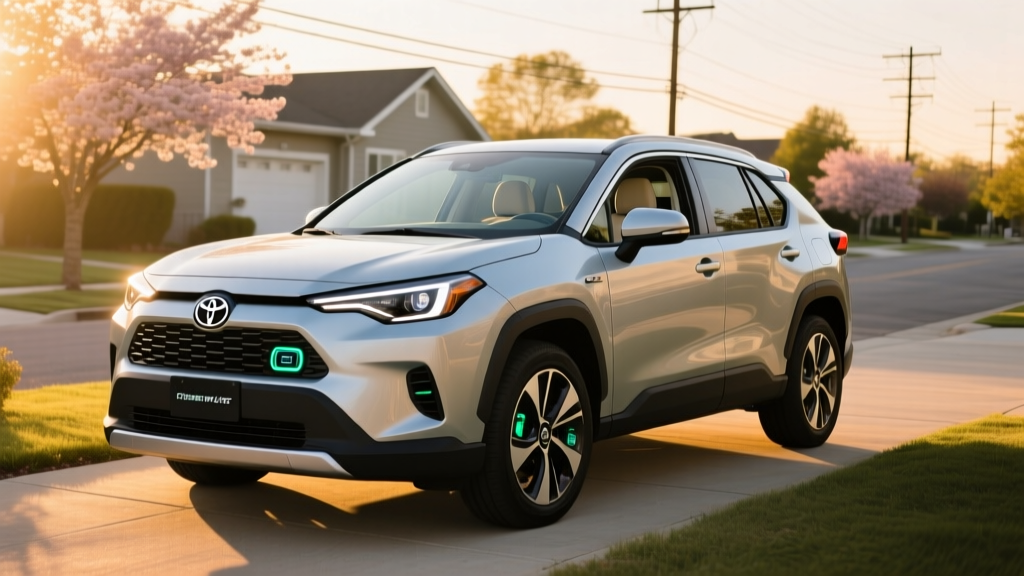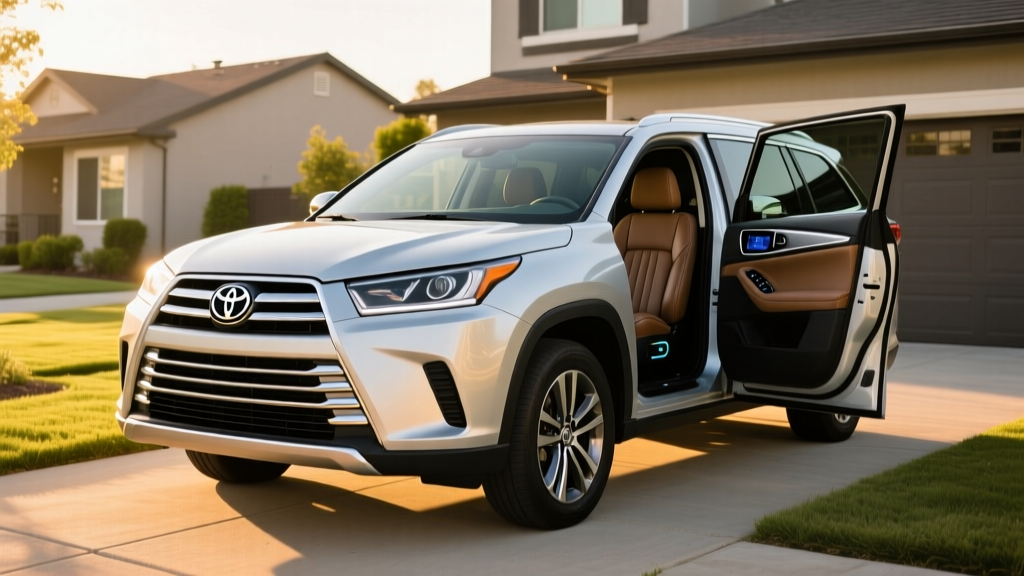
The 2021 Toyota Highlander Hybrid Platinum sits at the top of Toyota's three-row hybrid SUV lineup, pairing a 2.5-liter four-cylinder engine with front and rear electric motors for a combined 243 horsepower and an EPA-estimated 35 MPG combined. For families who need three rows, all-wheel drive, and genuinely low fuel costs — without ever plugging in — it remains one of the most practical vehicles on the used market in 2026.
This guide breaks down everything a buyer or current owner needs to know: exact fuel economy figures, how the hybrid system actually works, real-world MPG expectations, battery longevity and warranty coverage, and how this conventional hybrid stacks up against plug-in hybrids and full battery-electric SUVs.
HEV vs PHEV: What the Highlander Hybrid Actually Is
Before diving into specs, it is critical to understand what the 2021 Highlander Hybrid is not: it is not a plug-in hybrid. Toyota did not offer a Highlander PHEV (known as the Highlander Prime in some markets) in the United States for the 2021 model year. What you get is a conventional hybrid electric vehicle (HEV) — sometimes called a "self-charging hybrid" — that recovers energy through regenerative braking and the gasoline engine to recharge its small traction battery. You never plug it in.
HEV vs PHEV vs BEV — Quick Reference
| Feature | HEV (Highlander Hybrid) | PHEV (e.g., RAV4 Prime) | BEV (e.g., Kia EV9) |
|---|---|---|---|
| Plug-in required? | No | Yes | Yes |
| Electric-only range | ~1 mi at low speed | 25–42 mi typical | 230–310+ mi |
| Battery size | ~1.6 kWh (NiMH) | 13–18 kWh (Li-ion) | 75–100+ kWh (Li-ion) |
| Federal tax credit (§30D) | Not eligible | Up to $7,500* | Up to $7,500* |
| Home charging needed? | No | Yes (Level 2 recommended) | Yes (Level 2 essential) |
*§30D credit eligibility depends on MSRP caps, buyer income limits, battery sourcing, and critical-mineral requirements. See IRS guidelines.
The distinction matters because buyers sometimes search for "Highlander Hybrid plug-in" expecting a vehicle that can drive 30 miles on electricity alone. That vehicle does not exist in the Highlander lineup. If electric-only commuting is a priority, the Toyota RAV4 Prime PHEV (42 miles electric-only) or a three-row BEV like the Kia EV9 are the alternatives to cross-shop.
Fuel Economy: EPA Ratings and Real-World MPG
The 2021 Highlander Hybrid comes exclusively with electronic all-wheel drive (eAWD), which uses a separate rear electric motor rather than a mechanical driveshaft. This means every trim — LE, XLE, Limited, and Platinum — carries the same EPA fuel economy ratings.
| Metric | EPA Rating |
|---|---|
| City | 36 MPG |
| Highway | 35 MPG |
| Combined | 35 MPG |
| Fuel tank capacity | 17.9 gallons |
| Total driving range | ~627 miles |
Source: fueleconomy.gov
Real-World MPG: What Owners Actually Report
Toyota's hybrid system excels in city driving, where the electric motors handle low-speed acceleration and regenerative braking recovers energy at every stop. In real-world use:
- City/suburban driving: Many owners report 34–38 MPG, sometimes slightly exceeding the EPA city estimate thanks to frequent stop-and-go regen opportunities.
- Highway cruising (70–80 mph): Expect 30–33 MPG. The 2.5L Atkinson-cycle engine operates less efficiently at sustained high speeds, and the hybrid system provides less benefit without braking events.
- Cold weather (below 30°F): Expect a 5–10% drop, roughly 31–33 MPG combined. The engine runs more often to provide cabin heat and maintain catalyst temperature.
- Heavy cargo/towing: The Highlander Hybrid is rated for 3,500 lbs towing. Loaded up, expect 27–30 MPG.
Over a 15,000-mile year at a national average of $3.40/gallon (regular unleaded), the Highlander Hybrid costs approximately $1,457 in fuel. A comparable gas-only 2021 Highlander V6 AWD (24 MPG combined) would cost roughly $2,125 — a savings of about $668 per year with the hybrid.
Hybrid Powertrain: How 243 HP Gets a Three-Row SUV to 35 MPG
The fourth-generation Highlander Hybrid uses Toyota's fourth-generation hybrid system (THS IV), built around a 2.5-liter inline-four engine operating on the Atkinson cycle. The Atkinson cycle sacrifices low-end torque for higher thermal efficiency — exactly the trade-off a hybrid system can mask, since electric motors fill in the torque gap at low RPM.
| Component | Specification |
|---|---|
| Engine | 2.5L DOHC 16-valve inline-4, Atkinson cycle |
| Engine output | 186 HP @ 6,000 rpm / 175 lb-ft @ 4,400 rpm |
| Front electric motor | 134 HP / 199 lb-ft |
| Rear electric motor (eAWD) | 54 HP / 89 lb-ft |
| Net combined system output | 243 HP |
| Transmission | eCVT (planetary gearset, not a belt CVT) |
| Traction battery | Nickel-metal hydride (NiMH), ~1.6 kWh |
| 0–60 mph | ~7.7 seconds |
| Towing capacity | 3,500 lbs |
| Drivetrain | eAWD (electronic, no mechanical rear driveshaft) |
The eCVT in this vehicle is not the rubber-band-style belt-and-cone CVT found in some competitors. Toyota's Hybrid Synergy Drive uses a planetary gearset that seamlessly blends engine and motor power with no fixed gear ratios and no belts to slip. This design has proven extremely durable — it is one reason Toyota hybrids consistently rank at the top of long-term reliability surveys.
The rear motor on eAWD models activates during acceleration from a stop, in low-traction conditions, and during certain braking events. It can send up to 80% of available torque to the rear axle when needed, though under steady-state cruising the Highlander operates primarily as a front-wheel-drive vehicle to maximize efficiency.
Platinum Trim: What You Get at the Top of the Lineup
The Platinum was the most expensive Highlander Hybrid trim for 2021, adding features over the Limited that are relevant to both comfort and long-term ownership satisfaction:
- Panoramic glass roof with power sunshade
- 360-degree panoramic camera (bird's-eye view)
- Head-up display (HUD) projected on the windshield
- Heated and ventilated front seats, heated second-row seats
- Heated steering wheel
- JBL premium audio with 11 speakers and Clari-Fi
- 10-inch touchscreen with navigation (Limited and Platinum; lower trims get 8-inch)
- 20-inch alloy wheels (shared with Limited)
- Toyota Safety Sense 2.5+ (full suite, standard on all trims)
The Platinum's original MSRP was approximately $50,765 (including destination). As of early 2026, used-market pricing for a 2021 Highlander Hybrid Platinum with 40,000–60,000 miles typically ranges from $34,000 to $41,000, depending on condition, mileage, and region. Platinum trims command a $2,000–$4,000 premium over Limited examples.
Battery Longevity, Warranty, and Replacement Cost
Hybrid Battery Warranty — 2021 Highlander Hybrid
- Hybrid battery coverage: 10 years / 150,000 miles (whichever comes first)
- Hybrid system components: 8 years / 100,000 miles
- Transferability: Fully transferable to subsequent owners at no cost
- Capacity retention threshold: Toyota does not publish a specific degradation percentage trigger, but warranty covers defects and significant capacity loss that impairs hybrid function
Note: For model years 2020+, Toyota extended hybrid battery coverage from the previous 8yr/100k to 10yr/150k. This applies to the 2021 Highlander Hybrid.
The 2021 Highlander Hybrid uses a nickel-metal hydride (NiMH) traction battery rather than the lithium-ion packs found in most modern EVs and PHEVs. NiMH chemistry is less energy-dense but extremely well-proven — Toyota has used it in the Prius since 1997 and in the Highlander Hybrid since its 2006 debut. The battery pack is relatively small (~1.6 kWh) and operates within a narrow state-of-charge window (roughly 40%–80%), which dramatically reduces stress and extends cycle life.
How long do these batteries actually last? Data from Toyota dealer networks and owner communities (including priuschat.com and toyotanation.com forums) suggests that Highlander Hybrid batteries routinely reach 150,000–200,000 miles before significant degradation. Some first-generation units have exceeded 250,000 miles. Failures before 100,000 miles are uncommon and typically covered under warranty.
Replacement cost if out of warranty: A new OEM hybrid battery pack from Toyota currently costs approximately $3,000–$4,500 including labor at a dealership. Refurbished or aftermarket packs are available for $1,500–$2,500. Individual module replacement (only the degraded cells) can bring the cost down to $500–$1,200 at a hybrid specialist shop. For context, this is a fraction of the $10,000–$20,000+ that large BEV battery replacements can cost.
Tax Credits and Incentives: What Applies to a Conventional Hybrid?
This is where buyer confusion frequently surfaces. The 2021 Toyota Highlander Hybrid is a conventional HEV, and as such:
- Federal §30D Clean Vehicle Credit: Not eligible. The §30D credit (up to $7,500) applies only to plug-in electric vehicles — BEVs and PHEVs with a minimum battery capacity of 7 kWh. The Highlander Hybrid's ~1.6 kWh NiMH pack does not qualify.
- Federal used-EV credit (§25E): Not eligible. This credit (up to $4,000 for used plug-in vehicles) also requires a plug-in vehicle with at least 7 kWh of battery capacity.
- State incentives: A small number of states offer modest rebates or HOV-lane access for conventional hybrids, but these are increasingly rare as states redirect incentives toward plug-in vehicles. Check your state's energy office or DMV for current programs.
- Insurance discounts: Some insurers (notably GEICO and Liberty Mutual at various times) have offered hybrid-vehicle discounts of 5–10%. This varies by carrier and state.
The absence of a federal tax credit is a genuine disadvantage when comparing the Highlander Hybrid's purchase price to a plug-in alternative. However, the trade-off is simplicity: no home charger installation ($500–$2,000+), no dependence on charging infrastructure, and no eligibility complexity around MSRP caps, income limits, or battery-sourcing requirements.
Highlander Hybrid vs PHEV vs BEV: Which Three-Row SUV Fits You?
Decision Framework: Which Powertrain Is Right for Your Situation?
Choose the Highlander Hybrid (HEV) if:
- You cannot install a home charger (apartment, street parking, no garage)
- You regularly take long road trips and don't want to plan around charging stops
- You want three rows, AWD, and low fuel costs with zero behavior change
- You tow occasionally (3,500 lb rating)
- You value proven long-term reliability with minimal maintenance complexity
Choose a PHEV (e.g., Toyota RAV4 Prime, Kia Sorento PHEV) if:
Choose a three-row BEV (e.g., Kia EV9, Rivian R1S) if:
- You have reliable home Level 2 charging
- Your daily driving is under 250 miles and you're comfortable with DC fast-charging on road trips
- You want the lowest per-mile energy cost (electricity at ~$0.13/kWh ≈ $0.04/mile vs. $0.10/mile for the hybrid)
- You want maximum torque, instant acceleration, and zero tailpipe emissions
- You're prepared for higher purchase price, insurance costs, and potential charging-infrastructure limitations in rural areas
For many families shopping the used market in 2026, the 2021 Highlander Hybrid Platinum occupies a sweet spot: it delivers the fuel-cost advantage of electrification without requiring any infrastructure investment or behavioral change. If you already have home charging and a predictable commute, a PHEV may save you more. But for the buyer who wants to simply drive and refuel at any gas station while still averaging 35 MPG in a 4,700-pound three-row SUV, the Highlander Hybrid has no direct rival.
Pros and Cons: The Honest Assessment
Pros
- 35 MPG combined EPA — exceptional for a 4,700-lb three-row SUV
- No plug-in charging required; zero infrastructure dependency
- Standard eAWD on every trim
- 10yr/150k hybrid battery warranty (transferable)
- Proven THS IV powertrain with outstanding reliability track record
- 627-mile total range eliminates refueling stops on most road trips
- Platinum trim loaded with premium features (HUD, 360° camera, JBL audio)
- Strong resale value; Highlander Hybrid holds value better than most competitors
Cons
- No federal tax credit eligibility (HEV, not PHEV/BEV)
- 243 HP is adequate but not quick — 7.7s 0–60 trails turbocharged competitors
- Third row is tight for adults; best suited for children on longer trips
- Cargo space behind third row is only 16.1 cu ft (less than some rivals)
- NiMH battery is older chemistry; less energy-dense than Li-ion alternatives
- eAWD rear motor provides traction assist but is not a true off-road system
- Platinum trim's original ~$51K MSRP was steep; used prices remain elevated
- No electric-only driving mode beyond brief low-speed creep
Frequently Asked Questions
How many MPG does the 2021 Toyota Highlander Hybrid get?
The EPA rates it at 36 city / 35 highway / 35 combined MPG. In real-world driving, owners typically see 33–37 MPG combined, with city driving often matching or slightly exceeding the EPA estimate and highway cruising at 75+ mph dropping to 30–33 MPG. Cold weather reduces efficiency by roughly 5–10%.
Does the Highlander Hybrid need to be plugged in?
No. The 2021 Highlander Hybrid is a conventional hybrid (HEV). Its small NiMH battery is recharged entirely by the gasoline engine and regenerative braking. There is no plug, no charging port, and no electric-only driving range beyond momentary low-speed assist.
Is there a plug-in hybrid (PHEV) version of the Highlander?
Toyota does not sell a Highlander PHEV in the United States. The Highlander Hybrid has only been offered as a conventional HEV. If you want a Toyota PHEV with electric-only range, the RAV4 Prime (42 miles electric) is the closest option, though it has only two rows. The Kia Sorento PHEV (32 miles electric, three rows) is a closer functional competitor.
How reliable is the Highlander Hybrid, and what does battery replacement cost?
Toyota's hybrid system is among the most reliable powertrains in the industry, backed by decades of data from the Prius fleet. The eCVT planetary gearset has no belts, clutches, or torque converters to fail. The hybrid battery is warrantied for 10 years/150,000 miles and routinely lasts 150,000–200,000+ miles. Out-of-warranty replacement runs $3,000–$4,500 for a new OEM pack, or $1,500–$2,500 for a refurbished unit.
Does the 2021 Highlander Hybrid qualify for any tax credit?
No. The federal §30D Clean Vehicle Credit and the §25E used-EV credit both require a plug-in vehicle with at least 7 kWh of battery capacity. The Highlander Hybrid's ~1.6 kWh NiMH pack does not qualify. Some states may offer minor hybrid incentives — check your state energy office for current programs.
How does the Platinum trim compare to the Limited?
The Platinum adds a panoramic glass roof, head-up display, 360-degree camera, ventilated front seats, heated second-row seats, and a heated steering wheel over the Limited. The powertrain, fuel economy, and safety features are identical. On the used market, expect to pay $2,000–$4,000 more for a Platinum versus a comparably equipped Limited.
Can the Highlander Hybrid tow, and does towing hurt MPG significantly?
Yes — the 2021 Highlander Hybrid is rated to tow up to 3,500 pounds when properly equipped. Towing a small trailer or boat typically drops fuel economy to 27–30 MPG combined, which is still competitive with or better than many gas-only SUVs towing the same load.
Data sourced from fueleconomy.gov, IRS §30D guidelines, and Toyota Motor Corporation press materials. Used-market pricing reflects aggregated listing data as of early 2026 and will vary by region, condition, and mileage. Always verify tax-credit eligibility with a qualified tax professional.