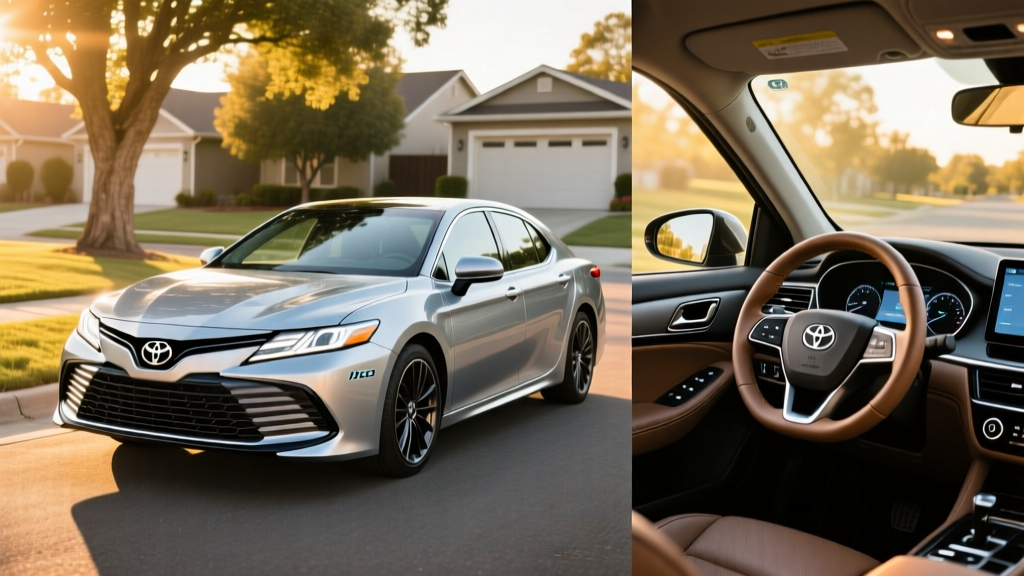
The 2021 Toyota Camry Hybrid occupies a specific niche in the electrified-vehicle landscape: it's a conventional hybrid (HEV) that requires no plug, no behavior change, and no charging infrastructure — yet delivers fuel economy that undercuts most plug-in alternatives in real-world city driving. For buyers in 2026 who aren't ready for a full EV or PHEV but want meaningful fuel savings, this midsize sedan remains a benchmark.
This guide covers everything you need to know about the 2021 Camry Hybrid's powertrain, real-world MPG performance, battery longevity, used-market pricing, and how it stacks up against PHEVs and full EVs.
2021 Toyota Camry Hybrid: Powertrain and Specs at a Glance
The 2021 Camry Hybrid pairs a 2.5-liter Dynamic Force four-cylinder engine with Toyota's fourth-generation hybrid system. A key addition for 2021 was the availability of electronic all-wheel drive (AWD-e) on SE and XLE trims — a first for the Camry Hybrid — which adds a rear-mounted electric motor for traction without a mechanical driveshaft.
| Specification | LE / SE (FWD) | XLE (FWD) | SE / XLE (AWD-e) |
|---|---|---|---|
| Combined Horsepower | 208 hp | 208 hp | 211 hp |
| Engine | 2.5L I4 + electric motor | 2.5L I4 + electric motor | 2.5L I4 + front/rear motors |
| Transmission | eCVT | eCVT | eCVT |
| Hybrid Battery | 1.6 kWh NiMH (sealed) | 1.6 kWh NiMH (sealed) | 1.6 kWh NiMH (sealed) |
| EPA City MPG | 51 | 44 | 44 |
| EPA Highway MPG | 53 | 47 | 47 |
| EPA Combined MPG | 52 | 46 | 46 |
| Fuel Tank Capacity | 13.2 gal | 13.2 gal | 13.2 gal |
| Estimated Total Range | ~686 miles | ~607 miles | |
| 0–60 mph | ~7.5 sec | ~7.5 sec | ~7.3 sec |
| Drivetrain | FWD | FWD | AWD-e |
Source: fueleconomy.gov — EPA estimates for the 2021 Toyota Camry Hybrid.
How Many MPG Does the 2021 Camry Hybrid Actually Get?
The EPA ratings tell a strong story, but the real-world picture is where this hybrid shines — particularly in urban driving.
| Driving Scenario | LE FWD (EPA) | LE FWD (Real-World Expectation) | XLE/SE AWD-e (EPA) | XLE/SE AWD-e (Real-World) |
|---|---|---|---|---|
| City | 51 MPG | 48–54 MPG | 44 MPG | 42–48 MPG |
| Highway (70+ mph) | 53 MPG | 44–48 MPG | 47 MPG | 40–44 MPG |
| Combined | 52 MPG | 47–50 MPG | 46 MPG | 42–45 MPG |
Why real-world often exceeds EPA in the city: Conventional hybrids like the Camry Hybrid thrive in stop-and-go traffic. Every braking event regenerates energy back into the battery, and the electric motor handles low-speed acceleration where gas engines are least efficient. Owners who drive predominantly in urban or suburban conditions frequently report exceeding the EPA city estimate.
Why highway MPG drops: At sustained speeds above 70 mph, the gasoline engine does nearly all the work. Aerodynamic drag increases with the square of velocity, and the hybrid system's regenerative advantage diminishes. Expect a noticeable dip compared to the EPA highway figure on long interstate trips.
Cold-weather impact: In freezing temperatures, expect a 5–10% reduction in fuel economy. The engine runs longer to maintain cabin heat and reach optimal operating temperature, reducing the time spent in electric-only mode at low speeds.
HEV vs. PHEV vs. EV: Which Powertrain Fits You?
The 2021 Camry Hybrid is a conventional hybrid (HEV). It has no plug, no electric-only driving range to speak of, and charges its small 1.6 kWh battery entirely through regenerative braking and the gasoline engine. This is fundamentally different from a plug-in hybrid (PHEV) or a battery electric vehicle (BEV).
HEV vs. PHEV vs. BEV — Key Differences
| Feature | HEV (Camry Hybrid) | PHEV (e.g., RAV4 Prime) | BEV (e.g., Tesla Model 3) |
|---|---|---|---|
| Plug required? | No | Yes | Yes |
| Electric-only range | ~1 mile at low speed | 25–42 miles typical | 250–350+ miles |
| Battery size | 1.6 kWh (NiMH) | 13–18 kWh (Li-ion) | 50–82 kWh (Li-ion) |
| Home charging needed? | No | Recommended (Level 2) | Essential (Level 2) |
| Gas required? | Yes, always | Yes, as backup | No |
| Federal tax credit (§30D)? | No | Up to $7,500 (rules apply) | Up to $7,500 (rules apply) |
| Best for | No home charging access; want simplicity | Short commute + occasional road trips | Home charging + mostly electric driving |
Choose the Camry Hybrid (HEV) if: You don't have access to home or workplace charging, you want zero behavior change from a gas car, you prioritize reliability and low maintenance, and your driving is a mix of city and highway with no need for electric-only operation.
Consider a PHEV instead if: You can install a Level 2 charger at home, your daily commute is under 30 miles (covering most trips on electricity), and you still want a gas engine for long road trips.
Consider a full EV instead if: You have reliable home charging, your daily driving is under 250 miles, you want to eliminate gasoline entirely, and you're eligible for the full federal tax credit to offset the higher purchase price.
Battery Warranty, Lifespan, and Replacement Cost
Hybrid battery longevity is the single most common concern among used-hybrid buyers. Here's what the data shows for the 2021 Camry Hybrid.
2021 Camry Hybrid — Battery Warranty
- Hybrid Battery Warranty: 10 years / 150,000 miles (whichever comes first) in all 50 states, effective for 2020 and newer model-year Toyota hybrids.
- Hybrid System Components: 8 years / 100,000 miles (inverter, converter, control module).
- Transferable? Yes — the hybrid battery warranty transfers to subsequent owners automatically.
Source: Toyota Warranty Guide
Real-world lifespan: Toyota's NiMH hybrid batteries have an exceptional longevity track record. Data from fleet operators and long-term owners suggests these batteries routinely last 150,000–200,000+ miles before significant degradation. Unlike the large lithium-ion packs in EVs, the Camry Hybrid's 1.6 kWh NiMH pack operates in a narrow state-of-charge window (roughly 40–80%), which dramatically reduces stress and extends cycle life.
Replacement cost: If the hybrid battery does fail outside warranty, expect to pay between $2,000 and $4,000 for a new OEM replacement at a dealership, including labor. Refurbished or aftermarket cells can reduce this to $1,000–$2,000. Independent hybrid specialists in most metro areas can perform the swap.
For a 2021 model purchased in 2026: The vehicle is approximately 5 years old. If the original owner maintained the car and it has under 150,000 miles, the hybrid battery warranty should still be active. Always verify warranty status with a Toyota dealer using the VIN before purchasing.
Does the 2021 Camry Hybrid Qualify for Any Tax Credit?
No. The 2021 Toyota Camry Hybrid is a conventional hybrid (HEV), not a plug-in vehicle. The federal §30D Clean Vehicle Credit applies only to plug-in electric vehicles (BEVs and PHEVs) that meet battery capacity, critical-mineral sourcing, MSRP, and buyer income requirements as defined by the IRS.
Conventional hybrids have not qualified for a federal purchase tax credit since the original Hybrid Tax Credit expired for Toyota in 2007. Some states and localities have offered periodic incentives for hybrids, but these are typically modest ($250–$500 rebates) and vary by jurisdiction. Check your state's energy or environmental agency website for current programs.
Used-market advantage: While there's no federal credit for buying a used Camry Hybrid, the lower used-market pricing (compared to new) already reflects significant value. A well-maintained 2021 Camry Hybrid LE typically trades for $20,000–$25,000 depending on mileage and condition as of early 2026.
2021 Camry Hybrid Trim Pricing (Original MSRP and 2026 Used Values)
| Trim | Original MSRP (2021) | Est. Used Value (2026) | Key Features |
|---|---|---|---|
| LE | $27,270 | $20,000–$23,000 | 52 MPG combined, 7" touchscreen, TSS 2.5+ |
| SE | $28,820 | $21,500–$25,000 | Sport-tuned suspension, 18" wheels, paddle shifters |
| XLE | $32,220 | $23,000–$27,000 | Leather, 9" touchscreen, wireless charging, heated seats |
| SE AWD-e | $30,320 | $23,000–$27,000 | AWD-e, sport-tuned suspension, 19" wheels |
| XLE AWD-e | $33,720 | $25,000–$29,000 | AWD-e, leather, premium audio, heated/ventilated seats |
Used values are estimates based on market conditions as of early 2026 and vary by mileage, condition, and region.
Reliability, Safety, and Long-Term Ownership Costs
The 2021 Camry Hybrid benefits from one of the strongest reliability reputations in the industry. Toyota's hybrid synergy drive system has been in production since 1997 (Prius), and the Camry Hybrid's powertrain is among the most proven in Toyota's lineup.
IIHS Safety: The 2021 Camry earned the IIHS Top Safety Pick+ rating, the organization's highest honor, with "Good" ratings across all crashworthiness tests. Toyota Safety Sense 2.5+ comes standard on every trim, including pre-collision braking with pedestrian detection, full-speed adaptive cruise control, lane-departure alert with steering assist, and automatic high beams. (IIHS)
Maintenance costs: The Camry Hybrid requires no more maintenance than a conventional Camry — in fact, less in some areas. Regenerative braking significantly extends brake pad life (many owners report 80,000–100,000+ miles on original pads). There's no starter motor, no alternator, and the eCVT has no traditional transmission fluid to change at short intervals.
Fuel cost savings: At 52 MPG combined (LE), the Camry Hybrid uses roughly 230 gallons per year at 12,000 miles annually. At $3.50/gallon, that's approximately $805/year in fuel. A comparable gas-only 2021 Camry (32 MPG combined) would use 375 gallons, or about $1,313/year — a savings of roughly $500/year with the hybrid.
Pros and Cons of the 2021 Toyota Camry Hybrid
Pros
- Class-leading 52 MPG combined (LE FWD)
- No plug or charging infrastructure needed
- AWD-e available for snow/rain traction
- 10-year/150,000-mile hybrid battery warranty
- Standard Toyota Safety Sense 2.5+
- IIHS Top Safety Pick+
- Proven reliability with extensive service network
- Strong resale value retention
Cons
- No electric-only driving range (not a PHEV)
- No federal tax credit eligibility
- XLE/SE trims drop to 46 MPG combined
- AWD-e reduces highway MPG further
- eCVT drone under hard acceleration
- Infotainment feels dated vs. competitors
- No DC fast charging capability (not applicable to HEV)
- Small 1.6 kWh battery limits electric assist at highway speeds
Frequently Asked Questions
Is the 2021 Camry Hybrid a plug-in hybrid?
No. The 2021 Camry Hybrid is a conventional hybrid (HEV). It charges its battery through regenerative braking and the gasoline engine. There is no plug, no charging port, and no requirement to connect to any external power source. If you want a plug-in Toyota, look at the RAV4 Prime (PHEV) or the bZ4X (BEV).
How long will the hybrid battery last on a 2021 Camry Hybrid?
Toyota warranties the hybrid battery for 10 years or 150,000 miles, whichever comes first. Real-world data from Toyota's hybrid fleet (Prius, Camry, Highlander) shows these NiMH batteries commonly last 150,000–200,000+ miles. For a 2021 model, the warranty should still be active through approximately 2031 if under the mileage cap.
What does it cost to replace the hybrid battery?
A new OEM hybrid battery replacement at a Toyota dealer typically costs $2,000–$4,000 including labor. Refurbished or aftermarket options can reduce this to $1,000–$2,000. Given the battery's longevity track record, most owners will never face this expense.
Does the 2021 Camry Hybrid qualify for any federal tax credit?
No. The federal §30D Clean Vehicle Credit applies only to plug-in electric vehicles. Conventional hybrids like the Camry Hybrid do not qualify. Some states may offer small rebates — check your state energy office for current programs.
How does the AWD-e system work?
The AWD-e system uses a separate rear-mounted electric motor (40 hp) that engages automatically when the front wheels lose traction — during acceleration from a stop, in rain, or on snow. It doesn't use a mechanical driveshaft, so there's minimal efficiency penalty when AWD isn't needed. The system operates up to approximately 43 mph, after which the vehicle reverts to FWD.
Should I buy the 2021 Camry Hybrid or a full EV?
Choose the Camry Hybrid if you lack home charging access, regularly drive more than 300 miles between fill-ups, or want the lowest-risk entry into electrified driving. Choose a full EV if you can charge at home, your daily driving is under 250 miles, you want to eliminate gasoline costs, and you qualify for the federal tax credit (up to $7,500 for eligible new EVs under current IRS rules).
What's the real-world fuel economy on long highway trips?
Expect 44–48 MPG on the LE at speeds around 65–70 mph. At 75+ mph, aerodynamic drag reduces this to roughly 40–44 MPG. The XLE and AWD-e trims will see 40–44 MPG at highway speeds. These figures still significantly outperform the gas-only Camry's ~32 MPG combined EPA rating.