Why the 2021 Sienna Hybrid Still Matters in 2026
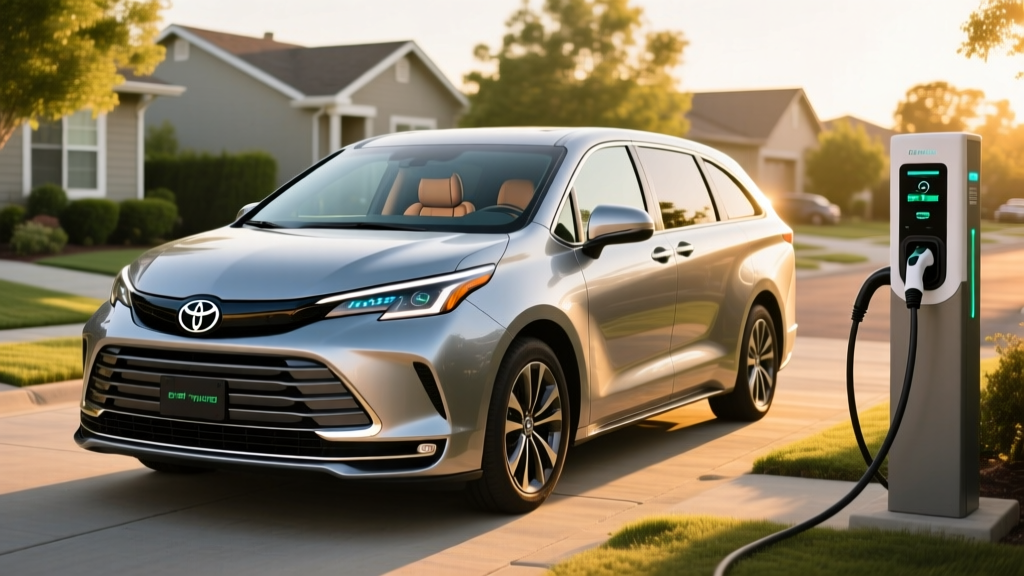
When Toyota redesigned the Sienna for the 2021 model year, it made a decision no other automaker had dared with a minivan: go all-hybrid, no gas-only option. Every 2021 Sienna left the factory with a 2.5-liter four-cylinder engine paired with Toyota's fourth-generation hybrid system. Five years later, that bet looks prescient — the 2021 Sienna hybrid remains one of the most fuel-efficient family haulers on the used market, and its powertrain is shared with millions of Toyota hybrids that have proven remarkably durable.
If you're shopping for a 2021 Sienna hybrid today, you're likely weighing it against newer plug-in hybrid minivans (like the Chrysler Pacifica PHEV), full-electric SUVs, or conventional gas competitors. This guide gives you the exact numbers — EPA MPG, real-world fuel economy, battery warranty terms, and total cost of ownership — so you can decide with confidence.
2021 Sienna Hybrid Powertrain: How It Works
The 2021 Sienna uses Toyota's Hybrid Synergy Drive with a 2.5-liter Atkinson-cycle inline-four engine producing 189 horsepower on its own. Combined with front and rear electric motors, total system output is 245 horsepower. This is a conventional hybrid (HEV), meaning it charges its own battery through regenerative braking and the gasoline engine — you never plug it in.
All-wheel drive is available across all trims, which adds a rear electric motor (no mechanical driveshaft). The AWD system engages automatically when the front wheels slip and otherwise operates in front-wheel drive for maximum efficiency.
| Specification | Value |
|---|---|
| Powertrain | 2.5L I4 + electric motor(s) (HEV) |
| Combined Horsepower | 245 hp |
| Transmission | eCVT (planetary gearset) |
| Drivetrain | FWD standard; AWD available |
| Battery Type | Nickel-metal hydride (NiMH), ~1.6 kWh |
| EPA Fuel Economy (FWD) | 36 city / 36 hwy / 36 combined MPG |
| EPA Fuel Economy (AWD) | 35 city / 36 hwy / 35 combined MPG |
| Fuel Tank Capacity | 14.5 gallons |
| Total Driving Range | ~522 miles (FWD) |
| 0–60 mph | ~7.1 seconds |
| Towing Capacity | 3,500 lbs |
| Seating | 7 or 8 passengers |
| Cargo (behind 3rd row) | 33.5 cu ft |
HEV vs. PHEV — what's the difference? The Sienna is a conventional hybrid (HEV). It cannot be plugged in and has no electric-only driving range beyond very low-speed maneuvers (typically under 1 mile). A plug-in hybrid (PHEV) like the Chrysler Pacifica Hybrid offers roughly 32 miles of electric-only range and a larger battery you charge from a wall outlet. The Sienna trades that electric-only capability for simplicity — no charging infrastructure needed, no range degradation from a bigger battery, and a lower purchase price.
Fuel Economy: EPA Numbers vs. Real-World MPG
The EPA rates the 2021 Sienna FWD at 36 MPG combined (36 city / 36 highway). The AWD version drops just 1 MPG in the city to 35 combined. These numbers are exceptional for a 4,500-pound minivan — for context, the gas-only Honda Odyssey rates at 22 MPG combined.
| Vehicle | City MPG | Highway MPG | Combined MPG |
|---|---|---|---|
| 2021 Toyota Sienna Hybrid (FWD) | 36 | 36 | 36 |
| 2021 Toyota Sienna Hybrid (AWD) | 35 | 36 | 35 |
| 2021 Honda Odyssey | 19 | 28 | 22 |
| 2021 Chrysler Pacifica (gas) | 19 | 28 | 22 |
| 2021 Chrysler Pacifica Hybrid (PHEV) | 82 MPGe | 30 (gas-only) | 30 (gas-only) / 82 MPGe (charge-sustaining) |
Real-World MPG: What Owners Actually Report
Toyota hybrids tend to meet or exceed their EPA estimates in city driving, where regenerative braking recovers the most energy. On FuelEconomy.gov's user-reported data, many 2021 Sienna owners report 33–38 MPG in mixed driving. Here's what to expect:
- City / suburban driving: 36–40 MPG. The hybrid system shines here — frequent stops let regen recharge the battery, and the electric motor handles low-speed acceleration without burning fuel.
- Highway cruising (65–70 mph): 32–36 MPG. Aerodynamic drag dominates at speed, and the small 2.5L engine works harder. You'll still beat any gas minivan by 10+ MPG.
- Cold weather (below 30°F): Expect a 5–10% drop, roughly 32–34 MPG combined. The engine runs longer to heat the cabin and bring the catalytic converter to operating temperature.
- Mountain / heavy-load driving: 28–32 MPG with a full passenger load on steep grades. The hybrid system still assists on climbs and recovers energy on descents.
At 15,000 miles per year and $3.50/gallon regular unleaded, the Sienna hybrid costs roughly $1,458 annually in fuel. A gas Odyssey at 22 MPG combined would cost about $2,386 — a savings of nearly $930 per year with the Sienna.
Battery Longevity, Warranty, and Replacement Cost
The 2021 Sienna uses a nickel-metal hydride (NiMH) hybrid battery pack — the same chemistry Toyota has refined across millions of Prius, Camry Hybrid, and Highlander Hybrid vehicles over two decades. This matters: Toyota's hybrid battery track record is among the best in the industry.
Battery Warranty Coverage
Hybrid battery: 10 years / 150,000 miles (whichever comes first) in all 50 states, effective for 2020 and newer Toyota hybrids. This was extended from the previous 8-year/100,000-mile coverage.
Hybrid system components (inverter, electric motors, control modules): 8 years / 100,000 miles.
Standard powertrain warranty: 5 years / 60,000 miles.
How Long Will the Sienna Hybrid Battery Actually Last?
Based on long-term data from the Toyota hybrid platform, most NiMH hybrid batteries last 150,000–200,000+ miles before needing replacement. The 2021 Sienna's battery is relatively small (~1.6 kWh) and is never fully charged or fully depleted — Toyota's battery management system keeps it in a narrow state-of-charge window (roughly 40–80%) to maximize cycle life. This shallow-cycling strategy is why Toyota hybrid batteries routinely outlast their warranties.
Battery Replacement Cost
If you do need a replacement outside of warranty:
- New OEM battery from Toyota: $2,500–$3,500 (parts + labor at a dealer)
- Refurbished/remanufactured battery: $1,500–$2,200 from aftermarket suppliers
- Individual module replacement: Some independent hybrid specialists can replace only the failed modules within the pack for $800–$1,500
For a 2021 model purchased in 2026 with typical mileage (50,000–75,000 miles), you'll likely still have significant hybrid battery warranty coverage remaining. Toyota's 10-year/150,000-mile warranty transfers to subsequent owners.
Pricing and Tax Credit Eligibility
The 2021 Sienna was offered in LE, XLE, XSE, Limited, and Platinum trims, with original MSRPs ranging from approximately $34,460 (LE FWD) to $50,460 (Platinum AWD). On the used market in 2026, expect to pay roughly:
- LE / XLE (50,000–70,000 miles): $26,000–$32,000
- XSE / Limited (40,000–60,000 miles): $30,000–$37,000
- Platinum / low-mileage examples: $35,000–$42,000
Does the 2021 Sienna Hybrid Qualify for Any Tax Credit?
No federal tax credit applies to the 2021 Sienna hybrid. Under current IRS §30D clean vehicle credit rules, only battery electric vehicles (BEVs) and plug-in hybrids (PHEVs) with sufficient battery capacity qualify. Conventional hybrids like the Sienna — which cannot be plugged in — are not eligible for the federal credit.
There is also a used clean vehicle credit (up to $4,000 or 30% of sale price, whichever is less) under IRC §25E, but it similarly applies only to used BEVs and PHEVs — not conventional hybrids.
Some states offer their own incentives for hybrid purchases, but these vary widely and change frequently. Check your state's energy or environmental agency website for current programs.
Reliability and Long-Term Ownership
Toyota's hybrid powertrain is one of the most proven in automotive history. The eCVT transmission has no traditional belts, clutches, or torque converter — it uses a planetary gearset that has essentially no wear components. The 2.5L Atkinson-cycle engine is under-stressed and benefits from the electric motor handling the hardest acceleration loads.
Key reliability considerations for a used 2021 Sienna:
- Brake wear: Regenerative braking significantly reduces pad wear. Many owners report original brake pads at 60,000+ miles.
- No starter motor or alternator: The hybrid system eliminates both — two common failure points in conventional vehicles.
- Timing chain: The 2.5L A25A-FKS engine uses a timing chain (not a belt), designed to last the life of the engine.
- Common complaints: Some owners note road noise at highway speeds and the four-cylinder engine's buzzy character under hard acceleration compared to the V6 it replaced. These are NVH trade-offs for the fuel economy gains.
The 2021 Sienna earned the IIHS Top Safety Pick+ award with acceptable headlights, reflecting strong crash-test performance across the board.
Who Should Choose the 2021 Sienna Hybrid?
Reasons to Choose the 2021 Sienna Hybrid
- Best-in-class fuel economy for a minivan (36 MPG combined)
- No charging infrastructure needed — just fill up with gas
- Proven Toyota hybrid reliability with 10-year/150,000-mile battery warranty
- Standard AWD availability without fuel economy penalty
- Significant annual fuel savings vs. gas minivans (~$900+/year)
- 3,500-lb towing capacity sufficient for small trailers and boats
Reasons to Look Elsewhere
- No electric-only driving range — always uses some gasoline
- No federal tax credit eligibility
- Four-cylinder engine sounds strained under hard acceleration
- Cargo space behind third row (33.5 cu ft) trails some competitors
- Cannot DC fast charge or plug in at all
- Higher used-market premiums due to strong demand
Sienna HEV vs. Pacifica PHEV vs. Full EV SUV: Decision Framework
Choose the 2021 Sienna Hybrid if: You want maximum fuel efficiency in a minivan with zero lifestyle change — no charging, no range planning, no home electrical upgrades. You drive a mix of city and highway miles and want a vehicle that simply sips fuel while carrying seven or eight passengers.
Choose a PHEV minivan (Chrysler Pacifica Hybrid) if: You have home Level 2 charging, your daily driving is under 32 miles round-trip, and you want to do most weekday driving on electricity while keeping gas flexibility for road trips. The Pacifica PHEV qualifies for the used EV credit (up to $4,000 under §25E) when purchased from a dealer.
Choose a full EV (like a Kia EV9 or Tesla Model X) if: You have reliable home charging, want zero tailpipe emissions, qualify for the full $7,500 federal credit on a new purchase, and don't need more than 6–7 seats. Expect higher upfront cost but lower per-mile energy cost and minimal maintenance.
Frequently Asked Questions
How many MPG does the 2021 Sienna hybrid get?
The EPA rates the 2021 Sienna hybrid at 36 MPG combined (36 city / 36 highway) for front-wheel drive and 35 combined for all-wheel drive. Real-world owner reports cluster between 33–38 MPG depending on driving conditions, with city driving often matching or exceeding the EPA estimate.
Can you plug in the 2021 Sienna hybrid to charge it?
No. The 2021 Sienna is a conventional hybrid (HEV), not a plug-in hybrid. It charges its own small battery through regenerative braking and the gasoline engine. There is no charging port and no electric-only driving range beyond very short, low-speed maneuvers.
Is the 2021 Sienna hybrid reliable?
Yes. Toyota's fourth-generation hybrid system has been deployed across millions of vehicles with an excellent reliability record. The eCVT has no wear-prone components like belts or clutches, and the hybrid battery is warrantied for 10 years / 150,000 miles. Most Toyota hybrid batteries last well beyond 150,000 miles.
What does it cost to replace the 2021 Sienna hybrid battery?
A new OEM replacement from a Toyota dealer costs approximately $2,500–$3,500 including labor. Refurbished batteries run $1,500–$2,200. However, most 2021 models still have remaining factory hybrid battery warranty coverage (10 years / 150,000 miles from original in-service date).
Does the 2021 Sienna hybrid qualify for a federal tax credit?
No. Under current IRS rules, only plug-in electric vehicles (BEVs and PHEVs) qualify for the federal clean vehicle credit. The Sienna's conventional hybrid system does not meet the battery capacity or plug-in requirements. No used-vehicle credit applies either.
How does the Sienna hybrid compare to the Honda Odyssey?
The Sienna hybrid gets 36 MPG combined versus the Odyssey's 22 MPG — a 64% improvement. That translates to roughly $930 in annual fuel savings at 15,000 miles/year. The Odyssey offers slightly more cargo volume and a smoother V6, but costs significantly more to fuel and lacks AWD availability.
Is the 2021 Sienna hybrid good for towing?
The 2021 Sienna hybrid is rated to tow up to 3,500 pounds when properly equipped, which covers small camping trailers, jet skis, and light utility trailers. Fuel economy will drop to the mid-to-high 20s MPG while towing, which still exceeds what a gas-only minivan delivers unloaded.