Quick Verdict: The 2021 RAV4 Hybrid Still Sets the Bar
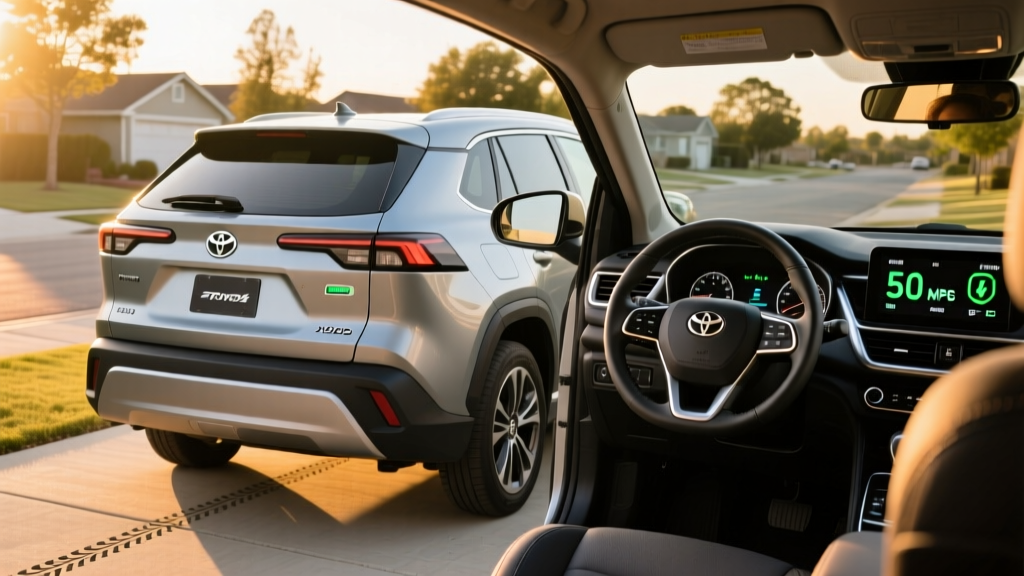
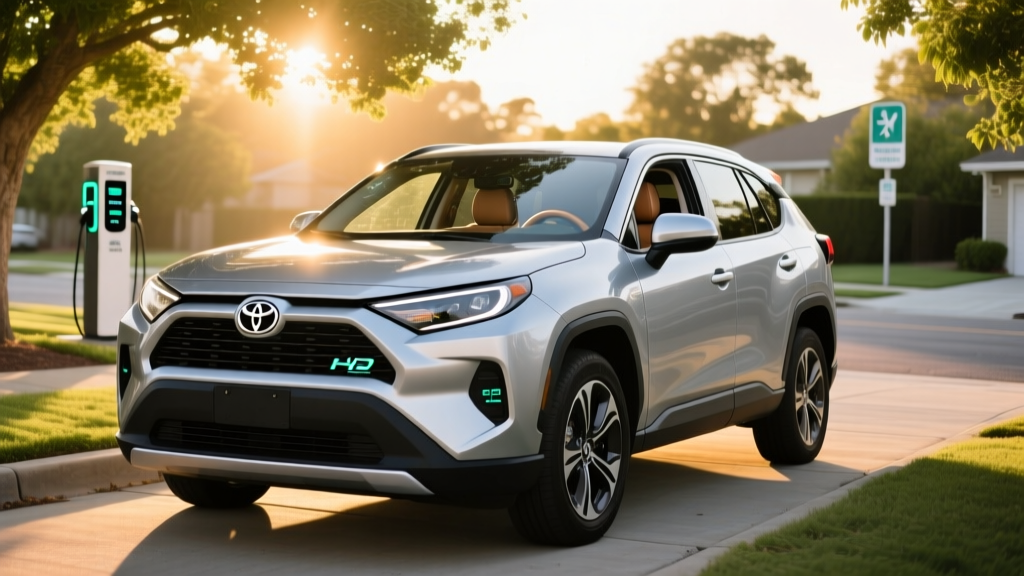
Even five years after its debut, the 2021 Toyota RAV4 Hybrid remains one of the most compelling used compact SUVs on the market. With an EPA-rated 40 MPG combined, standard electronic all-wheel drive, and Toyota's proven hybrid reliability, it delivers exactly what most drivers need: low running costs without range anxiety or charging infrastructure dependency. In 2026's used market, well-maintained examples represent strong value for buyers who want electrified efficiency without committing to a full battery-electric vehicle.
This guide covers every spec that matters — from real-world fuel economy data to battery warranty coverage — so you can evaluate a 2021 RAV4 Hybrid with confidence.
HEV vs PHEV: Understanding the 2021 RAV4 Lineup
Toyota offered the 2021 RAV4 in two electrified variants, and confusing them is a common mistake among used-car shoppers:
RAV4 Hybrid (HEV)
- Type: Conventional hybrid — no plug required
- Battery: 1.6 kWh nickel-metal hydride (NiMH), self-charging via regenerative braking and the gas engine
- Electric-only driving: Very short distances at low speeds (under ~1 mile, under 25 mph)
- Refueling: Gas station only, exactly like a conventional car
- EPA MPG: 40 combined
RAV4 Prime (PHEV)
- Type: Plug-in hybrid — charges from a wall outlet or charging station
- Battery: 18.1 kWh lithium-ion, plug-in rechargeable
- Electric-only range: 42 miles (EPA)
- Refueling: Plug to recharge + gas station for longer trips
- EPA MPGe: 94 MPGe (electric+gas), 38 MPG (gas-only after battery depletes)
This article focuses on the conventional RAV4 Hybrid (HEV). If you're evaluating the plug-in RAV4 Prime, the economics and ownership experience differ significantly — particularly around home charging access and federal tax credit eligibility.
Fuel Economy: EPA Ratings and Real-World MPG
| Driving Condition | EPA Estimate | Real-World Expectation |
|---|---|---|
| City | 41 MPG | 42–46 MPG (hybrids excel in stop-and-go) |
| Highway | 38 MPG | 34–37 MPG (aerodynamic drag reduces hybrid advantage) |
| Combined | 40 MPG | 38–43 MPG depending on driving mix |
The 2021 RAV4 Hybrid's city MPG actually exceeds its highway rating — a hallmark of Toyota's hybrid system. Regenerative braking recaptures energy during deceleration, and the electric motor handles low-speed propulsion where gas engines are least efficient. In real-world urban commuting, many owners report 43–45 MPG, especially in warm weather with moderate acceleration.
Highway driving tells a different story. At sustained 70–80 mph speeds, the 2.5-liter four-cylinder engine does most of the work, and the tall SUV body creates aerodynamic drag. Expect 34–37 MPG on long interstate trips. Cold weather (below 40°F) can reduce fuel economy by 5–10% as the engine runs more frequently to maintain cabin heat and battery temperature.
For authoritative EPA data, see the official 2021 RAV4 Hybrid listing on fueleconomy.gov.
Powertrain and Performance Specs
| Specification | 2021 RAV4 Hybrid |
|---|---|
| Gas Engine | 2.5L 4-cylinder Dynamic Force (176 hp, 163 lb-ft) |
| Front Electric Motor | 118 hp, 149 lb-ft |
| Rear Electric Motor (AWD-e) | 54 hp, 89 lb-ft |
| Net Combined Horsepower | 219 hp |
| Transmission | eCVT (electronically controlled continuously variable) |
| Drivetrain | Electronic On-Demand AWD (standard on all trims) |
| 0–60 mph | 7.4 seconds (Motor Trend tested) |
| Towing Capacity | 1,750 lbs |
| Battery Type | 1.6 kWh NiMH (sealed, maintenance-free) |
The 2021 RAV4 Hybrid uses Toyota's fourth-generation hybrid system. Unlike the RAV4 Prime (which pairs a more powerful electric drivetrain with a larger lithium-ion pack), the conventional HEV's small 1.6 kWh battery serves as a buffer — capturing regenerative energy and assisting the gas engine during acceleration. The battery never fully depletes; the system manages its state of charge automatically.
The electronic AWD system (marketed as AWD-e) is worth noting: a dedicated rear electric motor powers the rear wheels only when slip is detected or during hard acceleration from a stop. There is no mechanical driveshaft connecting the front and rear axles, which reduces weight and drivetrain losses. This system is adequate for rain, light snow, and gravel roads, but it is not designed for serious off-road use.
Reliability, Battery Lifespan, and Warranty
Toyota's hybrid battery track record is among the best in the industry. The Prius, which uses similar NiMH chemistry, routinely exceeds 200,000 miles on its original battery pack. The RAV4 Hybrid's battery is smaller and less stressed than a full EV battery, operating in a narrow state-of-charge window (roughly 40–80%) that minimizes degradation.
Should the battery require replacement out of warranty, expect a cost of $2,000–$4,000 for a refurbished or new OEM unit installed at a Toyota dealer. Independent hybrid specialists often offer replacements for $1,500–$2,500. However, given the 10-year warranty coverage (extending through 2031 for a 2021 model), most buyers will never face this expense.
Beyond the hybrid battery, the conventional hybrid powertrain has fewer wear items than a gas-only vehicle: no traditional starter motor, no alternator, and regenerative braking significantly extends brake pad life (many owners report 80,000+ miles on original pads). The eCVT transmission has no belts or clutches to replace — it uses a planetary gearset that is essentially maintenance-free.
For crash safety ratings, the 2021 RAV4 Hybrid earned the IIHS Top Safety Pick award with Good ratings across all crashworthiness tests.
Used Pricing and Tax Credit Eligibility in 2026
| Trim Level | Original MSRP (2021) | Estimated Used Price (2026) |
|---|---|---|
| LE | $29,470 | $21,000–$24,500 |
| XLE | $30,770 | $22,500–$26,000 |
| XLE Premium | $33,575 | $24,000–$28,000 |
| SE | $33,220 | $24,500–$27,500 |
| Woodland Edition | $34,125 | $26,000–$30,000 |
| Limited | $37,470 | $27,000–$32,000 |
Used prices vary significantly by mileage, condition, and regional demand. Hybrid models tend to hold value better than gas-only equivalents, and the RAV4 Hybrid's reputation for reliability keeps resale strong.
Federal Tax Credit: What Used Buyers Need to Know
The 2021 RAV4 Hybrid (conventional HEV) did not qualify for the federal EV tax credit when new, and it does not qualify for the used clean vehicle credit (§25E) today. Under current IRS rules, the used EV credit applies only to battery-electric vehicles and plug-in hybrids with at least 7 kWh of battery capacity. The RAV4 Hybrid's 1.6 kWh NiMH pack falls well below this threshold.
The RAV4 Prime (PHEV) variant, with its 18.1 kWh battery, did qualify for a federal credit when new and may qualify for the used clean vehicle credit (up to $4,000 or 30% of the sale price, whichever is less) if purchased from a dealer for under $25,000, subject to buyer income limits. Verify current eligibility on irs.gov or with a tax professional before relying on this credit.
Who Should Choose the RAV4 Hybrid vs a PHEV or Full EV
Choose the RAV4 Hybrid (HEV) if:
- You cannot install a home charger (apartment, street parking, no garage)
- You want EV-like city MPG without any change in refueling habits
- Your budget is $22,000–$30,000 on the used market
- You regularly drive in cold climates where EV range loss is a concern
- You want standard AWD without the price premium of a PHEV or EV
Choose the RAV4 Prime (PHEV) if:
- You have home Level 2 charging and a daily commute under 42 miles
- You want to drive primarily on electricity but keep a gas engine for road trips
- You qualify for the used clean vehicle credit (income and price caps apply)
- You can absorb the higher used-market premium ($30,000–$38,000 in 2026)
Choose a Full EV (e.g., Tesla Model Y, Hyundai Ioniq 5) if:
- You have reliable home charging and your daily driving is under 250 miles
- You want to eliminate gasoline entirely and minimize maintenance
- You can access DC fast charging for road trips
- You want the lowest per-mile fuel cost (electricity at $0.12/kWh ≈ $3.50/gallon equivalent)
The 2021 RAV4 Hybrid occupies a specific niche: it's the lowest-friction path to better fuel economy. You buy it, fill it with gas, and drive. There is no plug, no charging app, no route planning around chargers, and no cold-weather range cliff. For the majority of American drivers — especially those without dedicated parking and home charging access — this simplicity is a feature, not a limitation.
Pros
- 40 MPG combined, often exceeded in city driving
- Standard AWD on every trim at no extra cost
- 10-year/150,000-mile hybrid battery warranty (transferable)
- No charging infrastructure required
- Strong resale value and proven reliability
- 580-mile total range per tank
Cons
- No federal tax credit eligibility (HEV)
- Highway MPG drops to mid-30s at sustained speed
- eCVT drone under hard acceleration
- Towing limited to 1,750 lbs
- Infotainment system feels dated vs 2024+ models
- Rear battery slightly reduces cargo floor height vs gas model
Frequently Asked Questions
How many MPG does the 2021 RAV4 Hybrid actually get in real driving?
The EPA rates it at 41 city / 38 highway / 40 combined. In real-world use, city drivers commonly see 42–46 MPG thanks to regenerative braking, while sustained highway driving at 75+ mph typically yields 34–37 MPG. Cold weather and aggressive acceleration reduce these figures by 5–10%.
Does the 2021 RAV4 Hybrid need to be plugged in?
No. The conventional RAV4 Hybrid (HEV) charges its own battery through regenerative braking and the gas engine. You never plug it in. Only the RAV4 Prime (PHEV) variant requires plug-in charging to access its 42-mile electric-only range.
How long will the hybrid battery last, and what does replacement cost?
Toyota's NiMH hybrid batteries routinely last 150,000–200,000+ miles. The 2021 RAV4 Hybrid is covered by a 10-year/150,000-mile hybrid battery warranty that transfers to subsequent owners. Out-of-warranty replacement costs $2,000–$4,000 at a dealer, or $1,500–$2,500 at an independent hybrid specialist.
Does the 2021 RAV4 Hybrid qualify for any tax credit?
No. The conventional hybrid (HEV) does not qualify for any federal tax credit — neither the new vehicle §30D credit nor the used vehicle §25E credit. Its 1.6 kWh battery falls below the 7 kWh minimum threshold. The RAV4 Prime (PHEV) may qualify for the used clean vehicle credit under specific income and price conditions.
Is the RAV4 Hybrid's AWD system good in snow?
The electronic AWD-e system provides confident traction in rain, light snow, and icy intersections by automatically engaging the rear electric motor when slip is detected. It is not a substitute for winter tires in heavy snow, and it is not designed for off-road use. For moderate winter conditions, it performs comparably to most mechanical AWD systems in the compact SUV segment.
How does the RAV4 Hybrid compare to the RAV4 Prime in cost of ownership?
The RAV4 Hybrid has a lower purchase price ($22K–$32K used vs $30K–$38K for the Prime) and no charging infrastructure costs. The Prime offers lower per-mile fuel costs if you charge at home regularly (42 miles electric-only covers most commutes), but the price premium takes 4–6 years to recoup through fuel savings alone. If you can't charge at home, the conventional Hybrid is the more economical choice.