Quick Verdict: A Performance SUV That Plugs In
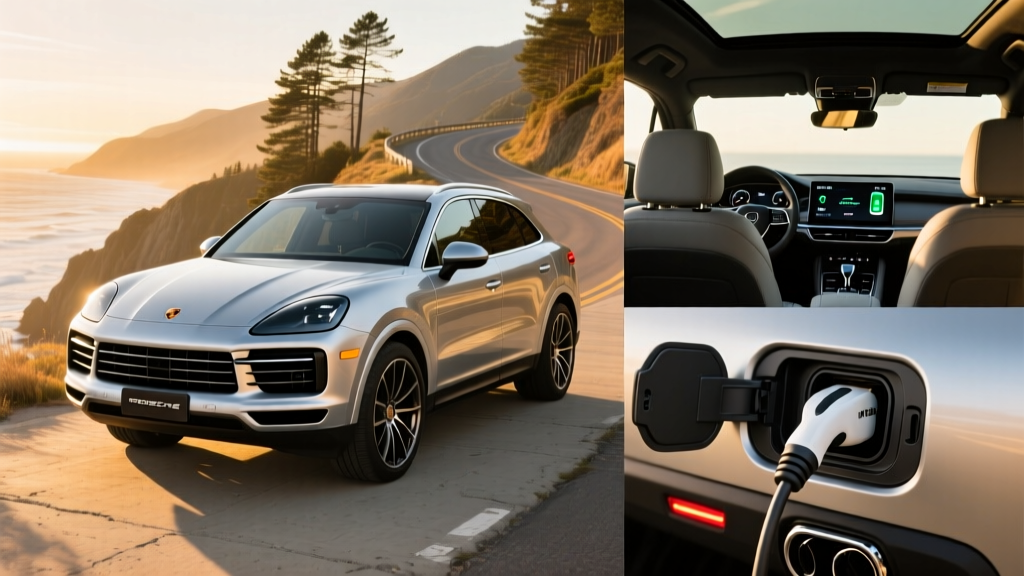
The 2021 Porsche Cayenne E-Hybrid occupies a narrow but compelling lane: a luxury performance SUV that delivers genuine electric-only commuting for short trips while retaining a twin-turbo V6 for unlimited range. With 455 combined horsepower and a 14.1 kWh battery pack, it's a plug-in hybrid (PHEV) — not a conventional hybrid — meaning you plug it in to unlock its electric potential. Now that this model sits firmly in the used market as of 2026, buyers are weighing its real-world efficiency against battery longevity, maintenance costs, and whether a full EV might serve them better.
This guide covers every number that matters: EPA MPG and MPGe, electric-only range, charging speed, powertrain specs, battery warranty, and what you'll actually spend to own one today.
HEV vs PHEV: Where the Cayenne E-Hybrid Fits
Conventional Hybrid (HEV): A small battery (typically 1–2 kWh) recharges through regenerative braking and the engine. You never plug it in. Examples: Toyota RAV4 Hybrid, Honda CR-V Hybrid. Expect 35–45 MPG combined.
Plug-in Hybrid (PHEV): A larger battery (12–25+ kWh) charges via a plug and provides 15–50 miles of electric-only driving before the gas engine takes over. Examples: the Cayenne E-Hybrid, Toyota RAV4 Prime, Jeep Wrangler 4xe.
The 2021 Cayenne E-Hybrid is a PHEV. If you never plug it in, it functions as a heavy, less-efficient hybrid — you're carrying 595 pounds of battery dead weight. To get value from this vehicle, you need access to a Level 1 (120V) or Level 2 (240V) outlet at home or work. Without that, a conventional hybrid or even a gas Cayenne makes more financial sense.
Fuel Economy & Electric Range: The Real Numbers
Porsche publishes two efficiency ratings for the Cayenne E-Hybrid because it operates in two distinct modes. Here's what the EPA says, along with what you should expect in practice.
| Metric | EPA Rating | Real-World Expectation |
|---|---|---|
| Combined MPGe (electric + gas) | 46 MPGe | 40–48 MPGe depending on charge frequency |
| Combined MPG (gas only, battery depleted) | 21 MPG | 18–22 MPG (heavy SUV with turbo V6) |
| City MPG (gas only) | 20 MPG | 19–21 MPG |
| Highway MPG (gas only) | 22 MPG | 20–24 MPG at 70 mph |
| Electric-only range | 14 miles | 11–13 miles (climate control, hills reduce it) |
| Total combined range (full tank + full battery) | ~380 miles | ~340–370 miles |
| Energy consumption (electric mode) | 46 kWh/100 mi | 48–55 kWh/100 mi in cold weather |
Powertrain & Performance Specs
The 2021 Cayenne E-Hybrid pairs a 3.0-liter turbocharged V6 with an electric motor integrated into the 8-speed Tiptronic S automatic transmission. The result is all-wheel drive and serious acceleration.
| Specification | Value |
|---|---|
| Engine | 3.0L turbocharged V6 |
| Engine output | 335 hp / 332 lb-ft torque |
| Electric motor output | 134 hp / 295 lb-ft torque |
| Combined system output | 455 hp / 516 lb-ft torque |
| 0–60 mph | 4.7 seconds (with Sport Chrono) |
| Top speed | 157 mph |
| Drivetrain | All-wheel drive (AWD) |
| Transmission | 8-speed Tiptronic S automatic |
| Curb weight | 5,093 lbs |
| Towing capacity | 7,716 lbs (with tow package) |
| Fuel tank capacity | 19.8 gallons |
The electric motor provides instant torque fill below 2,000 RPM, eliminating the turbo lag you'd feel in the gas-only Cayenne. In E-Power mode, the vehicle defaults to electric-only driving and only engages the V6 under hard acceleration or when the battery depletes. Switch to Sport or Sport Plus, and both power sources deliver maximum output simultaneously — the 4.7-second 0–60 time is genuinely quick for a 5,093-pound SUV.
Battery, Charging & What to Expect
The Cayenne E-Hybrid uses a 14.1 kWh lithium-ion battery pack (approximately 11.3 kWh usable, as Porsche reserves a buffer to protect longevity). The pack is liquid-cooled, which helps manage thermal stress during charging and high-load driving.
| Charging Level | Power | Time (0–100%) | Notes |
|---|---|---|---|
| Level 1 (120V household) | ~1.2 kW | ~10–12 hours | Adequate for overnight top-up |
| Level 2 (240V, 16A) | 3.6 kW | ~3.5–4 hours | Standard onboard charger limit |
| Level 2 (240V, 32A optional) | 7.2 kW | ~2–2.5 hours | Requires optional 7.2 kW onboard charger |
| DC Fast Charging | Not supported | N/A | No CCS or CHAdeMO port |
A critical detail for used buyers: the standard 2021 Cayenne E-Hybrid comes with a 3.6 kW onboard charger. Porsche offered a 7.2 kW onboard charger as an option (part of the Premium Plus package or standalone). Check the vehicle's window sticker or settings menu to confirm which charger is installed — it makes a meaningful difference if you need a midday top-up.
There is no DC fast charging capability. This is common for PHEVs of this era, as the smaller battery doesn't justify the cost and weight of DC hardware. You'll charge exclusively on AC power at home, work, or public Level 2 stations.
Battery Warranty, Longevity & Replacement Cost
For a 2021 model in 2026, you're five years into that warranty window, meaning three years / ~60,000+ miles of factory coverage remain (assuming the vehicle hasn't exceeded 100k miles). This is important context for used buyers — you still have meaningful protection.
Porsche's PHEV battery packs have shown solid longevity in practice. The liquid-cooled thermal management system reduces the calendar degradation you'd see in passively cooled packs. Based on owner reports and fleet data from similar Porsche PHEV platforms (Panamera E-Hybrid), expect approximately 5–8% total capacity loss over five years with normal use. That's well within the 70% warranty threshold.
If the battery does require out-of-warranty replacement, expect a cost between $8,000 and $14,000 for the pack itself, plus $1,500–$2,500 in labor. Porsche dealerships can replace individual cell modules rather than the entire pack in some failure scenarios, which can reduce costs to $3,000–$6,000 for a partial repair. Independent shops familiar with Porsche high-voltage systems are increasingly available in major metro areas.
Pricing & Tax Credit Eligibility
The 2021 Porsche Cayenne E-Hybrid originally started at $81,800 MSRP (base), with the Coupe variant starting at $87,600. Well-equipped examples with the Premium Plus package, 7.2 kW charger, and Sport Chrono pushed transaction prices to $95,000–$110,000.
| Trim | Original MSRP (2021) | Typical Used Price (2026) |
|---|---|---|
| Cayenne E-Hybrid (base) | $81,800 | $52,000–$62,000 |
| Cayenne E-Hybrid Coupe | $87,600 | $58,000–$70,000 |
| Cayenne E-Hybrid (well-equipped) | $95,000–$110,000 | $65,000–$82,000 |
Tax Credit Status: When new, the 2021 Cayenne E-Hybrid qualified for the federal plug-in vehicle tax credit — however, the credit amount was based on battery capacity and phased out based on manufacturer volume. Under the current IRS §30D rules (as of 2026), the federal new-vehicle credit is irrelevant for a 2021 model. However, buyers purchasing from a licensed dealer may qualify for the used clean vehicle credit (IRC §25E): up to $4,000 or 30% of the sale price (whichever is less), provided:
- The sale price is $25,000 or less (unlikely for this model — most examples exceed this threshold)
- Buyer modified AGI is ≤ $75,000 (single) / $112,500 (head of household) / $150,000 (joint)
- The vehicle is purchased from a licensed dealer
- The vehicle has not previously been claimed for the used-vehicle credit after 2022
Realistically, most 2021 Cayenne E-Hybrid examples sell above the $25,000 used-credit price cap. Check IRS guidance on the used-vehicle credit and consult a tax professional before counting on this incentive.
Who Should Buy This PHEV vs. a Full EV or Gas SUV
Choose the Cayenne E-Hybrid if:
- Your daily commute is 10–14 miles round-trip and you can charge at home
- You want performance SUV acceleration (4.7s 0–60) with occasional electric-only driving
- You take regular road trips where charging infrastructure is sparse
- You value the Porsche badge, build quality, and driving dynamics
- You tow (7,716-lb capacity exceeds most electric SUVs)
Choose a full EV (e.g., Tesla Model X, BMW iX, Rivian R1S) if:
- Your commute exceeds 20 miles and you want zero gas usage
- You have reliable home Level 2 charging and access to DC fast chargers for trips
- You want lower ongoing fuel and maintenance costs
- You prefer 250+ miles of range without a gas engine engaging
Choose a gas Cayenne or conventional hybrid SUV if:
- You cannot charge at home or work (PHEV without charging is counterproductive)
- Your budget doesn't accommodate PHEV maintenance complexity
- You prioritize simplicity over partial electrification
- 455 hp with seamless electric-to-gas transition
- 14-mile electric range covers short commutes
- Porsche build quality and driving dynamics
- 7,716-lb towing — rare for a PHEV
- Remaining factory battery warranty (through ~2029)
- Liquid-cooled battery for longevity
- Only 14 miles electric — short for a PHEV in 2026
- No DC fast charging
- 21 MPG gas-only is poor for a hybrid
- Heavy at 5,093 lbs — impacts tire and brake wear
- Used prices still high ($52k+ base)
- Likely exceeds $25k used-credit cap
- Complex powertrain = higher long-term maintenance risk
Frequently Asked Questions
How many MPG does the 2021 Porsche Cayenne E-Hybrid get?
The EPA rates it at 46 MPGe combined when operating in blended electric-gas mode with a charged battery. Once the battery depletes, it returns 21 MPG combined on gas alone (20 city / 22 highway). Real-world gas-only MPG typically falls between 18–22 depending on driving style and conditions. The key to maximizing efficiency is charging daily so you use the electric range for short trips.
How far can it go on electric only?
The EPA rates the electric-only range at 14 miles. In real-world driving, expect 11–13 miles depending on temperature, terrain, and speed. Cold weather (below 40°F) and highway speeds above 60 mph reduce this to 9–11 miles. The electric-only top speed is 84 mph, so highway merging is possible but drains the battery quickly.
Is the Cayenne E-Hybrid reliable, and what does battery replacement cost?
The 2021 Cayenne E-Hybrid has average reliability for a luxury German PHEV. The high-voltage battery is liquid-cooled and covered by an 8-year/100,000-mile warranty (still active through approximately 2029 for most examples). Full battery replacement runs $8,000–$14,000 out of warranty, though partial module repairs can cost $3,000–$6,000. The conventional 12V auxiliary battery and standard wear items (brakes, suspension) follow typical Porsche Cayenne maintenance schedules. Expect higher maintenance costs than a Toyota or Honda hybrid.
Does it qualify for any federal tax credit in 2026?
As a used vehicle, the 2021 Cayenne E-Hybrid may be eligible for the federal used clean vehicle credit (IRC §25E) of up to $4,000. However, this credit requires a sale price of $25,000 or less — and most used Cayenne E-Hybrid examples sell well above that. Income caps also apply ($75k single / $150k joint). Consult a tax professional and review IRS §25E rules before relying on this credit. State incentives vary — check your local DMV or energy office for PHEV rebates.
Should I get a PHEV or a full EV?
If you can charge at home, drive under 14 miles daily, and frequently take long road trips or tow, the PHEV offers flexibility. If your commute is longer, you have reliable charging access, and you want to eliminate gas entirely, a full EV like the BMW iX or Tesla Model X provides 250–320 miles of range, lower fuel costs, and less powertrain complexity. The Cayenne E-Hybrid is best viewed as a performance SUV that happens to be partially electric — not as an efficiency-first vehicle.
Can I charge it at public DC fast chargers?
No. The 2021 Cayenne E-Hybrid does not support DC fast charging. It charges exclusively on AC power via its J1772 port (Level 1 at 1.2 kW or Level 2 at 3.6 kW standard / 7.2 kW with the optional onboard charger). Public Level 2 chargers at shopping centers, workplaces, and parking garages will work, but you cannot use Electrify America, Tesla Supercharger, or other DC networks.