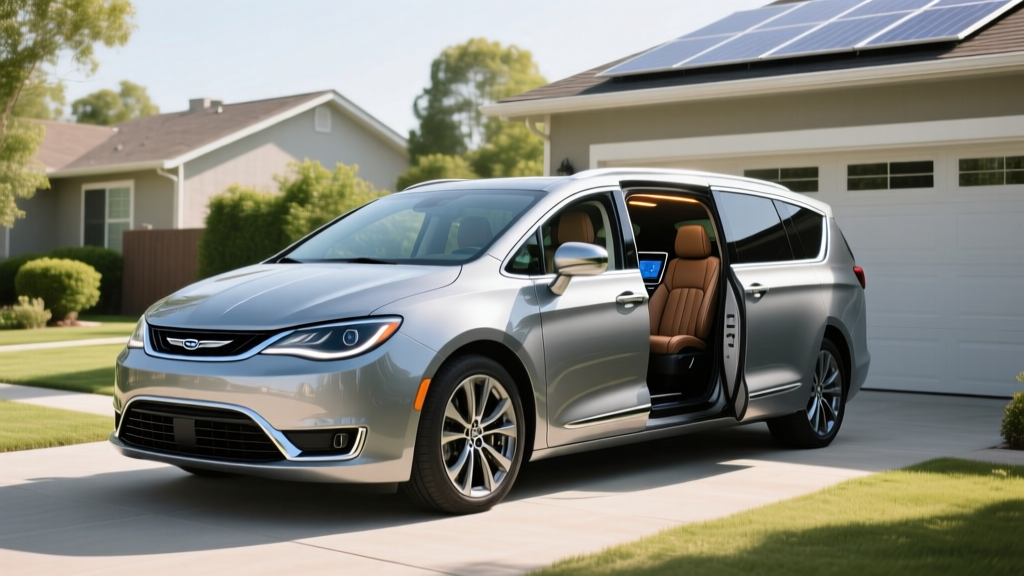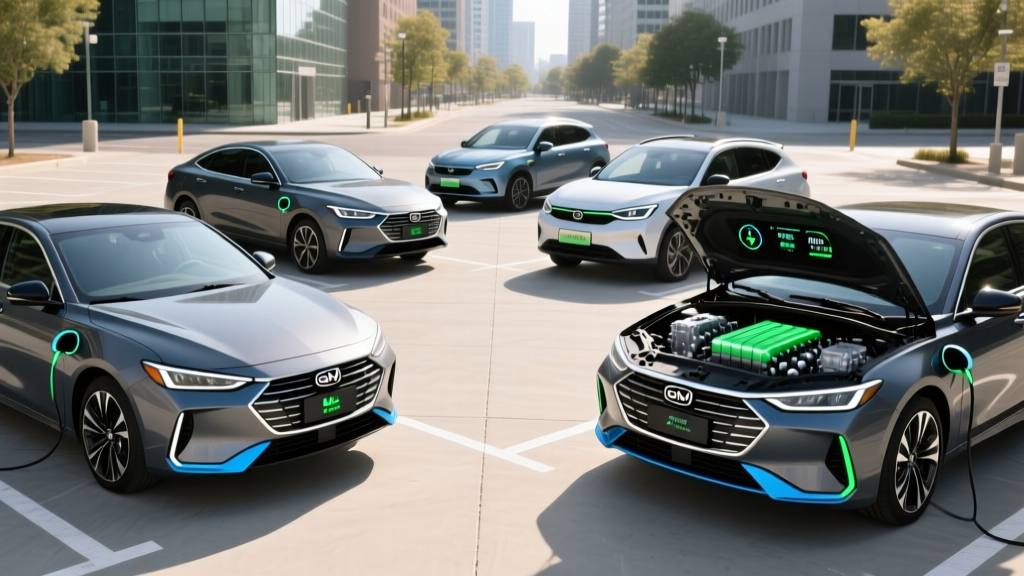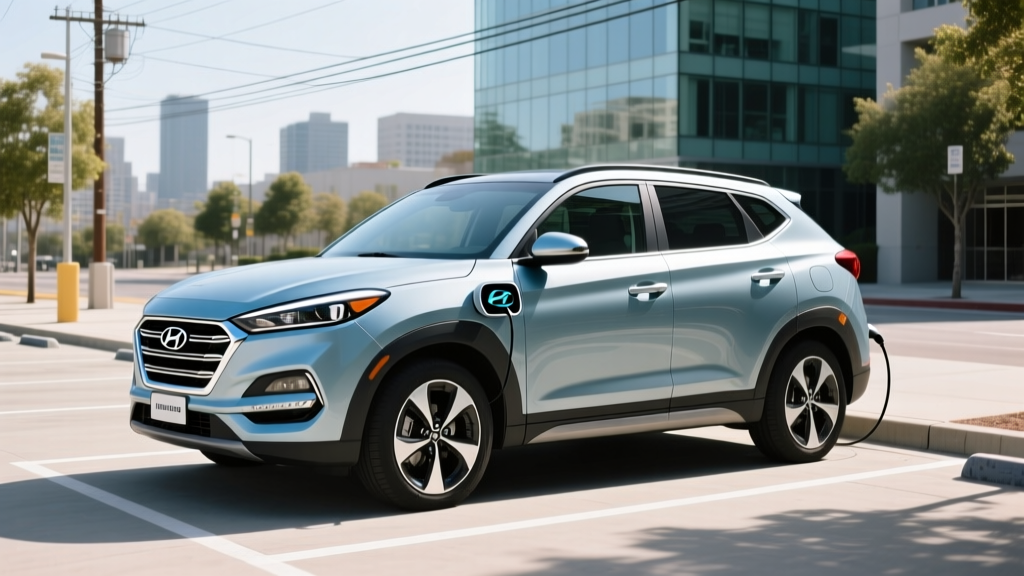
The 2021 Hyundai Tucson Plug-In Hybrid arrived as the first electrified variant of Hyundai's compact SUV, slotting between the conventional Tucson Hybrid and a fully electric vehicle. For buyers who want meaningful electric-only commuting without the range commitment of a full BEV, this PHEV offered a compelling middle ground. Now several model years later, the 2021 Tucson PHEV remains a popular option on the used market — and understanding its real-world efficiency, battery longevity, and ownership economics is essential before signing on the dotted line.
This guide breaks down every spec that matters: electric-only range, EPA MPG, powertrain output, charging logistics, battery warranty, and how the 2021 Tucson PHEV stacks up against both conventional hybrids and full EVs in 2026.
HEV vs PHEV: What's the Actual Difference?
Hyundai sold the 2021 Tucson in two electrified flavors, and confusing them is easy — especially on dealer lots where badges look similar.
| Attribute | Tucson Hybrid (HEV) | Tucson Plug-In Hybrid (PHEV) |
|---|---|---|
| Battery capacity | 1.49 kWh (small buffer) | 13.8 kWh usable (larger pack) |
| Plug-in charging | No — charges via regen & engine only | Yes — Level 1 & Level 2 AC |
| Electric-only range | ~1 mile at low speed | 33 miles (EPA) |
| Combined horsepower | 226 HP | 261 HP |
| EPA combined MPG/MPGe | 37 MPG combined | 80 MPGe (electric+gas) / 35 MPG (gas-only) |
| Drivetrain | AWD (HTRAC) | AWD (HTRAC) |
| 0–60 mph | ~7.5 sec | ~7.1 sec |
The bottom line: The conventional HEV never plugs in — it recovers energy through regenerative braking and the gasoline engine. The PHEV has a much larger battery you charge from a wall outlet, enabling 33 miles of pure electric driving before the gas engine takes over. If your commute is under 30 miles round-trip and you can charge at home, the PHEV can operate as a de facto EV most weekdays.
Electric-Only Range and Total Driving Range
EPA Electric-Only Range: 33 miles
Real-World Expectation: 27–31 miles in mixed driving; as low as 22–25 miles in sustained highway or cold weather (below 40°F).
Total Combined Range (Electric + Gasoline): ~400 miles with a full 13.7-gallon tank and charged battery.
The 13.8 kWh battery pack (lithium-ion polymer, NMC chemistry) delivers the full 33-mile EPA figure in moderate city driving where regenerative braking recaptures energy at every stoplight. On the highway at 70+ mph, expect that figure to drop by roughly 15–20% because electric motors are less efficient at sustained high speeds and there's no regen benefit.
Cold weather is the bigger range killer. Below freezing, the battery's internal resistance increases and cabin heating draws from the pack, cutting electric-only range to roughly 22–25 miles. The Tucson PHEV uses a heat pump for cabin climate, which mitigates this somewhat compared to resistive heaters, but physics still wins in deep winter.
Once the battery depletes to its buffer threshold (around 15–18% SoC, which the car manages automatically), the 1.6-liter turbocharged four-cylinder engine takes over seamlessly. You won't feel a jarring transition — the system blends modes based on throttle input and speed.
Fuel Economy: EPA MPG and Real-World Numbers
| Mode | City | Highway | Combined |
|---|---|---|---|
| Charge-Depleting (Electric+Gas blended) | 80 MPGe | ||
| Charge-Sustaining (Gas-Only, battery depleted) | 33 MPG | 37 MPG | 35 MPG |
How to read this table: MPGe (miles per gallon equivalent) measures efficiency when the battery has charge and the car blends electric and gasoline operation. Once the battery is depleted and you're running purely on gasoline, the Tucson PHEV returns 35 MPG combined — a figure that's actually slightly lower than the conventional Tucson Hybrid's 37 MPG combined, due to the extra weight of the larger battery pack.
Real-world MPG reality check: Owners who charge nightly and commute under 30 miles may burn almost no gasoline on weekdays, seeing effective "MPG" well over 100 MPGe. Owners who rarely charge will see 33–36 MPG in mixed driving — essentially operating a slightly heavier conventional hybrid. According to fueleconomy.gov, the annual fuel cost estimate assumes 15,000 miles per year with a mix of electric and gasoline operation.
The key insight: a PHEV's efficiency is entirely dependent on your charging habits. Without plugging in, you're carrying 300+ lbs of battery you never use.
Powertrain, Performance, and Charging Specs
| Engine | 1.6L turbocharged GDI 4-cylinder (178 HP / 195 lb-ft) |
| Electric Motor | 66.9 kW permanent-magnet synchronous (90 HP / 195 lb-ft) |
| Combined System Output | 261 HP / 258 lb-ft torque |
| Transmission | 6-speed automatic (no CVT) |
| Battery | 13.8 kWh lithium-ion polymer (NMC chemistry) |
| Onboard Charger | 7.2 kW (Level 2 AC) |
| DC Fast Charging | Not supported |
| Level 1 Charge Time (120V, 12A) | ~11 hours (0–100%) |
| Level 2 Charge Time (240V, 32A) | ~2 hours (0–100%) |
| Charge Port | J1772 (standard AC connector) |
| 0–60 mph | ~7.1 seconds |
| Drivetrain | HTRAC AWD |
| Towing Capacity | 2,000 lbs |
| Cargo Volume | 38.7 cu ft (rear seats up) / 80.3 cu ft (folded) |
Charging in practice: The 7.2 kW onboard charger is competitive for the class. On a 240V Level 2 home charger or public AC station, a full 0–100% charge takes roughly two hours — practical for topping up during a workday or between errands. Level 1 (standard 120V household outlet) will replenish the pack overnight in about 11 hours, which works for drivers who park in a garage with a standard outlet and drive under 33 miles daily.
Important limitation: The 2021 Tucson PHEV does not support DC fast charging. You will not find a CCS or CHAdeMO port on this vehicle. All charging is AC-only via the J1772 connector. For a 13.8 kWh battery, this is acceptable — DC fast infrastructure is designed for 60+ kWh BEV packs, and the cost/weight tradeoff for DC capability on a small PHEV battery isn't justified.
The 261 HP combined output makes this the quickest Tucson variant of its generation. The 6-speed automatic (rather than a CVT) delivers more natural shift feel and avoids the rubber-band sensation some hybrid CVTs produce.
Battery Warranty, Reliability, and Replacement Cost
Hybrid/PHEV Battery Warranty: 10 years / 100,000 miles (whichever comes first)
Capacity Retention Threshold: Hyundai covers the battery if it falls below approximately 70% of original capacity during the warranty period.
Powertrain Warranty: 10 years / 100,000 miles (engine, motor, transmission)
Basic Vehicle Warranty: 5 years / 60,000 miles
Hyundai's 10-year/100,000-mile hybrid battery warranty is among the best in the industry and applies to the original owner. For the 2021 model year, that coverage extends through roughly 2031 or 100,000 miles — meaning most used 2021 Tucson PHEVs purchased in 2026 still have substantial factory battery warranty remaining, provided the vehicle hasn't exceeded the mileage cap and the warranty transfers (Hyundai's hybrid battery warranty is transferable to subsequent owners, though the powertrain warranty drops to 5 years/60,000 miles for second owners — verify with your dealer).
Reliability track record: The 1.6L turbo engine and the PHEV powertrain have proven durable in Hyundai's broader lineup (Ioniq PHEV, Nexo fuel-cell platform sharing components). The NMC lithium-ion polymer pack uses a liquid thermal management system that keeps cell temperatures in an optimal range, reducing degradation risk compared to passively cooled packs. According to NHTSA records, the 2021 Tucson PHEV has no major battery-related recalls.
Battery replacement cost: If the pack eventually needs replacement outside warranty, expect a cost between $4,000 and $6,500 for the battery module, plus $500–$1,000 in labor. This is significantly less than full BEV battery replacements ($10,000–$20,000+) because the PHEV pack is roughly one-fifth to one-sixth the size. However, most PHEV batteries outlast 150,000+ miles with gradual capacity loss rather than sudden failure.
Pricing, Tax Credits, and Ownership Economics
Original MSRP (2021 model year):
- SEL Convenience: ~$35,310 (including destination)
- Limited: ~$39,410 (including destination)
Used market pricing (2026): Expect to pay roughly $22,000–$30,000 depending on mileage, condition, and trim level.
Federal tax credit — current rules: The 2021 Tucson PHEV originally qualified for a $7,500 federal tax credit under the pre-IRA §30D rules, since Hyundai had not yet hit the 200,000-vehicle manufacturer cap. However, under current IRS §30D rules (post-Inflation Reduction Act), the eligibility framework has changed substantially:
- New vehicle purchase: The 2021 Tucson PHEV is no longer available new, so new-vehicle §30D credit is moot.
- Used EV credit (§25E): If purchasing from a dealer in 2026, the used-clean-vehicle credit may apply — up to $4,000 or 30% of the sale price (whichever is lower), provided the sale price is under $25,000, buyer income is under $75,000 (single) / $150,000 (joint), and the vehicle is at least two model years old.
- Point-of-sale transfer: The used credit can be transferred to the dealer at purchase, reducing your out-of-pocket cost immediately.
Critical caveat: Used-vehicle credit eligibility depends on the specific VIN, dealer participation, and your tax situation. Confirm with a tax professional before relying on this credit. State incentives vary widely — check your state's energy office or AFDC incentive database for local rebates.
Who Should Buy the Tucson PHEV vs. a Full EV or Gas Car?
Choose the 2021 Tucson PHEV if:
- Your daily commute is 20–35 miles round-trip and you can charge at home (Level 1 or 2).
- You take regular road trips where EV charging infrastructure is sparse or unreliable.
- You want AWD capability for snow/rain without the fuel penalty of a gas-only SUV.
- You're not ready to commit to a full BEV but want to reduce gasoline consumption significantly.
Choose a full BEV (e.g., Hyundai Ioniq 5, Tesla Model Y) if:
- You have reliable home Level 2 charging and your daily driving rarely exceeds 200 miles.
- You want to eliminate gasoline costs entirely and minimize maintenance (no oil changes, fewer moving parts).
- You qualify for the full $7,500 new-vehicle §30D credit on a current-model BEV.
Choose the conventional Tucson Hybrid (HEV) if:
- You cannot charge at home (apartment, street parking, no garage outlet).
- You want the simplicity of gas-only refueling with better MPG than a non-hybrid SUV.
- You want a lower purchase price and don't need electric-only operation.
Pros
- 33 miles electric-only covers most commutes
- 261 HP — quickest Tucson of its generation
- AWD standard across all trims
- 10-year/100,000-mile battery warranty
- No range anxiety — gas engine as backup
- 7.2 kW onboard charger for quick Level 2 top-ups
Cons
- No DC fast charging capability
- 35 MPG gas-only is lower than the HEV's 37 MPG
- Smaller cargo area vs. gas Tucson (battery packaging)
- PHEV premium over HEV (~$4,000–$5,000 when new)
- Only two trims available (SEL Convenience, Limited)
- Electric range drops significantly in cold weather
Frequently Asked Questions
How many MPG does the 2021 Hyundai Tucson Plug-In Hybrid get?
The EPA rates the Tucson PHEV at 80 MPGe when operating with a charged battery (blending electric and gasoline power). Once the battery depletes and the vehicle runs on gasoline alone, it returns 35 MPG combined (33 city / 37 highway). Real-world gas-only MPG typically falls between 33–36 MPG depending on driving style and terrain.
How far can the 2021 Tucson PHEV go on electric power only?
The EPA rates it at 33 miles of electric-only range. In real-world driving, expect 27–31 miles in moderate conditions, dropping to 22–25 miles in freezing temperatures or sustained highway speeds above 70 mph. The vehicle seamlessly transitions to hybrid mode once the battery reaches its buffer threshold — you never get stranded.
Does the 2021 Tucson PHEV qualify for a tax credit in 2026?
As a used vehicle purchase, it may qualify for the federal used clean vehicle credit (§25E) of up to $4,000, provided the sale price is under $25,000, your income is below IRS thresholds ($75,000 single / $150,000 joint), and you purchase from a licensed dealer. The original $7,500 new-vehicle credit is no longer available since the model year is discontinued new. Consult a tax professional and check IRS.gov for current rules.
Is the hybrid battery reliable, and what does replacement cost?
Hyundai's PHEV battery packs have proven reliable, backed by a 10-year/100,000-mile warranty covering capacity loss below ~70%. Liquid thermal management helps prolong cell life. Out-of-warranty replacement costs $4,000–$6,500 for the battery plus labor, but most PHEV packs last well beyond 150,000 miles with gradual degradation rather than failure.
Can I charge the Tucson PHEV at a regular household outlet?
Yes. Level 1 charging on a standard 120V/12A outlet takes approximately 11 hours for a full charge. This works well if you park in a garage with an accessible outlet and drive under 33 miles daily — the car replenishes overnight. For faster charging, a 240V Level 2 station (7.2 kW) fills the battery in about 2 hours.
Hybrid vs PHEV vs EV — which powertrain fits my lifestyle?
If you can charge at home and commute under 35 miles, the PHEV offers the best of both worlds: electric weekdays, gas-engine flexibility for road trips. If you can't charge at home, a conventional HEV gives you better gas-only MPG without the PHEV's price premium. If you have home charging, rarely drive over 200 miles daily, and want zero gasoline costs, a full BEV is the most economical long-term choice.