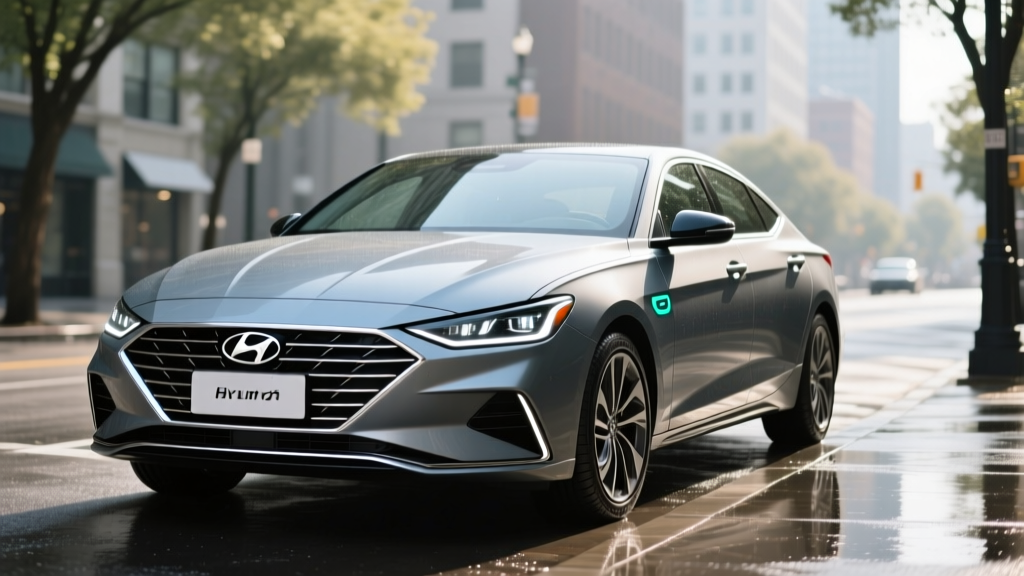
The 2021 Hyundai Sonata Hybrid occupies a specific niche: a midsize sedan that squeezes maximum fuel economy from a conventional hybrid powertrain without requiring a plug, a lifestyle change, or a premium price. Now available on the used market at a significant discount from its original MSRP, the Sonata Hybrid deserves a fresh look for buyers weighing their options against newer hybrids, plug-in hybrids, and full EVs in 2026.
This guide covers everything a prospective buyer needs — EPA fuel economy versus real-world numbers, powertrain specs, battery longevity, reliability data, and how the Sonata Hybrid stacks up against the alternatives.
2021 Hyundai Sonata Hybrid: Key Specs at a Glance
| Specification | Value |
|---|---|
| Powertrain Type | Conventional Hybrid (HEV) — no plug required |
| Engine | 2.0L inline-4 GDI + electric motor |
| Combined Horsepower | 192 hp (150 hp engine + 39 kW / 52 hp motor) |
| Transmission | 6-speed automatic |
| EPA MPG (City / Highway / Combined) | 50 / 54 / 52 (Blue trim); 45 / 51 / 47 (SEL/Limited) |
| Fuel Tank Capacity | 13.2 gallons |
| Total Driving Range (EPA est.) | ~686 miles (Blue); ~620 miles (SEL/Limited) |
| 0–60 mph | ~7.6 seconds |
| Battery Type | Lithium-ion polymer, 1.76 kWh |
| Hybrid Battery Warranty | 10 years / 100,000 miles (original owner); transfers to 10 yr/100k on certified pre-owned |
| Original MSRP (2021) | $27,750 (Blue) – $35,300 (Limited) |
| Typical Used Price (2026) | $16,000 – $23,000 depending on trim and mileage |
Fuel Economy: EPA Numbers vs. Real-World MPG
The 2021 Sonata Hybrid's headline figure is 52 MPG combined on the Blue trim, according to fueleconomy.gov. The higher-equipped SEL and Limited trims, which add weight from features like leather seats, a panoramic sunroof, and larger 17-inch wheels, drop to 47 MPG combined.
| Trim | City MPG | Highway MPG | Combined MPG |
|---|---|---|---|
| Blue | 50 | 54 | 52 |
| SEL | 45 | 51 | 47 |
| Limited | 45 | 51 | 47 |
Real-World MPG: What Owners Actually See
Hybrids like the Sonata tend to exceed their EPA city ratings in stop-and-go traffic because regenerative braking recaptures energy that a gas car wastes as heat. In mixed suburban driving with frequent stops, owners commonly report 50–55 MPG in the Blue trim. Highway-only driving at 75+ mph typically yields 44–48 MPG in the Blue and 40–44 in the SEL/Limited, as aerodynamic drag reduces the hybrid system's advantage.
Cold weather impacts all hybrids. Expect a 5–10% MPG reduction in freezing temperatures because the gasoline engine runs more frequently to provide cabin heat and because battery chemistry becomes less efficient. In sustained sub-30°F conditions, Blue-trim owners should plan for roughly 45–48 MPG combined rather than 52.
Hybrid vs. Plug-In Hybrid vs. Full EV: Which Fits You?
The 2021 Sonata was sold in the U.S. only as a conventional hybrid (HEV). Hyundai did offer a Sonata Plug-In Hybrid in earlier model years (2016–2017), but it was discontinued before the 2020 redesign. If you're considering electrification, here's how the three paths compare:
Conventional Hybrid (HEV) — Like the 2021 Sonata Hybrid
- No plug needed. Refuels at any gas station.
- Best for: Drivers without home charging access, apartment dwellers, road-trippers, and those who want maximum simplicity.
- Trade-off: Still burns gasoline; no electric-only driving mode.
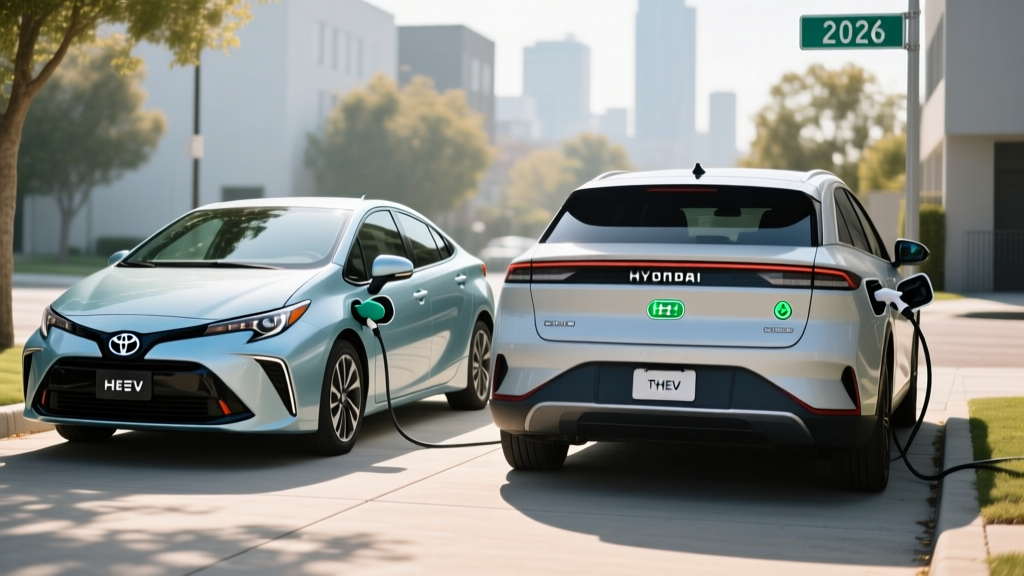
Plug-In Hybrid (PHEV) — e.g., Toyota Prius Prime, Hyundai Tucson PHEV
- Plugs in. Offers 25–44 miles of electric-only range before the gas engine engages.
- Best for: Drivers with home Level 2 charging who commute under 40 miles round-trip but still want gas flexibility for long trips.
- Trade-off: Higher purchase price; heavier; requires charging infrastructure to realize full benefit.
Battery Electric Vehicle (BEV) — e.g., Hyundai Ioniq 6, Tesla Model 3
- 100% electric. Zero tailpipe emissions; lowest per-mile fuel cost.
- Best for: Drivers with reliable home or workplace charging, predictable commutes, and access to DC fast charging for road trips.
- Trade-off: Higher upfront cost (though narrowing); charging logistics on long trips; range reduction in extreme cold (20–30%).
If you lack access to a home charger and your priority is simply spending less at the gas pump without changing your fueling habits, the Sonata Hybrid HEV is the straightforward answer.
Powertrain Deep Dive: How the Sonata Hybrid Works
The 2021 Sonata Hybrid pairs a 2.0-liter GDI inline-4 engine (150 hp, 139 lb-ft torque) with a 39 kW (52 hp) electric motor integrated into the transmission housing. Combined system output is 192 hp. Unlike Toyota's planetary-gear e-CVT approach, Hyundai uses a conventional 6-speed automatic transmission, which gives the Sonata Hybrid a more natural acceleration feel — no rubber-band effect.
The 1.76 kWh lithium-ion polymer battery pack sits behind the rear seats. This is a small battery by EV standards, but it's not meant to drive the car on electric power alone for meaningful distances. Instead, it serves as an energy buffer: capturing regenerative braking energy and deploying it to assist the gas engine during acceleration, and enabling brief electric-only operation at low speeds (typically under 25 mph in light-throttle conditions).
The Sonata Hybrid uses Hyundai's Active Shift Control technology, which synchronizes motor and engine RPMs during gear changes to reduce shift shock and improve efficiency. The result is smooth, unobtrusive hybrid operation that most drivers wouldn't distinguish from a conventional automatic.
Battery Longevity, Warranty, and Replacement Cost
Hybrid Battery Warranty
Hyundai covers the Sonata Hybrid's battery pack for 10 years or 100,000 miles for the original owner. For second and subsequent owners, Hyundai's standard powertrain warranty transfers at 10 years / 100,000 miles for certified pre-owned vehicles, or 5 years / 60,000 miles for non-CPO used vehicles. Always verify warranty transfer status with a Hyundai dealer using the VIN before purchasing.
In states that follow California Air Resources Board (CARB) emissions rules — including California, New York, Massachusetts, and several others — hybrid battery coverage may extend to 10 years / 150,000 miles under emissions-component warranties.
How Long Do Hyundai Hybrid Batteries Actually Last?
Hyundai's lithium-ion polymer hybrid batteries have proven durable in real-world use. The Sonata Hybrid's small 1.76 kWh pack experiences shallow charge-discharge cycles (it never fully depletes or fully charges), which dramatically extends cell life. Based on data from Hyundai and Kia hybrid platforms sharing similar battery architecture, degradation-related failures before 150,000 miles are uncommon.
Reports from high-mileage Sonata and Optima hybrid owners (the Kia Optima Hybrid shares the same powertrain family) indicate that batteries routinely last 150,000–200,000+ miles before significant capacity loss. This is consistent with industry-wide hybrid battery longevity data.
Battery Replacement Cost
If a replacement is needed out of warranty, expect to pay between $2,000 and $3,500 for a new Hyundai hybrid battery pack, plus $300–$600 in labor. Refurbished or aftermarket packs are available for $1,000–$1,800. Individual cell module replacement (rather than the full pack) is sometimes possible for $500–$1,200 at specialized hybrid repair shops.
Reliability and Ownership Costs
The 2021 Sonata Hybrid has earned solid reliability marks. IIHS named it a Top Safety Pick when equipped with specific headlights. The hybrid system adds fewer moving parts than a conventional powertrain (no alternator, no starter motor, no traditional friction brakes wearing quickly thanks to regen), which reduces long-term maintenance costs.
Common maintenance items mirror those of any modern Hyundai: oil changes every 7,500 miles (the engine runs less, so oil degrades more slowly), cabin air filter replacement, and tire rotation. Brake pads often last 80,000+ miles due to regenerative braking handling most deceleration.
Insurance costs for the Sonata Hybrid are generally comparable to the gas Sonata — sometimes slightly lower due to the vehicle's safety features and lower-risk driver demographic. Expect annual insurance premiums of $1,200–$1,800 depending on your state, age, and driving record.
Tax Credits and Incentives: What Applies in 2026?
The 2021 Hyundai Sonata Hybrid is a conventional hybrid (HEV), not a plug-in hybrid or battery electric vehicle. This distinction is critical for incentive eligibility:
- Federal §30D Clean Vehicle Credit ($7,500): NOT eligible. This credit applies only to plug-in electric vehicles (BEVs and PHEVs) that meet battery sourcing, MSRP caps, and buyer income limits per IRS guidelines.
- Federal Used Clean Vehicle Credit (§25E, up to $4,000): NOT eligible. This credit also requires a plug-in electric vehicle.
- State hybrid incentives: A handful of states and localities offer small rebates or HOV lane access for conventional hybrids, but these programs are limited and vary by jurisdiction. Check your state's energy office or DMV for current offerings.
While the Sonata Hybrid doesn't qualify for federal tax credits, its lower used-market price ($16,000–$23,000 in 2026) and exceptional fuel economy deliver strong value without needing incentive assistance. At 52 MPG combined and $3.25/gallon gas (2026 national average), a driver covering 15,000 miles/year would spend roughly $938 annually on fuel — compared to $1,875 for a 26 MPG gas-only midsize sedan. That's approximately $937 in annual fuel savings.
Pros and Cons: The Honest Assessment
Pros
- 52 MPG combined (Blue trim) — among the highest for any midsize sedan
- No plug required; fuels exactly like a gas car
- Smooth 6-speed automatic (no CVT drone)
- Strong standard safety tech: forward collision avoidance, lane keeping, blind-spot monitoring
- Spacious cabin with 16.0 cu ft trunk (battery doesn't significantly intrude)
- 10-year / 100,000-mile hybrid battery warranty (original owner)
- Competitive used pricing in 2026
Cons
- SEL and Limited trims drop to 47 MPG combined
- Modest 192 hp — adequate for commuting, not sporty
- No plug-in hybrid variant available for 2021 model year
- Road noise on highway is noticeable vs. some competitors
- No spare tire — tire repair kit only
- Hyundai's infotainment is functional but dated vs. 2025–2026 systems
- No federal tax credit eligibility
Who Should Buy the 2021 Sonata Hybrid?
Choose the 2021 Sonata Hybrid if:
- You want maximum MPG without plugging in or changing your fueling routine
- You live in an apartment or lack access to home/workplace EV charging
- You drive 15,000+ miles/year and want to minimize fuel costs
- You prefer a conventional driving experience with proven reliability
- You're buying used and want strong value under $25,000
Look elsewhere if:
- You want electric-only driving for short commutes (consider a PHEV like the Toyota Prius Prime or a used Hyundai Ioniq PHEV)
- You want to eliminate gasoline entirely (consider a BEV like the Hyundai Ioniq 5 or Chevrolet Bolt EUV)
- You prioritize acceleration and sporty handling (the Sonata Hybrid is tuned for comfort and efficiency)
- You frequently drive in mountainous terrain at high speeds, where hybrid efficiency drops significantly
Frequently Asked Questions
How many MPG does the 2021 Hyundai Sonata Hybrid get?
The Blue trim achieves 50 city / 54 highway / 52 combined MPG per the EPA. The SEL and Limited trims rate at 45 city / 51 highway / 47 combined. Real-world city driving often matches or slightly exceeds EPA figures, while sustained highway driving at 75+ mph typically returns 2–5 MPG below the EPA highway rating.
Can the 2021 Sonata Hybrid drive on electric power alone?
Only at very low speeds (under ~25 mph) with light throttle input, and only for short distances (a few hundred yards). The 1.76 kWh battery is not designed for meaningful electric-only range. This is a conventional hybrid, not a plug-in hybrid.
Does the 2021 Sonata Hybrid qualify for any federal tax credit?
No. The federal §30D Clean Vehicle Credit and the §25E Used Clean Vehicle Credit both require a plug-in electric vehicle (BEV or PHEV). The Sonata Hybrid is a conventional HEV and is not eligible for any federal purchase incentive.
Is the hybrid battery reliable, and what does replacement cost?
Hyundai's hybrid batteries have proven durable, commonly lasting 150,000–200,000+ miles. The battery is covered for 10 years / 100,000 miles under warranty (original owner). Out-of-warranty replacement costs $2,000–$3,500 for a new pack, or $1,000–$1,800 for a refurbished unit.
How does the Sonata Hybrid compare to the Toyota Camry Hybrid?
The 2021 Camry Hybrid LE rates at 52 city / 53 highway / 52 combined MPG — essentially identical to the Sonata Hybrid Blue on paper. The Camry Hybrid uses a 2.5L engine with 208 combined hp (more power) and Toyota's e-CVT. The Sonata Hybrid offers a more conventional 6-speed automatic feel, slightly more rear legroom, and a longer standard warranty. Both are excellent choices; the decision often comes down to styling preference, dealership proximity, and used-market pricing in your area.
Does the hybrid system require special maintenance?
No. Beyond standard maintenance (oil changes, fluid checks, tire rotation), the hybrid system requires no special service. The inverter coolant should be inspected per the maintenance schedule, and the hybrid battery cooling vents (located near the rear seats) should be kept clear of obstructions. Regenerative braking extends brake pad life significantly compared to the gas-only Sonata.