Quick Verdict: The Discontinued PHEV That Still Makes Sense
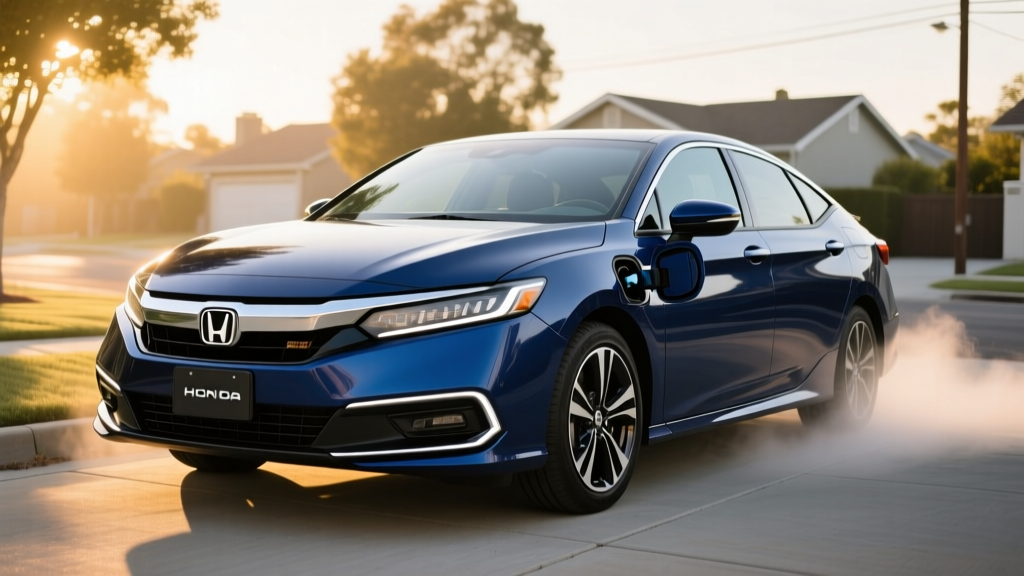
Honda discontinued the Clarity Plug-In Hybrid after the 2021 model year, but this midsize sedan remains one of the most practical PHEVs on the used market in 2026. With an EPA-rated 47 miles of electric-only range, 110 MPGe, and a combined 212 horsepower from its two-motor hybrid system, the Clarity PHEV bridges the gap between a daily electric commuter and a gas-powered road-tripper — without the range anxiety of a full BEV.
If you're shopping the used market, a well-maintained 2021 Clarity Plug-In Hybrid typically lists between $22,000 and $29,000 depending on mileage and condition. That's compelling value for a PHEV with this much electric range, especially compared to new PHEVs that start above $35,000.
| Spec | Value |
|---|---|
| EPA Electric-Only Range | 47 miles |
| Total Combined Range | ~340 miles |
| EPA MPGe (Electric + Gas) | 110 MPGe |
| EPA MPG (Gas Only, Combined) | 44 MPG |
| Battery Capacity (Gross / Usable) | 17.0 kWh / ~14.0 kWh |
| Battery Chemistry | Lithium-Ion (NMC) |
| Combined System Horsepower | 212 hp |
| Engine | 1.5L Atkinson-cycle 4-cyl + 2 electric motors |
| 0–60 mph | ~7.5 seconds |
| Level 1 Charge Time (120V, 12A) | ~12 hours (0–100%) |
| Level 2 Charge Time (240V, 32A) | ~2.5 hours (0–100%) |
| DC Fast Charging | Not available |
| Original MSRP (Base / Touring) | $33,400 / $36,620 |
| Battery Warranty (Original) | 8 yr / 100,000 mi (10 yr / 150,000 mi in CARB states) |
HEV vs. PHEV: What the Clarity Plug-In Hybrid Actually Is
Before evaluating the Clarity, it's worth clarifying the distinction between a conventional hybrid (HEV) and a plug-in hybrid (PHEV), because Honda sold both versions of the Clarity — and they behave very differently.
| Feature | HEV (e.g., Clarity Hybrid) | PHEV (e.g., Clarity Plug-In Hybrid) |
|---|---|---|
| Plug-in Charging | No — charges via regenerative braking and engine | Yes — plug in to charge the larger battery |
| Battery Size | ~1.0–1.5 kWh | 17.0 kWh (Clarity PHEV) |
| Electric-Only Range | ~1 mile or less at low speed | 47 miles EPA (Clarity PHEV) |
| Daily Commute on Electric | No | Yes — most commutes under 47 mi |
| Gas Engine | Always assisting or driving | Activates only after battery depletes (or under heavy load) |
| Fuel Cost Savings | Moderate (better MPG) | High (if charged daily) |
The 2021 Honda Clarity Plug-In Hybrid is squarely a PHEV. Its 17.0 kWh battery pack is large enough to handle most daily commutes entirely on electricity, then the 1.5L Atkinson-cycle engine takes over for longer drives. You never have to plug it in — it works as a very efficient hybrid even on a depleted battery — but plugging in is where the real savings come from.
Fuel Economy: EPA Ratings and Real-World MPG
The EPA rates the 2021 Clarity PHEV at 110 MPGe combined when operating in electric mode and 44 MPG combined when running on gasoline alone. Here's the full breakdown per fueleconomy.gov:
| Mode | City | Highway | Combined |
|---|---|---|---|
| Electric (MPGe) | 118 MPGe | 102 MPGe | 110 MPGe |
| Gasoline Only (MPG) | 44 MPG | 40 MPG | 44 MPG |
Real-world expectations: The Clarity PHEV's gas-only MPG is genuinely impressive for a 4,000-pound sedan. In mixed city/highway driving after the battery depletes, owners consistently report 42–46 MPG — right around the EPA sticker. In city-heavy driving, the two-motor hybrid system can actually exceed 44 MPG thanks to aggressive regenerative braking and frequent engine-off coasting. Highway driving at 75+ mph will drop you closer to 38–40 MPG.
On the electric side, the 47-mile EPA range is achievable in mild weather (55–75°F) at moderate speeds. Expect 38–42 miles in cold weather (below 35°F) due to cabin heating demands and reduced battery efficiency, and roughly 40–44 miles at sustained highway speeds above 70 mph.
EPA electric range: 47 miles
Real-world (mild weather, mixed driving): 42–47 miles
Real-world (cold weather, below 35°F): 35–42 miles
Real-world (highway 75+ mph): 38–44 miles
Gas-only total range (depleted battery): ~290–310 miles on a 10.2-gallon tank
Battery, Charging, and Powertrain Details
The Clarity PHEV's 17.0 kWh gross lithium-ion battery (approximately 14.0 kWh usable, with a buffer to protect longevity) uses NMC (nickel-manganese-cobalt) chemistry. This is typical for PHEVs of this era — NMC offers high energy density in a compact package, which matters in a sedan where battery space is limited.
Charging options are Level 1 and Level 2 only. The Clarity PHEV does not support DC fast charging — a common limitation for PHEVs, since their smaller batteries don't justify the cost and weight of DC fast-charge hardware. Here's what to expect:
- Level 1 (120V household outlet, 12A): Approximately 1.4 kW, adding about 5–6 miles of range per hour. A full charge from empty takes roughly 12 hours — fine for overnight charging if your daily drive is under 40 miles.
- Level 2 (240V, 32A): Approximately 7.2 kW onboard charger, adding about 25–30 miles of range per hour. A full charge from empty takes about 2.5 hours. This is the recommended home charging setup.
Most Clarity PHEV owners install a Level 2 home charger (typically a $300–$600 unit plus $500–$1,500 for electrician installation, depending on panel proximity). With a Level 2 charger, you can easily top up overnight and start every morning with a full 47-mile electric buffer.
Powertrain: The Clarity PHEV uses Honda's two-motor hybrid system paired with a 1.5L Atkinson-cycle four-cylinder engine. The primary drive motor produces 181 hp and 232 lb-ft of torque; the engine contributes additional power under heavy acceleration or when the battery is depleted. Combined system output is 212 hp. The result is a 0–60 mph time of approximately 7.5 seconds — adequate for merging and passing, though not sporty. The engine is notably smooth and quiet for a four-cylinder, and the transition between electric and gas power is among the most seamless in the PHEV segment.
Reliability, Battery Warranty, and Replacement Cost
The 2021 Clarity PHEV benefits from Honda's strong reliability reputation and a powertrain that's been proven across multiple Honda hybrid models. The two-motor hybrid system has no traditional transmission — it uses an e-CVT arrangement with a lock-up clutch — which eliminates a common failure point in conventional vehicles.
• Hybrid battery: 8 years / 100,000 miles (federal standard)
• Hybrid battery in CARB states (CA, NY, CT, MA, ME, MD, NJ, OR, RI, VT, WA, CO, NV, NM): 10 years / 150,000 miles
• Powertrain: 5 years / 60,000 miles
• Basic: 3 years / 36,000 miles
Note for 2026 used buyers: A 2021 model's federal 8-year battery warranty runs through 2029. CARB-state 10-year coverage runs through 2031. Check whether the warranty transfers to subsequent owners — Honda's hybrid battery warranty typically does transfer.
Battery degradation: PHEV batteries generally degrade more slowly than full BEV batteries because they operate in a narrower state-of-charge window (the buffer prevents full 0% and 100% usage). Most Clarity PHEV owners report minimal range loss — typically 2–5 miles of electric range reduction after 60,000–80,000 miles. This is consistent with NMC chemistry managed conservatively.
Battery replacement cost: If the high-voltage battery fails outside warranty, replacement costs range from $3,000 to $5,000 including parts and labor at a Honda dealer. Third-party hybrid battery refurbishers may offer rebuilt packs for $2,000–$3,500. Given the robust warranty coverage still active on 2021 models in 2026, this is a low-probability expense for most buyers.
According to NHTSA, the 2021 Clarity has no major safety recalls specific to the hybrid battery system. The IIHS did not crash-test the Clarity, which is a minor gap in safety data.
Used Pricing and Tax Credit Eligibility in 2026
Honda originally priced the 2021 Clarity PHEV at $33,400 (base) and $36,620 (Touring). On the used market in 2026, expect to pay:
- $22,000–$25,000: 50,000–80,000 miles, good condition
- $25,000–$29,000: 20,000–50,000 miles, excellent condition
- $29,000+: Under 20,000 miles, certified pre-owned or Touring trim
Federal tax credit for used PHEVs: Under the IRS §25E used clean vehicle credit (current rules per irs.gov), you may qualify for up to $4,000 (30% of the sale price, capped at $4,000) when buying a used Clarity PHEV from a licensed dealer. Key requirements:
- Sale price must be $25,000 or less
- Buyer income limits: $75,000 single / $112,500 head of household / $150,000 joint (modified AGI)
- Vehicle must be at least 2 model years old (2021 qualifies in 2026)
- Must purchase from a licensed dealer (private-party sales don't qualify)
- Vehicle must have a battery capacity of at least 7 kWh (Clarity's 17.0 kWh qualifies)
- Credit is non-refundable — you must have tax liability to use it
The original $7,500 federal new-vehicle credit (§30D) no longer applies since the Clarity is discontinued and sold only as used. However, some states offer additional rebates for used PHEVs — check your state's energy office or DMV for current programs.
Who Should Choose the Clarity PHEV vs. a Full EV or Gas Car?
- Your daily commute is under 45 miles round-trip and you can charge at home
- You want electric commuting but regularly take road trips over 200 miles
- You don't have reliable access to public DC fast chargers for road trips
- You want a comfortable, spacious midsize sedan with a large trunk (15.5 cu ft)
- Your budget is $22,000–$29,000 and you want maximum versatility
Choose a full EV (BEV) instead if:
- You rarely drive more than 250 miles in a single day
- You have home charging and access to DC fast chargers for road trips
- You want zero tailpipe emissions and minimal maintenance (no oil changes, no gas engine)
- You qualify for the full $7,500 §30D new-EV credit on a comparable BEV
Choose a conventional hybrid (HEV) instead if:
- You cannot charge at home or at work
- You want simpler ownership with no plug-in routine
- Your budget is lower and you prioritize MPG over electric-only driving
The Clarity PHEV's sweet spot is the driver who can charge nightly at home, commutes 20–45 miles daily, but still wants the freedom to drive cross-country without planning charging stops. It's a genuine best-of-both-worlds vehicle — and one that Honda's decision to discontinue left a gap in the market that few competitors have filled at this price point.
Pros and Cons at a Glance
- 47-mile EPA electric range — among the best of any PHEV sedan
- 44 MPG combined on gas alone — excellent for a 4,000-lb car
- Spacious interior and 15.5 cu ft trunk (no major battery intrusion)
- Smooth, quiet two-motor hybrid powertrain
- Honda Sensing safety suite standard (AEB, lane-keep, adaptive cruise)
- Battery warranty still active on 2021 models through 2029–2031
- Strong used value at $22K–$29K
- Discontinued — no new models available, limited dealer support
- No DC fast charging capability
- Infotainment system is dated (no wireless CarPlay, sluggish interface)
- Only 212 hp combined — adequate but not quick
- Ground clearance is low (5.1 in) — not ideal for snow or rough roads
- No IIHS crash-test rating available
- Level 1 charging is slow — Level 2 home install strongly recommended
Frequently Asked Questions
How many MPG does the 2021 Honda Clarity Plug-In Hybrid get?
The EPA rates it at 44 MPG combined (44 city / 40 highway) when running on gasoline after the battery is depleted. In electric mode, it achieves 110 MPGe combined. Real-world gas MPG typically lands between 42–46 MPG in mixed driving, with city driving sometimes exceeding 44 MPG thanks to regenerative braking.
How far can the Clarity PHEV go on electric only?
The EPA rates it at 47 miles of electric-only range. In real-world conditions, expect 42–47 miles in mild weather, 35–42 miles in cold weather (below 35°F), and 38–44 miles at sustained highway speeds. Once the battery depletes, the gas engine provides an additional ~290–310 miles of range on the 10.2-gallon fuel tank.
Does the 2021 Clarity PHEV qualify for any tax credit in 2026?
Yes — under the IRS §25E used clean vehicle credit, you may qualify for up to $4,000 if you buy from a licensed dealer for $25,000 or less and meet income limits ($75K single / $150K joint). The original $7,500 new-vehicle credit (§30D) no longer applies. State incentives vary — check your local energy office. Consult a tax professional for eligibility specifics.
Is the 2021 Clarity PHEV reliable, and what does a battery replacement cost?
The Clarity PHEV's two-motor hybrid system is proven and reliable, with no widespread failure reports. The hybrid battery carries an 8-year/100,000-mile warranty (10 years/150,000 miles in CARB states), which still covers 2021 models through at least 2029. If replacement is needed out of warranty, expect $3,000–$5,000 at a dealer or $2,000–$3,500 from a third-party refurbisher. Battery degradation has been minimal in owner reports.
Can I charge the Clarity PHEV at a public DC fast charger?
No. The 2021 Clarity Plug-In Hybrid does not have DC fast-charge capability. It charges via Level 1 (120V, ~12 hours full charge) or Level 2 (240V, ~2.5 hours full charge). This is standard for most PHEVs — the battery is small enough that Level 2 charging is sufficient for overnight replenishment.
How does the Clarity PHEV compare to a Toyota RAV4 Prime or Prius Prime?
The RAV4 Prime offers 42 miles of electric range, AWD, and an SUV form factor but costs significantly more on the used market ($38,000–$45,000). The Prius Prime delivers 40–44 miles of electric range in a smaller, more efficient package but with less interior space and power. The Clarity PHEV sits between them: more electric range than both, more interior space than the Prius, and a lower used price than the RAV4 Prime — but without AWD or SUV utility.