Quick Verdict: A Proven Midsize Hybrid Before Ford Went All-SUV
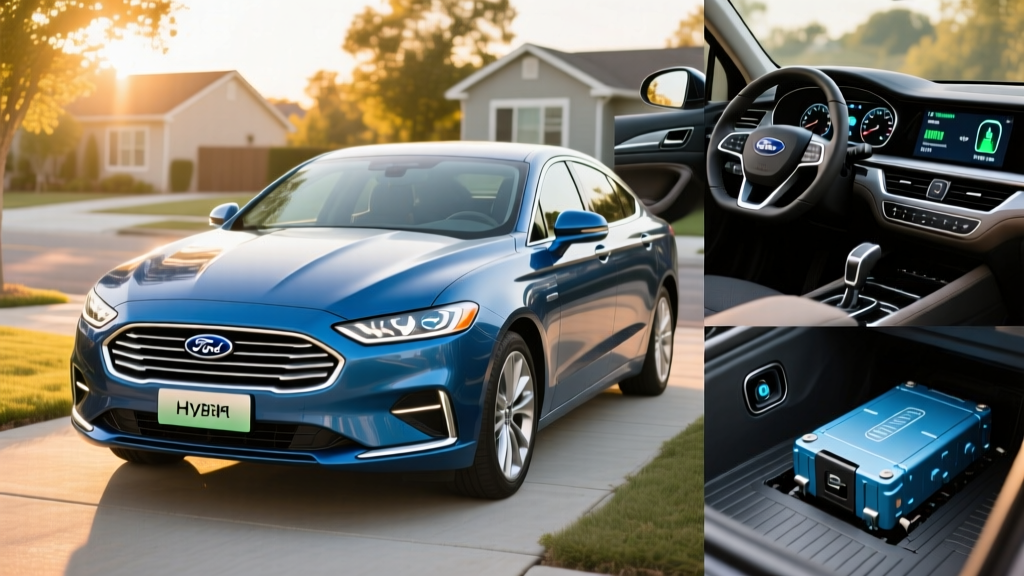
The 2021 Ford Fusion Hybrid was the final model year for Ford's midsize sedan lineup in North America. Built on a mature hybrid powertrain that Ford refined over nearly a decade, the Fusion Hybrid delivers an EPA-estimated 44 MPG combined — a number that still competes with the latest 2026 Toyota Camry Hybrid and Honda Accord Hybrid on the used market. For buyers seeking a comfortable, tech-equipped sedan with genuine fuel savings and no plug-in hassle, the 2021 Fusion Hybrid remains one of the smartest used hybrid purchases available.
As a conventional hybrid (HEV), the Fusion Hybrid never needs to be plugged in. It recovers energy through regenerative braking and its gasoline engine, storing it in a compact lithium-ion battery. If you're comparing it to the plug-in variant — the Fusion Energi — we'll clarify that distinction below, because the two are fundamentally different vehicles with different use cases.
HEV vs PHEV: Fusion Hybrid vs Fusion Energi Explained
Ford sold two electrified Fusion variants in 2021, and confusing them is the most common mistake used buyers make. Here's the breakdown:
| Feature | Fusion Hybrid (HEV) | Fusion Energi (PHEV) |
|---|---|---|
| Powertrain type | Conventional hybrid — no plug | Plug-in hybrid — charges from outlet |
| Battery capacity | 1.4 kWh (usable) | 9.0 kWh (usable, 7.6 kWh for EV mode) |
| Electric-only range | N/A (EV assist only, ~1 mi at low speed) | 26 miles EPA |
| EPA combined MPG / MPGe | 44 MPG combined | 103 MPGe (EV mode) / 42 MPG (gas only) |
| Total range | ~580 miles | ~370 miles (EV + gas combined) |
| Trunk space | 12.0 cu ft | 8.2 cu ft (battery intrudes) |
| Plug-in charging needed? | No — self-charging | Yes — Level 1 (120V) ~7 hrs, Level 2 ~2.5 hrs |
| DC fast charging? | No | No |
The Fusion Hybrid is the right pick if you want maximum simplicity — just fill up with gas and drive. The Energi makes sense only if you have home charging access and a commute under 26 miles round-trip, letting you drive mostly on electricity.
Fuel Economy: EPA Ratings vs Real-World MPG
The 2021 Fusion Hybrid's EPA fuel economy ratings are competitive even against newer midsize hybrids:
| Driving Cycle | EPA Estimate | Real-World Expectation |
|---|---|---|
| City | 44 MPG | 43–48 MPG (hybrids often exceed EPA in stop-and-go) |
| Highway | 41 MPG | 37–40 MPG (sustained 70+ mph reduces regen benefit) |
| Combined | 44 MPG | 40–45 MPG depending on driving mix |
Why city MPG matches combined: Hybrid powertrains thrive in stop-and-go traffic where regenerative braking recovers kinetic energy that would otherwise be wasted as heat in the brake pads. On the highway, the electric motor provides less assist, and aerodynamic drag dominates. Expect roughly 44–48 MPG on urban commutes and closer to 37–40 MPG on long interstate trips.
For context, the EPA's fueleconomy.gov listing confirms the 44/41/44 city/highway/combined split. Owner-reported averages on Fuelly cluster around 41–43 MPG combined, consistent with a mixed driving profile.
Powertrain Specs: 2.0L Atkinson-Cycle + Electric Motor
| Specification | 2021 Ford Fusion Hybrid |
|---|---|
| Engine | 2.0L 4-cylinder Atkinson-cycle |
| Engine output | 141 hp / 129 lb-ft torque |
| Electric motor output | 120 hp (88 kW) |
| Combined system output | 195 hp |
| Transmission | eCVT (planetary gearset, not a belt CVT) |
| 0-60 mph | ~7.8 seconds |
| Drivetrain | Front-wheel drive |
| Hybrid battery | 1.4 kWh lithium-ion (air-cooled) |
| Fuel tank | 13.5 gallons |
| Recommended fuel | 87 octane regular unleaded |
Ford's eCVT is a power-split device using a planetary gearset — not the rubber-belt continuously variable transmissions found in some competitors. This design is mechanically robust and avoids the "rubber-band" acceleration feel that plagues traditional CVTs. The 195 combined horsepower provides adequate acceleration for highway merging, though the Fusion Hybrid prioritizes efficiency over sportiness.
Battery Warranty, Lifespan, and Replacement Cost
Battery longevity is the top concern for used hybrid buyers, and Ford's warranty structure provides meaningful protection:
Ford Hybrid Battery Warranty Coverage
- Standard warranty: 8 years / 100,000 miles (whichever comes first)
- CARB-state warranty: 10 years / 150,000 miles in states adopting California Air Resources Board emissions standards (CA, CO, CT, DE, ME, MD, MA, NJ, NY, OR, RI, VT, WA, and others)
- Coverage trigger: Battery capacity loss below ~70% of original capacity, or any cell/module failure
- Transferability: Warranty transfers to subsequent owners automatically
Real-world degradation data: The Fusion Hybrid's 1.4 kWh battery is small and operates within a narrow state-of-charge window (roughly 40–60% SoC). This shallow-cycling strategy dramatically extends cell life. Most Fusion Hybrid batteries show minimal degradation even at 150,000+ miles. Fleet data from former taxi and rideshare vehicles suggest these packs routinely exceed 200,000 miles before meaningful capacity loss.
Replacement cost if out of warranty: A new OEM hybrid battery pack for the 2021 Fusion Hybrid runs approximately $2,500–$3,500 for the part, plus $500–$800 in labor. Independent hybrid battery shops offer reconditioned packs for $1,500–$2,200 installed. Given the battery's track record, this is a low-probability expense for most buyers.
Used Pricing and Tax Credit Eligibility
The 2021 Fusion Hybrid was discontinued after the 2020 model year in most markets — Ford actually ended Fusion production in July 2020, so any "2021" titled vehicles are late-registered 2020 models or fleet carry-overs. When shopping, you'll primarily find 2017–2020 model years on the used market.
As of early 2026, used 2020 Ford Fusion Hybrid pricing ranges from:
- $15,000–$18,000 — SE trim, 60,000–90,000 miles
- $18,000–$22,000 — Titanium trim, 30,000–60,000 miles
- $22,000–$26,000 — Low-mileage Titanium or SEL, under 30,000 miles
Federal tax credit: The Fusion Hybrid does not qualify for the IRS §30D Clean Vehicle Credit when purchased used. The used-EV credit (§25E) provides up to $4,000 for qualifying pre-owned electric vehicles and plug-in hybrids purchased from a dealer, but the conventional Fusion Hybrid (HEV) does not meet the plug-in requirement. The Fusion Energi (PHEV) may qualify under §25E if all income, price, and dealer requirements are met — the vehicle must be priced at $25,000 or less and the buyer must meet income caps ($75,000 single / $150,000 joint).
Who Should Buy the Fusion Hybrid vs an EV or Gas Car?
Choose the Fusion Hybrid If:
- You want 40+ MPG without changing your fueling habits
- You lack access to home or workplace charging (no plug needed)
- You drive 12,000–20,000 miles/year and want to cut fuel costs by ~40% vs a 28 MPG gas sedan
- You prefer a proven, low-risk powertrain with strong warranty backing
- You want a comfortable midsize sedan rather than a crossover
Look at a Full EV or PHEV Instead If:
- You have home Level 2 charging and want zero tailpipe emissions on daily commutes
- You drive under 40 miles/day and could run entirely on electricity (consider a used Chevy Volt, Prius Prime, or Fusion Energi)
- You want the lowest possible fuel cost — electricity at $0.13/kWh costs roughly $0.04/mile vs the Fusion Hybrid's ~$0.07/mile at $3.10/gallon
- You need all-wheel drive (the Fusion Hybrid is FWD only; consider a RAV4 Hybrid or Tesla Model Y)
Decision Framework
Choose the Fusion Hybrid if your priority is a reliable, no-compromise sedan that slashes fuel costs without requiring any infrastructure changes. It's ideal for apartment dwellers, street parkers, and anyone who doesn't want to think about charging.
Choose a PHEV (Fusion Energi, Prius Prime) if you can install a Level 2 charger at home and most of your daily driving falls under 25–40 miles — you'll run on electricity 80%+ of the time while keeping a gas engine for road trips.
Choose a full BEV (Tesla Model 3, Chevy Bolt) if you have reliable home charging, drive under 250 miles/day, and want the lowest per-mile operating cost with minimal maintenance.
Frequently Asked Questions
How many MPG does the 2021 Ford Fusion Hybrid get?
The EPA rates the 2021 Fusion Hybrid at 44 MPG city, 41 MPG highway, and 44 MPG combined. In real-world mixed driving, owners report 40–45 MPG combined. City-heavy commuters often see 45–48 MPG thanks to frequent regenerative braking.
Does the Fusion Hybrid need to be plugged in?
No. The Fusion Hybrid is a conventional hybrid (HEV). It charges its small 1.4 kWh battery through regenerative braking and the gasoline engine. You fuel it exactly like a normal car — just pump gas. The plug-in variant is the Fusion Energi (PHEV), which is a different model.
How far can the Fusion Energi go on electric only?
The Fusion Energi (PHEV) has an EPA-rated 26 miles of electric-only range on a full charge. This covers most short commutes without the gasoline engine engaging. After the battery depletes, it operates as a conventional hybrid at approximately 42 MPG combined.
Is the 2021 Fusion Hybrid reliable?
Yes. The Fusion Hybrid's powertrain is one of Ford's most reliable offerings. The eCVT transmission has no belts or clutches to wear, and the hybrid battery operates within a conservative charge window that extends cell life. NHTSA gave the Fusion a 5-star overall safety rating, and the model has few powertrain-related complaints relative to its sales volume. Consumer Reports consistently rated the Fusion Hybrid above average for reliability.
What does a Fusion Hybrid battery replacement cost?
If the hybrid battery fails outside the 8-year/100,000-mile warranty, expect to pay $2,500–$3,500 for a new OEM pack plus $500–$800 labor. Reconditioned aftermarket packs are available for $1,500–$2,200 installed. However, real-world data shows these batteries frequently last 200,000+ miles with minimal degradation.
Does the Fusion Hybrid qualify for any tax credit?
The conventional Fusion Hybrid (HEV) does not qualify for any federal tax credit — neither the new-vehicle §30D credit nor the used-vehicle §25E credit, because it cannot be plugged in. The Fusion Energi (PHEV) may qualify for the used-vehicle credit of up to $4,000 under §25E if purchased from a dealer for $25,000 or less and the buyer meets income requirements. Check current IRS guidelines before purchasing, as rules are subject to change.
How does the Fusion Hybrid compare to a 2026 Camry Hybrid?
The 2026 Toyota Camry Hybrid achieves 51 MPG combined (LE FWD) — about 7 MPG better than the Fusion Hybrid. However, a used Fusion Hybrid costs $10,000–$15,000 less than a new Camry Hybrid. If you're buying used and don't need the latest infotainment, the Fusion Hybrid offers 85% of the fuel savings at a fraction of the purchase price. The Camry Hybrid also uses a more refined 5th-gen Toyota Hybrid System with slightly better highway efficiency.