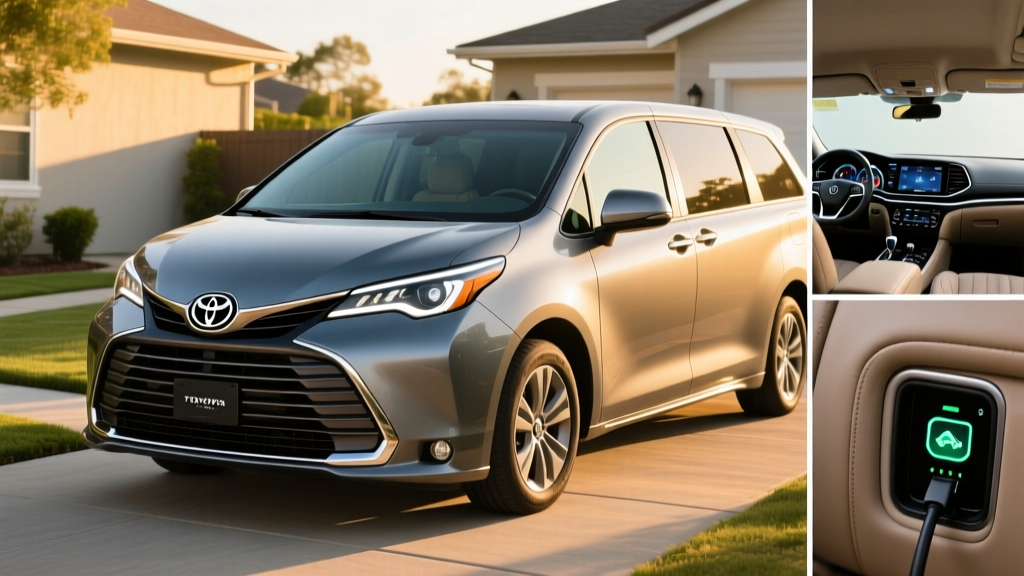
If you are shopping the used minivan market for maximum fuel efficiency without plugging anything in, the 2020 Toyota Sienna hybrid occupies a unique position. It was the final model year of the third-generation Sienna and the last year Toyota offered a hybrid-only variant before the fourth-generation Sienna went hybrid-only across all trims for 2021. That makes the 2020 model a bridge vehicle — a proven, naturally aspirated V6 hybrid paired with Toyota's well-regarded Hybrid Synergy Drive, available at used prices that undercut newer models by thousands.
This guide covers everything a buyer needs to know: real-world fuel economy, the hybrid powertrain, battery longevity, warranty coverage, and how the 2020 Sienna hybrid stacks up against plug-in alternatives and full electric vans in 2026.
2020 Toyota Sienna Hybrid Powertrain and Key Specs
The 2020 Sienna hybrid pairs a 3.5-liter V6 gasoline engine (296 HP on its own) with a front-mounted electric motor and Toyota's hybrid transaxle. Combined system output is 245 net horsepower — slightly less than the non-hybrid V6's 296 HP because the hybrid system prioritizes efficiency over peak output. Power is routed through a continuously variable transmission (CVT) to the front wheels, with an available electronic on-demand AWD system (AWD-e) that uses a rear electric motor.
| Specification | Value |
|---|---|
| Engine | 3.5L V6 + electric motor (Hybrid Synergy Drive) |
| Combined System Output | 245 HP (net) |
| Transmission | eCVT (planetary gearset) |
| Drivetrain | FWD standard; AWD-e optional |
| Hybrid Battery | ~1.9 kWh NiMH (sealed, self-charging) |
| Battery Type | Nickel-metal hydride (NiMH) |
| EPA Fuel Economy (FWD) | 36 MPG combined (36 city / 36 highway) |
| EPA Fuel Economy (AWD-e) | 35 MPG combined (35 city / 35 highway) |
| Fuel Tank Capacity | 20.0 gallons |
| Estimated Total Range | ~720 miles (FWD) |
| 0–60 MPH | ~7.7 seconds (estimated) |
| Towing Capacity | 3,500 lbs |
| Cargo Volume (behind 3rd row) | 39.1 cu ft |
| Max Cargo Volume | 150.0 cu ft |
How Many MPG Does the 2020 Toyota Sienna Hybrid Get?
The EPA rates the front-wheel-drive 2020 Sienna hybrid at 36 MPG city, 36 highway, and 36 combined. The AWD-e variant drops by 1 MPG across the board to 35/35/35. For context, the non-hybrid 2020 Sienna V6 (FWD) is rated at 19 city / 26 highway / 21 combined — the hybrid nearly doubles city efficiency.
| Powertrain | City MPG | Highway MPG | Combined MPG |
|---|---|---|---|
| Hybrid FWD | 36 | 36 | 36 |
| Hybrid AWD-e | 35 | 35 | 35 |
| V6 Gas FWD | 19 | 26 | 21 |
| V6 Gas AWD | 18 | 24 | 20 |
Source: EPA Fuel Economy Guide
Real-World MPG vs. EPA Sticker
Toyota's hybrid system excels in stop-and-go driving, where the electric motor handles low-speed propulsion and regenerative braking recaptures energy. In real-world suburban and city use, many owners report matching or slightly exceeding the 36 MPG combined figure — sometimes hitting 37–38 MPG in warm-weather city driving. Highway-only trips at 75+ MPH tend to drop to 31–33 MPG because the V6 engine carries more of the load at sustained speeds and the aerodynamic profile of a minivan creates significant drag.
Cold weather reduces efficiency by roughly 8–12% due to increased engine idling for cabin heat and reduced battery efficiency in the NiMH pack. Expect 32–33 MPG combined in winter conditions for FWD models. This is a modest penalty compared to the 25–30% range loss EVs experience in cold weather, and it does not affect drivability.
HEV vs. PHEV vs. EV: Which Is Right for Your Family?
The 2020 Sienna hybrid is a conventional hybrid electric vehicle (HEV) — it does not plug in, has no electric-only range to speak of (the small NiMH battery assists the engine for short bursts but cannot propel the van on electricity alone for any meaningful distance), and requires zero changes to your fueling routine. You fill it at a gas station like any other car.
| Factor | HEV (2020 Sienna Hybrid) | PHEV (e.g., Chrysler Pacifica Hybrid) | BEV (e.g., 2026 EV minivan) |
|---|---|---|---|
| Plugs In? | No | Yes (Level 1/2) | Yes (Level 2 + DC fast) |
| Electric-Only Range | ~0 miles | ~32 miles (Pacifica Hybrid) | 250–350+ miles |
| Combined MPG / MPGe | 36 MPG | 30 MPG + 82 MPGe | ~2.0–2.5 kWh/mi |
| Home Charging Needed? | No | Recommended for EV range | Essential |
| Federal Tax Credit (§30D) | Not eligible | Up to $7,500 (if eligible) | Up to $7,500 (if eligible) |
| Used Price (2026 market) | ~$22,000–$32,000 | ~$25,000–$38,000 | Varies widely |
| Best For | No home charging access, long road trips | Short commutes + road trip flexibility | Home charging, lower fuel cost, local driving |
The 2020 Sienna hybrid is the right choice if you want hybrid-level efficiency without installing a home charger, without worrying about electric range, and without paying the premium of a newer plug-in or fully electric vehicle. It is the lowest-friction path to better fuel economy in a family hauler.
The Chrysler Pacifica Hybrid (a PHEV with ~32 miles of electric-only range) is worth considering if you have home Level 2 charging and a short commute — you can drive most weekdays on electricity and still take road trips on gas. However, used Pacifica Hybrids command a premium and have had more reported powertrain issues than the Sienna hybrid's proven Toyota system.
Hybrid Battery Warranty, Lifespan, and Replacement Cost
2020 Sienna Hybrid Battery Warranty
Hybrid Battery: 10 years / 150,000 miles (whichever comes first) in most states. In California and states adopting CARB emissions standards (including NY, MA, NJ, and others), Toyota extended hybrid battery coverage to 10 years / 150,000 miles as well, starting with 2020 model-year vehicles.
Hybrid System Components: 8 years / 100,000 miles (inverter, transaxle, control module).
Note for 2026 buyers: A 2020 model-year Sienna still has factory hybrid battery warranty remaining through the 2030 model year or 150,000 miles — whichever comes first. Verify remaining coverage with a Toyota dealer using the VIN.
How Long Do Toyota Hybrid Batteries Actually Last?
Toyota's NiMH hybrid batteries have an excellent longevity track record. Data from fleet operators and owner surveys consistently show the Prius and Camry Hybrid packs lasting 150,000–200,000+ miles before significant degradation. The Sienna uses a larger, less-stressed variant of the same technology. Because the hybrid system never fully depletes or fully charges the pack (operating in a roughly 40–80% state-of-charge window), the NiMH cells experience relatively shallow cycling, which extends lifespan considerably.
That said, the 2020 Sienna hybrid is now 6 years old. Calendar aging does affect NiMH chemistry, though less dramatically than with lithium-ion packs. Most 2020 Sienna hybrids on the road in 2026 should still have healthy batteries, especially if mileage is under 100,000.
Battery Replacement Cost
If the hybrid battery does eventually fail outside of warranty, replacement costs for the Sienna hybrid NiMH pack run approximately $3,000–$4,500 at a Toyota dealer (parts and labor). Independent hybrid specialists often perform the same replacement for $2,000–$3,000 using refurbished or reconditioned packs. Some shops offer individual cell module replacement for $500–$1,200 if only a few cells have degraded. This is a known cost to budget for, but it is far less than EV battery replacement ($8,000–$20,000+) and occurs much less frequently.
Reliability and Ownership Costs
The third-generation Sienna (2011–2020) is one of Toyota's most reliable nameplates. The 3.5L 2GR-FKS V6 engine is a well-proven design shared across the Toyota/Lexus lineup with minimal systemic issues. The hybrid transaxle (an eCVT using a planetary gearset rather than a belt-driven CVT) has no friction bands or clutch packs to wear out, contributing to long service life.
Common items to inspect on a used 2020 Sienna hybrid:
- Brake wear: Regenerative braking reduces pad wear significantly — many owners report original brake pads lasting 80,000+ miles. However, rear drum-in-hat parking brake mechanisms can corrode in salt-belt states.
- Hybrid inverter coolant: Toyota recommends inspection at 100,000 miles. The inverter coolant pump is an inexpensive but critical component.
- Sliding door motors: Power sliding doors on all Siennas can develop cable or motor issues around 80,000–120,000 miles. This is not hybrid-specific.
- AWD-e rear motor: If equipped, the rear electric motor and its associated electronics should be inspected during routine service. Failures are rare but costly.
Estimated Annual Fuel Cost
At a national average gas price of roughly $3.20/gallon (early 2026) and 15,000 miles driven per year:
- 2020 Sienna Hybrid (36 MPG): ~417 gallons/year → ~$1,334/year
- 2020 Sienna V6 Gas (21 MPG): ~714 gallons/year → ~$2,285/year
The hybrid saves approximately $950 per year in fuel compared to the non-hybrid V6. Over 5 years of ownership, that is roughly $4,750 in fuel savings — enough to offset much of the used-market premium the hybrid commands over the gas model.
Does the 2020 Toyota Sienna Hybrid Qualify for a Tax Credit?
No. The 2020 Sienna hybrid is a conventional HEV and does not qualify for the federal §30D Clean Vehicle Credit. The IRS restricts this credit (up to $7,500) to plug-in electric vehicles — battery electric vehicles (BEVs) and plug-in hybrids (PHEVs) with a minimum battery capacity of 7 kWh. The Sienna hybrid's ~1.9 kWh NiMH pack does not meet this threshold, and the vehicle cannot be plugged in.
There is also no federal used-EV credit (§25E, up to $4,000) available for conventional hybrids — that credit applies only to used BEVs and PHEVs purchased from a dealer for $25,000 or less.
Some states offer minor incentives for hybrids (HOV lane access in certain states, for example), but these vary by jurisdiction and are phasing out in many areas. Check your state's DMV or energy office for current rules. For federal credit specifics, consult the IRS Clean Vehicle Credits page and a tax professional.
2020 Sienna Hybrid Trims and Used Pricing in 2026
For 2020, Toyota offered the Sienna hybrid in two trims:
- LE Hybrid: Base hybrid trim with 7-passenger seating, Toyota Safety Sense P (pre-collision, lane departure alert, automatic high beams, dynamic radar cruise control), 7-inch touchscreen, and 17-inch alloy wheels. Original MSRP was approximately $38,835 (FWD).
- XLE Hybrid: Added leather-trimmed seats, power liftgate, blind-spot monitor with rear cross-traffic alert, tri-zone automatic climate control, and 18-inch alloy wheels. Original MSRP was approximately $42,285 (FWD). AWD-e added roughly $1,000 to either trim.
In the 2026 used market, expect to pay:
- LE Hybrid (60,000–90,000 miles): ~$22,000–$27,000
- XLE Hybrid (40,000–70,000 miles): ~$26,000–$32,000
- Low-mileage examples (<40,000 miles): $30,000–$35,000+
Hybrid Siennas hold value well because of their fuel efficiency and Toyota reliability reputation. The 2021+ redesign (all-hybrid, starting around $35,000 used) puts upward pressure on 2020 pricing as buyers compare the two generations.
Pros and Cons of the 2020 Toyota Sienna Hybrid
Pros
- 36 MPG combined — best-in-class for a non-plug-in minivan
- Proven, durable Toyota Hybrid Synergy Drive with strong reliability record
- Remaining factory hybrid battery warranty through 2030 / 150,000 miles
- No plug-in charging required — zero infrastructure investment
- AWD-e option for snow-belt buyers
- Strong resale value
- Toyota Safety Sense P standard (automatic emergency braking, adaptive cruise)
Cons
- Third-generation platform (2011–2020) feels dated vs. 2021+ redesign
- No electric-only driving capability — this is a gas car with hybrid assist
- No federal tax credit eligibility (HEV, not PHEV/BEV)
- Infotainment is a 7-inch screen with no wireless CarPlay/Android Auto
- 245 HP is adequate but not quick for a loaded minivan (~7.7 sec 0–60)
- NiMH battery is older chemistry — less energy-dense than modern Li-ion
- Highway MPG drops noticeably at 75+ MPH
Frequently Asked Questions
How many MPG does the 2020 Toyota Sienna hybrid get?
The EPA rates it at 36 MPG city, 36 highway, and 36 combined for FWD models, and 35/35/35 for AWD-e. In real-world driving, expect 32–33 MPG on highway-only road trips and 37–38 MPG in warm-weather city use. Cold weather reduces combined MPG to roughly 32–33.
Is the 2020 Sienna hybrid a plug-in hybrid?
No. The 2020 Sienna hybrid is a conventional hybrid (HEV). It charges its small NiMH battery through regenerative braking and the gasoline engine. You never plug it in. If you want plug-in capability in a minivan, the Chrysler Pacifica Hybrid is the main PHEV option, offering ~32 miles of electric-only range.
How far can the 2020 Sienna hybrid drive on electric only?
Effectively zero miles. The hybrid system uses the electric motor to assist the V6 engine during acceleration and to enable brief engine-off coasting at low speeds, but it cannot propel the van on electricity alone for any practical distance. This is by design — the ~1.9 kWh NiMH battery is too small for EV-mode driving.
Is the 2020 Sienna hybrid reliable?
Yes. The third-generation Sienna platform and Toyota's Hybrid Synergy Drive have strong reliability records. The 3.5L V6 and eCVT transaxle are proven, low-stress components. The NiMH hybrid battery is designed to last 150,000–200,000+ miles. Toyota's 10-year/150,000-mile hybrid battery warranty provides additional peace of mind, and a 2020 model still has remaining factory coverage in 2026.
What does a Sienna hybrid battery replacement cost?
Dealer replacement runs approximately $3,000–$4,500 for a new NiMH pack including labor. Independent hybrid specialists can often do the job for $2,000–$3,000 with refurbished packs, or $500–$1,200 for individual cell module replacement. Battery failure before 150,000 miles is uncommon based on Toyota hybrid fleet data.
Does the 2020 Sienna hybrid qualify for any tax credit?
No. Federal tax credits under IRS §30D (new clean vehicles) and §25E (used clean vehicles) apply only to plug-in electric vehicles — BEVs and PHEVs with sufficient battery capacity. The Sienna hybrid is a conventional HEV and is not eligible. Some states may offer minor incentives like HOV lane access, but these vary by jurisdiction.
Should I buy the 2020 Sienna hybrid or wait for the 2021+ redesign?
The 2021+ Sienna went all-hybrid with a more modern 2.5L 4-cylinder hybrid system rated at 36 MPG combined, a significantly updated interior, larger infotainment screen, and more refined ride. However, used 2021+ models start around $35,000–$40,000+. The 2020 hybrid offers similar fuel economy for $10,000–$15,000 less. If you can accept the older infotainment and platform, the 2020 is a strong value.
How does the 2020 Sienna hybrid compare to a full EV minivan?
As of 2026, the fully electric minivan segment remains limited. The Sienna hybrid's advantage is zero range anxiety, no charging infrastructure requirement, 720+ miles of total range, and a lower purchase price. A BEV minivan offers lower per-mile fuel cost (roughly $0.04–$0.06/mile on home electricity vs. $0.09/mile for the hybrid), but requires home charging access, costs more upfront, and may lose range in cold weather. For families without reliable home charging or who take frequent long road trips, the Sienna hybrid remains the pragmatic choice.
Sources: EPA Fuel Economy (fueleconomy.gov), IRS Clean Vehicle Credits, Toyota Motor Corporation specifications.