Quick Verdict: The 2020 RAV4 Hybrid Still Holds Up
The 2020 Toyota RAV4 Hybrid occupies a specific niche that remains relevant even as the market floods with full EVs and newer plug-in hybrids: it's a conventional hybrid (HEV) that requires zero plug-in charging, delivers an EPA-estimated 40 MPG combined, and benefits from Toyota's long-proven hybrid powertrain reliability. With over six years of real-world data now accumulated on this generation, the 2020 model year represents a well-understood vehicle with predictable ownership costs.
If you're shopping the used market or evaluating whether to keep your current RAV4 Hybrid running, this guide covers the exact fuel economy figures, battery longevity data, powertrain specs, and ownership economics you need to make a data-driven decision.
HEV vs. PHEV: What the 2020 RAV4 Hybrid Actually Is
A common point of confusion among buyers is the distinction between the RAV4 Hybrid and the RAV4 Prime. These are fundamentally different powertrains, and understanding the difference is critical before you shop.
| Feature | 2020 RAV4 Hybrid (HEV) | 2020 RAV4 Prime (PHEV) |
|---|---|---|
| Powertrain Type | Conventional Hybrid (no plug) | Plug-in Hybrid (requires charging) |
| Battery Capacity | 1.6 kWh (nickel-metal hydride) | 18.1 kWh (lithium-ion) |
| Electric-Only Range | Not applicable (EV mode ~1 mi at low speed) | EPA 42 miles |
| Combined Horsepower | 219 hp | 302 hp |
| Plug-In Charging | No — charges via regenerative braking and engine | Yes — Level 1 (~12 hrs) or Level 2 (~4.5 hrs) |
| DC Fast Charging | No | No |
| EPA Combined MPG | 40 MPG | 94 MPGe (electric), 38 MPG (gas-only) |
| Federal Tax Credit (New) | Not eligible | Was eligible for up to $7,500 (phase-out applied) |
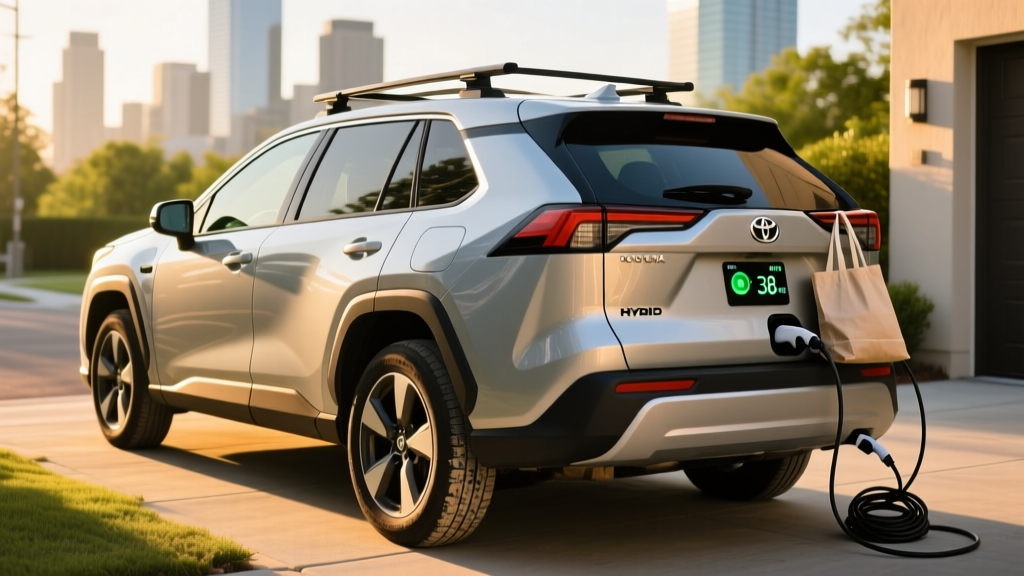
The 2020 RAV4 Hybrid is a self-charging conventional hybrid. You never plug it in. The small 1.6 kWh nickel-metal hydride (NiMH) battery charges through regenerative braking and the gasoline engine. It uses electric power to assist acceleration, enable low-speed electric-only movement, and optimize engine load — but it cannot sustain highway speeds on battery alone.
Fuel Economy: EPA Ratings vs. Real-World MPG
Fuel economy is the primary reason buyers choose the RAV4 Hybrid over the gas-only RAV4. Here's exactly what the EPA rates and what owners report after years of driving.
| Driving Cycle | EPA Estimate | Real-World Owner Reports |
|---|---|---|
| City | 41 MPG | 38–44 MPG |
| Highway | 38 MPG | 34–39 MPG |
| Combined | 40 MPG | 37–42 MPG |
Why city MPG exceeds highway MPG: Unlike gas-only vehicles, hybrids recapture energy through regenerative braking in stop-and-go traffic and rely more heavily on electric motor assist at low speeds. The 2020 RAV4 Hybrid actually achieves its highest efficiency in urban driving — a fundamental advantage of the HEV powertrain architecture.
Real-world variables that reduce MPG:
- Cold weather (below 35°F): Expect a 10–15% reduction (roughly 34–36 MPG combined) as the engine runs more frequently to provide cabin heat and maintain battery temperature.
- Sustained highway speeds above 75 mph: Aerodynamic drag dominates, and the electric motor provides less benefit. Expect 33–36 MPG.
- AWD-i models: The electronic all-wheel-drive system (standard on most 2020 trims) imposes a negligible ~1 MPG penalty versus the FWD configuration that was available on the LE trim.
- Roof cargo boxes and towing: The 2020 RAV4 Hybrid is rated for 1,750 lbs towing — any load near that maximum will drop fuel economy to the low-to-mid 30s.
According to fueleconomy.gov, the 2020 RAV4 Hybrid AWD achieves 41 city / 38 highway / 40 combined. Owners who track fuel consumption on platforms like Fuelly consistently report averages within 2–3 MPG of the EPA combined figure, with city-dominant drivers often exceeding it.
Powertrain Specs: 219 Horsepower from Engine + Motors
The 2020 RAV4 Hybrid pairs a 2.5-liter four-cylinder Atkinson-cycle gasoline engine with front and rear electric motors through Toyota's eCVT (electronically controlled continuously variable transmission).
| Specification | Value |
|---|---|
| Engine | 2.5L 4-cylinder Atkinson-cycle |
| Engine Output | 176 hp / 163 lb-ft torque |
| Front Electric Motor | 88 kW (118 hp) / 149 lb-ft |
| Rear Electric Motor (AWD-i) | 40 kW (54 hp) / 89 lb-ft |
| Net Combined System Horsepower | 219 hp |
| Transmission | eCVT (planetary gearset, no traditional gears or belts) |
| 0–60 mph | 7.8 seconds (Toyota estimate) |
| Drivetrain | AWD-i electronic all-wheel drive (standard on XLE, XLE Premium, SE, Limited; FWD on LE) |
| Battery Type | Nickel-metal hydride (NiMH), 1.6 kWh |
| Towing Capacity | 1,750 lbs |
The eCVT is not a traditional CVT with a steel belt and pulleys — it uses a planetary gearset to seamlessly blend engine and motor power. This design has proven exceptionally durable, with virtually no mechanical wear points compared to conventional automatic or belt-driven CVT transmissions.
Battery Longevity, Warranty, and Replacement Cost
Hybrid battery lifespan is the single most common concern among used hybrid buyers. Here's the data specific to the 2020 RAV4 Hybrid.
Factory Hybrid Battery Warranty
Coverage: 10 years or 150,000 miles (whichever comes first) in California-emission states; 8 years or 100,000 miles in all other states.
What's covered: Defects in materials/workmanship and capacity loss below a defined threshold (typically ~60% of original capacity).
Transferability: The hybrid battery warranty transfers to subsequent owners automatically — no paperwork required.
Real-world degradation data: Toyota's NiMH hybrid batteries have an extensive track record dating back to the 2001 Prius. Fleet data and owner reports indicate that the RAV4 Hybrid's NiMH pack typically retains 85–90% of its original capacity after 100,000 miles. Unlike the larger lithium-ion packs in PHEVs and BEVs, the RAV4 Hybrid's small 1.6 kWh battery is never deeply cycled — the hybrid system keeps the state of charge between roughly 40% and 80%, which dramatically reduces degradation.
Battery replacement cost (2026 estimates):
- OEM Toyota replacement pack: $2,500–$3,500 (parts) + $500–$1,000 (labor) = approximately $3,000–$4,500 total
- Refurbished/aftermarket pack: $1,500–$2,500 total installed
- Individual module replacement: Some specialists can replace only the degraded NiMH modules within the pack for $800–$1,500, though this is less common for the RAV4 Hybrid than for older Prius models
Is replacement likely? For a 2020 model year vehicle in 2026, the vehicle is six years old. Barring a manufacturing defect (covered under warranty), the hybrid battery in a 2020 RAV4 Hybrid is statistically unlikely to require replacement before 150,000–200,000+ miles. Many first-generation Prius taxis exceeded 300,000 miles on the original NiMH pack. The RAV4 Hybrid's battery management system is more advanced and conservative than those early systems.
Does the 2020 RAV4 Hybrid Qualify for Any Tax Credit?
No. The 2020 Toyota RAV4 Hybrid is a conventional hybrid (HEV), not a plug-in vehicle. The federal §30D New Clean Vehicle Credit and the §25E Used Clean Vehicle Credit both require a minimum battery capacity of 7 kWh and plug-in charging capability. The RAV4 Hybrid's 1.6 kWh NiMH battery and lack of a charge port disqualify it entirely.
What about the RAV4 Prime (PHEV)? The RAV4 Prime, with its 18.1 kWh lithium-ion battery, was eligible for a federal tax credit when purchased new. However, under current IRS §30D rules, eligibility depends on battery component and critical mineral sourcing requirements, MSRP caps ($80,000 for SUVs), buyer income limits ($150,000 single / $300,000 joint), and the vehicle must be new. For the used §25E credit (up to $4,000 or 30% of sale price, whichever is less), the RAV4 Prime may qualify if purchased from a dealer for $25,000 or less, subject to income caps ($75,000 single / $150,000 joint). Always verify current-year eligibility with a tax professional.
Some states offer their own incentives for hybrids or used vehicle purchases — check your state's energy or DMV website for current programs.
Used Market Pricing and Ownership Costs in 2026
As a six-year-old vehicle in 2026, the 2020 RAV4 Hybrid is exclusively available on the used market. Pricing varies by trim, mileage, and condition.
| Trim Level (2020) | Original MSRP | Estimated Used Price (2026, ~60k mi) |
|---|---|---|
| LE (FWD) | $29,470 | $21,000–$24,000 |
| XLE (AWD-i) | $30,760 | $22,000–$25,500 |
| XLE Premium (AWD-i) | $33,560 | $24,000–$27,500 |
| SE (AWD-i) | $33,960 | $24,500–$28,000 |
| Limited (AWD-i) | $38,060 | $26,500–$30,500 |
5-year ownership cost estimate (buying used in 2026, keeping through 2031):
- Fuel: At 40 MPG combined and 12,000 miles/year, you'll burn ~300 gallons annually. At $3.50/gallon average = ~$1,050/year or $5,250 over 5 years
- Maintenance: Hybrid-specific maintenance is minimal — no transmission fluid changes (eCVT is sealed), standard oil changes every 10,000 miles, brake pads last longer due to regen. Expect ~$400–$600/year = $2,000–$3,000 over 5 years
- Insurance: RAV4 Hybrid insurance averages $1,400–$1,800/year depending on location and driver profile = $7,000–$9,000 over 5 years
- Depreciation: Toyota RAV4 Hybrids hold value exceptionally well. A 2020 model purchased for ~$24,000 in 2026 might be worth $14,000–$17,000 in 2031 = ~$7,000–$10,000 depreciation
Compare this to a gas-only 2020 RAV4 (EPA 30 MPG combined): that vehicle burns ~400 gallons/year, costing ~$1,400 annually — a $1,750 fuel savings over 5 years for the hybrid.
Reliability and Safety Record
The 2020 RAV4 Hybrid benefits from Toyota's Hybrid Synergy Drive system, which has been in continuous production since 1997. The eCVT planetary gearset has no clutch packs, no torque converter, and no belt — the components most prone to failure in conventional transmissions.
IIHS rating: The 2020 RAV4 earned the IIHS Top Safety Pick designation when equipped with specific headlights. The hybrid variant shares the same structure and restraint systems. See details at iihs.org.
NHTSA rating: The 2020 RAV4 received a 5-star overall safety rating from the National Highway Traffic Safety Administration.
Common issues reported by owners:
- Fuel tank shape controversy: Some 2019–2020 RAV4 Hybrid owners reported that the fuel tank design prevented filling to full capacity, effectively reducing usable range. Toyota issued a technical service bulletin and customer support program addressing this for affected vehicles. Verify whether a specific VIN had this addressed before purchasing.
- 12V auxiliary battery drain: Like many modern vehicles with extensive electronics, the 12V battery can drain if the vehicle sits unused for extended periods (2+ weeks). This is unrelated to the hybrid traction battery.
- Rear motor whine: A small number of owners report a subtle whine from the rear electric motor under certain acceleration loads. This is generally considered normal operation, not a defect.
Who Should Choose the 2020 RAV4 Hybrid vs. a PHEV or Full EV?
Pros
- No plug-in charging required — works for apartment dwellers and street parkers
- Proven 40 MPG combined with real-world data confirming EPA accuracy
- Strong reliability record with minimal hybrid-specific maintenance
- AWD-i standard on most trims for all-weather capability
- Holds resale value well; parts widely available
- 10-year/150,000-mile hybrid battery warranty (in CARB states) transfers to used buyers
Cons
- No electric-only highway driving — always burning some gasoline
- Not eligible for any federal EV tax credit (new or used)
- NiMH battery is older technology (less energy-dense than lithium-ion)
- Fuel tank shape issue may affect some vehicles — check VIN
- eCVT drone under hard acceleration (common to all Toyota hybrids)
- Slower 0–60 (7.8s) compared to the RAV4 Prime (5.7s)
Decision Framework
Choose the 2020 RAV4 Hybrid (HEV) if: You lack access to home or workplace charging, want the lowest-maintenance electrified vehicle, drive a mix of city and highway miles, and want proven reliability without plug-in complexity.
Choose the RAV4 Prime (PHEV) if: You can charge at home (Level 2), your daily commute is under 42 miles (enabling all-electric driving most days), you want 302 hp, and you can find one that qualifies for the used §25E credit.
Choose a full EV (BEV) if: You have reliable home charging, want zero tailpipe emissions, want to eliminate gasoline costs entirely, and your typical daily driving is under 250 miles with access to DC fast charging for road trips.
Frequently Asked Questions
How many MPG does the 2020 Toyota RAV4 Hybrid get?
The EPA rates the 2020 RAV4 Hybrid at 41 city / 38 highway / 40 combined MPG. Real-world owner data confirms most drivers achieve 37–42 MPG combined, with city-dominant driving often exceeding the EPA city figure thanks to regenerative braking.
Does the 2020 RAV4 Hybrid need to be plugged in?
No. The 2020 RAV4 Hybrid is a conventional hybrid (HEV), not a plug-in hybrid. It charges its small battery through regenerative braking and the gasoline engine. You simply fill it with gasoline like any other car. Only the RAV4 Prime (PHEV) requires plug-in charging.
How long will the hybrid battery last, and what does replacement cost?
Toyota's NiMH hybrid batteries have demonstrated lifespans exceeding 200,000 miles in many applications. The factory warranty covers the hybrid battery for 10 years/150,000 miles (CARB states) or 8 years/100,000 miles (other states). If replacement is needed outside warranty, expect $3,000–$4,500 for an OEM pack installed, or $1,500–$2,500 for a refurbished unit.
Does the 2020 RAV4 Hybrid qualify for a tax credit?
No. Federal tax credits under §30D (new) and §25E (used) require plug-in capability and a minimum 7 kWh battery. The RAV4 Hybrid's 1.6 kWh NiMH battery and lack of a charge port make it ineligible. The RAV4 Prime (PHEV) may qualify for the used §25E credit if purchased for $25,000 or less and buyer income is within limits.
Is the 2020 RAV4 Hybrid better than the gas-only RAV4?
For most buyers, yes. The hybrid delivers 40 MPG combined versus the gas model's 30 MPG — a 33% improvement — while adding all-wheel drive (AWD-i on most trims), more horsepower (219 vs. 203), and smoother low-speed driving. The trade-off is a modest price premium on the used market and slightly less cargo space due to the battery placement under the rear seat.
Can the 2020 RAV4 Hybrid drive on electric power alone?
Only at very low speeds (under ~25 mph) for very short distances (roughly 0.5–1 mile) on a fully charged hybrid battery. This EV mode is useful for creeping through parking lots or residential streets, but the vehicle cannot sustain highway speeds or meaningful distances on electric power alone. This is a fundamental limitation of the 1.6 kWh NiMH battery — it's designed for assist, not propulsion.