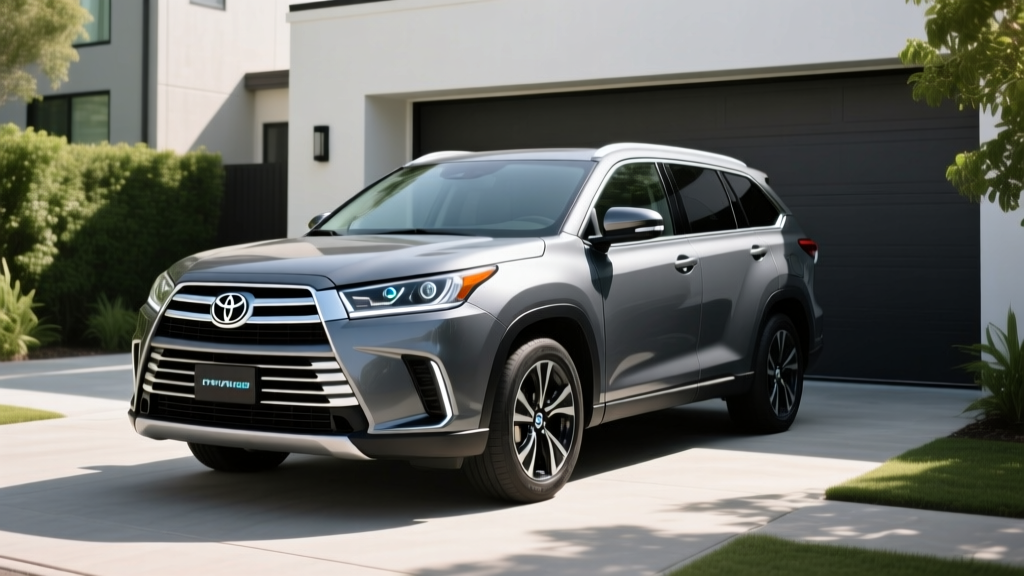
The 2020 Toyota Highlander Hybrid launched as a complete redesign for Toyota's three-row family hauler, swapping the previous V6 for a 2.5-liter four-cylinder paired with Toyota's fourth-generation hybrid system. For buyers shopping the used market in 2026, understanding the original 2020 Toyota Highlander Hybrid MSRP alongside real-world fuel economy, battery longevity, and ownership costs is essential to making a smart purchase.
This guide covers every trim's original window-sticker price, EPA-rated and observed MPG, the hybrid powertrain architecture, battery warranty and replacement costs, and how the Highlander Hybrid stacks up against a plug-in hybrid or full EV for family duty.
2020 Toyota Highlander Hybrid MSRP by Trim
When new, the 2020 Highlander Hybrid was offered in four trims. Toyota priced the hybrid powertrain as a modest premium over the gas-only V6 — typically around $1,400 to $1,600 more per comparable trim. Here is the original MSRP breakdown (destination charge of $1,120 included):
| Trim | Drivetrain | MSRP (incl. destination) |
|---|---|---|
| LE | AWD (standard) | $39,320 |
| XLE | AWD | $42,570 |
| Limited | AWD | $47,070 |
| Platinum | AWD | $49,970 |
All trims came with electronic on-demand AWD as standard — a key differentiator from the gas model, where AWD was optional on lower trims. The hybrid powertrain was not available on the base L trim.
2026 Used Market Pricing
As of early 2026, six-year-old Highlander Hybrids with 60,000–90,000 miles typically trade between $24,000 and $34,000 depending on trim, mileage, and condition. The XLE and Limited remain the most sought-after trims on the used market for their balance of features and value. Platinum examples command a premium but are less common, as Toyota allocated fewer hybrid units to the top trim.
Fuel Economy: EPA Ratings and Real-World MPG
The 2020 Highlander Hybrid carries identical EPA ratings across all trims thanks to the shared powertrain and similar curb weights:
| Cycle | EPA MPG |
|---|---|
| City | 35 MPG |
| Highway | 35 MPG |
| Combined | 35 MPG |
Source: EPA / fueleconomy.gov
Real-World MPG: What Owners Actually See
The flat 35/35/35 EPA split is a hallmark of Toyota's hybrid synergy drive — the electric motors shoulder heavy city loads, while the Atkinson-cycle engine runs efficiently at highway cruise. In practice:
- City/suburban driving: Many owners report 36–38 MPG in stop-and-go traffic, where regenerative braking and electric-only low-speed operation shine. This is a common hybrid trait — real-world city MPG often exceeds the EPA sticker.
- Highway cruising (70–75 mph): Expect 30–33 MPG. Aerodynamic drag on a 4,500-lb three-row SUV reduces the hybrid advantage at sustained high speeds.
- Cold weather (below 30°F): Plan for 28–31 MPG combined. The engine runs more frequently to provide cabin heat and maintain catalytic converter temperature, reducing electric-only operation.
- Mountainous terrain: Uphill segments will drop instantaneous MPG into the low 20s, but regenerative braking on descents partially recovers energy. Net trip MPG in mountainous areas typically averages 29–32.
With a 17.1-gallon fuel tank, total range lands between 510 and 645 miles depending on driving conditions — enough for most family road trips without a mid-journey fuel stop.
Hybrid Powertrain: Engine, Motors, and Horsepower
The 2020 Highlander Hybrid uses Toyota's well-proven hybrid architecture, adapted for a larger SUV platform:
| Component | Specification |
|---|---|
| Engine | 2.5L inline-4, Atkinson cycle, DOHC |
| Engine Output | 186 hp / 175 lb-ft torque |
| Front Electric Motor | 134 kW (180 hp) / 199 lb-ft |
| Rear Electric Motor (AWD) | 40 kW (54 hp) / 89 lb-ft |
| Net Combined System Output | 243 hp |
| Transmission | eCVT (planetary gearset, not a belt CVT) |
| 0–60 mph | ~7.1 seconds (MotorTrend tested) |
| Towing Capacity | 3,500 lbs (hybrid) |
A critical detail: the rear axle is driven entirely by the electric motor — there is no mechanical driveshaft connecting the engine to the rear wheels. This "electronic on-demand AWD" engages the rear motor when slip is detected or during hard acceleration, and it operates seamlessly without driver input. However, it is not a heavy-duty off-road system; it is designed for rain, snow, and light-traction scenarios.
The eCVT uses a planetary gearset to blend engine and motor power, not a steel-belt-and-pulley design. This means there is no belt to wear out — Toyota's eCVTs have proven among the most durable transmissions in the industry.
This Is a Conventional Hybrid (HEV), Not a PHEV
A common source of confusion for used-car shoppers: the 2020 Highlander Hybrid is a conventional hybrid electric vehicle (HEV). It does not have a plug, cannot be charged from an external source, and has no meaningful electric-only driving range.
| Feature | Conventional Hybrid (HEV) | Plug-In Hybrid (PHEV) |
|---|---|---|
| External Charging | No — charges via engine and regen | Yes — plug into Level 1 or Level 2 |
| Electric-Only Range | Less than 1 mile at very low speed | Typically 20–45 miles |
| Battery Size | ~1.6 kWh (small, NiMH or Li-ion) | 10–20+ kWh |
| Gas Engine | Primary power source, assisted by motor | Supplement after battery depletes |
| Federal Tax Credit | Not eligible (§30D expired for HEVs) | Eligible if battery ≥7 kWh & meets sourcing rules |
| Example | Highlander Hybrid, RAV4 Hybrid | RAV4 Prime, Tucson PHEV |
Toyota did not offer a Highlander PHEV in the U.S. market for the 2020 model year. If you need plug-in electric range in a Toyota three-row SUV, you would need to look at the Sienna (which is a hybrid-only minivan, also without a plug) or consider competitors like the Chrysler Pacifica PHEV, which offers 32 miles of electric-only range.
Battery Warranty, Lifespan, and Replacement Cost
The hybrid battery is the single largest concern for used hybrid buyers. Here is what you need to know about the 2020 Highlander Hybrid's pack:
- Hybrid Battery: 10 years / 150,000 miles (whichever comes first) — applies in all 50 states for 2020+ model years under Toyota's updated warranty.
- Hybrid System Components (inverter, motors, control module): 8 years / 100,000 miles.
- Transferability: Both warranties are fully transferable to subsequent owners with no fee or paperwork required.
Battery Chemistry and Degradation
The 2020 Highlander Hybrid uses a nickel-metal hydride (NiMH) battery pack located under the second-row seats. Unlike the lithium-ion packs in full EVs, this pack is relatively small (~1.6 kWh total capacity) and is managed conservatively by Toyota's battery management system — it never fully charges or fully depletes the cells, staying within a narrow state-of-charge window that dramatically extends cycle life.
Toyota's hybrid battery track record is strong. Data from fleet operators and long-term owners of the Prius, Camry Hybrid, and RAV4 Hybrid consistently shows NiMH packs lasting 150,000–200,000+ miles before significant capacity loss. The Highlander Hybrid's larger cooling system and conservative tuning further support longevity.
Replacement Cost if Needed
If the hybrid battery does fail outside warranty:
- New OEM battery from Toyota: $3,000–$4,500 (parts + dealer labor)
- Refurbished/remanufactured pack: $1,500–$2,500 from third-party hybrid specialists
- Individual module replacement: Some hybrid-specialty shops can replace only the failed modules within the pack for $500–$1,200, though this is a temporary fix if the pack is broadly aging.
For a 2020 model purchased in 2026, the original 10-year/150,000-mile battery warranty remains in effect through 2030 or 150,000 miles, whichever comes first. This is a significant safety net for used buyers.
Does the 2020 Highlander Hybrid Qualify for Any Tax Credit?
No. The 2020 Toyota Highlander Hybrid does not qualify for the federal §30D clean vehicle tax credit, which is reserved for plug-in electric vehicles (battery electric and qualifying plug-in hybrids) with battery capacities of at least 7 kWh. The Highlander Hybrid's ~1.6 kWh NiMH pack falls far short of this threshold.
The IRS phased out the original hybrid vehicle tax credit (under the older Energy Policy Act provisions) years ago, and conventional HEVs are not eligible under current IRS §30D rules. There is no federal purchase incentive for conventional hybrids as of 2026.
Some states offer modest incentives for hybrid vehicles — for example, certain states provide reduced registration fees or HOV lane access — but these vary widely by jurisdiction. Check your state's department of revenue or energy office for current programs.
Who Should Choose the Highlander Hybrid vs. a PHEV or Full EV?
Choose the 2020 Highlander Hybrid (HEV) if:
- You want a three-row SUV with no plug-in requirement and no charging infrastructure dependency.
- Your daily commute is 20–60 miles and you want 35 MPG combined without behavioral changes.
- You regularly take long road trips (500+ miles) and don't want to plan around charging stops.
- You live in an apartment or lack access to home/work charging.
- Budget is a priority — used pricing is $24K–$34K with no tax credit needed to make the math work.
Consider a PHEV (like the Chrysler Pacifica Hybrid) if:
- You have home Level 2 charging and a commute under 30 miles round-trip — you could drive mostly on electricity.
- You want to reduce fuel consumption to near-zero on weekdays while retaining gas range for weekends.
- You qualify for the §30D federal tax credit on a new PHEV purchase (up to $7,500, subject to income, MSRP, and battery-sourcing rules).
Consider a Full EV (like the Kia EV9 or Tesla Model X) if:
- You have reliable home charging and your daily driving stays within ~250 miles.
- You want to eliminate fuel costs entirely and minimize maintenance (no oil changes, no transmission fluid).
- You qualify for the §30D credit on a new EV purchase and are comfortable with a higher upfront price.
- Three-row EV options are limited and generally more expensive on the used market than the Highlander Hybrid.
Pros and Cons at a Glance
Pros
- 35 MPG combined is exceptional for a 4,500-lb three-row SUV
- Standard AWD on all hybrid trims — no premium or option package needed
- 10-year/150,000-mile hybrid battery warranty, fully transferable
- Toyota reliability track record and low cost of ownership
- No plug-in charging required — works with existing gas-station infrastructure
- eCVT planetary gearset is extremely durable (no belt to fail)
- Reasonable used pricing in 2026: $24K–$34K
Cons
- No electric-only range — this is not a PHEV and cannot drive emissions-free
- Towing limited to 3,500 lbs (gas V6 model rated for 5,000 lbs)
- 243 hp is adequate but not quick for a vehicle this size (7.1s 0–60)
- Highway MPG drops to ~30–33 at sustained 75 mph speeds
- No federal tax credit eligibility
- Third-row space is tight for adults on long trips
- NiMH battery chemistry is older technology (though proven durable)
Frequently Asked Questions
How many MPG does the 2020 Toyota Highlander Hybrid get?
The EPA rates it at 35 MPG city, 35 highway, and 35 combined across all trims. Real-world driving typically yields 33–37 MPG in mixed conditions, with city-heavy commutes sometimes reaching 38 MPG and cold-weather or highway-dominant driving settling around 30–33 MPG.
Can I plug in the 2020 Highlander Hybrid to charge it?
No. The 2020 Highlander Hybrid is a conventional hybrid (HEV), not a plug-in hybrid (PHEV). It has no charging port. The hybrid battery is charged exclusively by the gasoline engine and regenerative braking during deceleration.
How far can the Highlander Hybrid drive on electric power alone?
Less than one mile, and only at very low speeds (under 25 mph in ideal conditions). The electric motors assist the engine and enable brief EV-mode coasting, but this is not designed for meaningful electric-only commuting. If you need 20+ miles of electric range, you need a PHEV or a full EV.
Is the 2020 Highlander Hybrid reliable?
Yes. Toyota's hybrid system is among the most proven in the industry, with decades of real-world data from millions of Prius, Camry, and RAV4 Hybrid vehicles. The eCVT has no wear-prone belt, and the NiMH battery is conservatively managed. Consumer Reports and J.D. Power have consistently rated Toyota hybrids above average for long-term reliability. The 10-year/150,000-mile battery warranty provides additional peace of mind.
What does a Highlander Hybrid battery replacement cost?
A new OEM replacement from a Toyota dealer runs approximately $3,000–$4,500 including labor. Refurbished packs from hybrid specialists cost $1,500–$2,500. However, most Toyota hybrid batteries last 150,000–200,000+ miles, and a 2020 model's original battery warranty remains valid through 2030 or 150,000 miles.
Does the 2020 Highlander Hybrid qualify for any federal tax credit?
No. The §30D federal clean vehicle credit requires a plug-in vehicle with a battery capacity of at least 7 kWh. The Highlander Hybrid's ~1.6 kWh NiMH pack does not qualify. Some states may offer minor incentives for hybrids — check your state's energy or revenue department for details.
How does the Highlander Hybrid compare to the gas-only Highlander?
The gas-only 2020 Highlander with the 3.5L V6 and 8-speed automatic is rated at 20 city / 27 highway / 23 combined (AWD). The hybrid nearly doubles the city MPG (35 vs 20) and improves combined by over 50% (35 vs 23). The trade-off is lower towing capacity (3,500 lbs vs 5,000 lbs) and slightly less peak horsepower (243 hp vs 295 hp).
Is AWD always on in the Highlander Hybrid?
The system is "on-demand" — the rear electric motor activates when the vehicle detects front-wheel slip, during hard acceleration, or in low-traction conditions. There is no driver-operated AWD lock. It is effective for rain, snow, and gravel but is not designed for serious off-road use.