Quick Verdict: The 2020 Crosstrek Hybrid as a Used PHEV in 2026
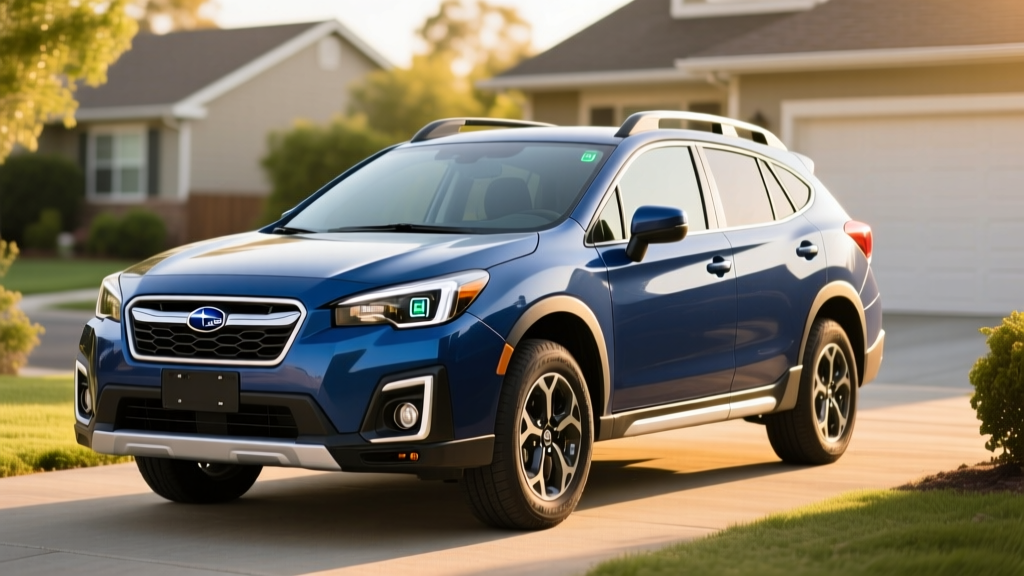
The 2020 Subaru Crosstrek Hybrid is a plug-in hybrid (PHEV) that pairs a 2.0-liter Boxer engine with Toyota-sourced hybrid components to deliver 17 miles of electric-only range and 35 MPG combined once the battery depletes. For used-car shoppers in 2026, it occupies a narrow but useful niche: you get genuine electric commuting capability for short trips, Subaru's standard all-wheel drive, and no range anxiety for longer drives. The trade-off is a small battery, modest electric range compared to newer PHEVs like the Toyota RAV4 Prime (42 miles), and a premium over the gas Crosstrek that takes years to recoup at the pump.
Subaru discontinued the Crosstrek Hybrid after the 2023 model year, so every example on the market today is used. That means federal tax credits are off the table for new purchases, but the used clean vehicle credit (up to $4,000 under IRC §25E) may apply if you buy from a dealer and meet income requirements. Below, we break down the exact numbers you need to decide if this PHEV fits your commute, climate, and budget.
HEV vs. PHEV: What the Crosstrek Hybrid Actually Is
Before evaluating the Crosstrek Hybrid, it's essential to distinguish the two hybrid architectures buyers encounter:
| Feature | Conventional Hybrid (HEV) | Plug-in Hybrid (PHEV) |
|---|---|---|
| Plugs in to charge? | No — regenerative braking only | Yes — Level 1/Level 2 AC charging |
| Electric-only range | 0–2 miles at low speed | 17 miles (Crosstrek Hybrid) |
| Battery size | ~1.0–1.6 kWh | 8.8 kWh total (Crosstrek Hybrid) |
| Fuel when battery depletes | Gasoline, seamlessly | Gasoline, seamlessly |
| Federal tax credit (new) | None | Up to $7,500 (was eligible when new) |
| Used EV credit (§25E) | Not eligible | Up to $4,000 (if eligible) |
The 2020 Crosstrek Hybrid is a PHEV. It has a charge port (J1772 connector), an 8.8 kWh lithium-ion battery pack, and can drive up to 17 miles on electricity alone before the gasoline engine engages. You can also drive it without ever plugging in — it simply operates as a conventional hybrid, achieving 35 MPG combined.
Fuel Economy, Electric Range, and Real-World Efficiency
The EPA rates the 2020 Subaru Crosstrek Hybrid at 90 MPGe when operating in electric mode and 35 MPG combined in hybrid (charge-sustaining) mode. Here's the full breakdown:
| Mode | City | Highway | Combined |
|---|---|---|---|
| Electric (MPGe) | 105 MPGe | 78 MPGe | 90 MPGe |
| Hybrid / Gas (MPG) | 35 MPG | 34 MPG | 35 MPG |
Source: EPA Fuel Economy
The EPA electric-only range is 17 miles. In practice, expect 14–16 miles in mild weather with conservative driving. In cold climates (below 30°F), the cabin heater draws significant energy from the small battery, reducing electric range to roughly 10–12 miles. Highway driving at 70+ mph also cuts electric range short — the EPA's 78 MPGe highway figure reflects this.
Once the battery depletes, 35 MPG combined is realistic for mixed driving. City-heavy routes may yield 37–38 MPG thanks to regenerative braking, while sustained highway driving at 75 mph typically returns 32–33 MPG. The total combined range (electric + 13.2-gallon fuel tank) is approximately 480 miles.
Powertrain, Battery Specs, and Charging
| Specification | 2020 Subaru Crosstrek Hybrid |
|---|---|
| Powertrain Type | Plug-in Hybrid (PHEV) |
| Engine | 2.0L 4-cylinder Boxer (137 hp) |
| Electric Motor | 118 hp (88 kW) |
| Combined System Output | 148 hp |
| Transmission | CVT (eCVT — Toyota hybrid transaxle) |
| Drivetrain | AWD (standard) |
| Battery Capacity | 8.8 kWh (total) / ~6.5 kWh usable |
| Battery Chemistry | Lithium-ion (NMC) |
| EPA Electric Range | 17 miles |
| EPA Combined MPG (hybrid mode) | 35 MPG |
| EPA Combined MPGe (electric) | 90 MPGe |
| Charge Port | J1772 (AC only) |
| Level 1 Charge Time (120V) | ~5 hours (0–100%) |
| Level 2 Charge Time (240V) | ~2 hours (0–100%) |
| DC Fast Charging | Not supported |
| 0–60 mph | ~6.7 seconds (estimated) |
| Cargo Volume (rear seats up) | 15.9 cu ft |
| Original MSRP (2020) | $36,395 |
Charging in Practice
The Crosstrek Hybrid charges on AC power only — there is no DC fast-charge port. At Level 2 (240V, ~3.3 kW onboard charger), a full charge takes roughly two hours. On a standard 120V household outlet (Level 1, ~1.4 kW), expect about five hours. For most owners, plugging in overnight at Level 1 is sufficient to wake up with a full battery every morning, given the small 8.8 kWh pack.
The hybrid system is sourced from Toyota (the same architecture found in the Prius Prime of that era), which means proven reliability but also the limitations of older PHEV design: a small battery, no DC fast charging, and electric-only top speed limited to about 65 mph before the engine kicks in.
Reliability, Battery Warranty, and Replacement Cost
- Hybrid battery: 8 years / 100,000 miles (10 years / 150,000 miles in CARB states: CA, CT, ME, MD, MA, NJ, NY, OR, RI, VT, WA)
- Hybrid system components: 8 years / 100,000 miles
- Basic vehicle warranty: 3 years / 36,000 miles (expired on all 2020 models)
- Powertrain warranty: 5 years / 60,000 miles (expired on most 2020 models by 2025)
For a 2020 model purchased in 2026, the hybrid battery warranty may still be in effect if the vehicle has fewer than 100,000 miles — that's a significant safety net. Subaru's hybrid battery warranty transfers to subsequent owners, so a used buyer inherits whatever remains of the 8-year/100,000-mile coverage (through approximately August 2028 for a vehicle first sold in mid-2020).
Battery Degradation and Replacement
The 8.8 kWh lithium-ion pack in the Crosstrek Hybrid is relatively small and conservatively managed — Subaru and Toyota buffer a meaningful portion of the total capacity to prevent deep cycling, which extends lifespan. Based on data from the Toyota Prius Prime (which shares similar architecture), owners typically see 10–15% capacity loss over 100,000 miles. For a 17-mile electric range, that translates to roughly 14–15 miles of range after significant use.
If the battery does need replacement outside of warranty, expect a cost in the range of $3,000–$5,000 for the pack itself, plus labor. Independent hybrid specialists often offer refurbished packs at lower cost. The good news: Toyota-derived hybrid systems have an exceptional reliability track record, and catastrophic battery failure before 150,000 miles is uncommon.
The Crosstrek Hybrid received strong safety marks. The IIHS named it a Top Safety Pick when equipped with specific headlights, and the standard EyeSight driver-assistance suite (adaptive cruise, lane-keep, pre-collision braking) was ahead of competitors at this price point. Note that EyeSight is an SAE Level 2 driver-assistance system — it requires the driver to remain fully engaged at all times.
Used Pricing and Tax Credit Eligibility in 2026
The 2020 Crosstrek Hybrid originally stickered at $36,395 (single trim, well-equipped). In the 2026 used market, examples typically list between $18,000 and $24,000 depending on mileage, condition, and region. Low-mileage examples (under 40,000 miles) in CARB states command a premium.
Federal Used Clean Vehicle Credit (IRC §25E)
Because the Crosstrek Hybrid is a PHEV with at least 4 kWh of battery capacity, it qualifies as an eligible vehicle under the used clean vehicle credit. Here's what you need to know:
- Credit amount: 30% of the sale price, up to a maximum of $4,000
- Income caps: AGI must not exceed $75,000 (single), $112,500 (head of household), or $150,000 (joint)
- Sale price cap: Vehicle must sell for $25,000 or less
- Purchase channel: Must buy from a licensed dealer (private-party sales do not qualify)
- Vehicle age: Must be at least 2 model years old (2020 models qualify)
- Battery requirement: At least 4 kWh capacity (Crosstrek Hybrid's 8.8 kWh qualifies)
- Frequency limit: You can only claim this credit once every 3 years
Source: IRS Used Clean Vehicle Credit
Practical example: If you purchase a 2020 Crosstrek Hybrid from a dealer for $22,000 and your AGI is under the cap, you'd receive 30% × $22,000 = $4,000 (hitting the maximum). That effectively brings your net cost to $18,000 — a meaningful discount that narrows the gap with the gas-only Crosstrek.
State incentives vary widely and change frequently. Check your state energy office or the Alternative Fuels Data Center for current local rebates, HOV lane access, or utility charging incentives.
Who Should Choose the Crosstrek Hybrid vs. a Full EV or Gas Car
- Your daily commute is under 20 miles round-trip and you can charge at home
- You need AWD for snow or unpaved roads but want some electric efficiency
- You take road trips where charging infrastructure is sparse
- You want lower running costs without committing to a full EV
- You find a well-maintained example under $25,000 and qualify for the used credit
- Your commute exceeds 30 miles and you want to eliminate gas entirely
- You have reliable home charging and access to DC fast chargers for trips
- You want 200+ miles of range and zero tailpipe emissions
- You're willing to consider models like the Hyundai Kona Electric, Chevrolet Bolt EUV, or Tesla Model Y on the used market
- You can't charge at home or at work
- You drive mostly highway miles (the PHEV advantage shrinks)
- The $4,000–$7,000 price premium over the gas model doesn't pencil out for your mileage
- You prefer a larger cargo area (the PHEV battery slightly reduces rear cargo space)
Ownership Economics: Does the PHEV Premium Pay Off?
| Cost Factor | Gas Crosstrek (2020) | Crosstrek Hybrid (PHEV) |
|---|---|---|
| Used purchase price (avg.) | $16,000 | $21,000 |
| Federal used credit | $0 | –$4,000 |
| Net purchase cost | $16,000 | $17,000 |
| Annual fuel (12,000 mi/yr) | $1,680 (28 MPG, $3.90/gal) | $720 (assuming 70% electric) |
| 5-year fuel cost | $8,400 | $3,600 |
| Home charging install (Level 2) | N/A | $500–$1,500 |
| 5-year total (purchase + fuel + charging) | $24,400 | $21,600 |
Assumptions: electricity at $0.14/kWh, gas at $3.90/gallon, 70% of miles driven in electric mode (requires daily home charging). Actual savings depend heavily on your local electricity and gas prices, driving mix, and whether you qualify for the used credit. With the §25E credit, the PHEV can break even or come out ahead within 3–5 years for commuters who charge daily.
Pros and Cons
- Standard AWD — rare among PHEVs in this class
- Proven Toyota-derived hybrid powertrain reliability
- 17 miles electric covers many commutes entirely
- 35 MPG combined even when battery is depleted
- EyeSight safety suite standard
- Eligible for up to $4,000 used EV credit
- Hybrid battery warranty may still apply (through ~2028)
- Only 17 miles of electric range — less than most modern PHEVs
- No DC fast charging
- Modest 148 hp — adequate but not quick
- Cargo space slightly reduced vs. gas Crosstrek
- Discontinued — no new examples available
- Infotainment and interior feel dated by 2026 standards
- Original MSRP was steep for a compact crossover
Frequently Asked Questions
How many MPG does the 2020 Subaru Crosstrek Hybrid get?
The EPA rates it at 35 MPG combined (35 city / 34 highway) in hybrid mode after the battery is depleted. In electric mode, it achieves 90 MPGe combined. Real-world results vary: city-heavy driving in hybrid mode can push 37–38 MPG, while sustained highway driving typically yields 32–33 MPG.
How far can the 2020 Crosstrek Hybrid go on electric only?
The EPA rates it at 17 miles of electric-only range. In mild weather with moderate driving, expect 14–16 miles. In cold weather (below 30°F), that drops to roughly 10–12 miles due to cabin heating demands on the small battery.
Can I drive the Crosstrek Hybrid without plugging it in?
Yes. If you never plug it in, it operates as a conventional hybrid, achieving 35 MPG combined. However, you'd be paying a premium for PHEV hardware you're not utilizing — the gas-only Crosstrek gets 30 MPG combined and costs significantly less on the used market.
Is the 2020 Crosstrek Hybrid reliable, and what does battery replacement cost?
The Toyota-derived hybrid system has an excellent reliability record. The 8.8 kWh lithium-ion battery is conservatively buffered, and typical degradation is 10–15% over 100,000 miles. Original hybrid battery warranty is 8 years/100,000 miles (10/150,000 in CARB states), and some 2020 models may still be covered. Out-of-warranty replacement runs approximately $3,000–$5,000.
Does the 2020 Crosstrek Hybrid qualify for any tax credit in 2026?
It no longer qualifies for the new-vehicle §30D credit (the vehicle is discontinued and used). However, it is eligible for the used clean vehicle credit (IRC §25E) — up to $4,000 — if you purchase from a dealer for $25,000 or less and your adjusted gross income falls under the cap ($75K single / $150K joint). Consult a tax professional and review current IRS guidance before relying on credit eligibility.
Does the Crosstrek Hybrid support DC fast charging?
No. The Crosstrek Hybrid charges only on AC power via a J1772 port. Level 2 (240V) charging takes about 2 hours for a full charge; Level 1 (120V) takes about 5 hours. For a PHEV with a small battery, overnight Level 1 charging is typically sufficient.
Hybrid vs. PHEV vs. full EV — which is right for me?
A conventional hybrid (HEV) is best if you can't charge at home and want better MPG with no behavior change. A PHEV like the Crosstrek Hybrid suits drivers with short commutes who can charge at home but also need gas-engine flexibility for longer trips. A full EV (BEV) is ideal if you have home charging, want zero tailpipe emissions, and your daily driving plus road-trip comfort align with available range and charging infrastructure.