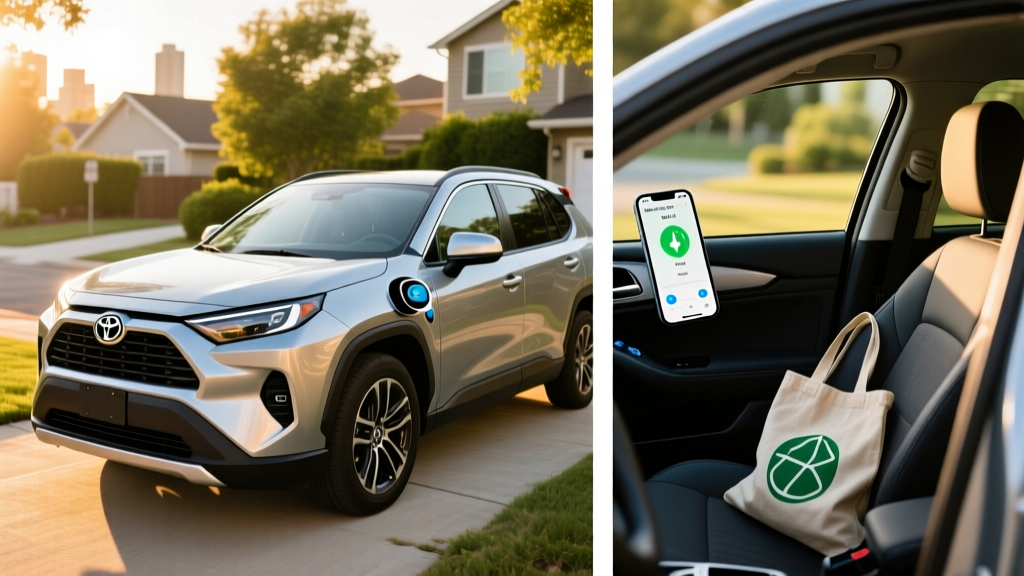
The Toyota RAV4 Hybrid has been one of the best-selling electrified vehicles in the United States for good reason: it delivers meaningful fuel savings without requiring a plug, a lifestyle change, or a steep learning curve. For shoppers researching 2020 RAV4 Hybrid MPG figures — whether considering a used example or comparing it against newer models — the numbers tell a compelling story, but real-world results often surprise owners in the best way.
This guide covers the 2020 RAV4 Hybrid's EPA-rated and real-world fuel economy, powertrain specs, battery longevity, and how it compares to its plug-in sibling, the RAV4 Prime. We'll also address whether any tax credits apply and who should choose this conventional hybrid over a PHEV or full battery-electric vehicle.
2020 RAV4 Hybrid EPA MPG Ratings and Real-World Results
The 2020 Toyota RAV4 Hybrid uses Toyota's fourth-generation Hybrid Synergy Drive system paired with a 2.5-liter four-cylinder engine. Every trim — LE, XLE, XSE, SE, and Limited — comes standard with electronic on-demand all-wheel drive (AWD-e), which uses a separate rear-mounted electric motor rather than a mechanical driveshaft.
| Metric | EPA Rating |
|---|---|
| City MPG | 41 MPG |
| Highway MPG | 38 MPG |
| Combined MPG | 40 MPG |
| Fuel Tank Capacity | 14.5 gallons |
| EPA Total Range | ~580 miles |
Source: U.S. EPA / fueleconomy.gov
Conventional hybrids like the RAV4 Hybrid frequently exceed their EPA city rating in stop-and-go driving because regenerative braking recovers energy that gas-only vehicles waste as heat. Many owners report 42–45 MPG in city and suburban conditions. Highway driving at sustained 70+ MPH speeds tends to return 35–38 MPG, slightly below the EPA highway figure, because the electric motor assists less at constant high speed. In cold weather (below 30°F), expect a 5–10% reduction as the engine runs more frequently to heat the cabin and maintain battery temperature.
HEV vs. PHEV: RAV4 Hybrid vs. RAV4 Prime
A common source of confusion is the difference between the RAV4 Hybrid (HEV) and the RAV4 Prime (PHEV). Both are electrified RAV4s, but they operate very differently.
| Attribute | RAV4 Hybrid (HEV) | RAV4 Prime (PHEV) |
|---|---|---|
| Plug-in Charging | No — self-charging via regen & engine | Yes — 18.1 kWh battery, plugs in |
| Electric-Only Range | Not applicable (EV mode ~1 mi at low speed) | 42 miles (EPA) |
| Combined MPG / MPGe | 40 MPG combined | 94 MPGe (EV mode), 38 MPG (hybrid mode) |
| Combined Horsepower | 219 HP | 302 HP |
| 0–60 MPH | 7.8 seconds | 5.7 seconds |
| Battery Capacity | 1.6 kWh (NiMH, not plug-in) | 18.1 kWh (Lithium-ion) |
| DC Fast Charging | No | No (Level 2 AC only, ~2.5 hours) |
| Federal Tax Credit (2020) | None | Up to $7,500 (was eligible in 2020) |
| Base MSRP (2020) | ~$28,350 (LE) | ~$38,100 (SE) |
The HEV is the simpler choice: you never plug it in, and it operates exactly like a conventional gas SUV at the pump. The PHEV rewards drivers who can charge at home or work with dramatically lower fuel consumption on shorter commutes, plus substantially more power.
Powertrain and Performance Specs
| Specification | Detail |
|---|---|
| Engine | 2.5L 4-cylinder Dynamic Force (A25A-FXS) |
| Engine Power | 176 HP @ 5,700 RPM / 163 lb-ft torque |
| Front Electric Motor | 118 HP / 149 lb-ft |
| Rear Electric Motor (AWD-e) | 54 HP / 89 lb-ft |
| Net Combined System Power | 219 HP |
| Transmission | Electronic Continuously Variable (eCVT) |
| Drivetrain | AWD-e (electronic on-demand AWD) |
| 0–60 MPH | 7.8 seconds |
| Towing Capacity | 1,750 lbs |
| Hybrid Battery | 1.6 kWh, Nickel-Metal Hydride (NiMH) |
The eCVT is not a belt-driven CVT like those found in some competitors. Toyota's planetary gearset design has no belts or pulleys to wear out, contributing to the hybrid system's long-term durability. The AWD-e system engages the rear motor automatically during acceleration, low-traction conditions, and cornering, then disconnects during steady cruising to maximize efficiency.
Battery Longevity, Warranty, and Replacement Cost
Battery lifespan is consistently the top concern for hybrid buyers, especially those shopping the used market for a 2020 model.
- Hybrid Battery Coverage: 10 years / 150,000 miles (in states following California emissions standards, which includes most states for the 2020 model year onward)
- Hybrid System Components: 8 years / 100,000 miles (inverter, transaxle, control module)
- Capacity Retention: Toyota does not publish a specific degradation threshold for HEV batteries. The small 1.6 kWh NiMH pack is shallow-cycled — it rarely charges above ~80% or below ~40% state of charge — which significantly extends cell life.
Toyota's NiMH hybrid batteries have an exceptionally strong track record. Data from fleet operators and long-term owners indicates that RAV4 Hybrid battery packs commonly exceed 150,000 miles with minimal degradation. The shallow cycling strategy means the battery is never deeply discharged or fully saturated, the two conditions that accelerate lithium-ion and NiMH wear.
If replacement is eventually needed, a new OEM hybrid battery pack for the RAV4 Hybrid typically costs between $2,000 and $3,500 including labor at a Toyota dealer. Refurbished packs from independent hybrid specialists can run $1,200–$2,000. This is a fraction of the cost of a full EV traction battery replacement because the HEV pack is small and relatively simple.
For a 2020 model purchased in 2026, the original 10-year/150,000-mile hybrid battery warranty remains in effect through the 2030 model year, providing significant remaining coverage for most buyers.
Tax Credits and Incentives for the RAV4 Hybrid
The 2020 RAV4 Hybrid (HEV) does not qualify for the federal §30D Clean Vehicle Credit. Under IRS rules, conventional hybrids without plug-in capability and a minimum 7 kWh battery capacity are ineligible. This applies to both new and used purchases.
| Requirement | RAV4 Hybrid (HEV) | RAV4 Prime (PHEV) |
|---|---|---|
| Plug-in capable | ❌ No | ✅ Yes |
| Battery ≥ 7 kWh | ❌ 1.6 kWh | ✅ 18.1 kWh |
| §30D New Vehicle Credit | Not eligible | Was eligible (credit phased out after Toyota hit 200K unit cap in 2022) |
| §25E Used EV Credit (up to $4,000) | Not eligible | Eligible if purchased used from a dealer, subject to income caps and sale price ≤ $25,000 |
For the RAV4 Prime (PHEV), the new-vehicle §30D credit is no longer available because Toyota surpassed the manufacturer cap of 200,000 qualifying vehicles in Q3 2022. However, a used RAV4 Prime purchased from a dealer for $25,000 or less may qualify for the §25E Previously-Owned Clean Vehicle Credit (up to $4,000 or 30% of the sale price), subject to buyer income limits ($75,000 single / $150,000 joint). See IRS §25E guidelines for current eligibility details.
Some states offer additional hybrid incentives. Check your state energy office or the Alternative Fuels Data Center for local programs.
Who Should Choose the RAV4 Hybrid vs. a PHEV or Full EV?
- You cannot charge at home or work (apartment living, street parking, no garage access)
- You want maximum simplicity — no charging cables, apps, or route planning
- Your budget is under $30,000 (used market) or you want a lower entry price new
- You drive a mix of city and highway and want consistent 38–45 MPG without behavior changes
- You live in an area with limited public charging infrastructure
- You can install a Level 2 charger at home and your daily commute is under 40 miles
- You want EV-like daily driving with gas-engine flexibility for road trips
- You value the 302 HP performance upgrade (5.7-second 0–60)
- You can find a used example under $25,000 to capture the §25E credit
- You have reliable home Level 2 charging
- Your daily driving is under 250 miles and you road-trip infrequently
- You want to eliminate gasoline costs entirely and minimize maintenance
- You qualify for the full $7,500 §30D credit on an eligible new EV
Ownership Costs: 5-Year Fuel Savings vs. Gas-Only RAV4
| Metric | RAV4 Hybrid (40 MPG) | RAV4 Gas AWD (28 MPG) |
|---|---|---|
| Annual Fuel Use | 375 gallons | 536 gallons |
| Annual Fuel Cost ($3.50/gal) | $1,313 | $1,876 |
| 5-Year Fuel Cost | $6,563 | $9,380 |
| 5-Year Fuel Savings (Hybrid) | $2,817 saved over gas model | |
At current fuel prices, the RAV4 Hybrid saves roughly $560 per year in fuel compared to the gas-only RAV4 AWD. Over five years and 75,000 miles, that's nearly $2,800 back — enough to offset much of the hybrid's original price premium. If you drive more than 15,000 miles per year or live in a state with higher gas prices (California, Washington, New York), the savings widen considerably.
Maintenance costs are comparable between hybrid and gas RAV4s. The hybrid has no additional scheduled maintenance items beyond the gas model. The eCVT requires no fluid changes under normal conditions, and regenerative braking extends brake pad life — many owners report original brake pads lasting 80,000+ miles.
Reliability and Safety Ratings
The 2020 RAV4 Hybrid earned strong marks from both major safety organizations:
- IIHS: Top Safety Pick (with specific headlight trims) — Good ratings in all crashworthiness tests. Source: IIHS
- NHTSA: 5-Star Overall Safety Rating
Toyota's hybrid systems are among the most proven in the industry, with over 25 years of continuous production since the original Prius. The 2020 RAV4 Hybrid's A25A-FXS engine uses Toyota's D-4S dual injection (port + direct) and a high thermal efficiency design that reduces internal friction and heat stress. Consumer reliability surveys consistently rank the RAV4 Hybrid above average for its class.
Pros and Cons at a Glance
- 40 MPG combined EPA — real-world city driving often exceeds 42 MPG
- Standard AWD-e on every trim with no fuel-economy penalty
- No plug-in required — zero lifestyle change from a gas vehicle
- 10-year / 150,000-mile hybrid battery warranty still active on 2020 models
- Strong resale value and proven long-term reliability
- ~580-mile total range between fill-ups
- No electric-only driving capability (EV mode limited to ~1 mile at low speed)
- Highway MPG drops to ~35–37 at sustained 70+ MPH speeds
- No federal tax credit eligibility for the HEV model
- 219 HP is adequate but not quick — 7.8-second 0–60 trails the RAV4 Prime significantly
- 1,750-lb towing capacity is low for the compact SUV segment
- Cargo space slightly reduced vs. gas RAV4 due to hybrid battery placement (37.6 vs. 37.5 cu ft — negligible difference in practice)
Frequently Asked Questions
How many MPG does the 2020 RAV4 Hybrid actually get?
The EPA rates it at 41 city / 38 highway / 40 combined MPG. In real-world driving, most owners see 42–45 MPG in city and suburban conditions thanks to aggressive regenerative braking. Highway-only driving at 70+ MPH typically yields 35–38 MPG. Cold weather can reduce these figures by 5–10%.
Does the 2020 RAV4 Hybrid need to be plugged in?
No. The RAV4 Hybrid is a conventional hybrid (HEV). It charges its small 1.6 kWh battery through regenerative braking and the gasoline engine. You simply fill it with gas like any other vehicle. If you want a RAV4 that plugs in, look at the RAV4 Prime (PHEV), which offers 42 miles of electric-only range.
How far can the RAV4 Prime go on electric only?
The 2020 RAV4 Prime (the plug-in variant) delivers an EPA-rated 42 miles of electric-only range from its 18.1 kWh lithium-ion battery. Once that's depleted, it operates as a conventional hybrid at 38 MPG combined. Total combined range exceeds 600 miles.
Is the 2020 RAV4 Hybrid battery reliable, and what does replacement cost?
Toyota's hybrid batteries are among the most durable in the industry. The 2020 model carries a 10-year/150,000-mile hybrid battery warranty that remains active through 2030. Real-world data shows these NiMH packs commonly exceed 150,000 miles. If replacement is needed, expect $2,000–$3,500 for a new OEM pack or $1,200–$2,000 for a refurbished unit.
Does the 2020 RAV4 Hybrid qualify for any tax credit?
No. The conventional RAV4 Hybrid does not qualify for any federal tax credit because it lacks plug-in capability and a battery of at least 7 kWh. The RAV4 Prime (PHEV) was eligible for up to $7,500 when new, but the credit ended for Toyota after the manufacturer hit its 200,000-unit cap in 2022. A used RAV4 Prime purchased for $25,000 or less may qualify for the §25E used-vehicle credit of up to $4,000, subject to income limits.
Hybrid vs. PHEV vs. EV — which RAV4 is right for me?
Choose the Hybrid (HEV) if you can't charge at home and want simple, reliable fuel savings. Choose the RAV4 Prime (PHEV) if you can charge at home and want 42 miles of electric commuting with gas backup. Choose a full EV if you have home charging, drive under 250 miles daily, and want to eliminate gas costs entirely. The HEV is the lowest-risk entry point into electrification.
What is the difference between kW and kWh in hybrid specs?
kW (kilowatts) measures power — the rate at which energy is delivered or consumed. kWh (kilowatt-hours) measures energy capacity — the total amount of energy stored. The RAV4 Hybrid's battery stores 1.6 kWh of energy. Its electric motors produce power measured in kW (the front motor produces approximately 88 kW / 118 HP). For conventional hybrids, kWh is a small number because the battery is a buffer, not a primary energy source.