Quick Verdict: A Practical Bridge Between Gas and Electric
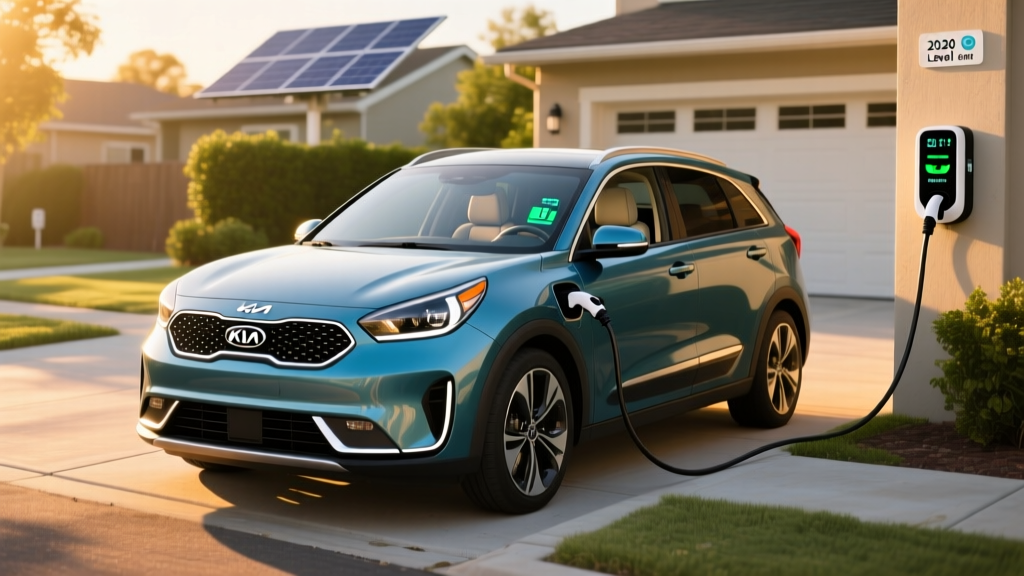
The 2020 Kia Niro Plug-In Hybrid occupies a specific niche: drivers who want electric commuting without committing to full battery-electric ownership. With an EPA-rated 26 miles of electric-only range and 46 MPG combined once the battery depletes, it covers most daily commutes on electrons while eliminating range anxiety for longer trips. Now available only on the used market, the Niro PHEV represents strong value for budget-conscious electrified-vehicle shoppers — but understanding its real-world limitations is critical before buying.
| Specification | Value |
|---|---|
| EPA Electric-Only Range | 26 miles |
| EPA Combined MPGe (EV mode) | 105 MPGe |
| EPA Combined MPG (hybrid mode) | 46 MPG (52 city / 49 hwy — fueleconomy.gov) |
| Battery Capacity | 8.9 kWh (lithium-ion polymer) |
| Combined System Horsepower | 139 HP |
| Engine | 1.6L 4-cyl GDI (104 HP) + 43 kW electric motor |
| Transmission | 6-speed dual-clutch automatic |
| 0–60 MPH | ~9.7 seconds |
| Level 2 Charge Time (240V) | ~2 hours 15 minutes |
| DC Fast Charging | Not supported |
| Original MSRP (base LXS) | $34,090 |
| Hybrid Battery Warranty | 10 years / 100,000 miles |
HEV vs PHEV: Which Niro Are You Looking At?
Kia sold the 2020 Niro in three electrified variants, and confusing them is easy. Here is the breakdown:
| Feature | Niro HEV (Hybrid) | Niro PHEV (Plug-In) | Niro EV |
|---|---|---|---|
| Plugs in? | No — self-charging | Yes — plug to charge | Yes — plug to charge |
| Electric-Only Range | None (EV assist only) | 26 miles EPA | 239 miles EPA |
| Battery Size | 1.56 kWh | 8.9 kWh | 64 kWh |
| Combined MPG / MPGe | 49 MPG combined | 46 MPG / 105 MPGe | 112 MPGe |
| Gas Engine? | Yes | Yes | No |
| Best For | No charging access | Short commute + home charging | Full EV commitment |
The conventional HEV never plugs in. It recovers energy through regenerative braking and the gasoline engine, using its small battery to assist acceleration and enable brief low-speed electric crawling. The PHEV adds a much larger 8.9 kWh battery and a more powerful electric motor, enabling genuine electric-only driving at highway speeds for a limited distance. If you see a Niro listed for sale, confirm which variant it is — the price, fuel economy, and ownership experience differ substantially.
Electric-Only Range and Real-World Efficiency
The EPA rates the 2020 Niro PHEV at 26 miles of electric-only range and 105 MPGe when operating in EV mode. In hybrid mode (battery depleted), it returns 46 MPG combined — though the EPA actually rates it at 52 city and 49 highway, which is unusual for hybrids that typically favor city driving thanks to regenerative braking.
| Mode | City | Highway | Combined |
|---|---|---|---|
| Electric-Only (MPGe) | 110 MPGe | 99 MPGe | 105 MPGe |
| Hybrid Mode (MPG) | 52 MPG | 49 MPG | 46 MPG |
Real-world expectations: In moderate temperatures with a full charge, owners consistently report 24–28 miles of electric range on mixed driving. Highway-heavy routes at 70+ MPH will reduce this to roughly 20–22 miles. In cold weather (below 35°F), expect a 20–30% reduction in electric range — roughly 18–21 miles — because battery chemistry becomes less efficient and cabin heating draws significant energy. Once the battery depletes, real-world hybrid-mode fuel economy typically lands between 42–48 MPG depending on driving style, terrain, and climate control usage. Many owners report exceeding the EPA city figure during stop-and-go commuting where regenerative braking recaptures the most energy.
EPA electric-only: 26 miles | Expect ~22–28 mi in moderate conditions, ~18–21 mi in cold weather.
Total combined range (electric + full 11.4-gal tank): approximately 550+ miles in mixed driving.
Powertrain and Charging Details
The Niro PHEV pairs a 1.6-liter direct-injection four-cylinder engine (producing 104 HP on its own) with a 43 kW (58 HP) permanent-magnet synchronous electric motor. Combined system output is 139 HP and 195 lb-ft of torque, routed through a 6-speed dual-clutch automatic transmission to the front wheels. This is not a performance vehicle — the 0–60 MPH time of roughly 9.7 seconds is leisurely — but the electric motor's instant torque makes it feel responsive around town.
Charging the 8.9 kWh battery:
- Level 1 (120V household outlet): Approximately 9 hours from empty to full using the included portable cord. Practical for overnight top-ups if you drive less than the electric range daily.
- Level 2 (240V): Approximately 2 hours 15 minutes from empty to full. A home Level 2 charger (typically 3.3 kW for this vehicle's onboard charger limit) makes daily top-ups effortless.
- DC Fast Charging: Not supported. The Niro PHEV uses a J1772 connector for AC charging only. There is no CCS or CHAdeMO port.
The Niro PHEV's onboard charger maxes out at 3.3 kW, meaning even a 7.2 kW or 11.5 kW home charger will only deliver 3.3 kW to the battery. This is standard for PHEVs with smaller batteries — the charge time remains manageable because the battery is small.
Used Pricing and Tax Credit Reality
The 2020 Niro PHEV is no longer sold new (Kia redesigned the Niro for the 2023 model year, and the second-generation PHEV variant has limited availability). Original MSRP ranged from approximately $34,090 (LXS) to $36,590 (EX Premium).
As of early 2026, used 2020 Niro PHEV pricing typically falls between $17,000 and $24,000 depending on mileage, condition, and trim. The lower end applies to higher-mileage examples; well-maintained EX Premium models with under 40,000 miles command the top of that range.
As a used PHEV purchased from a dealer, the 2020 Niro Plug-In Hybrid may qualify for the Used Clean Vehicle Credit under IRS §25E — up to $4,000 or 30% of the sale price, whichever is less. Key requirements per irs.gov:
- Sale price must be $25,000 or less
- Buyer income caps: $75,000 single / $112,500 head of household / $150,000 joint
- Vehicle must be at least 2 model years old (2020 qualifies in 2026)
- Must purchase from a licensed dealer (private-party sales excluded)
- Vehicle must have a battery capacity of at least 7 kWh (Niro PHEV's 8.9 kWh qualifies)
- Credit is non-refundable — you must have tax liability to benefit
Note: The original $7,500 new-vehicle §30D credit is no longer applicable for used purchases. Always consult a tax professional and verify current IRS rules before relying on credit eligibility.
Some states offer additional rebates for used PHEVs or hybrids. California's CVRP program, for example, has offered rebates for used plug-in vehicles, though funding availability varies. Check your state energy office or DMV for current programs.
Battery Warranty, Reliability, and Replacement Cost
Kia covers the 2020 Niro PHEV's high-voltage lithium-ion battery for 10 years or 100,000 miles (whichever comes first) from the original in-service date. This warranty guarantees the battery will retain sufficient capacity — typically defined as above 70% of original capacity — and covers defects and premature degradation.
Important for used buyers: The 10-year/100,000-mile hybrid battery warranty is tied to the original owner in most cases. For subsequent owners, Kia's powertrain warranty typically transfers at 5 years / 60,000 miles. However, the hybrid battery emissions warranty (mandated by federal law) may extend coverage to 8 years/80,000 miles for subsequent owners. Verify the specific warranty transfer terms with a Kia dealer using the VIN before purchasing.
Reliability track record: The first-generation Niro (2017–2022) has demonstrated solid reliability overall. The 1.6L engine and 6-speed DCT powertrain are conventional and well-understood. The most commonly reported issues involve the dual-clutch transmission exhibiting occasional hesitation during low-speed maneuvers, and infotainment system quirks rather than powertrain failures. The hybrid battery system itself has proven durable — widespread premature degradation reports are rare for Kia/Hyundai PHEV packs of this era.
Battery replacement cost: If the high-voltage battery fails outside of warranty, a replacement pack for the Niro PHEV typically costs between $3,500 and $5,500 including labor, based on dealer parts pricing and independent hybrid specialist shops. This is significantly less than a full-EV battery replacement because the pack is small (8.9 kWh). However, given the 10-year warranty window from the 2020 model year, most examples will remain under some form of battery coverage through at least 2028–2030 if mileage is reasonable.
The standard 12V auxiliary battery (a separate, conventional battery that powers accessories and starts the vehicle's computers) should be inspected like any used car's — replacement runs $150–$250.
Who Should Choose the Niro PHEV Over a Full EV or Gas Car?
Choose the 2020 Niro PHEV if:
- Your daily commute is under 25 miles round-trip and you can charge at home (Level 1 or 2)
- You want to drive on electricity most days but need gas-engine flexibility for road trips
- You live in an area with unreliable or sparse public DC fast-charging infrastructure
- Your budget is $18,000–$24,000 and you want electrified driving without a new-car payment
- You want a practical crossover with good cargo space (19.4 cu ft behind rear seats, 54.5 cu ft folded)
Choose a full EV instead if:
- You have reliable home charging and your daily driving rarely exceeds 150 miles
- You want zero tailpipe emissions and minimal maintenance (no oil changes, no gas engine)
- You can spend $25,000+ on a used EV with 200+ miles of range (e.g., used Chevy Bolt, Tesla Model 3)
Choose a conventional HEV (standard Niro Hybrid) instead if:
- You cannot charge at home or at work — a PHEV's electric range is wasted without regular plugging in
- You want simpler ownership with no charging cables or routines
- Your budget is tighter — used Niro HEVs often run $2,000–$4,000 less than the PHEV variant
Pros and Cons at a Glance
- 26 miles EV range covers most commutes without gas
- 46 MPG hybrid mode is excellent even when battery depletes
- 550+ mile total range eliminates range anxiety entirely
- Practical hatchback cargo space for the segment
- May qualify for up to $4,000 used-EV federal tax credit
- Strong hybrid battery warranty coverage
- Lower used pricing compared to newer PHEV alternatives
- No DC fast-charging capability
- 3.3 kW onboard charger limits Level 2 speed
- Modest 139 HP — not a performance-oriented vehicle
- DCT can feel hesitant at low speeds
- Used battery warranty may be reduced for second owners
- Infotainment feels dated compared to 2023+ Niro redesign
- Cold-weather electric range drops noticeably
Frequently Asked Questions
How many MPG does the 2020 Kia Niro Plug-In Hybrid get?
The EPA rates it at 105 MPGe in electric mode and 46 MPG combined (52 city / 49 highway) in hybrid mode after the battery is depleted. Real-world owners typically see 42–48 MPG in hybrid mode depending on conditions, and many exceed the EPA city figure in stop-and-go driving where regenerative braking is most effective.
How far can the 2020 Niro PHEV go on electric only?
The EPA rates it at 26 miles of electric-only range. In real-world moderate-temperature driving, expect 22–28 miles. Cold weather (below 35°F) reduces this to roughly 18–21 miles. Highway speeds above 70 MPH also reduce electric range compared to city driving.
Does the 2020 Niro PHEV qualify for a tax credit in 2026?
It is no longer eligible for the $7,500 new-vehicle credit (§30D). However, as a used purchase from a licensed dealer at $25,000 or less, it may qualify for the Used Clean Vehicle Credit (§25E) — up to $4,000, subject to buyer income limits and other requirements. Consult IRS guidance and a tax professional.
Is the 2020 Niro PHEV reliable, and what does a battery replacement cost?
The first-generation Niro has a solid reliability record with no widespread hybrid battery failure patterns. The 8.9 kWh battery is covered by Kia's 10-year/100,000-mile warranty from the original sale date (reduced for subsequent owners). Out-of-warranty replacement costs approximately $3,500–$5,500 — far less than a full-EV battery due to the small pack size.
Can the Niro PHEV charge at a DC fast-charging station?
No. The 2020 Niro PHEV only supports AC charging via a J1772 connector — Level 1 (120V, ~9 hours) or Level 2 (240V, ~2.25 hours). It has no DC fast-charge port (CCS or CHAdeMO). This is typical for PHEVs with smaller batteries.
What happens when the battery runs out of electric charge?
The Niro PHEV seamlessly transitions to hybrid mode, operating like a conventional hybrid. The gasoline engine and regenerative braking maintain the battery at a low state of charge, and the vehicle continues to deliver approximately 46 MPG combined. You never need to worry about being stranded — the 11.4-gallon fuel tank provides over 500 miles of total range.
Should I buy the Niro PHEV or the regular Niro Hybrid?
If you can charge at home (even a standard 120V outlet works overnight) and your daily driving is under 25 miles, the PHEV will save you significantly on fuel by running mostly on electricity. If you cannot charge at home, the conventional HEV is the smarter choice — a PHEV you never plug in is just a heavier, more expensive hybrid.
Sources: EPA Fuel Economy — 2020 Kia Niro PHEV, IRS Used Clean Vehicle Credit (§25E), Kia America.