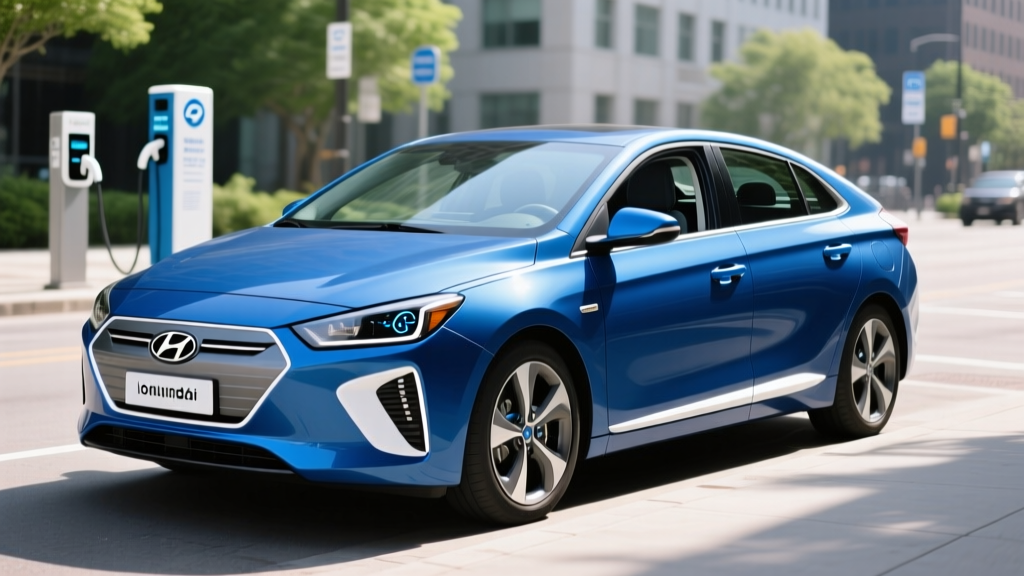
The 2020 Hyundai Ioniq Hybrid Blue occupies a specific niche in the used-hybrid market: it's the most fuel-efficient variant of a nameplate that Hyundai built to challenge the Toyota Prius on its own turf. With an EPA-estimated 59 MPG combined, the Blue trim squeezes every last mile out of its 1.6-liter hybrid powertrain by shedding weight and optimizing aerodynamics. If you're shopping the used-hybrid market in 2026 and prioritizing fuel economy above all else, this car deserves a close look — but its limitations are as important as its numbers.
This guide covers the 2020 Ioniq Hybrid Blue as a conventional hybrid (HEV), not the plug-in variant. We'll clarify the differences, break down real-world MPG expectations, examine battery longevity and warranty coverage, and help you decide whether this HEV, a PHEV, or a full battery-electric vehicle (BEV) fits your driving life.
2020 Hyundai Ioniq Hybrid Blue: Key Specs at a Glance
| Specification | Value |
|---|---|
| EPA Combined MPG | 59 MPG |
| EPA City MPG | 57 MPG |
| EPA Highway MPG | 59 MPG |
| Powertrain | 1.6L 4-cyl GDI + electric motor (HEV) |
| Combined Horsepower | 139 HP |
| Transmission | 6-speed dual-clutch automatic (DCT) |
| Hybrid Battery | 1.56 kWh lithium-ion polymer |
| 0–60 mph (est.) | ~9.5 seconds |
| Drivetrain | Front-wheel drive |
| Cargo Volume | 26.5 cu ft (behind rear seats) |
| Curb Weight | ~3,078 lbs |
| Original MSRP (2020) | ~$23,200 |
| Hybrid Battery Warranty (original) | 10 years / 100,000 miles |
Fuel Economy: EPA Numbers vs. Real-World MPG
The headline figure is 59 MPG combined, per the EPA's fueleconomy.gov listing. That's broken down as 57 MPG city and 59 MPG highway — an unusually balanced profile that reflects Hyundai's focus on low rolling-resistance tires, a lighter curb weight, and aerodynamic tweaks unique to the Blue trim.
For context, here's how the 2020 Ioniq Hybrid lineup breaks down across trims:
| Trim | City | Highway | Combined |
|---|---|---|---|
| Blue | 57 MPG | 59 MPG | 59 MPG |
| SE / SEL / Limited | 54 MPG | 57 MPG | 55 MPG |
The 4-MPG gap between the Blue and higher trims comes from the Blue's lighter wheels, absence of a sunroof, and lighter interior components. Every pound counts at this efficiency level.
What Real-World Owners Actually See
Hybrids tend to match or exceed their EPA city estimates because regenerative braking recaptures energy in stop-and-go driving. Many Ioniq Hybrid owners report 60–65 MPG in urban commutes under moderate temperatures. Highway driving at 75+ MPH tends to drop fuel economy to the low-to-mid 50s, as aerodynamic drag dominates and the electric motor assists less.
Cold weather (below 35°F) reduces MPG by roughly 5–10% due to increased engine idling for cabin heat and reduced battery efficiency. Expect 50–54 MPG combined in winter conditions if you live in a northern climate.
Powertrain and Driving Character
The 2020 Ioniq Hybrid pairs a 1.6-liter Atkinson-cycle 4-cylinder gasoline engine (104 HP) with a 32-kW electric motor (43 HP) integrated into the transmission housing. Total system output is 139 HP and 195 lb-ft of torque. Unlike the Toyota Prius, which uses a continuously variable transmission (CVT), Hyundai chose a 6-speed dual-clutch transmission (DCT). This gives the Ioniq a more traditional, stepped shifting feel that many drivers prefer over the rubber-band sensation of a CVT.
The 1.56 kWh lithium-ion polymer battery pack sits under the rear seats. It's small by any electrified-vehicle standard — this is a conventional hybrid, so the battery exists to capture regenerative braking energy and assist the engine during acceleration, not to provide meaningful electric-only driving range.
The driving experience is competent but unhurried. The 0–60 mph time of roughly 9.5 seconds is adequate for merging and city driving but won't thrill anyone. The Ioniq Blue's low curb weight (~3,078 lbs) helps it feel nimble around town, and the DCT delivers crisp upshifts under light throttle. At highway speeds, cabin noise is well-managed, though the economy tires do transmit some road texture on rough surfaces.
HEV vs. PHEV vs. BEV: Which Electrified Powertrain Fits You?
The Ioniq nameplate was sold in three flavors in 2020: the conventional Hybrid (HEV), the Plug-in Hybrid (PHEV), and the fully Electric (EV). Understanding the differences is critical before you buy.
| Factor | HEV (Ioniq Hybrid) | PHEV (Ioniq Plug-In) | BEV (Ioniq Electric) |
|---|---|---|---|
| Plug in to charge? | No | Yes | Yes |
| Electric-only range | N/A (motor assists only) | 29 miles (EPA) | 170 miles (EPA) |
| Battery size | 1.56 kWh | 8.9 kWh | 38.3 kWh |
| Combined fuel economy | 59 MPG | 52 MPG (gas) / 119 MPGe (electric) | 133 MPGe |
| Home charging needed? | No | Recommended (Level 2, ~3 hrs) | Required (Level 2, ~7 hrs) |
| DC fast charging? | No | No | Yes (CCS, ~50 kW) |
| Gas engine? | Yes (primary) | Yes (backup) | No |
| Total range | ~690 miles | ~630 miles (combined) | 170 miles |
Choose the 2020 Ioniq Hybrid Blue (HEV) If:
- You want maximum fuel economy without changing your fueling habits
- You can't install a Level 2 home charger (apartment, street parking)
- Your commute is long and mostly highway — PHEV electric range wouldn't cover it
- You want the lowest purchase price in the used-electrified market
Consider a PHEV or BEV Instead If:
- You have home charging and a short commute (PHEV covers daily driving on electricity)
- You want zero tailpipe emissions on most trips (BEV)
- You qualify for federal or state EV incentives that make a BEV cost-competitive
- You want stronger acceleration and a quieter driving experience (BEV)
Reliability, Battery Lifespan, and Warranty Coverage
Battery longevity is the top concern for any used-hybrid buyer. The 2020 Ioniq Hybrid's 1.56 kWh lithium-ion polymer pack is small and operates within a narrow state-of-charge window — Hyundai's battery management system keeps it between roughly 40% and 80% to minimize degradation. This conservative strategy, combined with the pack's modest size, means hybrid battery failures are uncommon at normal mileages.
Hybrid Battery Replacement Cost
If the battery does fail outside warranty, replacement cost for the Ioniq Hybrid's 1.56 kWh pack typically ranges from $2,000 to $3,500 including labor at a dealership. Independent hybrid specialists may offer refurbished packs for $1,500–$2,500. This is significantly less than a PHEV or BEV battery replacement because the pack is small and simple.
For broader reliability context, the Ioniq Hybrid has been well-received by owners. Hyundai's hybrid powertrain has proven durable across model years, and the Ioniq nameplate consistently earns favorable marks in long-term ownership surveys. The 6-speed DCT is generally reliable, though some owners report slight low-speed hesitation — a characteristic of DCT designs rather than a defect.
Used-Car Pricing in 2026 and Tax Credit Eligibility
The 2020 Hyundai Ioniq Hybrid Blue originally carried an MSRP of approximately $23,200 (before destination charges). In the 2026 used-car market, well-maintained examples with 50,000–80,000 miles typically trade between $14,000 and $18,000, depending on condition, mileage, and region.
Federal Tax Credit for Used Hybrids
Under current IRS rules for the Used Clean Vehicle Credit (§25E), qualifying buyers can claim up to $4,000 (or 30% of the sale price, whichever is less) on a used plug-in electric vehicle or fuel-cell vehicle. However, conventional hybrids like the Ioniq Hybrid (HEV) do not qualify for this credit. The §25E credit applies only to vehicles that can be recharged from an external power source — meaning PHEVs and BEVs only.
If you're considering the Ioniq Plug-in Hybrid (PHEV) variant instead, it may qualify for the used-EV credit, subject to these requirements:
- Sale price must be $25,000 or less
- Buyer's modified adjusted gross income must not exceed $75,000 (single) / $112,500 (head of household) / $150,000 (joint)
- Vehicle must be at least 2 model years old (2020 qualifies in 2026)
- Must be purchased from a licensed dealer
- Vehicle must have a battery capacity of at least 7 kWh (the Ioniq PHEV's 8.9 kWh pack qualifies)
The conventional Ioniq Hybrid Blue, while ineligible for federal credits, compensates with a lower purchase price and simpler ownership — no charging equipment, no eligibility paperwork.
Ownership Economics: Fuel Cost Savings
At 59 MPG combined, the Ioniq Hybrid Blue delivers meaningful fuel savings over a comparable gas-only compact car. Here's the math at 15,000 miles per year and $3.50/gallon gasoline:
| Vehicle | Combined MPG | Gallons/Year | Annual Fuel Cost |
|---|---|---|---|
| 2020 Ioniq Hybrid Blue | 59 MPG | 254 | $889 |
| Typical gas compact (30 MPG) | 30 MPG | 500 | $1,750 |
| Typical gas SUV (22 MPG) | 22 MPG | 682 | $2,387 |
The Ioniq Hybrid Blue saves roughly $861 per year versus a 30-MPG gas compact and $1,498 per year versus a 22-MPG gas SUV. Over a 5-year ownership period, that's $4,300–$7,500 in fuel savings alone — a meaningful offset to the used-car purchase price.
Pros and Cons of the 2020 Ioniq Hybrid Blue
Pros
- Class-leading 59 MPG combined (EPA)
- No plug-in charging required — fuel like a gas car
- Remaining factory hybrid battery warranty (through ~2030)
- Low annual fuel cost (~$889/yr at 15k miles)
- Competitive used pricing ($14k–$18k in 2026)
- 6-speed DCT feels more natural than a CVT
- Practical hatchback cargo area (26.5 cu ft)
Cons
- Modest 139 HP — acceleration is slow (~9.5s 0–60)
- No electric-only driving capability
- No DC fast charging or plug-in option
- Blue trim is basic — fewer features than SE/Limited
- Rear-seat headroom is tight for tall passengers
- Discontinued nameplate — no new model successor
- Ineligible for federal EV/PHEV tax credits
Frequently Asked Questions
How many MPG does the 2020 Hyundai Ioniq Hybrid Blue get?
The EPA rates it at 57 MPG city, 59 MPG highway, and 59 MPG combined. In real-world driving, city-heavy commuters often see 60–65 MPG, while sustained highway driving at higher speeds may yield 50–55 MPG. Cold weather reduces fuel economy by roughly 5–10%.
Does the 2020 Ioniq Hybrid need to be plugged in?
No. The conventional Ioniq Hybrid (HEV) is a self-charging hybrid. It recaptures energy through regenerative braking and the gasoline engine. You fuel it exclusively at gas stations, just like a conventional car. Only the Ioniq Plug-in Hybrid (PHEV) and Ioniq Electric (BEV) require plugging in.
How far can the Ioniq Hybrid drive on electric power alone?
The conventional Ioniq Hybrid cannot drive meaningful distances on electricity alone. Its 1.56 kWh battery assists the gas engine during acceleration and enables very low-speed electric creep (under 1 mile at parking-lot speeds), but the gas engine is always the primary power source. If you want electric-only driving, look at the Ioniq Plug-in Hybrid (29 miles electric) or the Ioniq Electric (170 miles electric).
Is the 2020 Ioniq Hybrid reliable, and what does a battery replacement cost?
Yes — the Ioniq Hybrid has a strong reliability reputation. Hyundai's hybrid system is proven, and the small 1.56 kWh battery operates within a protective charge window that limits degradation. The original 10-year/100,000-mile hybrid battery warranty still covers many 2020 examples through ~2030. Out-of-warranty battery replacement costs approximately $2,000–$3,500 at a dealer, or $1,500–$2,500 from an independent hybrid specialist.
Does the 2020 Ioniq Hybrid Blue qualify for any tax credit?
The conventional Ioniq Hybrid (HEV) does not qualify for the federal Used Clean Vehicle Credit (§25E) or the new-vehicle §30D credit. These credits apply only to plug-in vehicles (PHEVs and BEVs). Some states offer their own incentives for hybrids — check your state's energy or environmental agency for current programs. The Ioniq PHEV variant may qualify for the up-to-$4,000 used-EV credit if all IRS income, price, and sourcing requirements are met.
How does the Ioniq Hybrid Blue compare to the Toyota Prius?
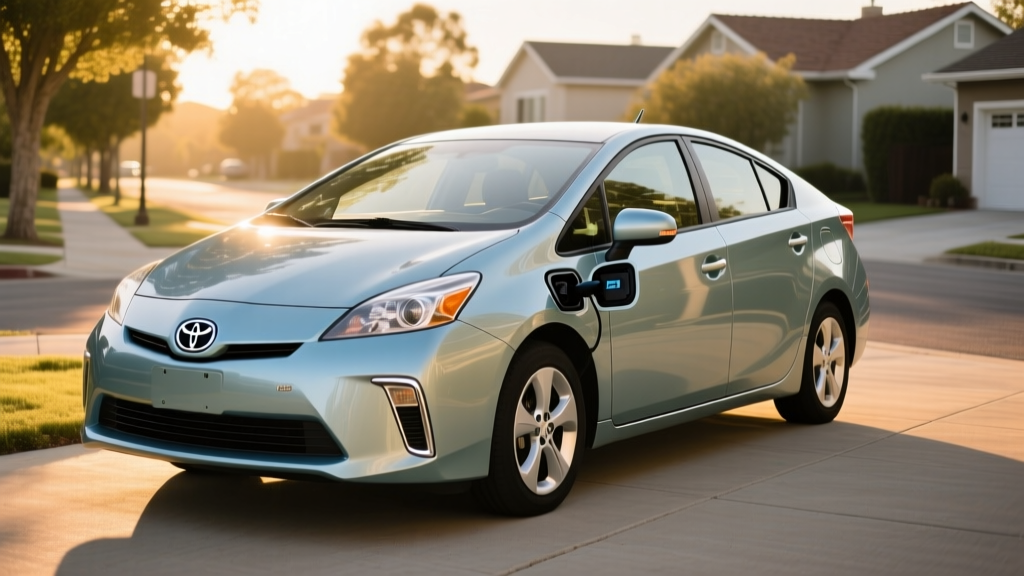
The 2020 Prius Eco achieves 56 MPG combined — 3 MPG less than the Ioniq Blue. The Prius offers slightly more cargo space, a more established used-car market, and available all-wheel drive (Prius AWD-e, though at lower MPG). The Ioniq Blue counters with a more engaging DCT transmission, a lower curb weight, and a generally lower used-car price. Both are excellent choices; the Ioniq wins on pure fuel economy, while the Prius wins on versatility and parts availability.
Sources: EPA fueleconomy.gov — 2020 Hyundai Ioniq Hybrid, IRS Used Clean Vehicle Credit (§25E), Hyundai Motor America specifications.