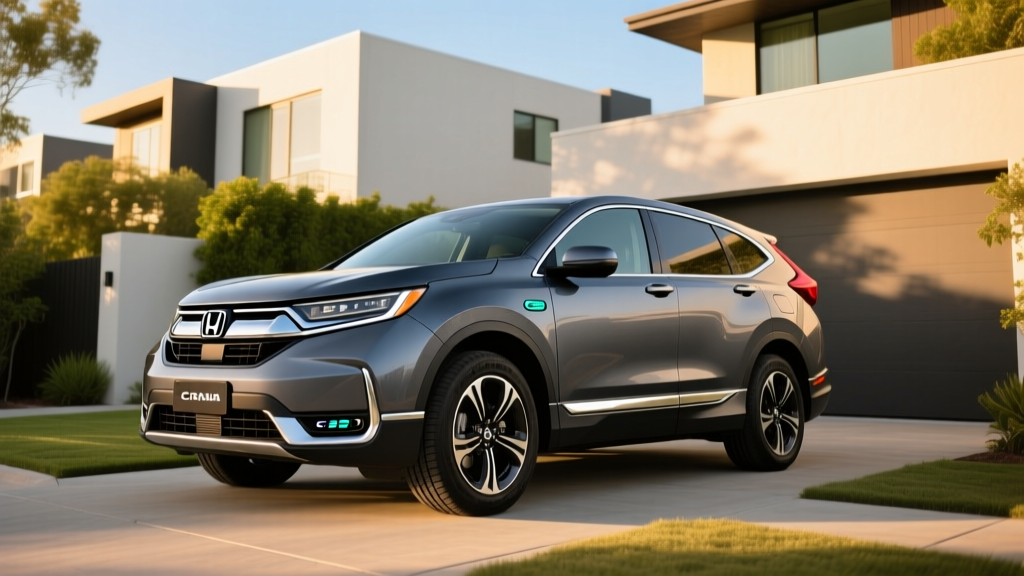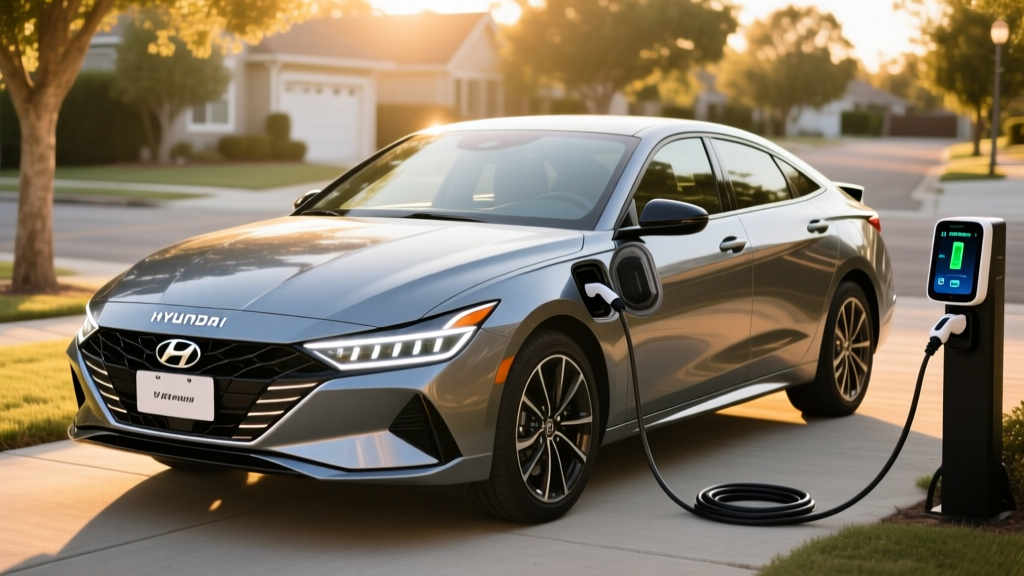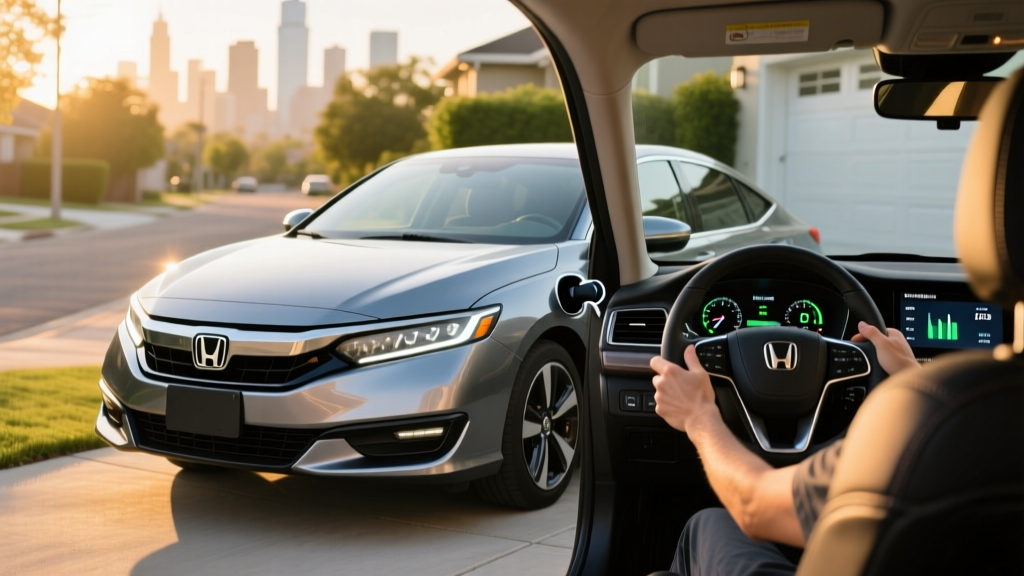
The 2020 Honda Clarity Plug-In Hybrid occupies a specific niche in the used-EV market: a midsize sedan that delivers genuine electric-only commuting range without the range anxiety of a full battery-electric vehicle. Honda discontinued the Clarity after the 2022 model year, but its 47-mile EPA electric range and 42 MPG combined gasoline operation keep it relevant for buyers who want to electrify daily driving while retaining a gas tank for road trips. With used examples now priced between $18,000 and $26,000 depending on mileage and condition, the Clarity PHEV competes against newer PHEVs and used full EVs alike.
This guide covers everything a 2026 used-car buyer needs to know — from real-world range expectations and charging logistics to battery health checks and total cost of ownership — before signing on a pre-owned Clarity Plug-In Hybrid.
HEV vs PHEV: Understanding What the Clarity Actually Is
Before evaluating the Clarity, it is essential to distinguish between conventional hybrids and plug-in hybrids, because the ownership experience differs dramatically.
Conventional Hybrid (HEV)
A standard hybrid like the Toyota Prius or Honda Accord Hybrid uses a small battery (typically 1–2 kWh) that charges exclusively through regenerative braking and the gasoline engine. You never plug it in. The electric motor assists the engine to improve fuel economy, but electric-only driving is limited to very low speeds for short distances. Think of it as a gas car that sips fuel more efficiently.
Plug-In Hybrid (PHEV) — The Clarity's Category
A plug-in hybrid like the 2020 Honda Clarity PHEV carries a much larger battery (17 kWh) that you charge from a wall outlet or charging station. It operates as a full electric vehicle for its rated range (47 miles EPA), then seamlessly transitions to hybrid mode once the battery is depleted. You get the best of both worlds: zero-emission commuting during the week, and a 340+ mile total range for weekend road trips with no charging infrastructure required.
The Clarity was also sold as a fuel-cell variant (Clarity Fuel Cell) and a battery-electric variant (Clarity Electric, with only 89 miles of range), but the PHEV was by far the most popular and practical configuration. When shopping the used market, confirm the listing specifies "Plug-In Hybrid" — the other variants are rare and serve very different use cases.
Range, Efficiency, and Real-World MPG Numbers
The EPA rated the 2020 Honda Clarity Plug-In Hybrid with figures that remain competitive against PHEVs selling new in 2026. Here is the official breakdown:
| Metric | EPA Rating | Real-World Expectation |
|---|---|---|
| Electric-only range | 47 miles | 38–45 mi (highway/cold); up to 50 mi (city/mild weather) |
| EV efficiency (MPGe) | 110 MPGe combined | 95–115 MPGe depending on climate |
| Gas-only MPG (combined) | 42 MPG | 38–44 MPG (hybrids often beat EPA in city) |
| Gas-only MPG (city) | 44 MPG | 42–48 MPG (regen braking excels in stop-and-go) |
| Gas-only MPG (highway) | 40 MPG | 36–41 MPG |
| Total combined range | 340 miles | 310–360 miles depending on conditions |
| Fuel tank capacity | 7.0 gallons | — |
| Energy consumption (EV mode) | 31 kWh/100 mi | 28–35 kWh/100 mi |
Real-world range reality: The EPA's 47-mile electric range assumes moderate temperatures and mixed driving. In freezing weather (below 32°F), expect 30–38 miles of electric range due to cabin heating demands and reduced battery efficiency. In summer city driving with mild A/C, some owners report exceeding 50 miles. Highway driving at 70+ mph reduces electric range to roughly 35–40 miles regardless of temperature.
One advantage the Clarity PHEV retains over full EVs: once the battery is depleted, the 1.5-liter Atkinson-cycle engine takes over seamlessly. There is no range cliff — just a transition to 42 MPG hybrid operation. This makes the Clarity practical for single-car households that cannot guarantee charging access on every trip.
Battery, Charging, and Powertrain Specifications
| Specification | 2020 Honda Clarity PHEV |
|---|---|
| Battery capacity (total / usable) | 17.0 kWh / ~14.0 kWh usable |
| Battery chemistry | Lithium-ion (NMC) |
| Electric motor output | 181 hp / 232 lb-ft torque |
| Gasoline engine | 1.5L 4-cyl Atkinson cycle, 103 hp |
| Combined system horsepower | 212 hp |
| 0–60 mph | ~7.5 seconds |
| Transmission | Single-speed direct drive (no traditional transmission) |
| Level 1 charging (120V) | ~12 hours (0–100%) |
| Level 2 charging (240V, 3.3 kW) | ~2.5 hours (0–100%) |
| DC fast charging | Not supported |
| Charge port | J1772 (Level 1 and Level 2) |
| Drivetrain | Front-wheel drive |
| Cargo volume | 15.5 cu ft (battery reduces trunk vs. gas Accord) |
Charging logistics matter here. The Clarity PHEV's onboard charger is limited to 3.3 kW, which means even on a 240V Level 2 station, charging takes approximately 2.5 hours from empty to full. This is perfectly adequate for overnight home charging but makes public Level 2 chargers impractical for quick top-ups. DC fast charging is not available on any Clarity PHEV — Honda reserved that capability for the now-discontinued Clarity Electric variant.
For daily use, most owners plug in at home using a standard 120V outlet (Level 1), which adds roughly 4 miles of range per hour of charging. A full overnight charge (10–12 hours) replenishes the battery completely. If you install a 240V Level 2 home charger, the 2.5-hour full charge means you can easily top up between evening arrival and morning departure, even with a late start.
Understanding kW vs kWh
A common point of confusion: the battery stores 17 kWh of energy (kilowatt-hours — think of this as the "fuel tank size"), while the charger delivers power at 3.3 kW (kilowatts — the "flow rate"). Dividing 17 kWh by 3.3 kW gives roughly 5 hours theoretically, but charging losses and taper near full capacity push the real time to about 2.5 hours for the usable portion. The Clarity does not charge at the faster 6.6 kW or 7.2 kW rates found on some competing PHEVs like the Toyota RAV4 Prime.
Battery Longevity, Warranty, and Replacement Costs
Original Honda battery warranty: 8 years / 100,000 miles (10 years / 150,000 miles in CARB states including California, New York, Massachusetts, and others adopting California emissions standards). The warranty covers battery capacity below 70% of original capacity.
For a 2020 model in 2026: Original factory warranty coverage has expired for most examples unless the vehicle has very low mileage. Extended warranties or third-party coverage may still apply — verify with the selling dealer or a Honda service department using the VIN.
Honda's lithium-ion battery pack in the Clarity has proven reliable in real-world use. Data from owner forums and fleet observations show typical degradation of 8–12% over the first five years, meaning a 2020 Clarity in 2026 should still deliver approximately 40–43 miles of electric range when new it delivered 47. This is normal for NMC chemistry and consistent with degradation curves seen in the Chevrolet Volt and Toyota Prius Prime.
Is the Honda Clarity Plug-In Hybrid reliable? The Clarity PHEV powertrain has a strong reliability record. The 1.5L Atkinson-cycle engine is lightly stressed, and Honda's hybrid system has been refined over multiple generations (Insight, Accord Hybrid, CR-V Hybrid). Common complaints are minor: infotainment lag, road noise, and reduced rear visibility due to the trunk-mounted battery. Major powertrain or battery failures are rare.
Battery replacement cost: If the high-voltage battery does fail outside warranty, replacement costs range from $3,000 to $5,000 including parts and labor at a Honda dealership. Independent hybrid battery shops may offer refurbished replacements for $2,000–$3,500. Given the Clarity's relatively small 17 kWh pack and Honda's engineering, outright battery failure before 150,000 miles is uncommon. Most buyers will never face this expense.
Pricing, Tax Credits, and Total Cost of Ownership
The 2020 Honda Clarity PHEV originally started at $33,400 (base) and $36,620 (Touring trim), before destination. When new, it qualified for the full $7,500 federal tax credit under the previous IRS rules, which effectively brought the net price to approximately $25,900–$29,120.
Tax Credits for Used PHEV Buyers in 2026
Under current IRS §25E rules, the used clean vehicle credit offers up to $4,000 (or 30% of the sale price, whichever is less) for qualifying pre-owned PHEVs and EVs. To qualify for the 2020 Clarity PHEV on the used market:
- Vehicle price cap: Sale price must be $25,000 or less
- Buyer income cap: AGI must not exceed $75,000 (single), $112,500 (head of household), or $150,000 (joint)
- Vehicle age: Must be at least 2 model years old (2020 qualifies in 2026)
- Battery capacity: Must have at least 7 kWh (Clarity's 17 kWh qualifies)
- Dealer requirement: Must be purchased from a licensed dealer (private-party sales do not qualify)
- One-time use: You cannot claim this credit more than once every 3 years
At current used-market prices of $18,000–$26,000, many Clarity PHEVs fall under the $25,000 cap, making buyers eligible for up to $4,000 off at the point of sale (the credit can now be transferred to the dealer as an upfront discount). Always confirm eligibility with a tax professional and verify the vehicle's battery sourcing documentation, as IRS rules are subject to change.
Five-Year Ownership Cost Estimate
| Cost Category | Clarity PHEV (est.) | Gas Sedan Baseline (est.) |
|---|---|---|
| Purchase price (used, 2026) | $22,000 | $18,000 |
| Federal used-EV credit | –$4,000 | $0 |
| Net purchase price | $18,000 | $18,000 |
| Fuel/energy (5 yr, 60k mi) | $2,800 | $7,200 |
| Maintenance (5 yr) | $1,800 | $3,000 |
| Insurance (5 yr avg) | $6,500 | $5,800 |
| Estimated depreciation | $7,000 | $6,500 |
| 5-year total | $36,100 | $40,500 |
Fuel savings are the Clarity's primary economic advantage. If you charge at home (national average $0.16/kWh) and drive 80% of your miles on electricity, annual energy costs drop to roughly $400–$600 versus $1,400+ for a comparable gas sedan at $3.50/gallon. The savings widen further if your utility offers off-peak EV charging rates.
Who Should Buy the 2020 Clarity PHEV — And Who Shouldn't
Pros
- 47-mile EV range covers most daily commutes without gasoline
- 42 MPG in hybrid mode beats most non-hybrid sedans
- No range anxiety — gas tank provides 340+ mile total range
- Comfortable, spacious interior with premium feel (especially Touring trim)
- Strong reliability record with Honda's proven hybrid system
- Eligible for up to $4,000 used-EV tax credit (income/price dependent)
- Smooth, quiet electric driving experience in EV mode
Cons
- 3.3 kW onboard charger is slow compared to newer PHEVs (6.6–7.2 kW typical)
- No DC fast charging capability
- Discontinued model — limited dealer familiarity for future service
- Trunk space reduced to 15.5 cu ft due to battery placement
- Infotainment system feels dated by 2026 standards (no wireless CarPlay)
- Front-wheel drive only — no AWD option for snow-belt buyers
- Used market prices may exceed $25,000 credit cap for low-mileage examples
Choose the 2020 Honda Clarity PHEV if:
- Your daily round-trip commute is under 45 miles and you can charge at home
- You want electric commuting but regularly take trips exceeding 200 miles
- You live in an area with unreliable public charging infrastructure
- You prefer a sedan over the crossover/SUV body styles dominating the new PHEV market
- You qualify for the used-EV tax credit and find a sub-$25,000 example
Look elsewhere if:
- You want DC fast charging for apartment living or frequent road trips (consider a used Chevrolet Bolt EV or Tesla Model 3)
- You need AWD for harsh winters (consider a used Toyota RAV4 Prime or Subaru Solterra)
- Your daily commute exceeds 50 miles — a full EV with 250+ mile range will save more
- You want the latest infotainment and driver-assist technology (the Clarity's Honda Sensing suite is basic by 2026 standards)
What to Inspect Before Buying a Used Clarity PHEV
When evaluating a pre-owned 2020 Honda Clarity Plug-In Hybrid, focus your inspection on PHEV-specific items that generic used-car checklists miss:
- Battery state of health (SoH): Ask the seller or dealer to pull the battery health report via Honda's diagnostic system. Look for capacity retention above 85%. If the dashboard shows noticeably reduced EV range (below 38 miles on a full charge in mild weather), negotiate the price down or walk away.
- Charging port and cable: Inspect the J1772 charge port for corrosion, loose pins, or damaged latching mechanisms. Test both Level 1 and Level 2 charging if possible. The included Level 1 charging cord should be present and functional.
- Service records: Honda's hybrid system requires minimal maintenance, but verify that coolant flushes (for the hybrid system's separate cooling circuit) were performed on schedule at 45,000-mile intervals.
- Tire wear: The Clarity's instant electric torque can accelerate front tire wear. Check for uneven wear patterns indicating alignment issues or aggressive driving.
- VIN check for recalls: Verify on NHTSA's recall database that all open recalls have been addressed, particularly any related to the powertrain control module.
Frequently Asked Questions
How many MPG does the 2020 Honda Clarity Plug-In Hybrid get?
The EPA rates the Clarity PHEV at 42 MPG combined (44 city / 40 highway) when operating in hybrid mode after the battery is depleted. In real-world driving, many owners report 38–48 MPG depending on conditions. City driving often exceeds the EPA estimate thanks to regenerative braking, while sustained highway driving at 75+ mph may drop to 36–38 MPG. In electric mode, it achieves 110 MPGe combined.
How far can the 2020 Clarity go on electric only?
The EPA rates the Clarity PHEV at 47 miles of electric-only range. In real-world conditions, expect 38–45 miles in mixed driving, 30–38 miles in freezing weather, and up to 50 miles in mild-weather city driving. Once the battery is depleted, the gasoline engine engages automatically and the car operates as a conventional hybrid with 42 MPG.
Does the 2020 Honda Clarity PHEV qualify for a tax credit?
The original $7,500 federal tax credit for new Clarity purchases has expired. However, under the current IRS §25E used clean vehicle credit, buyers may qualify for up to $4,000 (30% of sale price, capped at $4,000) when purchasing from a dealer. Eligibility requires a sale price of $25,000 or less, buyer AGI below $75,000/$112,500/$150,000 (single/HOH/joint), and purchase from a licensed dealer. State incentives vary — check fueleconomy.gov and your state's energy office for current programs.
Is the Honda Clarity Plug-In Hybrid reliable?
Yes. The Clarity PHEV's powertrain — Honda's two-motor hybrid system paired with the 1.5L Atkinson-cycle engine — has a strong reliability record across Honda's hybrid lineup. The 17 kWh lithium-ion battery typically retains 85–92% of its original capacity after five years. Major battery or powertrain failures are rare. Honda's original 8-year/100,000-mile hybrid battery warranty has expired for most 2020 examples, but the underlying hardware is proven and durable.
What does it cost to replace the Clarity PHEV battery?
Out-of-warranty high-voltage battery replacement for the Clarity PHEV ranges from $3,000 to $5,000 at a Honda dealership, or $2,000–$3,500 through an independent hybrid battery specialist. However, battery replacement is rarely needed — Honda's NMC cells are engineered for 150,000+ miles with gradual, manageable degradation rather than sudden failure.
Can I charge the Clarity PHEV at a public DC fast charger?
No. The 2020 Honda Clarity Plug-In Hybrid does not support DC fast charging. It is limited to Level 1 (120V, ~1.4 kW) and Level 2 (240V, 3.3 kW maximum) AC charging via its J1772 port. This is a deliberate engineering choice — Honda designed the Clarity PHEV for home and workplace charging, not public fast-charging stops. If DC fast charging is essential to your lifestyle, consider a full EV or a PHEV with DC capability like the Mitsubishi Outlander PHEV.
Hybrid vs PHEV vs EV — which is right for me?
Choose a conventional hybrid (HEV) if you cannot charge at home and want better MPG without any behavioral change. Choose a plug-in hybrid (PHEV) like the Clarity if you can charge at home, want electric commuting for trips under 47 miles, and need gas-engine flexibility for longer trips. Choose a full EV if you want zero gasoline use, have reliable home charging, and your longest regular trip fits within 250+ miles of range (or you're willing to use DC fast chargers on road trips).
The 2020 Honda Clarity Plug-In Hybrid remains a rational, data-backed choice for used-car buyers in 2026 who want to reduce fuel consumption and emissions without committing fully to battery-electric ownership. Its 47-mile electric range, 42 MPG hybrid efficiency, and Honda reliability make it one of the most practical used PHEVs on the market — provided you understand its charging limitations and verify battery health before purchase.