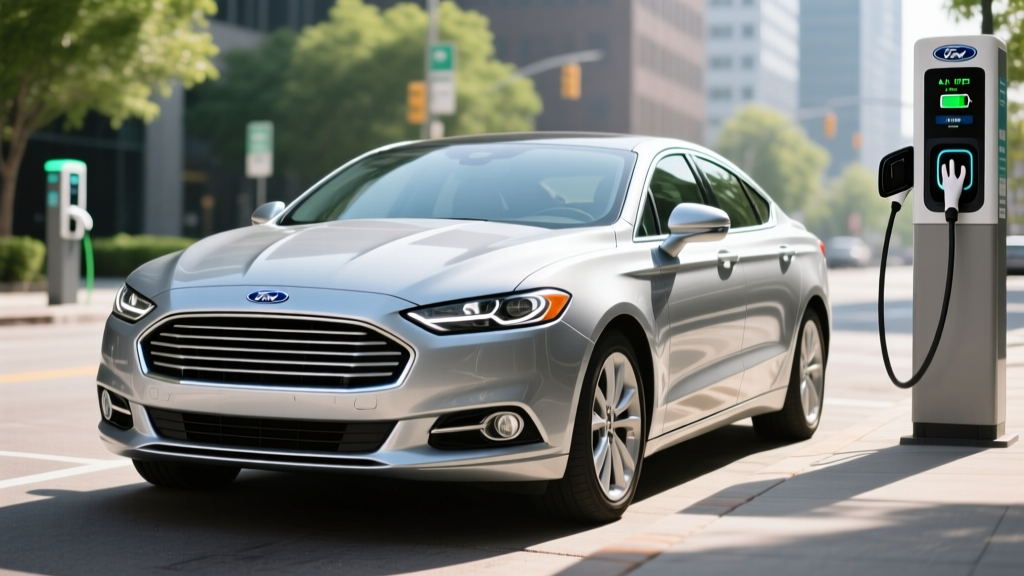
The Ford Fusion Hybrid was discontinued after the 2020 model year, but it remains one of the most popular used midsize hybrid sedans on the market. With EPA ratings near 42 MPG combined and a proven planetary-gear hybrid powertrain shared with Toyota's hybrid architecture, the 2020 Fusion Hybrid is a practical, efficient choice for buyers who want hybrid efficiency without plugging in. This guide covers the exact specs, real-world fuel economy data, battery longevity expectations, and used-market pricing you need to make an informed purchase in 2026.
HEV vs PHEV: Understanding the 2020 Fusion Lineup
Ford offered the Fusion in two electrified variants for 2020, and confusing them is a common mistake among used buyers. Here's the critical distinction:
2020 Ford Fusion Hybrid (HEV)
- Type: Conventional hybrid — no plug required
- Battery: 1.4 kWh lithium-ion (not plug-in capable)
- Charging: Self-charging via regenerative braking and engine; no external charging
- Electric-only driving: Very short distances at low speeds (~0.5–1 mile)
- EPA Combined: 42 MPG
2020 Ford Fusion Energi (PHEV)
- Type: Plug-in hybrid — must plug in to maximize electric range
- Battery: 9.0 kWh usable lithium-ion
- Charging: Level 1 (120V) ~5 hours; Level 2 (240V, 3.6 kW) ~2.5 hours; no DC fast charging
- Electric-only range: EPA-rated 26 miles
- Total combined range: ~370 miles (electric + gas)
- EPA Combined (charge-sustaining): 42 MPG after battery depletes; 103 MPGe combined when including electric driving
This article focuses primarily on the conventional Fusion Hybrid (HEV). We cover Energi (PHEV) specifics where relevant, since many used buyers cross-shop both.
Fuel Economy: EPA Ratings and Real-World MPG
| Model | City MPG | Highway MPG | Combined MPG |
|---|---|---|---|
| Fusion Hybrid (HEV) | 43 | 41 | 42 |
| Fusion Energi (PHEV, charge-sustaining) | 43 | 41 | 42 |
| Fusion Energi (PHEV, charge-depleting) | 103 MPGe combined (electric + gas) | ||
Source: EPA Fuel Economy
Real-World MPG: What Owners Actually See
The Fusion Hybrid's EPA numbers hold up well in practice — and in some conditions, owners exceed them. Here's what to expect based on aggregated owner data and testing:
- City driving: 40–46 MPG. Hybrids excel in stop-and-go traffic where regenerative braking recaptures energy and the engine shuts off at stops. Many owners report 44–46 MPG in urban commutes.
- Highway driving: 37–41 MPG. At sustained 70+ MPH speeds, the gasoline engine does most of the work. Expect the low end of the EPA highway estimate on long interstate trips.
- Cold weather penalty: 5–10% reduction in winter. The engine runs more frequently to provide cabin heat and maintain catalyst temperature. Expect 37–39 MPG combined in sub-freezing conditions.
- Combined real-world average: Most owners report 39–44 MPG over mixed driving, aligning closely with the 42 MPG EPA sticker.
Fusion Energi (PHEV): Electric-Only Range
If you're considering the plug-in Energi variant, the EPA rates it at 26 miles of electric-only range on a full charge. In real-world conditions:
- Mild weather, city driving: 24–28 miles electric-only
- Highway at 70 MPH: 20–23 miles before the engine engages
- Cold weather (below 32°F): 18–22 miles — cabin heating demands pull from the battery
Once the battery depletes, the Energi operates identically to the standard Hybrid, achieving the same 42 MPG combined. The Energi makes the most financial sense for drivers with a sub-25-mile commute and access to home or workplace Level 2 charging.
Powertrain and Performance Specs
| Specification | Detail |
|---|---|
| Engine | 2.0L Atkinson-cycle 4-cylinder |
| Engine horsepower | 141 hp @ 6,000 rpm |
| Electric motor | Permanent-magnet synchronous AC motor, 88 kW (118 hp) |
| Combined system output | 195 hp |
| Transmission | Electronic continuously variable (eCVT, planetary gearset) |
| Drivetrain | Front-wheel drive |
| 0–60 MPH | ~7.8 seconds (estimated) |
| Hybrid battery (HEV) | 1.4 kWh lithium-ion |
| Hybrid battery (Energi PHEV) | 9.0 kWh usable lithium-ion |
| Fuel tank capacity | 13.5 gallons (HEV); 14.0 gallons (Energi) |
| Total driving range (HEV) | ~567 miles |
| Total driving range (Energi) | ~370 miles (26 electric + ~344 gas) |
The Fusion Hybrid uses Ford's third-generation hybrid system, which is mechanically similar to Toyota's Hybrid Synergy Drive. Both employ a planetary gearset eCVT that seamlessly blends engine and motor power without the rubber-band feel of belt-driven CVTs. The result is smooth, linear acceleration that feels more like a conventional automatic than most CVT-equipped vehicles.
At 195 combined horsepower, the Fusion Hybrid has adequate passing power for highway merging and is noticeably quicker than competitors like the 2020 Toyota Camry Hybrid (208 hp but heavier) in real-world driving. The eCVT eliminates shift shock entirely.
Battery Longevity, Warranty, and Replacement Cost
Hybrid Battery Warranty (Original)
- Federal emissions warranty: 8 years / 100,000 miles (hybrid battery and components)
- California Air Resources Board (CARB) states: 10 years / 150,000 miles
- Coverage threshold: Battery must retain sufficient capacity to function as designed; Ford does not publish a specific percentage retention guarantee for the HEV battery
For a 2020 model in 2026, the original 8-year/100,000-mile warranty is still active through the 2028 model year or until the odometer hits 100,000 miles — whichever comes first. Buyers in CARB states (California, New York, Massachusetts, and others adopting California emissions standards) retain coverage through 2030 or 150,000 miles.
How Long Do Fusion Hybrid Batteries Actually Last?
Ford's hybrid battery track record is strong. The Fusion Hybrid's 1.4 kWh pack is relatively small and is never deeply cycled — the hybrid system keeps the battery in a narrow state-of-charge window (roughly 40–80%) to minimize degradation. Key data points:
- Expected lifespan: 150,000–200,000+ miles before significant capacity loss is typical for Ford's lithium-ion hybrid packs, based on fleet and owner data
- Degradation pattern: Gradual capacity loss over time; a 10-year-old Fusion Hybrid battery may retain 85–90% of original capacity, which has minimal impact on fuel economy since the pack is small and the engine compensates
- Failure rate: Low. Widespread hybrid battery failures on the Fusion are uncommon; isolated cell failures are more often related to thermal management issues or manufacturing defects covered under warranty
Battery Replacement Cost
If the hybrid battery does fail out of warranty, here's what to budget:
- OEM replacement (dealer): $2,500–$3,500 including parts and labor for the HEV pack
- Remanufactured/aftermarket: $1,500–$2,500 installed
- Individual cell module replacement: $300–$800 if only one or two modules are degraded (a specialist hybrid shop can diagnose and replace individual modules rather than the entire pack)
- Energi (PHEV) pack replacement: $4,000–$6,000 OEM due to the larger 9.0 kWh battery
For context, a $3,000 battery replacement at 180,000 miles is equivalent to roughly $0.017/mile over the battery's service life — a minor cost relative to the fuel savings the hybrid system delivers.
Used Pricing and Tax Credit Eligibility
The 2020 Fusion Hybrid was discontinued when Ford exited the sedan market. Here's what used buyers face in 2026:
| Trim | Original MSRP | Used Price Range (60K–80K mi) |
|---|---|---|
| S Hybrid | $23,270 | $14,000–$16,500 |
| SE Hybrid | $25,720 | $15,500–$18,500 |
| SEL Hybrid | $28,490 | $17,000–$20,500 |
| Titanium Hybrid | $32,490 | $19,000–$23,000 |
| Energi (PHEV) — All trims | $34,595–$37,995 | $16,000–$22,000 |
Federal Tax Credit: Does a Used Fusion Hybrid Qualify?
Under current IRS §30D and §25E rules, here's how tax incentives apply to the used Fusion Hybrid and Energi in 2026:
- §30D New Clean Vehicle Credit: Not applicable — the Fusion Hybrid is no longer manufactured or sold new.
- §25E Previously-Owned Clean Vehicle Credit: The Fusion Energi (PHEV) may qualify for up to $4,000 (30% of sale price, capped at $4,000) if purchased from a licensed dealer for $25,000 or less. The conventional Fusion Hybrid (HEV) does not qualify for the used EV credit — §25E applies only to battery electric vehicles and plug-in hybrids with at least 7 kWh of battery capacity, and the Fusion Hybrid's 1.4 kWh pack falls below the threshold.
- §25E income limits: Adjusted gross income must not exceed $75,000 (single), $112,500 (head of household), or $150,000 (joint filers).
- §25E vehicle requirements: Model year must be at least 2 years older than the calendar year of purchase (a 2020 model qualifies in 2026); must be purchased from a dealer; sale price must be $25,000 or less.
Always verify current eligibility with the IRS used vehicle credit page and consult a tax professional, as credit rules and qualifying vehicle lists can change.
Who Should Buy the 2020 Fusion Hybrid — And Who Shouldn't
Choose the 2020 Fusion Hybrid (HEV) If:
- You want 40+ MPG without changing your driving or fueling habits at all
- You don't have access to home or workplace charging (no plug needed)
- Your commute is mixed city/highway and exceeds 30 miles round-trip
- You want a proven, low-risk hybrid with strong dealer service support
- Your budget is $15,000–$22,000 for a used midsize sedan
Choose the 2020 Fusion Energi (PHEV) If:
- Your daily commute is under 25 miles round-trip and you can charge at home
- You want electric-only commuting for most daily driving but need gas flexibility for road trips
- You qualify for the §25E used clean vehicle credit (up to $4,000)
- You're willing to pay a slight premium for the larger battery and plug-in capability
Consider a Full EV Instead If:
- You have reliable Level 2 home charging and your daily driving is under 250 miles
- You want zero tailpipe emissions and minimal powertrain maintenance
- You qualify for the full §30D new EV credit ($7,500) on a new vehicle like the Hyundai Ioniq 6 or Tesla Model 3
Stick With a Gas-Only Sedan If:
- You drive fewer than 8,000 miles per year (the hybrid fuel savings won't offset the purchase premium)
- You want a sportier driving experience — the Fusion Hybrid prioritizes efficiency over engagement
Pros and Cons
Pros
- 42 MPG EPA combined; real-world city driving often exceeds 44 MPG
- No plug-in charging required (HEV); zero lifestyle change from a gas car
- Smooth eCVT powertrain with no shift shock
- Spacious midsize sedan interior with 16 cu ft trunk (HEV); Energi loses some trunk space to the larger battery
- Proven hybrid system with strong reliability data and low battery failure rates
- Available through 2028 under original hybrid battery warranty
- Competitively priced on the used market ($14K–$23K depending on trim and mileage)
Cons
- Discontinued — no new models available; parts supply is good but will gradually thin
- Modest 195 hp — adequate but not quick; 0–60 in ~7.8 seconds
- Energi (PHEV) trunk reduced to 8.2 cu ft due to larger battery pack
- HEV does not qualify for any federal tax credit; only the Energi PHEV may qualify for §25E used credit
- No DC fast charging on Energi (Level 2 only, ~2.5 hours for full charge)
- Ford has exited the sedan market — long-term dealer support for sedans is uncertain
- Infotainment (SYNC 3) is functional but dated compared to 2026 systems
Frequently Asked Questions
How many MPG does the 2020 Ford Fusion Hybrid get?
The EPA rates the 2020 Fusion Hybrid at 43 city / 41 highway / 42 combined MPG. In real-world driving, city-heavy commuters often achieve 44–46 MPG, while highway-dominant drivers typically see 37–41 MPG. Cold weather reduces fuel economy by approximately 5–10%.
How far can the 2020 Fusion Energi go on electric only?
The EPA rates the Fusion Energi PHEV at 26 miles of electric-only range. Real-world range is typically 22–28 miles depending on temperature, speed, and terrain. Once the battery depletes, the Energi operates as a conventional hybrid at 42 MPG combined.
Is the 2020 Ford Fusion Hybrid reliable?
Yes. The Fusion Hybrid's planetary-gear eCVT and lithium-ion battery have a strong reliability record. The hybrid system has fewer wear components than a conventional automatic transmission (no clutch packs, torque converter, or traditional gears). The battery is warrantied for 8 years/100,000 miles (10 years/150,000 in CARB states), and failure rates are low. Common non-hybrid maintenance items (brakes, suspension) carry standard costs, and regenerative braking extends brake pad life significantly.
What does a Fusion Hybrid battery replacement cost?
An OEM dealer replacement runs $2,500–$3,500 for the HEV battery and $4,000–$6,000 for the Energi PHEV battery. Remanufactured packs and individual module replacements can reduce costs to $1,500–$2,500. Battery failures before 150,000 miles are uncommon, and most units remain under the original 8-year/100,000-mile warranty through 2028.
Does the 2020 Fusion Hybrid qualify for a tax credit?
The conventional Fusion Hybrid (HEV) does not qualify for any federal tax credit — its 1.4 kWh battery is below the 7 kWh threshold for the §25E used vehicle credit. The Fusion Energi (PHEV) with its 9.0 kWh battery may qualify for up to $4,000 under §25E if purchased from a dealer for $25,000 or less and the buyer meets income requirements ($75K single / $150K joint). Verify current rules at IRS.gov.
Do I need to plug in the Fusion Hybrid?
No. The conventional Fusion Hybrid (HEV) charges its small 1.4 kWh battery entirely through regenerative braking and the gasoline engine. You fuel it like any other car. Only the Fusion Energi (PHEV) benefits from plug-in charging to access its 26-mile electric-only range.
How does the Fusion Hybrid compare to the Toyota Camry Hybrid?
The 2020 Camry Hybrid achieves a slightly higher 52 MPG combined (LE trim) versus the Fusion's 42 MPG. However, the Fusion offers a more refined ride, a larger trunk (16 vs 15.1 cu ft for the HEV), and often lower used pricing. The Camry Hybrid holds a slight edge in fuel economy; the Fusion Hybrid competes on comfort and value. Both use proven planetary-gear hybrid systems with strong reliability.
Sources: EPA Fuel Economy — 2020 Ford Fusion Hybrid, IRS Previously-Owned Clean Vehicle Credit (§25E), NHTSA Vehicle Safety Ratings.