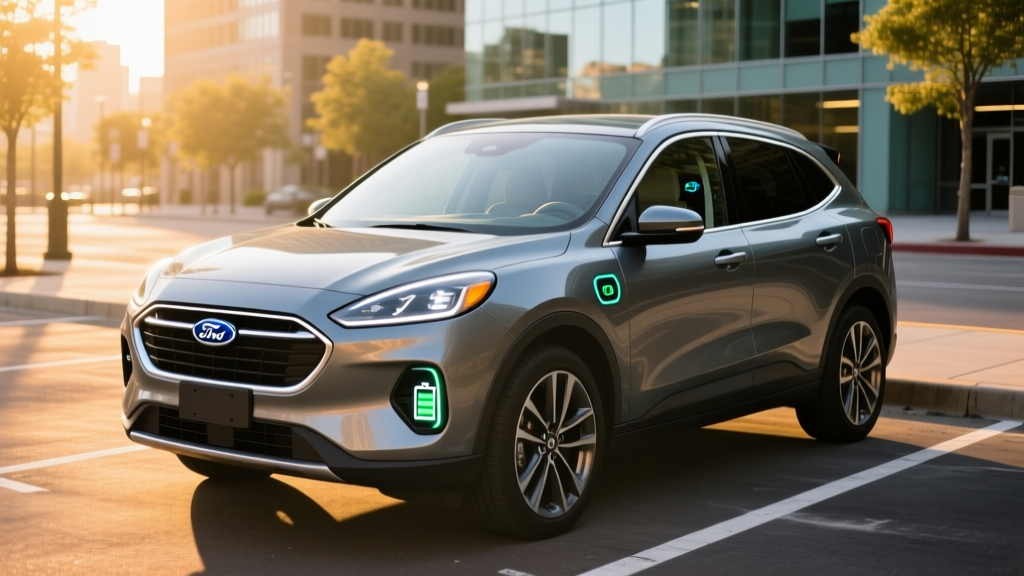
The 2020 Ford Escape Hybrid occupies a practical sweet spot in the compact crossover segment: it pairs a proven 2.5-liter Atkinson-cycle engine with an electric motor for strong city fuel economy, available all-wheel drive, and no plug-in obligation. For buyers in 2026 shopping the used market, this generation (introduced for the 2020 model year) remains one of the more efficient non-plug-in hybrid SUVs you can find under $25,000. But Ford also offered a plug-in hybrid (PHEV) variant the same year, and the two powertrains serve very different needs. This guide separates the HEV from the PHEV, pins down real-world MPG, and addresses the battery longevity questions that dominate hybrid buyer research.
HEV vs PHEV: Which 2020 Escape Are You Actually Looking At?
Ford sold the 2020 Escape in two distinct electrified configurations. Confusing them is easy on a used-car listing because both carry "Hybrid" badges, but the mechanical differences are substantial.
| Attribute | 2020 Escape Hybrid (HEV) | 2020 Escape PHEV |
|---|---|---|
| Powertrain | 2.5L 4-cyl + electric motor, self-charging | 2.5L 4-cyl + larger electric motor, plug-in capable |
| Combined Horsepower | 200 hp (198 hp AWD) | 221 hp |
| Battery Capacity | ~1.1 kWh (small buffer) | 14.4 kWh lithium-ion |
| Needs to Plug In? | No — regenerative braking recharges | Yes, for electric-only driving |
| Drivetrain Options | FWD or AWD | FWD only |
| EPA Combined MPG / MPGe | 41 MPG (FWD) / 39 MPG (AWD) | 105 MPGe (electric) / 41 MPG (gas-only) |
| Electric-Only Range | N/A (brief low-speed assist only) | 37 miles EPA |
| DC Fast Charging | N/A | No — Level 2 AC only |
The conventional hybrid (HEV) is the volume seller and the simpler ownership proposition. You fuel it like any gas car and the hybrid system handles energy recovery automatically. The PHEV rewards owners who can charge at home or work with 37 miles of electric-only range — enough for many commutes — before the gas engine engages. If you lack reliable access to a plug, the PHEV's larger battery becomes dead weight and the HEV is the better pick.
Fuel Economy: EPA Numbers and Real-World MPG
The EPA rates the 2020 Ford Escape Hybrid FWD at 44 MPG city, 37 MPG highway, and 41 MPG combined. The AWD version drops slightly to 43 city / 35 highway / 39 combined.
| Drivetrain | City MPG | Highway MPG | Combined MPG |
|---|---|---|---|
| FWD Hybrid (HEV) | 44 | 37 | 41 |
| AWD Hybrid (HEV) | 43 | 35 | 39 |
| PHEV (FWD, gas-only mode) | 43 | 40 | 41 |
| PHEV (FWD, electric mode) | 105 MPGe combined | ||
Real-World MPG: What Owners Actually See
Hybrids typically exceed their EPA city rating in stop-and-go driving because regenerative braking recaptures energy that a gas car wastes as heat. Highway driving is where hybrids lose their advantage — the electric motor contributes less at sustained speed, and aerodynamic drag dominates.
Based on aggregated owner data from Fuelly and real-world testing, expect:
- City / suburban driving: 42–47 MPG is common. Some hypermilers report touching 50 MPG in warm weather with light acceleration.
- Highway (70+ mph): 33–37 MPG. The Escape Hybrid's aerodynamics and CVT tuning don't favor high-speed efficiency.
- Mixed driving (realistic daily average): 38–42 MPG for FWD, 36–40 MPG for AWD.
- Cold weather penalty: Expect a 5–10% drop in winter. The engine runs more often to provide cabin heat, and battery efficiency drops at low temperatures.
For the PHEV, real-world electric range hovers around 32–37 miles depending on temperature and driving style. Once the battery depletes, the PHEV operates as a conventional hybrid and delivers approximately 39–42 MPG in mixed driving — comparable to the HEV.
Powertrain and Driving Impressions
Both electrified Escapes use Ford's 2.5-liter inline-four operating on the Atkinson cycle, which sacrifices peak power for thermal efficiency. An electric motor integrated into the transaxle fills in low-end torque. Combined output is 200 horsepower for the HEV (198 hp with AWD due to a rear-axle motor configuration) and 221 hp for the PHEV.
The powertrain routes through an electronically controlled CVT (eCVT), which is a planetary gearset design — not the belt-and-cone CVT found in some competitors. This design is durable and avoids the "rubber-band" feel that plagues lesser CVTs, though there's still a noticeable drone under hard acceleration as the engine holds at its optimal RPM.
The PHEV's 221 hp and instant electric torque make it the quicker variant, with 0–60 mph times in the mid-7-second range versus the low-8-second range for the HEV. Neither is fast, but both are adequate for merging and passing.
| Specification | 2020 Escape Hybrid (HEV FWD) | 2020 Escape PHEV |
|---|---|---|
| Engine | 2.5L I4 Atkinson + e-motor | 2.5L I4 Atkinson + e-motor |
| Combined HP | 200 hp | 221 hp |
| 0–60 mph | ~8.1 sec | ~7.5 sec |
| Drivetrain | FWD (AWD available) | FWD only |
| Transmission | eCVT | eCVT |
| Towing Capacity | 1,500 lbs | Not rated for towing |
| Cargo Volume | 34.4 cu ft (rear seats up) | 30.7 cu ft (rear seats up) |
Note the cargo trade-off: the PHEV's larger 14.4 kWh battery pack sits beneath the rear floor, reducing cargo space by roughly 3.7 cubic feet compared to the HEV.
PHEV Charging: What You Need to Know
If you're considering the PHEV variant, charging logistics determine whether the electric range is a benefit or a wasted feature.
- Battery capacity: 14.4 kWh lithium-ion
- Electric-only range: 37 miles (EPA)
- Total combined range: ~490 miles (electric + 11.1-gallon tank)
- Level 1 charging (120V household outlet): ~10–11 hours for a full charge. Adequate if you drive less than 30 miles daily and plug in overnight.
- Level 2 charging (240V): ~3.5 hours for a full charge using a 32-amp home charger.
- DC fast charging: Not supported. The 2020 Escape PHEV cannot use CCS or CHAdeMO fast chargers.
The lack of DC fast charging is typical for PHEVs of this era. The smaller battery doesn't justify the hardware cost, and most PHEV charging happens at home overnight. If your daily commute exceeds 37 miles round-trip and you can't charge at your destination, the PHEV advantage narrows considerably.
Used Pricing and Tax Credit Reality (2026)
As of early 2026, the 2020 Ford Escape Hybrid is available exclusively on the used market. Pricing varies by mileage, trim, and condition:
- Escape Hybrid (HEV), 50K–80K miles: $17,000–$23,000
- Escape PHEV, 40K–70K miles: $19,000–$26,000
Tax Credit Eligibility
Here's where used buyers need clarity: the federal Used Clean Vehicle Credit (§25E) provides up to $4,000 (30% of the sale price, capped at $4,000) for qualifying used EVs and PHEVs purchased from a dealer. Key requirements:
- Sale price must be $25,000 or less
- Buyer income caps: $75,000 single / $112,500 head of household / $150,000 joint
- Vehicle must be at least two model years old (2020 qualifies in 2026)
- The PHEV's battery must meet the minimum 7 kWh capacity requirement (14.4 kWh qualifies)
- Must purchase from a licensed dealer (private sales don't qualify)
- Credit is non-refundable — you must have tax liability to claim it
The conventional HEV (non-plug-in hybrid) does not qualify for any federal purchase tax credit — neither the new-vehicle §30D credit nor the used §25E credit, which apply only to plug-in vehicles. Some states offer separate hybrid incentives, but these vary widely. Check your state's energy office or the Alternative Fuels Data Center for current local programs.
Battery Warranty, Lifespan, and Replacement Cost
Original Warranty Coverage: Ford warranted the 2020 Escape Hybrid and PHEV high-voltage battery for 8 years or 100,000 miles (whichever comes first). In California Air Resources Board (CARB) states, the warranty extends to 10 years or 150,000 miles. This covers defects and capacity loss below a defined threshold (typically 60–70% of original capacity, per Ford's warranty guide).
How Long Do These Batteries Actually Last?
Ford's hybrid battery packs — particularly the nickel-metal hydride (NiMH) and lithium-ion units used across the Escape and Fusion Hybrid lineages — have a strong longevity track record. Real-world data from high-mileage Ford hybrid owners and fleet operators shows:
- Most hybrid batteries retain 85–90% capacity at 100,000 miles
- Failure before 150,000 miles is uncommon but not unheard of
- Heat is the primary degradation accelerator — vehicles in hot climates (Arizona, Texas) see slightly faster capacity loss
- The HEV's small ~1.1 kWh battery cycles shallowly and frequently, which is actually gentle on lithium-ion chemistry
Replacement Cost
If the high-voltage battery does fail outside warranty:
- HEV battery replacement: $2,500–$4,000 (parts and labor, OEM)
- PHEV battery replacement: $6,000–$9,000 (larger pack, more complex installation)
- Refurbished/remanufactured options: $1,500–$2,500 for the HEV, reducing cost substantially
For a used 2020 model in 2026, check whether the original 8-year/100,000-mile warranty is still active. A low-mileage example (under 60,000 miles) likely retains factory hybrid battery coverage through at least 2028.
Reliability and Common Issues
The 2020 Escape Hybrid's powertrain is one of Ford's most reliable offerings. The eCVT planetary gearset has no belts or clutches to wear, and the Atkinson-cycle engine operates under less stress than a conventional engine. NHTSA and IIHS ratings were strong for the generation.
Reported issues from owner forums and NHTSA complaint databases include:
- 12V battery drain: Like many modern hybrids, the Escape can drain its 12V accessory battery if left unused for extended periods. This is not the high-voltage traction battery — it's the standard lead-acid battery that powers electronics. A trickle charger or regular driving prevents this.
- Infotainment glitches: SYNC 3 software can freeze or lag; updates via Wi-Fi or dealer visits usually resolve these.
- Brake feel: The transition between regenerative and friction braking can feel slightly grabby at low speeds — normal for the hybrid system but noticeable to first-time hybrid drivers.
Overall, the 2020 Escape Hybrid ranks above average in compact SUV reliability. The hybrid system itself is a known quantity, having evolved over two decades since Ford's first Escape Hybrid in 2005.
Who Should Choose This Hybrid vs. a Full EV or Gas Car?
Choose the 2020 Escape Hybrid (HEV) if:
- You want maximum fuel efficiency without changing your fueling habits
- You lack access to home or workplace charging
- Your annual mileage is high (15,000+ miles/year), where the MPG savings compound
- You want AWD availability (not offered on the PHEV)
- Your budget is under $25,000 and you want low running costs
Choose the 2020 Escape PHEV if:
- You can install a Level 2 charger at home or have reliable workplace charging
- Your daily commute is under 35 miles round-trip (you'll rarely burn gas)
- You want to drive electric most days but need gas flexibility for road trips
- You qualify for the $4,000 used clean vehicle credit, bringing effective cost down
- You don't need AWD
Choose a full EV (like a used Tesla Model Y or Chevy Bolt) if:
- You have reliable home Level 2 charging
- Your daily driving is under 200 miles and you road-trip infrequently
- You want zero tailpipe emissions and minimal maintenance (no oil changes, no exhaust system)
- You're willing to accept a higher upfront cost for lower per-mile energy cost
Stick with a conventional gas car if:
- Your annual mileage is very low (under 8,000 miles) — the hybrid premium won't pay back
- You primarily drive highway miles where the hybrid advantage is smallest
- You need maximum cargo space and towing capacity
Pros
- 44 MPG city EPA — real-world city driving often exceeds this
- No plug-in required for the HEV — zero infrastructure change
- AWD availability on the HEV (rare for compact hybrids)
- Proven eCVT powertrain with strong reliability history
- Hybrid battery warranty may still be active on low-mileage used examples
- PHEV variant offers 37 miles electric-only for commuters with charging access
Cons
- Highway MPG (35–37) is only average — highway commuters save less
- eCVT drone under hard acceleration isn't refined
- PHEV has no DC fast charging and sacrifices 3.7 cu ft of cargo space
- PHEV is FWD only — no AWD option
- No federal tax credit for the HEV; used PHEV credit has strict income/price caps
- Interior materials and infotainment feel dated vs. 2024+ competitors
Frequently Asked Questions
How many MPG does the 2020 Ford Escape Hybrid get?
The EPA rates the FWD Escape Hybrid at 44 city / 37 highway / 41 combined MPG. The AWD version gets 43 city / 35 highway / 39 combined. In real-world mixed driving, most owners report 38–42 MPG (FWD), with city driving often reaching 44–47 MPG.
How far can the 2020 Escape PHEV go on electric only?
The EPA rates the Escape PHEV at 37 miles of electric-only range. Real-world results range from 32–37 miles depending on temperature, speed, and climate control use. After the battery depletes, the PHEV operates as a standard hybrid at approximately 41 MPG combined.
Is the 2020 Ford Escape Hybrid reliable?
Yes. Ford's hybrid system has been in production since 2005, and the eCVT planetary gearset is one of the most durable transmissions in the industry. The high-voltage battery is warranted for 8 years/100,000 miles (10 years/150,000 miles in CARB states), and most units retain strong capacity well past 100,000 miles.
What does it cost to replace the hybrid battery?
HEV battery replacement runs $2,500–$4,000 OEM, or $1,500–$2,500 with a refurbished unit. The PHEV's larger 14.4 kWh battery costs $6,000–$9,000 to replace. However, premature battery failure is uncommon, and many used 2020 examples still carry factory warranty coverage.
Does the 2020 Ford Escape Hybrid qualify for a tax credit?
The conventional HEV does not qualify for any federal tax credit. The PHEV may qualify for the Used Clean Vehicle Credit (§25E) of up to $4,000 if purchased from a dealer for $25,000 or less, and the buyer meets income caps ($75K single / $150K joint). Consult IRS guidelines and a tax professional for your specific eligibility.
Do I need to plug in the Escape Hybrid (HEV)?
No. The conventional Escape Hybrid recharges its small battery through regenerative braking and the gas engine. You fuel it exactly like a standard gasoline car. Only the PHEV variant benefits from plugging in.
Can the Escape PHEV use DC fast chargers?
No. The 2020 Escape PHEV supports only Level 1 (120V) and Level 2 (240V) AC charging. A full Level 2 charge takes approximately 3.5 hours. DC fast charging is not available on this model.