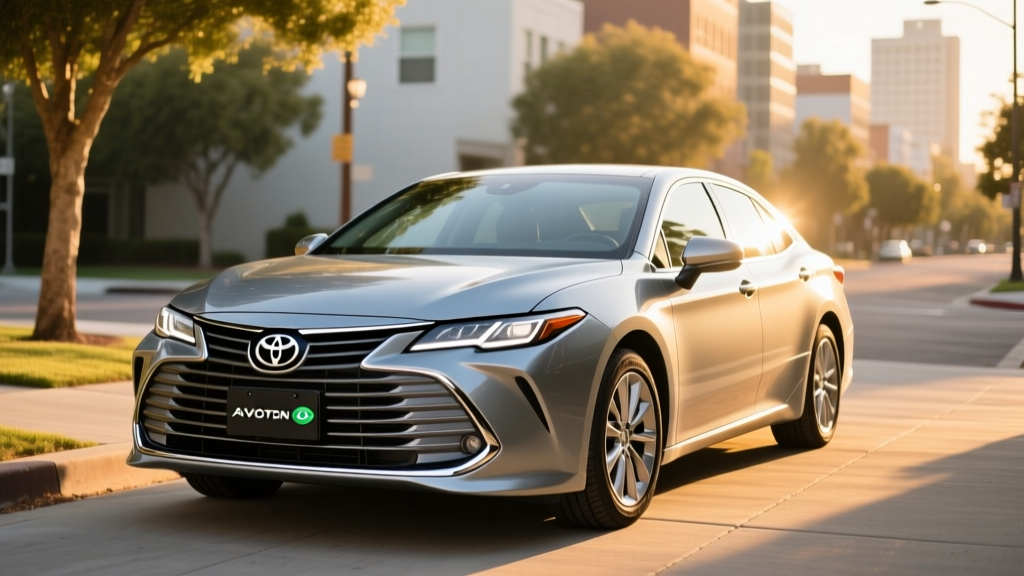
The Toyota Avalon Hybrid was discontinued after the 2022 model year, but the 2020 model remains one of the most efficient full-size sedans on the used market. With an EPA-estimated 44 MPG combined, a proven fourth-generation Toyota Hybrid Synergy Drive powertrain, and a battery warranty that often still applies to 2020 examples, it's a compelling choice for buyers who want max-cabin comfort without the range anxiety of a full EV. Here's everything you need to know before buying one in 2026.
2020 Avalon Hybrid MPG: EPA vs. Real-World Numbers
| Trim | City MPG | Highway MPG | Combined MPG |
|---|---|---|---|
| XLE | 43 | 44 | 44 |
| XSE / Touring / Limited | 43 | 43 | 43 |
The slight MPG difference between trims comes down to wheel size: the XLE rides on 17-inch wheels with low-rolling-resistance tires, while the XSE, Touring, and Limited trims use 18-inch wheels that add a touch of rolling resistance.
Real-world expectations: Toyota hybrids historically exceed their EPA city estimates because regenerative braking recaptures energy in stop-and-go traffic. Owners regularly report 45–48 MPG in urban driving. Highway cruising at 75+ MPH tends to pull numbers down to 39–41 MPG — the Atkinson-cycle 2.5-liter four-cylinder is optimized for low-RPM efficiency, not high-speed aerodynamics. In cold weather (below 30°F), expect a 5–8% drop in combined MPG as the engine runs longer to heat the cabin and bring the catalytic converter to operating temperature.
Powertrain Specs: How the Hybrid System Works
| Engine | 2.5L 4-cylinder Atkinson-cycle (A25A-FXS) |
| Engine Output | 176 HP / 163 lb-ft torque |
| Electric Motor | Permanent-magnet synchronous (front axle) |
| Motor Output | 118 HP / 149 lb-ft torque |
| Net Combined Output | 215 HP |
| Transmission | eCVT (planetary gearset, no belt) |
| Drivetrain | Front-wheel drive |
| 0–60 MPH | ~7.8 seconds |
| Hybrid Battery | 1.6 kWh nickel-metal hydride (NiMH) |
| Drive Modes | Normal / Eco / Sport / EV (short distance, low speed) |
The 2020 Avalon Hybrid uses Toyota's well-proven eCVT — not a traditional belt-and-pulley CVT, but a planetary gearset that seamlessly blends engine and motor power. This design has no belts to wear, no fixed gear ratios to hunt, and is widely considered one of the most durable transmissions in the industry.
The EV mode allows pure-electric driving for roughly 0.5–1 mile at speeds under 25 MPH. This is useful for creeping through a parking garage or a quiet neighborhood, but it is not a meaningful electric-commute solution. That distinction matters: the Avalon Hybrid is a conventional hybrid (HEV), not a plug-in hybrid.
HEV vs. PHEV vs. EV: Where Does the Avalon Hybrid Fit?
| Feature | HEV (Avalon Hybrid) | PHEV (e.g., RAV4 Prime) | BEV (e.g., Tesla Model 3) |
|---|---|---|---|
| Plug in to charge? | No — self-charging | Yes — 120V or 240V | Yes — 240V or DC fast |
| Electric-only range | <1 mile (low speed) | 25–42 miles typical | 250–400+ miles |
| Fuel/energy source | Gasoline only | Gasoline + grid electricity | Grid electricity only |
| Home charging needed? | No | Recommended (Level 2) | Essential (Level 2) |
| Federal tax credit (§30D) | Not eligible | Up to $7,500* | Up to $7,500* |
| Ideal driver | No charging access; wants simplicity | Short commute + road-trip flexibility | Home charging + daily EV driving |
*§30D credit eligibility depends on MSRP caps, buyer income limits, and battery-sourcing requirements. See IRS.gov for current rules. The Avalon Hybrid is not eligible because it is not a plug-in vehicle.
The Avalon Hybrid is purpose-built for drivers who cannot or do not want to plug in. If you live in an apartment without charging access, park on the street, or simply want the lowest-effort path to excellent fuel economy, an HEV like the Avalon Hybrid is the right call. If you have a garage and a short commute, a PHEV gives you daily electric driving with a gas backup. If you're ready to go fully electric, a BEV eliminates gasoline entirely but requires reliable home or workplace charging.
Battery Warranty, Lifespan & Replacement Cost
- Duration: 10 years / 150,000 miles (whichever comes first) in most states
- California-emissions states: 10 years / 150,000 miles (same — Toyota extended the standard warranty to match CARB states for 2020+ models)
- Coverage: Hybrid battery pack and hybrid-system components (inverter, control module)
- Transferable: Yes — warranty transfers to subsequent owners automatically
As of 2026, a 2020 Avalon Hybrid is six years old, meaning most examples still carry four or more years of original hybrid battery warranty — unless the odometer has crossed 150,000 miles. This is a major advantage for used buyers.
How long do Toyota hybrid batteries actually last? Toyota's NiMH hybrid batteries have an exceptional track record. Data from fleet operators and long-term owners shows that the vast majority of Prius and Camry Hybrid battery packs last 150,000–200,000+ miles before significant degradation. The Avalon Hybrid uses a similar NiMH pack in a less thermally stressed application (larger car, less aggressive cycling), so longevity should be comparable or better.
Battery replacement cost if out of warranty: A new OEM hybrid battery pack from Toyota runs approximately $3,000–$4,000 installed at a dealership. Independent hybrid specialists can sometimes source refurbished packs for $1,500–$2,500 installed. Given the 10-year/150,000-mile warranty and the pack's proven durability, this is a low-probability expense for most owners.
Reliability & Safety Ratings
Toyota's hybrid powertrain is among the most reliable in the automotive industry. The A25A-FXS engine has no turbocharger, no direct-injection carbon buildup issues, and runs the relatively stress-free Atkinson cycle. The eCVT has no clutch packs or bands to wear. Brake pads last significantly longer than in gas-only cars because regenerative braking handles most deceleration — owners commonly report 60,000–80,000 miles on original brake pads.
The 2020 Avalon earned top safety marks:
- IIHS: Top Safety Pick (Good ratings in all crashworthiness tests)
- NHTSA: 5-star overall safety rating
- Standard ADAS: Toyota Safety Sense P (TSS-P) — pre-collision system with pedestrian detection, full-speed-range adaptive cruise control, lane-departure alert with steering assist, and automatic high beams
Note that TSS-P is an SAE Level 2 driver-assistance system. It provides steering and speed support but requires the driver to remain fully engaged at all times — it is not self-driving.
Pricing & Value in 2026
| Trim | Original MSRP | 2026 Used Range (est.) |
|---|---|---|
| XLE | $37,775 | $21,000–$25,000 |
| XSE | $39,275 | $22,000–$26,500 |
| Touring | $41,275 | $24,000–$28,000 |
| Limited | $43,275 | $25,000–$30,000 |
Prices vary by mileage, condition, and region. Hybrid trims command a modest premium over gas-only Avalon trims on the used market — typically $1,500–$3,000 more — but that premium is easily recovered in fuel savings within the first year of ownership for a typical driver.
Tax credit note: The 2020 Avalon Hybrid does not qualify for the federal §30D Clean Vehicle Credit because it is a conventional hybrid (HEV), not a plug-in vehicle. It also does not qualify for the used-EV credit (§25E) for the same reason. Some states offer minor hybrid incentives, but most have expired. Check your state's energy office for current programs.
Pros & Cons
Pros
- 44 MPG combined — best-in-class for a full-size sedan
- 580+ mile total range per tank
- No plug-in charging required
- Proven hybrid reliability; most still under battery warranty
- Spacious cabin, comfortable ride quality
- Standard Toyota Safety Sense P (adaptive cruise, lane-keep)
- Low brake wear thanks to regenerative braking
Cons
- Discontinued after 2022 — sedan body style losing popularity
- No meaningful electric-only driving range
- No all-wheel-drive option (hybrid AWD arrived on Camry, not Avalon)
- Infotainment feels dated vs. 2026 standards (no wireless CarPlay on most trims)
- No federal tax credit eligibility
- Rear visibility slightly compromised by trunk design
Who Should Buy the 2020 Avalon Hybrid?
Choose the 2020 Avalon Hybrid if:
- You want 40+ MPG without ever plugging in
- You drive 15,000+ miles per year and want to minimize fuel costs
- You prefer a large, quiet sedan over a crossover
- You don't have access to home or workplace EV charging
- You want a proven powertrain with remaining factory warranty
Look elsewhere if:
- You want daily electric-only commuting — consider a PHEV like the RAV4 Prime or a used Prius Prime
- You need AWD — look at the Toyota Venza Hybrid or a used RAV4 Hybrid
- You want the latest tech and infotainment — a newer EV or PHEV will have more current software
- You need maximum cargo versatility — a hybrid SUV offers hatchback utility the Avalon's trunk cannot match
Frequently Asked Questions
How many MPG does the 2020 Avalon Hybrid get?
The EPA rates the XLE trim at 43 city / 44 highway / 44 combined MPG. The XSE, Touring, and Limited trims are rated at 43/43/43 due to larger 18-inch wheels. Real-world city driving often yields 45–48 MPG thanks to regenerative braking.
Can I plug in the 2020 Avalon Hybrid?
No. The Avalon Hybrid is a conventional hybrid (HEV). It charges its own 1.6 kWh battery through regenerative braking and the gasoline engine. There is no plug, no charging port, and no electric-only commute range beyond a fraction of a mile at very low speeds.
How far can it go on electric only?
Less than one mile, at speeds under 25 MPH, using the EV mode button. This is useful for parking lots or residential streets, not for commuting. If you want meaningful electric-only range (25–40 miles), you need a plug-in hybrid (PHEV) or a full EV.
Is the hybrid battery reliable and what does replacement cost?
Toyota's NiMH hybrid batteries are among the most durable in the industry, commonly lasting 150,000–200,000+ miles. The 2020 model's 10-year/150,000-mile hybrid battery warranty still covers most examples in 2026. Out-of-pocket replacement, if needed, runs $3,000–$4,000 at a dealer or $1,500–$2,500 through an independent hybrid specialist.
Does the 2020 Avalon Hybrid qualify for any tax credit?
No. The federal §30D Clean Vehicle Credit applies only to plug-in vehicles (PHEVs and BEVs) with qualifying battery sourcing. The Avalon Hybrid is a conventional HEV and is not eligible for any federal purchase credit, new or used. Check IRS.gov for current credit rules.
How does it compare to the Camry Hybrid?
The 2020 Camry Hybrid LE is rated at 52 MPG combined (44/47/52) — about 8 MPG better — thanks to its lighter weight and smaller footprint. The Avalon Hybrid trades some efficiency for significantly more rear-seat legroom (40.3 vs. 38.0 inches), a larger trunk (16.1 vs. 15.1 cu ft), and a quieter, more compliant ride. If rear-seat space and highway comfort are priorities, the Avalon wins. If pure MPG is the goal, the Camry Hybrid is more efficient.
What should I check when buying a used 2020 Avalon Hybrid?
Verify the hybrid battery health through the Toyota diagnostic menu or a pre-purchase inspection at a Toyota dealer. Check the inverter coolant level and service history. Confirm the odometer is under 150,000 miles to retain remaining hybrid warranty. As with any used car, review the CarFax for accident history and ensure all recall campaigns have been completed.