Quick Verdict: A Discontinued Hybrid Worth Considering on the Used Market
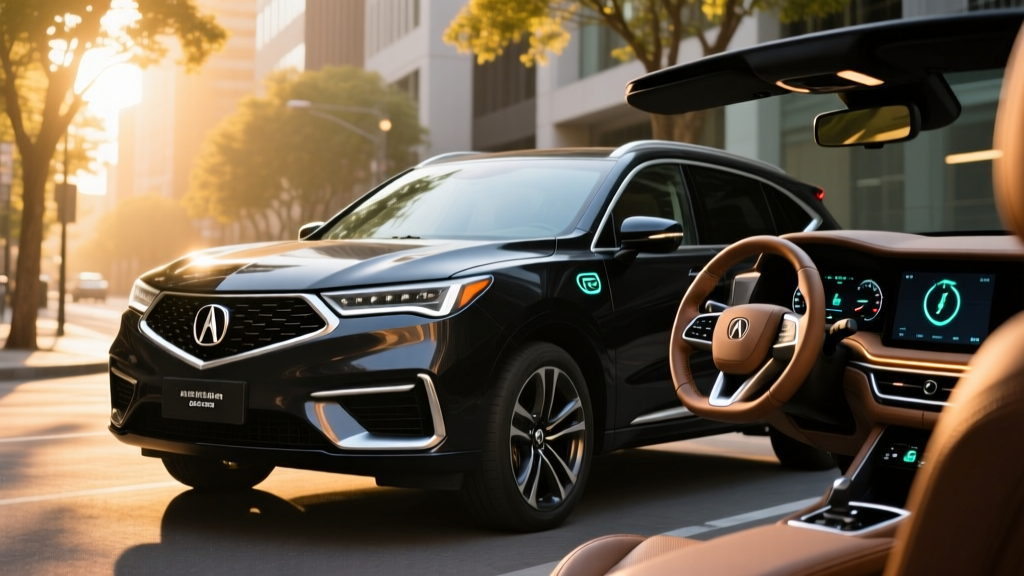
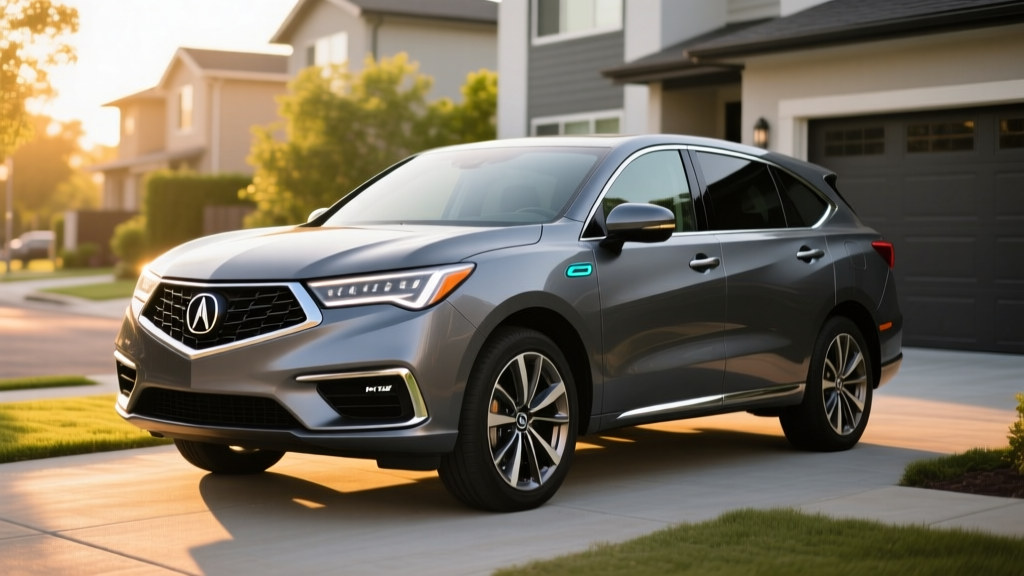
Acura killed the MDX Sport Hybrid after the 2020 model year, but that discontinuation is precisely what makes it interesting in 2026. You're looking at a three-row luxury SUV with 321 combined horsepower, standard all-wheel drive, and an EPA-estimated 27 MPG combined — all for a used-market price that undercuts a new base-model MDX by $15,000 or more. The catch? It's a conventional hybrid (HEV), not a plug-in, and parts availability for the hybrid-specific components will only get trickier as the fleet ages.
This guide covers everything a prospective used buyer needs to know: real-world fuel economy, the three-motor Sport Hybrid powertrain, battery longevity, warranty transferability, and how the 2020 MDX Hybrid stacks up against going full EV or sticking with the gas-only MDX.
HEV vs. PHEV: What the 2020 MDX Hybrid Actually Is
Conventional Hybrid (HEV): The 2020 Acura MDX Sport Hybrid is a self-charging hybrid. It has no plug, no electric-only driving mode of meaningful distance, and no external charging capability. A small battery pack is recharged through regenerative braking and the gasoline engine. You fuel it like any other car — the hybrid system simply optimizes when the engine runs vs. when the electric motors assist.
Plug-in Hybrid (PHEV): A PHEV has a larger battery (typically 12–25 kWh), can be plugged into a wall outlet or charging station, and offers 20–50 miles of electric-only driving before the gas engine kicks in. The MDX has never been offered as a PHEV.
Full EV (BEV): Battery electric vehicles have no gas engine at all. For comparison, the Hyundai Ioniq 5 or Tesla Model X would be BEV alternatives in this segment.
If you're searching for a "2020 Acura MDX Hybrid" expecting to plug it in at night and commute on electricity alone, you'll need to reset expectations. This is a fuel-efficiency play, not an electric-driving play. The hybrid system exists to improve MPG and add torque — not to eliminate gas station visits.
Fuel Economy: EPA Numbers and Real-World MPG
The 2020 Acura MDX Sport Hybrid carries EPA ratings that were competitive at launch and still hold up against many 2026 three-row SUVs.
| Metric | EPA Estimate | Real-World Expectation |
|---|---|---|
| City MPG | 26 MPG | 25–28 MPG (hybrids often match or beat EPA city) |
| Highway MPG | 27 MPG | 24–26 MPG (highway driving favors gas-only at steady speed) |
| Combined MPG | 27 MPG | 25–27 MPG (mixed driving) |
According to fueleconomy.gov, the 2020 MDX Sport Hybrid AWD achieves 26 city / 27 highway / 27 combined. For context, the gas-only 2020 MDX with SH-AWD rates 19/26/22 MPG — meaning the hybrid delivers roughly a 5 MPG combined improvement, or about 23% better fuel economy.
Real-world note: Honda's Sport Hybrid system excels in stop-and-go traffic where regenerative braking frequently recaptures energy. Owners reporting on fuel-tracking platforms consistently log 25–28 MPG in suburban and city driving. Highway-heavy commutes at 75+ MPH tend to drop to 23–25 MPG, as the gasoline engine does most of the work and the hybrid advantage diminishes at sustained speeds. In cold weather (below 30°F), expect a 1–2 MPG reduction as the engine runs more frequently to provide cabin heat.
At 15,000 miles per year and $3.50/gallon regular unleaded, the hybrid saves roughly $400–$500 annually versus the gas-only MDX with SH-AWD. Over a typical five-year ownership period, that's $2,000–$2,500 in fuel savings — meaningful but not transformative.
Sport Hybrid Powertrain: Three Motors and a V6
The 2020 MDX Sport Hybrid uses Honda's three-motor Sport Hybrid SH-AWD system — the same architecture found in the NSX supercar (though obviously tuned very differently for a family SUV).
| Specification | Detail |
|---|---|
| Engine | 3.0L SOHC V-6 (257 hp, 218 lb-ft torque) |
| Front Electric Motor | 47 hp, integrated into 7-speed DCT |
| Rear Electric Motors | Twin 36 hp motors (one per rear wheel) |
| Combined System Output | 321 hp, 289 lb-ft torque |
| Transmission | 7-speed dual-clutch automatic (DCT) |
| Drivetrain | SH-AWD (torque-vectoring rear axle via electric motors) |
| 0–60 MPH | ~5.9 seconds (est.) |
| Hybrid Battery | 1.3 kWh lithium-ion (nominal) |
| Towing Capacity | 3,500 lbs (vs. 5,000 lbs gas MDX) |
The twin rear electric motors are the engineering highlight. They enable true torque vectoring — the system can send up to 100% of rear axle torque to either the left or right rear wheel, improving cornering stability and traction. This makes the SH-AWD hybrid system genuinely more capable in wet and snowy conditions than a conventional AWD setup.
However, the 7-speed DCT has drawn criticism for low-speed hesitation. Some owners report a slight shudder or delay when accelerating from a stop, a characteristic of early dual-clutch designs in heavy vehicles. It's not a reliability concern, but it's a refinement gap versus the 9-speed automatic in the gas MDX or the smooth single-speed reductions in modern EVs.
Towing trade-off: The hybrid's 3,500-lb tow rating is 1,500 lbs less than the gas MDX. If you regularly tow a boat or camper, the hybrid is the wrong choice.
Hybrid Battery: Warranty, Degradation, and Replacement Cost
Original Battery Warranty: Acura covered the 2020 MDX Sport Hybrid's IMA (Integrated Motor Assist) battery for 8 years / 100,000 miles (10 years / 150,000 miles in CARB states including California, New York, Massachusetts, and others that follow California emissions standards).
2026 Status: For a 2020 model, the federal 8-year warranty has expired as of the 2028 model year. However, in CARB states, coverage extends through 2030 / 150,000 miles. If you're buying used in 2026, verify remaining warranty by running the VIN with an Acura dealer.
Replacement Cost: A new OEM hybrid battery pack from Acura runs approximately $2,500–$4,000 for parts, with labor adding $500–$800. Third-party refurbished packs are available for $1,500–$2,500 installed. The 1.3 kWh pack is small by EV standards, which keeps replacement costs manageable.
The lithium-ion pack in the MDX Sport Hybrid is compact — just 1.3 kWh — and it's never deeply cycled. The system keeps the battery in a narrow state-of-charge window (roughly 40–80%) to minimize degradation. Honda's hybrid batteries have proven durable across the Accord Hybrid, CR-V Hybrid, and MDX Sport Hybrid lineups, with most lasting well beyond 150,000 miles before significant capacity loss.
That said, age is a factor independent of mileage. Lithium-ion cells degrade over calendar time, especially if the vehicle is frequently parked in extreme heat. A 2020 model in 2026 is six years old — still within the expected lifespan, but buyers should budget for a potential battery replacement within the next 4–6 years.
Used Pricing and Tax Credit Eligibility in 2026
The 2020 Acura MDX Sport Hybrid originally started at an MSRP of approximately $53,895 (including destination). In 2026, used examples are trading in a wide range depending on mileage and condition:
- Low mileage (under 40K): $28,000–$34,000
- Average mileage (40K–80K): $22,000–$28,000
- High mileage (80K+): $17,000–$22,000
Federal tax credit — does it qualify? The 2020 MDX Sport Hybrid does not qualify for the new-vehicle §30D federal tax credit (up to $7,500) because it's a conventional hybrid, not a plug-in. The IRS restricts §30D credits to plug-in electric vehicles (BEVs and PHEVs) with qualifying battery capacity and sourcing requirements — see IRS.gov guidance on clean vehicle credits.
However, there is a potential path to savings: the Used Clean Vehicle Credit (§25E). This credit offers up to $4,000 (30% of the sale price, capped at $4,000) for qualifying used plug-in EVs and fuel-cell vehicles purchased from a dealer for under $25,000. Unfortunately, conventional hybrids like the MDX Sport Hybrid are excluded from §25E as well — only used BEVs and PHEVs qualify. A buyer's income must also fall below $75,000 (single) / $150,000 (joint) to claim §25E on eligible vehicles.
The bottom line: no federal tax credit applies to this vehicle. Your savings come purely from the used-market discount and improved fuel economy versus the gas-only MDX.
Hybrid vs. PHEV vs. Full EV: Which Three-Row SUV Fits You?
Choose the 2020 MDX Sport Hybrid (HEV) if:
- You want better MPG without changing your fueling habits
- You lack access to home or workplace charging
- You want SH-AWD torque vectoring for snow/rain
- You're budget-conscious and want a luxury SUV under $30K
- You don't need to tow more than 3,500 lbs
Look at a PHEV or full EV instead if:
- You want any electric-only driving range (MDX Hybrid offers none)
- You have home Level 2 charging and a short commute
- You want federal tax credit eligibility (up to $7,500 on new PHEVs/BEVs)
- You want lower maintenance costs (EVs eliminate oil changes, DCT fluid)
- You care about tailpipe emissions reduction
For buyers cross-shopping in 2026, the competitive landscape looks different than it did when the MDX Sport Hybrid was new. Consider these alternatives:
Used Toyota Highlander Hybrid (2020–2023): 35–36 MPG combined, proven reliability, larger hybrid battery track record, but less power (243 hp) and no luxury badge. Typically $28,000–$38,000 used.
New Kia Sorento PHEV (2025–2026): 32 miles electric-only range, 79 MPGe combined on electricity, qualifies for up to $7,500 federal credit, and starts around $50,000. A strong option if you can charge at home and want electric commuting with gas flexibility for road trips.
Used Tesla Model X (2020–2022): Full electric, 300+ mile range, three rows, but higher used pricing ($40,000–$60,000), potential out-of-warranty repair costs, and limited service centers in rural areas.
Reliability and Known Issues
The 2020 MDX Sport Hybrid carries an average reliability profile for its class. The V6 engine and hybrid system are proven Honda/Acura components shared with the RLX Sport Hybrid and, in modified form, the NSX. The 7-speed DCT, however, has a mixed reputation:
- DCT shudder at low speeds: Reported by some owners, particularly in cold weather. Usually addressed with software updates from Acura.
- Infotainment system: The dual-screen setup in the 2020 MDX was widely criticized for lag and a finicky touchpad controller. This is a technology frustration, not a reliability failure.
- Brake feel: The transition between regenerative braking and friction brakes can feel grabby — a common trait in Honda hybrids of this era.
The NHTSA gave the 2020 MDX a 5-star overall safety rating. The IIHS named it a Top Safety Pick+ when equipped with specific headlights. These are strong marks for a family vehicle.
Frequently Asked Questions
How many MPG does the 2020 Acura MDX Hybrid get?
The EPA rates the 2020 MDX Sport Hybrid at 26 city / 27 highway / 27 combined MPG. Real-world driving typically yields 25–28 MPG in mixed conditions, with highway-heavy driving dropping to 23–25 MPG.
Can the 2020 MDX Hybrid drive on electric power only?
Only at very low speeds for very short distances (under 1 mile, typically in parking lots). The 1.3 kWh battery is too small for meaningful electric-only driving. This is a conventional hybrid, not a plug-in.
Is the hybrid battery expensive to replace?
A new OEM replacement battery costs approximately $2,500–$4,000 plus $500–$800 in labor. Refurbished packs are available for $1,500–$2,500 installed. This is significantly less than a full EV battery replacement ($8,000–$20,000+).
Does the 2020 MDX Hybrid qualify for any tax credit?
No. The federal §30D new-vehicle credit and §25E used-vehicle credit both require plug-in capability (BEV or PHEV). The MDX Sport Hybrid is a conventional HEV and is ineligible for federal EV tax incentives.
Is the 2020 MDX Hybrid still under warranty?
The original 8-year/100,000-mile hybrid battery warranty may still apply depending on the vehicle's mileage and your state. In CARB states (CA, NY, MA, and others), coverage extends to 10 years / 150,000 miles. Check with an Acura dealer using the VIN for exact remaining coverage.
Should I buy the hybrid or gas-only 2020 MDX?
Choose the hybrid if fuel economy and SH-AWD torque vectoring matter to you, and you don't need to tow more than 3,500 lbs. Choose the gas-only MDX (19/26/22 MPG) if you want a higher 5,000-lb tow rating, a smoother 9-speed automatic, and lower complexity. On the used market, both are priced similarly, so the decision comes down to priorities.
How does the MDX Hybrid compare to a full EV for a family?
A full EV like the Tesla Model X or Rivian R1S eliminates fuel costs and reduces maintenance, but costs significantly more even on the used market. The MDX Hybrid is a pragmatic middle ground: modest fuel savings, no charging infrastructure needed, and a lower purchase price — at the cost of continued gas dependence and no electric-only commuting.