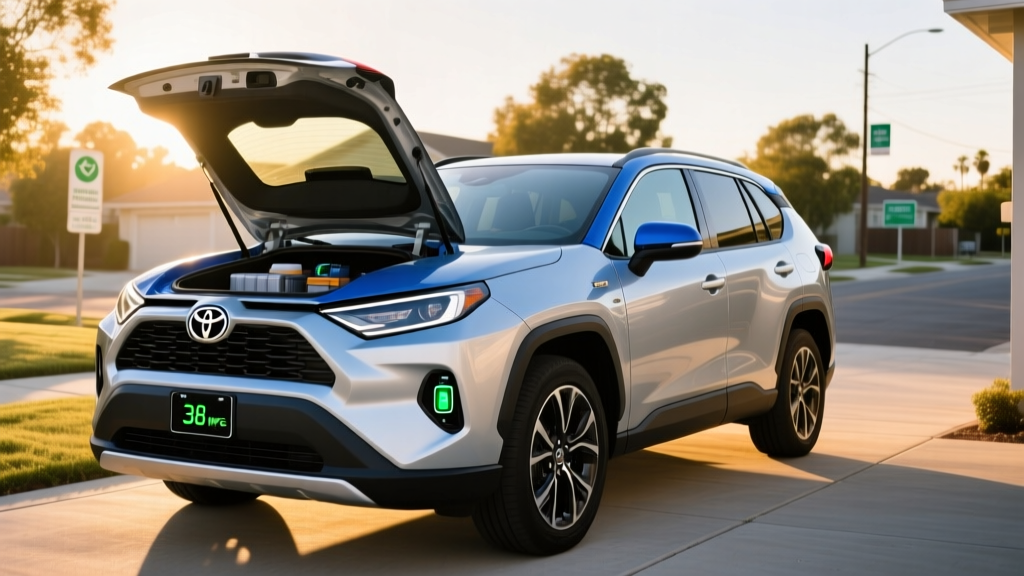
The 2019 Toyota RAV4 Hybrid was a watershed moment for the compact SUV segment. Built on Toyota's TNGA-K platform, it paired a 2.5-liter four-cylinder engine with a self-charging hybrid system and standard electronic all-wheel drive, delivering an EPA-estimated 41 MPG city / 38 MPG highway / 39 MPG combined. In 2026, it remains one of the most sought-after used hybrids on the market — and for good reason. Below, we dissect every number that matters to a used buyer today: real-world fuel economy, powertrain specs, battery longevity, and how it stacks up against the plug-in RAV4 Prime and full EVs.
HEV vs PHEV: Where the 2019 RAV4 Hybrid Fits
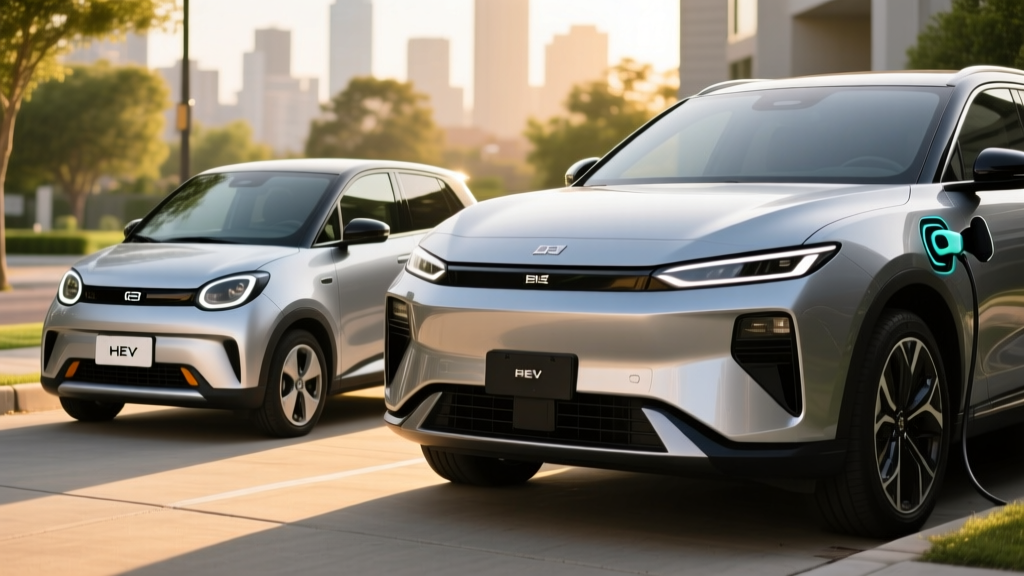
Before diving into specs, it's critical to distinguish between the two electrified RAV4 variants that exist in the wild:
| Feature | 2019 RAV4 Hybrid (HEV) | RAV4 Prime (PHEV, 2021+) |
|---|---|---|
| Powertrain Type | Conventional hybrid — no plug | Plug-in hybrid — charges via outlet |
| Electric-Only Range | ~0.5–1 mile at low speed | 42 miles (EPA) |
| Battery Capacity | 1.6 kWh (NiMH) | 18.1 kWh (Lithium-ion) |
| Combined Horsepower | 219 hp | 302 hp |
| EPA Combined MPG / MPGe | 39 MPG combined | 94 MPGe (electric) / 38 MPG (gas) |
| Plug-In Charging | No — charges via regen & engine | Yes — Level 1 (~12 hr) or Level 2 (~2.5 hr) |
| DC Fast Charging | Not applicable | No DC fast charge |
| Federal Tax Credit (New) | None | Up to $7,500 (when eligible) |
The 2019 RAV4 Hybrid is a conventional HEV. You never plug it in. The battery recharges through regenerative braking and the gasoline engine. If you want plug-in capability with meaningful electric-only driving, you'd need the RAV4 Prime, which Toyota introduced for the 2021 model year — it was not available in 2019.
Fuel Economy: EPA Ratings vs Real-World MPG
| Driving Condition | EPA Estimate | Real-World Expectation |
|---|---|---|
| City | 41 MPG | 38–44 MPG (hybrids often exceed EPA in stop-and-go) |
| Highway | 38 MPG | 34–39 MPG (less regen benefit at sustained speed) |
| Combined | 39 MPG | 36–41 MPG depending on driving mix |
Source: EPA Fuel Economy — 2019 Toyota RAV4 Hybrid AWD
Hybrids shine in city driving where regenerative braking recaptures energy at every stoplight. Many owners report exceeding the 41 MPG city EPA figure in warm-weather urban commuting. Highway fuel economy tends to land slightly below the EPA sticker, especially at speeds above 70 mph or in cold weather, where engine efficiency drops and cabin heating demands more from the gasoline engine.
Real-world range note: With a 14.5-gallon fuel tank and a realistic 37 MPG combined, expect approximately 536 miles per tank. In warm city driving, some owners push past 580 miles. In winter highway conditions, that can drop to ~470 miles.
Powertrain and Performance Specs
| Specification | 2019 RAV4 Hybrid |
|---|---|
| Engine | 2.5L Dynamic Force 4-cylinder (176 hp, 163 lb-ft) |
| Front Electric Motor | 118 hp, 149 lb-ft |
| Rear Electric Motor (AWD-i) | 54 hp, 89 lb-ft |
| Net Combined Horsepower | 219 hp |
| Transmission | eCVT (electronically controlled continuously variable) |
| Drivetrain | Electronic AWD (AWD-i) — standard on all trims |
| 0–60 mph | 7.8 seconds (Car and Driver tested) |
| Towing Capacity | 1,750 lbs |
| Cargo Volume (behind rear seats) | 37.5 cu ft |
| Cargo Volume (rear seats folded) | 69.8 cu ft |
The AWD-i system is worth highlighting. Unlike mechanical AWD with a driveshaft, the rear axle is powered entirely by the dedicated rear electric motor. It engages automatically when the system detects slip or during hard acceleration from a stop. There's no driver-selectable AWD mode — the system manages torque distribution electronically. This keeps weight down and eliminates a mechanical linkage, contributing to the RAV4 Hybrid's strong fuel economy despite offering all-wheel traction.
Hybrid Battery: Warranty, Longevity, and Replacement Cost
Toyota Hybrid Battery Warranty: For the 2019 model year, Toyota covers the hybrid battery for 8 years / 100,000 miles (whichever comes first). In states that follow California Air Resources Board (CARB) regulations — including California, New York, Massachusetts, and several others — coverage extends to 10 years / 150,000 miles.
The 2019 RAV4 Hybrid uses a 1.6 kWh nickel-metal hydride (NiMH) battery pack located beneath the rear seats. NiMH chemistry is less energy-dense than lithium-ion but is extremely well-proven in Toyota's hybrid lineup, with a track record stretching back to the original Prius in 1997.
How long do these batteries actually last? Real-world data from Toyota's hybrid fleet suggests most NiMH packs last well beyond the warranty period. Failures before 150,000 miles are uncommon. Many Prius and Camry Hybrid owners report original batteries lasting 200,000+ miles with gradual capacity loss rather than sudden failure.
Replacement cost in 2026: If the hybrid battery does fail out of warranty, expect to pay between $2,500 and $4,000 for a new OEM replacement at a Toyota dealer, including labor. Refurbished or reconditioned NiMH packs are available from third-party suppliers for $1,500 to $2,500. Individual cell module replacement — a repair some independent hybrid specialists offer — can cost as little as $500 to $1,000 if only a few modules have degraded.
The 12-volt auxiliary battery (a standard AGM unit, separate from the hybrid traction battery) typically needs replacement every 4–6 years at a cost of roughly $150–$250. This is a routine maintenance item, not a major concern.
Used Pricing in 2026 and Tax Credit Eligibility
As of early 2026, a used 2019 Toyota RAV4 Hybrid typically sells for $22,000 to $30,000, depending on mileage, condition, and trim level (LE, XLE, XSE, Limited). Lower-mileage examples in the Limited trim command the upper end of that range.
Original MSRP when new started at approximately $28,350 for the Hybrid LE (including destination) and climbed to roughly $37,000 for a fully loaded Limited.
Does the 2019 RAV4 Hybrid qualify for any tax credit?
No federal tax credit applies to the 2019 RAV4 Hybrid — neither when it was new nor as a used purchase today. Here's why:
- Conventional hybrids (HEVs) do not qualify for the IRS §30D Clean Vehicle Credit. That credit requires a plug-in vehicle with at least 7 kWh of battery capacity. The RAV4 Hybrid's 1.6 kWh NiMH pack falls far short.
- The Used Clean Vehicle Credit (§25E) offers up to $4,000 (or 30% of the sale price, whichever is less) for qualifying used plug-in EVs and PHEVs sold for $25,000 or less. Since the RAV4 Hybrid is an HEV with no plug, it does not qualify.
- State incentives vary by jurisdiction. A handful of states have offered rebates for conventional hybrids in the past, but most current programs target plug-in vehicles. Check your state's energy office or DMV for active programs.
For full federal credit rules, consult the IRS Clean Vehicle Credits page.
Reliability and Ownership Costs
The 2019 RAV4 Hybrid has earned strong reliability marks across the board:
- IIHS: Named a Top Safety Pick+ (with optional front crash prevention and specific headlights). Source: IIHS 2019 RAV4
- NHTSA: 5-star overall safety rating.
- Consumer Reports: The 2019 RAV4 Hybrid received above-average predicted reliability scores, consistent with Toyota's hybrid track record.
From a maintenance standpoint, the RAV4 Hybrid costs less to maintain than a conventional gas-only RAV4 over the long haul. The hybrid system eliminates the traditional starter motor and alternator (the motor-generators handle those functions). Regenerative braking reduces wear on the friction brake pads — many owners report original brake pads lasting 80,000+ miles. There's no conventional transmission to service; the eCVT uses a planetary gearset with no belts, clutches, or bands to wear out.
Estimated annual maintenance cost: $350–$500 per year for routine items (oil changes, tire rotations, cabin air filter, brake fluid). This is competitive with or lower than most gas-only compact SUVs.
Who Should Choose the 2019 RAV4 Hybrid vs a PHEV or Full EV?
Choose the 2019 RAV4 Hybrid (HEV) if:
- You don't have access to home or workplace charging and don't want to rely on public infrastructure.
- You want a simple, proven powertrain with zero plug-in hassle.
- Your budget is under $30,000 and you want an AWD SUV with strong fuel economy.
- You regularly drive in cold climates where EV range loss is a concern — the hybrid's fuel economy is less affected by temperature.
- You tow occasionally (up to 1,750 lbs) and need cargo versatility.
Consider a PHEV (like the RAV4 Prime) if:
- You can charge at home (even a standard 120V outlet works overnight).
- Your daily commute is under 40 miles round-trip and you want to drive mostly on electricity.
- You want more power (302 hp in the Prime) and don't mind paying a premium ($35,000+ used).
Consider a full EV (like a used Tesla Model Y or Hyundai Ioniq 5) if:
- You have reliable Level 2 home charging.
- Your daily driving is under 250 miles and you rarely take road trips beyond DC fast-charger coverage.
- You want to eliminate gasoline costs entirely and reduce maintenance further.
- You qualify for the used EV tax credit (up to $4,000 under §25E for qualifying used BEVs priced at $25,000 or less).
Pros and Cons at a Glance
Pros
- 39 MPG combined EPA — real-world often higher in city driving
- Standard AWD on every trim at no extra cost
- Proven Toyota hybrid reliability with strong battery longevity
- No plug-in required — zero charging infrastructure dependency
- Strong IIHS Top Safety Pick+ rating
- Spacious cargo area (37.5 cu ft) with no battery intrusion
- Lower brake wear thanks to regenerative braking
Cons
- No federal tax credit eligibility (HEV, not a plug-in)
- eCVT drone under hard acceleration (common Toyota hybrid trait)
- 1,750-lb towing capacity is modest for the segment
- Infotainment system feels dated by 2026 standards (no wireless CarPlay on most trims)
- Rear-seat legroom is adequate but not class-leading
- NiMH battery is heavier and less energy-dense than modern lithium-ion packs
Frequently Asked Questions
How many MPG does the 2019 Toyota RAV4 Hybrid get?
The EPA rates it at 41 MPG city, 38 MPG highway, and 39 MPG combined. In real-world driving, city commuters often see 40–44 MPG, while highway-heavy driving tends to land between 34–39 MPG. Cold weather and high speeds reduce efficiency, as they do with any vehicle.
Do I need to plug in the 2019 RAV4 Hybrid?
No. The 2019 RAV4 Hybrid is a conventional hybrid (HEV). It charges its small battery pack through regenerative braking and the gasoline engine. There is no plug, no charging port, and no electric-only driving range to speak of. If you want plug-in capability, look at the 2021+ RAV4 Prime (PHEV).
How far can the 2019 RAV4 Hybrid drive on electric power alone?
Effectively zero miles in any practical sense. The hybrid system can propel the vehicle at very low speeds (under ~25 mph) for roughly half a mile on battery power in ideal conditions, but the engine will start almost immediately under any meaningful acceleration or load. This is normal for conventional hybrids — the electric motor assists the engine rather than replacing it.
Is the 2019 RAV4 Hybrid reliable, and what does battery replacement cost?
Yes. Toyota's hybrid system is one of the most proven in the industry, with decades of real-world data. The NiMH hybrid battery is warranted for 8 years/100,000 miles (10 years/150,000 miles in CARB states). Most batteries last well beyond warranty. If replacement is needed out of warranty, expect $2,500–$4,000 for a new OEM pack or $1,500–$2,500 for a refurbished unit. Independent shops can sometimes replace individual cell modules for $500–$1,000.
Does the 2019 RAV4 Hybrid qualify for any tax credit?
No. Conventional hybrids (HEVs) are not eligible for the federal §30D Clean Vehicle Credit or the §25E Used Clean Vehicle Credit. These programs require plug-in vehicles with minimum battery capacities. Some states may offer minor incentives for hybrids, but most have shifted focus to plug-in vehicles. Check your state's energy office for current programs.
What's the difference between the 2019 RAV4 Hybrid and the RAV4 Prime?
The RAV4 Prime is a plug-in hybrid (PHEV) introduced for 2021 with a larger 18.1 kWh lithium-ion battery, 302 combined horsepower, and 42 miles of electric-only range. It can be plugged in to charge and qualifies for certain tax incentives. The 2019 RAV4 Hybrid is a conventional HEV with no plug, 219 hp, and 39 MPG combined. The Prime was not available in the 2019 model year.
How does the AWD system work on the 2019 RAV4 Hybrid?
The RAV4 Hybrid uses Toyota's AWD-i system, which employs a dedicated rear electric motor (54 hp) to power the rear wheels. There is no mechanical driveshaft connecting the front and rear axles. The system engages the rear motor automatically when it detects front-wheel slip, during hard acceleration, or at low speeds for added traction. It's transparent in operation and does not require any driver input.
Final Assessment for Used Buyers in 2026
The 2019 Toyota RAV4 Hybrid remains one of the smartest used SUV purchases available in 2026. Its combination of 39 MPG combined, standard electronic AWD, strong safety ratings, and Toyota's proven hybrid reliability make it a low-risk, high-reward choice for buyers who want electrified efficiency without any charging infrastructure dependency. At $22,000–$30,000 on the used market, it undercuts comparable PHEVs and EVs while delivering fuel economy that still rivals many newer vehicles. The main trade-offs are the lack of tax credit eligibility, modest towing capacity, and an infotainment system that shows its age. For the buyer who prioritizes cost-per-mile efficiency and mechanical simplicity over plug-in perks, the 2019 RAV4 Hybrid is a benchmark worth chasing.