Quick Verdict: The 2019 Highlander Hybrid at a Glance
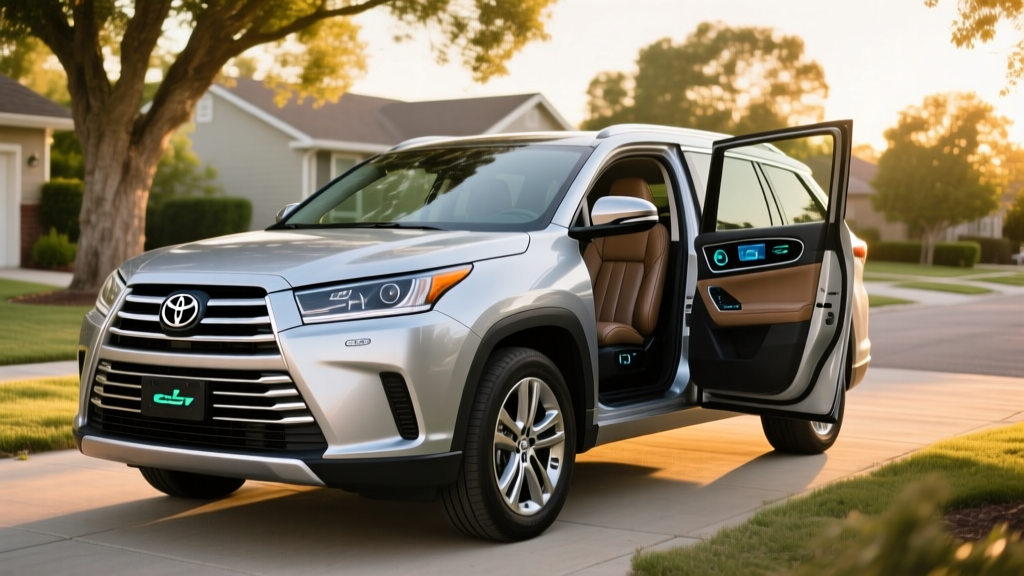
The 2019 Toyota Highlander Hybrid is a conventional hybrid electric vehicle (HEV) — not a plug-in. It requires no charging infrastructure, generates its own electricity through regenerative braking and its gasoline engine, and delivers an EPA-estimated 29 MPG combined in a three-row SUV package that seats up to eight. On the used market in 2026, well-maintained examples typically list between $22,000 and $32,000 depending on trim, mileage, and condition.
If you need three rows, all-wheel drive, and sub-30-MPG fuel bills without ever plugging in, the 2019 Highlander Hybrid remains one of the most practical choices in the used-SUV segment. But before you buy, you need to understand exactly what this powertrain delivers — and where its limits are.
| Spec | Value |
|---|---|
| Powertrain Type | Conventional Hybrid (HEV) — no plug |
| Engine | 3.5L V6 + 2 electric motor-generators |
| Combined System Horsepower | 306 hp |
| Drivetrain | AWD (electronic on-demand rear motor) |
| EPA MPG (City / Hwy / Combined) | 29 / 27 / 29 |
| Hybrid Battery | ~1.9 kWh nickel-metal hydride (NiMH) |
| 0-60 mph | ~7.8 seconds |
| Towing Capacity | 3,500 lbs |
| Seating | 7 or 8 passengers (trim-dependent) |
| Cargo (behind 3rd / 2nd / 1st row) | 13.8 / 42.3 / 83.7 cu ft |
| Original MSRP (LE / Limited Platinum) | $37,030 / $50,880 |
| Used Price Range (2026 est.) | $22,000 – $32,000 |
HEV vs. PHEV: What the 2019 Highlander Hybrid Actually Is
A common source of confusion among used-SUV shoppers is the difference between a conventional hybrid (HEV) and a plug-in hybrid (PHEV). The 2019 Highlander Hybrid is strictly an HEV.
| Feature | HEV (2019 Highlander Hybrid) | PHEV (e.g., RAV4 Prime) |
|---|---|---|
| Plugs in to charge? | No | Yes |
| Electric-only driving range | Less than 1 mile at low speed | 20–42 miles typical |
| Battery size | ~1.9 kWh (NiMH) | 13–18+ kWh (lithium-ion) |
| Federal tax credit (§30D) | Not eligible | Eligible (if qualifying model/year) |
| Home charging needed? | No | Yes, for EV-range benefit |
| Gas engine | Always available | Always available |
The Highlander Hybrid's small 1.9 kWh NiMH battery is charged entirely by the 3.5L V6 engine and regenerative braking. You will never see a charge port on this vehicle. The electric motors assist the engine during acceleration, enable low-speed electric-only creeping (typically under 1 mile at parking-lot speeds), and recover energy during deceleration. This is fundamentally different from a PHEV like the Toyota RAV4 Prime, which offers 42 miles of electric-only range and requires a Level 2 home charger to realize its full efficiency potential.
Fuel Economy: EPA Numbers vs. Real-World MPG
The EPA rates the 2019 Highlander Hybrid at 29 MPG city, 27 MPG highway, and 29 MPG combined. These figures apply to the AWD configuration, which is the only drivetrain offered on the Hybrid.
| Driving Cycle | EPA MPG | Real-World Expectation |
|---|---|---|
| City | 29 MPG | 30–33 MPG (hybrids excel in stop-and-go) |
| Highway | 27 MPG | 25–27 MPG (aero drag, less regen benefit) |
| Combined | 29 MPG | 27–31 MPG (mix-dependent) |
Why Hybrids Often Beat EPA City Estimates
Conventional hybrids like the Highlander tend to match or exceed their EPA city numbers in real-world driving because stop-and-go traffic maximizes regenerative braking opportunities. Every stoplight becomes a chance to recapture kinetic energy and recharge the battery. On highway runs at sustained 70–80 mph speeds, however, the hybrid system provides less benefit — the engine does most of the work, and aerodynamic drag dominates. Expect highway fuel economy to land closer to 25–27 MPG on flat interstate runs, dropping further in mountainous terrain or when towing.
Cold-Weather and Towing Impact
In sub-freezing temperatures, expect a 5–10% reduction in fuel economy as the engine runs more frequently to maintain cabin heat and battery temperature. Towing at the 3,500-lb max rating will drop MPG into the low-to-mid 20s regardless of conditions. These are physics constraints that apply to every hybrid in this class.
Powertrain Deep Dive: 306 HP from a V6 Hybrid
The 2019 Highlander Hybrid pairs a 3.5-liter V6 gasoline engine (295 hp on its own) with Toyota's Hybrid Synergy Drive system. Two motor-generators — one primarily driving the front wheels and assisting the engine, the other powering the rear axle for AWD — contribute to a combined system output of 306 horsepower.
The rear axle has no mechanical connection to the engine. Instead, a separate electric motor engages when the system detects front-wheel slip or when additional traction is needed. This electronic on-demand AWD system is seamless in rain and light snow but is not designed for serious off-road use.
Acceleration is respectable for a 4,500-lb three-row SUV: 0–60 mph in roughly 7.8 seconds. The continuously variable transmission (eCVT) keeps the engine in its most efficient range, which means you'll hear a characteristic drone under hard acceleration — a common trait of Toyota hybrids that some drivers find unobtrusive and others find annoying. There are no fixed gear shifts; the eCVT uses planetary gearsets rather than a belt-and-pulley design, making it far more durable than traditional CVTs.
Hybrid Battery Longevity, Warranty, and Replacement Cost
2019 Highlander Hybrid — Battery Warranty
Original coverage: 8 years / 100,000 miles (10 years / 150,000 miles in California and states adopting CARB emissions standards).
What's covered: Defects and capacity loss below a defined performance threshold (typically ~60% of original capacity).
2026 status: Most 2019 models have aged out of the 8-year federal warranty window but may still fall within the 10-year CARB-state coverage depending on mileage. Verify VIN-specific warranty status with a Toyota dealer before purchasing.
How Long Do Highlander Hybrid Batteries Actually Last?
Toyota's NiMH hybrid batteries have a strong track record for longevity. The Highlander Hybrid uses a nickel-metal hydride pack — the same chemistry proven in millions of Prius units over two decades. Real-world data and owner reports indicate these batteries commonly last 150,000–200,000+ miles before requiring replacement. Failures before 100,000 miles are uncommon and typically covered under warranty.
NiMH chemistry degrades more gradually than early lithium-ion packs. You won't see a sudden cliff in performance — instead, fuel economy slowly declines as the battery's ability to hold and deliver charge diminishes. A Highlander Hybrid at 180,000 miles with an original battery might return 26–27 MPG combined instead of 29.
Battery Replacement Cost
If replacement becomes necessary, expect the following costs in 2026:
- New OEM Toyota battery: $2,500–$3,500 (part) + $300–$600 labor = $2,800–$4,100 total
- Refurbished/remanufactured battery: $1,500–$2,200 installed
- Individual cell replacement (specialist shops): $500–$1,200
For context, a comparable gas-only Highlander's transmission replacement often costs more. The hybrid battery is not the financial time bomb some used-car buyers fear.
Pricing, Trims, and Tax Credit Eligibility
The 2019 Highlander Hybrid was offered in three trims: LE, XLE, and Limited (including the Limited Platinum). Original MSRPs ranged from $37,030 to $50,880, including destination.
| Trim | Original MSRP | Key Features |
|---|---|---|
| LE | $37,030 | 8-passenger seating, Toyota Safety Sense P, 6.1" touchscreen |
| XLE | $40,430 | 7-passenger (captain's chairs), SofTex seats, power liftgate, 8" screen |
| Limited Platinum | $50,880 | Panoramic roof, JBL audio, navigation, 360° camera, heated/ventilated front seats |
Does the 2019 Highlander Hybrid Qualify for Any Tax Credit?
No. The 2019 Highlander Hybrid does not qualify for the federal §30D Clean Vehicle Credit. This credit applies only to battery electric vehicles (BEVs) and plug-in hybrids (PHEVs) with battery capacities of at least 7 kWh. The Highlander Hybrid's ~1.9 kWh NiMH pack falls far short of this threshold, and as a conventional HEV, it was never eligible for federal purchase incentives — not when new, and not on the used market today.
Some states offer modest rebates for conventional hybrids, but these programs are increasingly rare as incentives shift toward BEVs and PHEVs. Check your state's energy office or AFDC incentive database for current local programs.
Who Should Buy This Hybrid — And Who Shouldn't
Pros
- No charging infrastructure needed — ideal for apartment dwellers and street-parkers
- Proven NiMH battery with 150K–200K+ mile lifespan
- 306 hp with smooth, quiet hybrid operation in city driving
- AWD standard with no fuel-economy penalty vs. FWD (AWD is the only option)
- Strong Toyota reliability record and resale value retention
- 3,500-lb towing capacity adequate for small trailers and boats
- Toyota Safety Sense P standard (pre-collision, lane departure, auto high beams, adaptive cruise)
Cons
- No electric-only driving range (less than 1 mile at crawl speeds)
- 27 MPG highway is unremarkable for a hybrid — aero and weight limit gains
- eCVT drone under hard acceleration
- Dated infotainment (no Apple CarPlay/Android Auto on 2019 model year)
- No federal or most state tax credit eligibility
- Third-row space is tight for adults on longer trips
- 2019 is the final year of this generation — 2020+ redesign offers significantly improved MPG
Choose the 2019 Highlander Hybrid If:
- You need three rows and AWD but can't install a home charger
- Your driving is primarily city and suburban (where hybrid efficiency peaks)
- You plan to own the vehicle past 150,000 miles and value long-term reliability
- You tow occasionally but don't need heavy-duty capability
- You want hybrid fuel savings without the complexity or cost of a PHEV or BEV
Look Elsewhere If:
- You want meaningful electric-only driving (consider the Toyota RAV4 Prime PHEV or a BEV like the Kia EV9 for three rows)
- Most of your miles are highway — the hybrid advantage shrinks significantly above 65 mph
- You need modern infotainment with smartphone integration (the 2020+ Highlander added CarPlay)
- Fuel economy is your top priority — the redesigned 2020+ Highlander Hybrid achieves 35–36 MPG combined thanks to a more efficient 2.5L 4-cylinder hybrid system
2019 vs. 2020+ Highlander Hybrid: A Generational Leap
It's critical for used shoppers to understand that the 2019 model year represents the final year of the third-generation Highlander. The 2020 redesign brought a fundamentally different hybrid powertrain: a 2.5-liter inline-4 replacing the 3.5L V6, a lithium-ion battery replacing NiMH, and EPA ratings jumping to 35–36 MPG combined — a 20%+ improvement.
If fuel economy is your primary motivation for choosing the hybrid, and your budget can stretch to the $28,000–$40,000 range for a used 2020–2023 model, the newer generation is meaningfully more efficient. The 2019 model's advantage is a lower entry price and a V6 that some buyers prefer for its smoother power delivery and higher towing confidence.
Hybrid vs. PHEV vs. EV: Which Powertrain Fits Your Life?
The used-SUV market now offers all three electrified options. Here's how the 2019 Highlander Hybrid stacks up against the alternatives:
| Factor | 2019 Highlander Hybrid (HEV) | PHEV (e.g., Chrysler Pacifica Hybrid) | BEV (e.g., Kia EV9) |
|---|---|---|---|
| Home charging needed? | No | Yes (for EV range) | Yes (required) |
| Electric-only range | ~0 miles | 32 miles | 270+ miles |
| Combined MPG / MPGe | 29 MPG | 30 MPG / 82 MPGe | 85–89 MPGe |
| Used price range (2026) | $22K–$32K | $25K–$38K | $38K–$55K |
| Federal tax credit (used) | None | Up to $4,000 (used §25E, income-limited) | Up to $4,000 (used §25E, income-limited) |
| Best for | No-charger households | Short commutes + road trips | Home-charger owners, low fuel cost |
If you have access to Level 2 home charging and most of your daily driving falls under 30 miles, a PHEV lets you commute on electricity while keeping a gas engine for road trips. If you're ready to go fully electric and can charge at home, a BEV delivers the lowest per-mile fuel cost and strongest tax-credit eligibility. But if you park on the street, live in an apartment without charging, or simply want zero lifestyle changes with meaningful fuel savings, the HEV format of the 2019 Highlander Hybrid is the pragmatic choice.
Frequently Asked Questions
How many MPG does the 2019 Toyota Highlander Hybrid get?
The EPA rates it at 29 MPG city, 27 MPG highway, and 29 MPG combined. In real-world city driving with frequent stops, many owners report 30–33 MPG. Highway driving at 70+ mph typically yields 25–27 MPG. Cold weather and towing reduce these figures by 5–15%.
Can I plug in the 2019 Highlander Hybrid to charge?
No. The 2019 Highlander Hybrid is a conventional hybrid (HEV), not a plug-in hybrid (PHEV). It has no charge port. The battery is charged entirely by the gasoline engine and regenerative braking. If you want a Toyota SUV that plugs in, look at the RAV4 Prime or the 2024+ Highlander Hybrid (which remains an HEV — Toyota has not offered a PHEV Highlander in the US market).
Is the 2019 Highlander Hybrid reliable?
Yes. Toyota's hybrid powertrains consistently rank among the most reliable in the industry. The eCVT uses a planetary gearset with no belts or clutches to wear out, and the NiMH battery commonly exceeds 150,000 miles. The NHTSA gave the 2019 Highlander a 5-star overall safety rating. The main reliability consideration for a used example is verifying maintenance history — particularly coolant changes for the hybrid inverter cooling system.
What does a replacement hybrid battery cost?
A new OEM replacement battery from Toyota costs approximately $2,800–$4,100 installed. Refurbished units run $1,500–$2,200 installed. Individual cell replacement at a hybrid specialist shop can cost as little as $500–$1,200. Battery failure before 100,000 miles is rare, and most 2019 examples still on the road in 2026 have their original batteries functioning adequately.
Does the 2019 Highlander Hybrid qualify for any federal tax credit?
No. The federal §30D Clean Vehicle Credit requires a battery capacity of at least 7 kWh and applies only to BEVs and PHEVs. The Highlander Hybrid's 1.9 kWh NiMH battery does not qualify. The used-EV credit (§25E, up to $4,000) also requires the vehicle to be a BEV or PHEV — conventional hybrids are excluded. No federal tax incentive is available for this vehicle.
How far can it drive on electric power alone?
Effectively zero miles in normal driving. The hybrid system can propel the vehicle at very low speeds (under 25 mph) for short distances — typically a few hundred yards in a parking lot — before the gasoline engine engages. This is not comparable to a PHEV's 20–40 miles of electric-only range. Think of the electric motors as assistants to the gas engine, not as a standalone propulsion source.
Is the 2019 model year a good one to buy used?
The 2019 is the final year of its generation, which means Toyota had several years to refine this powertrain. It's generally considered a reliable model year with few outstanding technical service bulletins. The main trade-off versus the 2020+ redesign is fuel economy (29 vs. 35–36 MPG combined) and infotainment (no smartphone integration in 2019). If you can accept those limitations, the 2019 offers strong value at its current used-market pricing.