Why the 2019 RAV4 Hybrid Still Matters in 2026
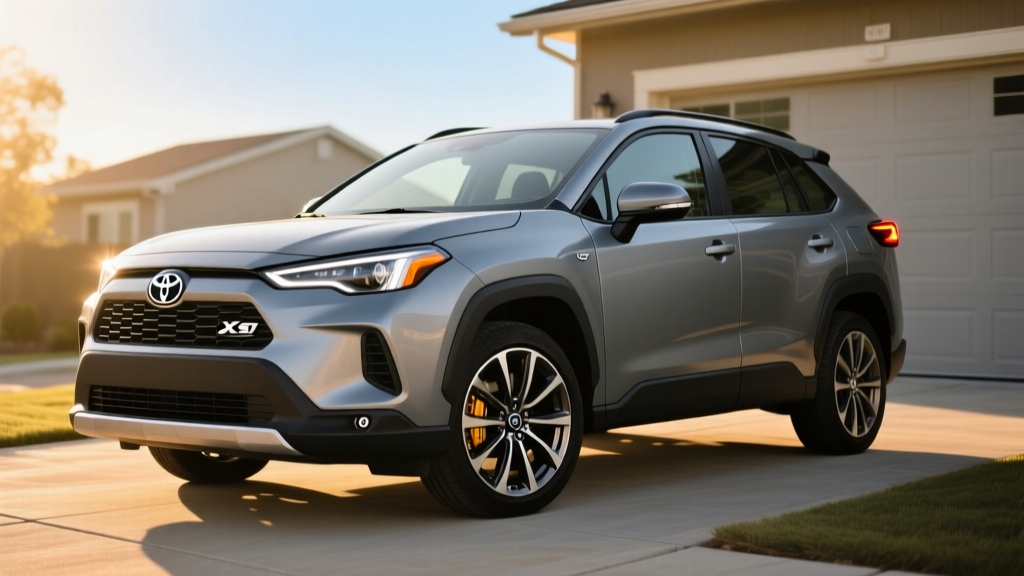
The fifth-generation Toyota RAV4 Hybrid launched for the 2019 model year on Toyota's TNGA-K platform, and it remains one of the most sought-after used hybrid SUVs on the market. Buyers searching for 2019 RAV4 Hybrid MPG data are typically weighing this vehicle against newer hybrids, plug-in hybrids, and full electric crossovers. The answer on fuel economy is straightforward, but the ownership picture — battery longevity, real-world efficiency, and how it stacks up against a PHEV or BEV — deserves a closer look.
This guide covers the EPA numbers, what you'll actually see at the pump, the hybrid powertrain specs, battery warranty and replacement costs, and whether this HEV still makes sense compared to a plug-in RAV4 Prime or a battery-electric alternative.
2019 RAV4 Hybrid MPG: EPA Ratings and Real-World Numbers
The 2019 Toyota RAV4 Hybrid is equipped with a 2.5-liter four-cylinder engine paired with Toyota's fourth-generation Hybrid Synergy Drive system and an electronically controlled continuously variable transmission (eCVT). All trims come with electronic on-demand all-wheel drive via a separate rear-mounted electric motor.
| Metric | EPA Rating |
|---|---|
| City | 41 MPG |
| Highway | 38 MPG |
| Combined | 40 MPG |
| Fuel Tank Capacity | 14.5 gallons |
| Total Range | ~580 miles |
Source: EPA / fueleconomy.gov
Powertrain Specs: What's Under the Hood
The 2019 RAV4 Hybrid's powertrain is a proven Toyota system shared across several models. Here's what generates those 40 MPG combined:
| Component | Specification |
|---|---|
| Engine | 2.5L Dynamic Force 4-cylinder (176 HP, 163 lb-ft) |
| Front Electric Motor | 88 kW (118 HP) |
| Rear Electric Motor | 40 kW (54 HP) — AWD only |
| Net Combined System Output | 219 HP |
| Transmission | eCVT (planetary gearset) |
| Hybrid Battery | 1.6 kWh Nickel-Metal Hydride (NiMH) |
| Drivetrain | Electronic On-Demand AWD |
| 0–60 MPH | ~7.8 seconds |
| Towing Capacity | 1,750 lbs |
The 1.6 kWh NiMH battery pack is small by modern standards — it's not designed for electric-only driving beyond very short, low-speed bursts. Its job is to buffer energy captured from regenerative braking and assist the gasoline engine during acceleration. This is the fundamental difference between a conventional hybrid and a plug-in hybrid, which we'll cover next.
HEV vs PHEV vs EV: Which Powertrain Fits You?
Understanding where the 2019 RAV4 Hybrid sits in the electrification spectrum is critical before you buy. Here's how the three options compare:
HEV (This Vehicle)
2019 RAV4 Hybrid
- No plug — refuels with gas only
- 40 MPG combined
- ~580-mile total range
- No EV-only range to speak of
- No federal tax credit
PHEV
RAV4 Prime (2021+)
- Plugs in — 18.1 kWh battery
- 42 miles electric-only (EPA)
- 38 MPG combined after battery depletes
- 302 HP combined
- May qualify for §30D credit (check current IRS rules)
BEV
e.g., Tesla Model Y / Ioniq 5
- Electric only — no gas engine
- 270–330 miles EPA range
- Home + public charging required
- Lower running cost per mile
- May qualify for $7,500 §30D credit
The decision framework:
- Choose the HEV (2019 RAV4 Hybrid) if you want maximum simplicity, no charging infrastructure, and lower used-market pricing. It's the right call if you lack home charging access or drive long rural routes where charging stations are sparse.
- Choose a PHEV (RAV4 Prime) if you have home charging and a commute under 42 miles — you'll drive most days on electricity and use gas only for road trips. The trade-off is a significantly higher purchase price.
- Choose a BEV if you have reliable home charging, want the lowest per-mile energy cost, and your daily driving falls well within the vehicle's range.
Battery Reliability, Warranty, and Replacement Cost
Hybrid battery longevity is the single most common concern for used HEV buyers. Here's what you need to know about the 2019 RAV4 Hybrid's battery system.
- Hybrid Battery: 8 years / 100,000 miles (10 years / 150,000 miles in California and states adopting CARB emissions standards)
- Hybrid System Components: 8 years / 100,000 miles
- Powertrain: 5 years / 60,000 miles
For a 2019 model, the 8-year/100,000-mile hybrid battery warranty extends through at least 2027 or 100,000 miles, whichever comes first. CARB-state buyers get coverage through 2029 or 150,000 miles.
Real-world battery lifespan: Toyota's NiMH hybrid batteries have an exceptional track record. Data from fleet operators and long-term owners shows these packs routinely last 150,000–200,000+ miles before significant degradation. The 1.6 kWh pack is deliberately small and operates within a narrow state-of-charge window (roughly 40–80%), which minimizes stress on the cells. Unlike larger BEV batteries, the hybrid pack isn't subjected to deep discharge cycles.
Replacement cost if out of warranty: A new OEM hybrid battery pack from Toyota currently costs between $2,000 and $4,000 installed, depending on the dealer and region. Third-party refurbished packs are available for $1,000–$2,000. Given the pack's track record, most 2019 RAV4 Hybrid buyers will never face this expense — but it's important to budget for the possibility on a vehicle approaching six figures on the odometer.
Pricing in 2026: Used Market and Tax Credit Status
The 2019 RAV4 Hybrid was originally sold in LE, XLE, XSE, and Limited trims, with MSRPs ranging from approximately $28,950 to $37,450 (including destination). In the 2026 used market, expect the following approximate ranges depending on mileage, condition, and region:
| Trim | Original MSRP | 2026 Used Range (60k–90k mi) |
|---|---|---|
| LE | ~$28,950 | $20,000 – $23,500 |
| XLE | ~$31,450 | $22,000 – $26,000 |
| XSE | ~$33,950 | $24,000 – $28,000 |
| Limited | ~$37,450 | $26,000 – $31,000 |
Tax credit eligibility: The 2019 RAV4 Hybrid is a conventional hybrid (HEV) with no plug-in capability. It does not qualify for the federal §30D Clean Vehicle Credit, which requires a battery capacity of at least 7 kWh and plug-in charging capability. There is no federal tax credit available for conventional hybrids. Some states may offer minor incentives for used hybrid purchases — check your state's energy office or department of environmental quality for current programs.
The used clean vehicle credit (up to $4,000 or 30% of the sale price under §25E) also does not apply, as that credit requires the vehicle to be a qualified plug-in electric or fuel cell vehicle. The RAV4 Hybrid, as an HEV, falls outside both credit programs. For full eligibility details on plug-in vehicles, refer to the IRS Clean Vehicle Credits page.
Reliability and Long-Term Ownership Costs
Toyota's hybrid system is among the most thoroughly validated powertrains in the automotive industry. The RAV4 Hybrid's eCVT has no traditional transmission bands, clutches, or torque converter — it uses a planetary gearset with no wearable friction components, which translates to lower long-term maintenance compared to conventional automatics.
Key ownership cost advantages:
- No transmission fluid changes required on the eCVT under normal use
- Brake pad life extended significantly — regenerative braking handles most deceleration, so friction brakes see far less wear. Many owners report original brake pads at 80,000+ miles
- Engine longevity — the Atkinson-cycle 2.5L runs under reduced load because the electric motor supplements acceleration. Oil change intervals remain at the standard 10,000 miles / 12 months
- Fuel cost: At 40 MPG combined and $3.40/gallon (national average), annual fuel cost for 12,000 miles is approximately $1,020. A comparable gas-only 2019 RAV4 AWD (28 MPG combined) would cost roughly $1,457 annually — a savings of about $437/year with the hybrid
Insurance: Hybrid models typically carry slightly higher insurance premiums than their gas counterparts (roughly 5–8% more) due to higher repair costs for hybrid-specific components. Get quotes before purchasing to factor this into your total cost.
Pros, Cons, and the Final Verdict
Pros
- 40 MPG combined — best-in-class for a compact AWD SUV
- No charging infrastructure needed
- Proven Toyota hybrid reliability (200k+ mi track record)
- Standard AWD across all trims
- 219 HP provides confident merging and passing
- Hybrid battery warranty still active through 2027+
- Lower brake wear from regenerative braking
Cons
- No electric-only driving range
- No federal or state tax credit eligibility
- 1.6 kWh NiMH pack is older tech vs modern lithium-ion
- Highway MPG drops noticeably above 75 MPH
- eCVT drone under hard acceleration
- 1,750-lb towing capacity limits utility
- Used pricing still elevated due to hybrid demand
The verdict: If your priority is maximum fuel efficiency with zero lifestyle compromise — no charging apps, no route planning around chargers, no home electrical upgrades — the 2019 RAV4 Hybrid delivers exactly what it promises. At 40 MPG combined in a practical, AWD compact SUV with Toyota's reliability record, it remains a rational buy in 2026, particularly for buyers in areas with limited public charging infrastructure.
Frequently Asked Questions
How many MPG does the 2019 RAV4 Hybrid actually get?
The EPA rates it at 41 city / 38 highway / 40 combined. In real-world driving, owners commonly see 42–44 MPG in city traffic (where regenerative braking excels) and 34–36 MPG at sustained highway speeds above 75 MPH. Cold weather reduces efficiency by roughly 5–10%. A realistic blended average is 38–42 MPG.
Does the 2019 RAV4 Hybrid need to be plugged in?
No. The 2019 RAV4 Hybrid is a conventional hybrid (HEV), not a plug-in hybrid (PHEV). It charges its small 1.6 kWh battery entirely through regenerative braking and the gasoline engine. You simply fill it with gas like any other vehicle. If you want plug-in capability and electric-only range, you'd need the RAV4 Prime (introduced for 2021).
How long will the hybrid battery last and what does replacement cost?
Toyota's NiMH hybrid battery packs routinely last 150,000–200,000+ miles based on long-term fleet and owner data. The original warranty covers 8 years/100,000 miles (10 years/150,000 miles in CARB states). If replacement is eventually needed, expect to pay $2,000–$4,000 for a new OEM pack installed, or $1,000–$2,000 for a refurbished unit.
Does the 2019 RAV4 Hybrid qualify for any tax credit?
No. Federal §30D and §25E clean vehicle credits require plug-in electric vehicles with battery packs of at least 7 kWh. The RAV4 Hybrid's 1.6 kWh NiMH pack and lack of plug-in capability make it ineligible for any federal EV tax credit. Check your state energy office for any local hybrid incentives, though these are uncommon.
Should I buy the 2019 RAV4 Hybrid or a newer RAV4 Prime PHEV?
It depends on your charging access and budget. The RAV4 Prime (2021+) offers 42 miles of electric-only range, 302 HP, and potential tax credit eligibility — but commands $35,000–$45,000+ on the used market. The 2019 RAV4 Hybrid costs $20,000–$31,000 used, requires no charging, and delivers 40 MPG. If you have home charging and a sub-40-mile commute, the Prime saves more on fuel. If you lack charging access or want a lower entry price, the HEV is the practical choice.
Is the 2019 RAV4 Hybrid reliable compared to a full EV?
Both powertrains have strong reliability records, but in different ways. The RAV4 Hybrid has more moving parts (gasoline engine + electric motors + eCVT) but benefits from Toyota's decades of hybrid refinement and a battery system that rarely fails before 150,000 miles. A full EV has fewer mechanical components but depends on charging infrastructure and may face higher insurance costs. For buyers without reliable home charging, the RAV4 Hybrid's simplicity is a significant reliability advantage — there's no charging hardware to maintain or depend on.