Quick Verdict: Why the 2019 RAV4 Hybrid Still Matters in 2026
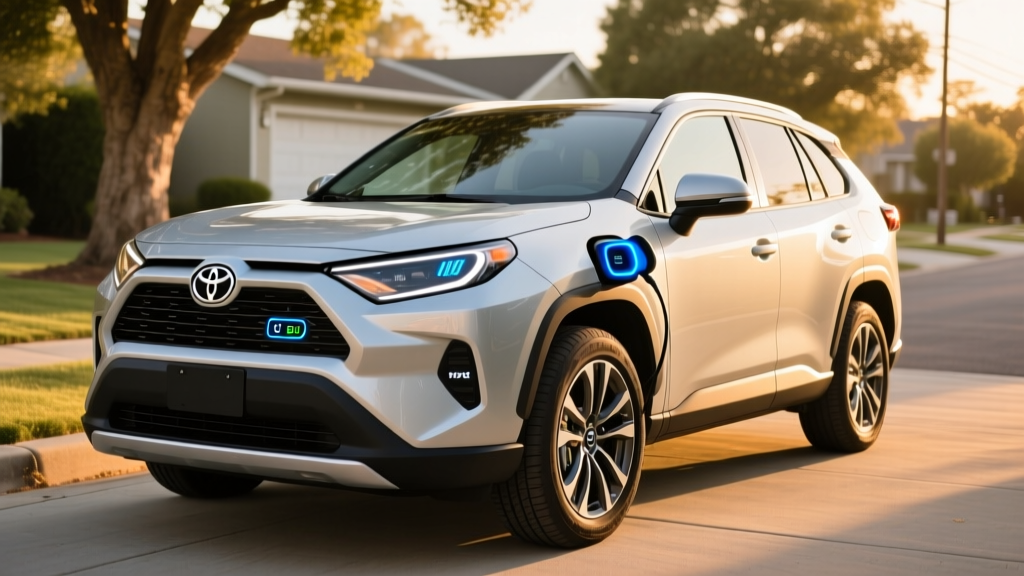
The 2019 Toyota RAV4 Hybrid was a turning point for the compact SUV segment. Built on Toyota's TNGA-K platform with a fourth-generation hybrid powertrain, it delivered 41 MPG city without ever needing a plug — and it remains one of the most sought-after used hybrids in 2026. With over 500,000 units sold across the RAV4 Hybrid's first two model years on this generation, real-world reliability data is now robust enough to evaluate long-term battery health, ownership costs, and whether it still makes sense versus newer PHEVs and full EVs.
This guide breaks down everything a used-car buyer needs to know: exact EPA fuel economy, real-world MPG observations, hybrid battery longevity, replacement costs, and how the 2019 RAV4 Hybrid stacks up against the RAV4 Prime PHEV and competing electrified SUVs.
HEV vs PHEV: What the 2019 RAV4 Hybrid Is (and Isn't)
2019 RAV4 Hybrid (HEV)
- Type: Conventional hybrid — no plug required
- Battery: 1.6 kWh nickel-metal hydride (NiMH), sealed
- Electric-only driving: Very short distances at low speed (under ~1 mile)
- Charging: Self-charging via regenerative braking and the gas engine
- Federal tax credit: None (HEVs do not qualify under IRS §30D)
RAV4 Prime (PHEV, introduced 2021)
- Type: Plug-in hybrid — requires external charging for EV mode
- Battery: 18.1 kWh lithium-ion
- Electric-only range: 42 miles EPA
- Charging: Level 1 (120V) ~12 hrs; Level 2 (240V) ~2.5 hrs; no DC fast charge
- Federal tax credit: Up to $7,500 when new (now subject to §30D sourcing rules)
The 2019 RAV4 Hybrid is strictly a conventional HEV. It recovers energy during braking and deceleration, stores it in a small NiMH pack, and uses the electric motor to assist the gasoline engine or drive short distances at low speeds. You never plug it in. If you want meaningful electric-only range, you'd need to look at the 2021+ RAV4 Prime PHEV or a full BEV like the bZ4X.
Fuel Economy: EPA Ratings and Real-World MPG
The 2019 RAV4 Hybrid carries an EPA rating of 41 MPG city, 38 MPG highway, and 40 MPG combined across all trims (LE, XLE, XSE, Limited). These figures were class-leading at launch and remain competitive in 2026. Per fueleconomy.gov, the RAV4 Hybrid uses approximately 2.5 gallons per 100 miles.
| Driving Condition | EPA Estimate | Real-World Observation |
|---|---|---|
| City | 41 MPG | 42–45 MPG (hybrids often exceed EPA in stop-and-go) |
| Highway (70 mph) | 38 MPG | 34–37 MPG (aerodynamic drag reduces hybrid advantage) |
| Combined | 40 MPG | 37–41 MPG (varies with driving mix) |
| Cold weather (below 30°F) | N/A | 33–36 MPG (engine runs more for cabin heat) |
Why city MPG beats highway: Unlike gas-only cars, hybrids recapture braking energy and shut off the engine at stops. City driving with frequent stops maximizes regenerative braking. On sustained highway runs, the gasoline engine does most of the work, reducing the hybrid system's advantage.
Total range: With a 14.5-gallon fuel tank and 40 MPG combined, expect roughly 550–580 miles per tank in mixed driving, and up to 600+ miles in city-heavy commutes. Cold weather and heavy cargo reduce this to approximately 480–520 miles.
Powertrain Specs: Engine, Motors, and Horsepower
| Specification | 2019 RAV4 Hybrid |
|---|---|
| Engine | 2.5L Dynamic Force 4-cylinder (A25A-FXS) |
| Engine power | 176 hp / 163 lb-ft torque |
| Front electric motor | 118 hp / 149 lb-ft |
| Rear electric motor (AWD) | 54 hp / 89 lb-ft |
| Net combined system horsepower | 219 hp |
| Transmission | eCVT (planetary gearset, not a belt-driven CVT) |
| Drivetrain | AWD (electronic rear axle, no mechanical driveshaft) |
| 0–60 mph | 7.8 seconds (Car and Driver tested) |
| Battery type | NiMH, 1.6 kWh (sealed, under rear seat) |
| Curb weight | ~3,710 lbs (LE trim) |
The rear axle is driven entirely by an independent electric motor — there's no driveshaft connecting it to the front transaxle. This "AWD-i" system engages the rear motor on acceleration and when front-wheel slip is detected. It's not designed for serious off-roading, but it handles snow, rain, and light gravel confidently. The eCVT is Toyota's proven planetary-gear hybrid transaxle, not the rubber-belt CVT found in some competitors, and it's widely regarded as one of the most durable hybrid transmissions ever built.
Hybrid Battery Longevity, Warranty, and Replacement Cost
Original warranty: 8 years / 100,000 miles (10 years / 150,000 miles in California and states adopting CARB emissions standards — CA, CO, CT, DE, ME, MD, MA, MN, NJ, NM, NY, OR, RI, VT, WA).
Warranty coverage threshold: Toyota warrants the hybrid battery to retain sufficient capacity for normal hybrid operation. There is no published minimum percentage, but failure triggers a full replacement under warranty.
2026 status for a 2019 model: Most 2019 RAV4 Hybrids are now outside the federal 8-year window but may still fall within the 10-year CARB-state coverage depending on mileage. Verify the in-service date on the original window sticker or dealer records.
Real-world battery lifespan: Toyota's NiMH hybrid batteries have an exceptional track record. Data from fleet operators, taxi services, and owner forums indicates that the vast majority of RAV4 Hybrid batteries last well beyond 150,000 miles with minimal degradation. Unlike lithium-ion packs in full EVs, NiMH cells in Toyota's hybrid system experience shallow charge/discharge cycles — the battery management system keeps the state of charge between roughly 40% and 80%, avoiding the deep cycles that accelerate degradation.
Replacement cost if out of warranty:
| Option | Estimated Cost (2026) | Notes |
|---|---|---|
| New OEM battery (Toyota dealer) | $3,000–$4,500 | Includes parts and labor; varies by region |
| Refurbished/remanufactured battery | $1,500–$2,500 | Available from third-party suppliers; warranty varies (1–3 years typical) |
| Individual cell/module replacement | $500–$1,200 | Independent hybrid specialists can replace only failed modules; most cost-effective option |
The hybrid battery is located under the rear seat, making it relatively accessible for service. Unlike EV battery replacements that can exceed $15,000, the RAV4 Hybrid's small NiMH pack is affordable to replace — and the likelihood of needing one before 200,000 miles is low based on current data.
2019 RAV4 Hybrid vs. RAV4 Prime vs. Full EV: Which Fits You?
| Factor | 2019 RAV4 Hybrid (HEV) | RAV4 Prime (PHEV, 2021+) | Full EV (e.g., Hyundai Ioniq 5) |
|---|---|---|---|
| Plug-in required? | No | Yes (for EV mode) | Yes |
| Electric-only range | ~0.5 mi at low speed | 42 mi EPA | 250–310 mi EPA |
| Total range | ~560 mi | ~600 mi (EV + gas) | 250–310 mi |
| Fuel cost per mile | ~$0.08 (at $3.20/gal) | ~$0.04 (electric) / $0.08 (gas) | ~$0.04–$0.06 (electric) |
| Home charging needed? | No | Recommended for EV benefit | Essential |
| Used price (2026) | $22,000–$28,000 | $32,000–$40,000 | $28,000–$38,000 |
| Federal tax credit (used) | None | Up to $4,000 (§25E used EV credit, income caps apply) | Up to $4,000 (§25E used EV credit) |
| Maintenance cost | Low (standard hybrid) | Low (dual systems) | Lowest (no engine/oil) |
Choose the 2019 RAV4 Hybrid if:
- You don't have access to home or workplace charging
- You want maximum range without range anxiety (560+ miles per tank)
- Your budget is under $30,000 and you want proven reliability
- You drive a mix of city and highway and want excellent fuel economy without behavior changes
Choose the RAV4 Prime PHEV if:
- You can install a Level 2 home charger
- Your daily commute is under 42 miles round-trip (you'd rarely use gas)
- You want the option of electric-only driving without full EV range commitment
Choose a full EV if:
- You have reliable home charging and your daily driving is under 250 miles
- You want the lowest per-mile fuel cost and zero tailpipe emissions
- You want to eliminate oil changes, spark plugs, and exhaust-system maintenance entirely
Pricing, Tax Credits, and Used-Buyer Considerations
The 2019 RAV4 Hybrid originally started at $28,350 (LE trim, including destination) and topped out around $38,000 for a fully loaded Limited. In the 2026 used market, expect to pay:
- LE/XLE (60,000–90,000 miles): $22,000–$25,000
- XSE/Limited (40,000–70,000 miles): $25,000–$28,000
- Low-mileage examples (under 30,000 miles): $27,000–$30,000
Tax credit situation: The 2019 RAV4 Hybrid never qualified for the federal §30D new EV tax credit because it is a conventional hybrid, not a plug-in vehicle. However, under the IRS §25E used clean vehicle credit, only PHEVs and BEVs qualify — conventional HEVs are excluded. There is no federal tax incentive available for purchasing a used 2019 RAV4 Hybrid. Some states may offer minimal hybrid incentives, but these are rare and vary by jurisdiction — check your state's energy office for current programs.
Reliability and Common Issues
The 2019 RAV4 Hybrid scores well across major reliability indices. Consumer Reports has consistently given the 2019–2021 RAV4 Hybrid above-average reliability ratings, and IIHS named it a Top Safety Pick when equipped with specific headlights.
Known issues to check on a used example:
- Hybrid battery cooling fan: Located near the rear seat. Ensure it's free of debris and pet hair, which can cause overheating. A clogged fan is the most common preventable cause of hybrid battery stress.
- 12V auxiliary battery: Like all modern vehicles, the RAV4 Hybrid has a conventional 12V battery for electronics. It typically lasts 3–5 years and is a common roadside-stranding culprit — not related to the hybrid traction battery.
- Brake actuator recall: Toyota issued a recall for certain 2019 RAV4 Hybrid units related to the brake booster assembly. Verify recall status via NHTSA's VIN lookup tool before purchasing.
- AWD-i rear motor: Largely trouble-free, but listen for unusual whining from the rear axle during a test drive. Failure is rare but documented in high-mileage examples.
Pros
- 41 MPG city — exceptional for an AWD SUV
- Proven Toyota hybrid reliability with 200,000+ mi battery lifespan
- Strong cargo capacity (37.6 cu ft behind rear seats)
- Standard Toyota Safety Sense 2.0 (AEB, lane-keep, adaptive cruise)
- 560+ mile total range eliminates fuel stops on road trips
- Lower used prices vs. PHEV/EV alternatives
Cons
- No electric-only driving capability
- No federal or state tax credits available
- Infotainment system feels dated by 2026 standards (no wireless CarPlay on 2019)
- Rear-seat space slightly tighter than newer competitors
- Highway MPG drops noticeably above 75 mph
- NiMH battery (older chemistry vs. lithium-ion in newer hybrids)
Frequently Asked Questions
How many MPG does the 2019 RAV4 Hybrid actually get?
The EPA rates it at 41 city / 38 highway / 40 combined. In real-world driving, owners commonly report 42–45 MPG in city-heavy commutes and 34–37 MPG on sustained highway trips at 70+ mph. Cold weather reduces efficiency by roughly 10–15% due to increased engine runtime for cabin heating.
Does the 2019 RAV4 Hybrid need to be plugged in?
No. It is a conventional hybrid (HEV), not a plug-in hybrid (PHEV). The battery charges itself through regenerative braking and the gasoline engine. There is no charging port on the vehicle.
How long does the hybrid battery last, and what does replacement cost?
Toyota's NiMH hybrid batteries routinely last 150,000–200,000+ miles based on fleet and owner data. Replacement costs range from $500–$1,200 for individual module repair to $3,000–$4,500 for a new OEM battery at a dealer. The original warranty was 8 years/100,000 miles (10/150,000 in CARB states).
Does the 2019 RAV4 Hybrid qualify for any tax credit?
No. Conventional hybrids (HEVs) do not qualify for the federal §30D new vehicle credit or the §25E used clean vehicle credit. Only plug-in hybrids (PHEVs) and full battery-electric vehicles (BEVs) are eligible. Some states may have minor hybrid incentives, but these are uncommon and vary by jurisdiction.
Is the 2019 RAV4 Hybrid better than the RAV4 Prime?
They serve different needs. The RAV4 Prime (PHEV) offers 42 miles of electric-only range and 302 hp, but costs significantly more on the used market ($32,000–$40,000) and requires home charging to realize its benefits. The 2019 RAV4 Hybrid costs less, needs no plug, and is simpler to own — making it the better choice for buyers without charging access or with longer commutes.
What should I check before buying a used 2019 RAV4 Hybrid?
Verify the hybrid battery health via an OBD-II scan tool (look for voltage delta between modules — a healthy pack shows less than 0.3V difference). Check the hybrid battery cooling fan for debris. Run the VIN through NHTSA's recall database. Confirm the brake actuator recall was performed if applicable. Review maintenance records for regular oil changes (every 10,000 miles with 0W-16 synthetic).