Quick Verdict: A Performance PHEV That Still Delivers
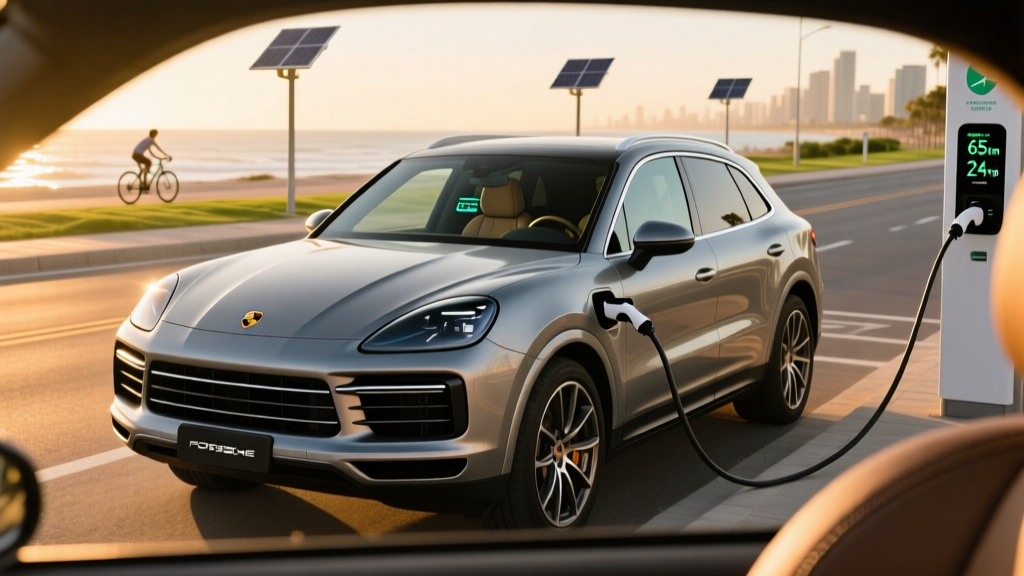
The 2019 Porsche Cayenne E-Hybrid remains one of the most compelling plug-in hybrid SUVs on the used market in 2026. With 455 combined horsepower, a 14.1 kWh battery delivering up to 27 miles of electric-only driving, and the prestige of the Porsche badge, it bridges the gap between daily electric commuting and long-distance capability. For buyers shopping the used PHEV market, this third-generation Cayenne represents a sweet spot: modern architecture, proven powertrain, and depreciation that has made it far more accessible than its original $80,000+ MSRP.
But how does it stack up against newer PHEVs and full EVs in 2026? And what should you expect for real-world efficiency, battery health, and maintenance costs on a seven-year-old luxury hybrid? This guide covers every number that matters.
HEV vs PHEV: What the Cayenne E-Hybrid Actually Is
Before diving into specs, it is critical to understand the distinction between a conventional hybrid (HEV) and a plug-in hybrid (PHEV), because the Cayenne E-Hybrid is firmly a PHEV.
| Feature | Conventional Hybrid (HEV) | Plug-In Hybrid (PHEV) |
|---|---|---|
| Battery Size | 0.5–2 kWh | 8–30+ kWh |
| Electric-Only Range | 0.5–2 miles at low speed | 20–50+ miles |
| Plug-In Charging | No — charges via engine/regen only | Yes — Level 1/Level 2 plug-in required for full benefit |
| Gas Engine | Yes — primary power source | Yes — backup and highway power |
| Tax Credit Eligibility | No federal credit | Eligible under §30D (if bought new; used credit available for qualifying pre-owned) |
| Example | Toyota RAV4 Hybrid | 2019 Porsche Cayenne E-Hybrid |
The Cayenne E-Hybrid has a 14.1 kWh lithium-ion battery pack that you plug in to charge — unlike a conventional hybrid such as the Toyota Highlander Hybrid, which charges its small battery exclusively through the gasoline engine and regenerative braking. To get the full value from this PHEV, you need access to a Level 2 home charger or regular plug-in opportunities. Without plugging in, you are essentially driving a heavy hybrid with diminished efficiency returns.
Powertrain Specs: Engine, Motor, and Combined Output
The 2019 Cayenne E-Hybrid pairs a turbocharged 3.0-liter V6 gasoline engine with an electric motor integrated into the eight-speed Tiptronic S automatic transmission. Here is the full breakdown:
| Specification | 2019 Porsche Cayenne E-Hybrid |
|---|---|
| Gas Engine | 3.0L Turbocharged V6 — 335 HP, 332 lb-ft torque |
| Electric Motor | 134 HP (100 kW), 295 lb-ft torque |
| Combined System Output | 455 HP, 516 lb-ft torque |
| Transmission | 8-speed Tiptronic S automatic, AWD |
| 0–60 mph | 4.7 seconds (4.4 s with Sport Chrono Package) |
| Top Speed | 157 mph (electronically limited) |
| Battery Capacity | 14.1 kWh (liquid-cooled lithium-ion) |
| Drivetrain | All-wheel drive (AWD) |
| Curb Weight | ~5,060 lbs |
The electric motor sits between the engine and transmission, enabling pure electric driving at speeds up to 84 mph before the gas engine engages. Porsche's E-Power mode prioritizes electric operation, while Hybrid Auto mode intelligently blends both sources for optimal efficiency. Sport and Sport Plus modes unleash the full 455 HP, using the electric motor as a torque-fill system for aggressive acceleration.
Fuel Economy: EPA MPG and Real-World Efficiency
Because the Cayenne E-Hybrid is a PHEV, the EPA rates it in two ways: MPGe (miles-per-gallon-equivalent) when operating on combined electric and gasoline power, and standard MPG when running on gasoline alone after the battery is depleted.
| Metric | City | Highway | Combined |
|---|---|---|---|
| MPGe (electric + gas) | 46 MPGe combined | ||
| Gas-Only MPG (battery depleted) | 19 MPG | 22 MPG | 20 MPG |
| Electric-Only Range | 27 miles (EPA est.) | ||
| Total Combined Range | ~430 miles (gas + electric) | ||
| Fuel Tank Capacity | 19.8 gallons (standard), 23.8 gallons (optional) | ||
The EPA's 27-mile electric range is achievable in mild weather at city speeds (under 45 mph). In real-world 2026 ownership, expect:
- Summer city driving: 24–27 miles electric-only
- Highway (70 mph): 18–21 miles electric-only before the engine engages
- Cold weather (below 35°F): 15–19 miles electric-only due to battery chemistry limitations and cabin heating demands
- Gas-only mixed driving: 18–21 MPG real-world, close to the EPA's 20 MPG combined
Owners with short commutes (under 20 miles round-trip) and regular Level 2 charging report averaging 55–65 MPGe over a year. Those who rarely plug in see 18–20 MPG — essentially heavy-SUV gas mileage.
The key takeaway: this PHEV rewards plug-in discipline. Charge nightly and your gas station visits become rare. Ignore the plug and you are hauling 5,060 pounds on a 3.0L V6 — efficient for a performance SUV, but not for a hybrid.
Charging: Battery Size, Charge Times, and Connector Details
The 14.1 kWh battery pack (approximately 11.3 kWh usable to protect longevity via a top/bottom buffer) charges through the following methods:
| Charging Method | Power (kW) | 0–100% Time | Connector |
|---|---|---|---|
| Level 1 (120V household outlet) | 1.2 kW | ~10–12 hours | |
| Level 2 (240V, standard home/public) | 3.6 kW (onboard charger limit) | ~3.5–4 hours | |
| DC Fast Charging | Not supported — no DC fast charge capability | ||
The Cayenne E-Hybrid uses a J1772 connector for Level 1 and Level 2 AC charging. It does not support DC fast charging — a limitation shared with most PHEVs of this era. The onboard charger is limited to 3.6 kW (later updated to 7.2 kW in the 2020 model year), meaning even a high-power Level 2 station will only deliver 3.6 kW to this vehicle.
For daily use, a Level 2 home charger (such as a ChargePoint Home Flex or Porsche-recommended unit on a 240V/20A circuit) fully replenishes the battery overnight in roughly four hours. This is more than sufficient for daily commuting patterns.
Pricing, Used Market Value, and Tax Credit Eligibility
The 2019 Cayenne E-Hybrid originally started at $80,900 MSRP (before destination), with well-optioned examples exceeding $100,000. As of early 2026, used market pricing reflects significant depreciation:
| Condition / Mileage | Approximate Used Price (2026) |
|---|---|
| Low mileage (<30K), excellent condition | $48,000–$56,000 |
| Average mileage (40K–70K), good condition | $38,000–$48,000 |
| Higher mileage (70K–100K) | $30,000–$38,000 |
Federal Tax Credit for Used PHEVs
When purchased new, the 2019 Cayenne E-Hybrid qualified for a $6,712 federal tax credit under the previous §30D rules (based on battery capacity). That original credit is no longer available.
However, under the current IRS Used Clean Vehicle Credit (§25E), buyers purchasing this Cayenne E-Hybrid from a dealer in 2026 may qualify for up to $4,000 or 30% of the sale price (whichever is lower), subject to these requirements:
- Sale price cap: Vehicle must sell for $25,000 or less (many examples exceed this, limiting eligibility)
- Buyer income limits: AGI must not exceed $75,000 (single), $112,500 (head of household), or $150,000 (joint)
- Dealer requirement: Must be purchased from a licensed dealer, not a private party
- Model year requirement: Vehicle must be at least two model years old (2019 qualifies)
- First transfer: Credit applies only to the first qualified resale since August 16, 2022
The $25,000 sale price cap is the main obstacle. Most 2019 Cayenne E-Hybrids sell well above that threshold, meaning the majority of buyers will not qualify for the used-EV credit. Consult a tax professional and review current IRS guidance before counting on this incentive.
Reliability, Battery Warranty, and Replacement Costs
- Hybrid Battery Warranty: 8 years / 100,000 miles (whichever comes first) — covers capacity loss below a defined threshold (typically 70% of original capacity)
- Powertrain Warranty: 4 years / 50,000 miles
- Limited Vehicle Warranty: 4 years / 50,000 miles
For a 2019 model in 2026, the hybrid battery warranty is either expiring or already expired (depending on mileage). Verify remaining coverage with a Porsche dealer using the VIN before purchase.
Reliability Track Record
The third-generation Cayenne (2019+) has generally earned average-to-above-average reliability marks. The hybrid system itself — the electric motor and battery pack — has proven durable in owner forums and industry data. The primary concerns center on:
- Air suspension: The standard air suspension system can develop leaks or compressor failures at 60,000–80,000 miles. Repair costs range from $1,500–$3,500 per corner.
- Coolant system: The hybrid battery's liquid cooling system requires maintenance. Coolant leaks near the battery housing have been reported.
- Infotainment (PCM 5.0): The 12.3-inch touchscreen is responsive but some units develop display issues after 5+ years.
- Brakes: Regenerative braking extends pad life significantly — many owners report original pads at 50,000+ miles.
Battery Replacement Cost
If the high-voltage battery requires replacement out of warranty, expect a cost between $12,000 and $18,000 (parts and labor at a Porsche dealer). Independent hybrid specialists may offer refurbished pack replacements for $8,000–$12,000. However, widespread battery failures on the 2019 Cayenne E-Hybrid are uncommon — most packs retain 85–92% of original capacity at 60,000 miles based on owner-reported fueleconomy.gov data and enthusiast community tracking.
Before buying, request a battery health report from a Porsche dealer (the Porsche PIWIS diagnostic system can read individual cell voltages and overall State of Health). This is the single most important pre-purchase step for any used PHEV.
Who Should Choose the Cayenne E-Hybrid vs a Full EV or Gas SUV?
Choose the 2019 Cayenne E-Hybrid if:
- You have home Level 2 charging and a daily commute under 25 miles
- You want luxury-SUV performance (4.7-second 0–60) without full-EV range anxiety on road trips
- You regularly take long drives where DC fast-charging infrastructure is sparse
- You value the Porsche driving dynamics and brand cachet at a depreciated price
- You want a PHEV that can tow (7,700 lbs rated capacity)
Choose a Full EV (e.g., Tesla Model X, BMW iX, Rivian R1S) if:
- You want zero tailpipe emissions and minimal drivetrain maintenance
- You have reliable home charging and access to DC fast-charging networks for road trips
- You want the lowest per-mile energy cost (electricity vs. gasoline)
- You prefer the newest ADAS and infotainment technology
Choose a Conventional Hybrid (e.g., Lexus RX 450h) if:
- You cannot plug in at home or work
- You want simpler ownership with no charging behavior changes
- You prioritize low maintenance costs over performance
Pros
- 455 HP with genuine Porsche handling dynamics
- 27-mile electric range covers most daily commutes
- Significant depreciation makes it accessible on the used market
- 7,700-lb towing capacity
- Regenerative braking extends brake life dramatically
- Premium interior with 12.3-inch PCM touchscreen
Cons
- 3.6 kW onboard charger limits Level 2 speed (2019 only)
- No DC fast charging capability
- Gas-only MPG of 20 combined is modest for a hybrid
- Air suspension repairs are costly out of warranty
- Battery warranty expiring on 2019 models in 2026–2027
- Used-EV tax credit unlikely due to $25K price cap
- Heavy at 5,060 lbs — tires and brakes wear faster than lighter vehicles
Frequently Asked Questions
How many MPG does the 2019 Porsche Cayenne E-Hybrid get?
The EPA rates it at 46 MPGe combined when using both electric and gasoline power. Once the battery is depleted, it returns 19 city / 22 highway / 20 combined MPG on gasoline alone. Real-world gas-only driving typically yields 18–21 MPG depending on driving style and conditions.
How far can the 2019 Cayenne E-Hybrid go on electric only?
The EPA estimates 27 miles of electric-only range. In real-world conditions, expect 24–27 miles in mild city driving, 18–21 miles at highway speeds, and 15–19 miles in cold weather (below 35°F). The electric motor can propel the vehicle up to 84 mph before the gasoline engine must engage.
Does the 2019 Cayenne E-Hybrid qualify for any tax credit in 2026?
The original new-vehicle federal tax credit is no longer available. Under the IRS §25E Used Clean Vehicle Credit, buyers may qualify for up to $4,000 — but only if the sale price is $25,000 or less and the buyer meets income requirements. Since most 2019 Cayenne E-Hybrids sell for $35,000+, most buyers will not qualify. State-level incentives vary; check your local DMV or energy office for specifics.
Is the 2019 Cayenne E-Hybrid reliable?
The hybrid powertrain (battery, electric motor) has proven reliable with few widespread failures. The main concerns are the air suspension system (potential $1,500–$3,500 per-corner repair) and cooling system maintenance. Overall, it rates as average for the luxury SUV segment. A pre-purchase inspection including a battery health report is strongly recommended.
What does it cost to replace the hybrid battery?
Out-of-warranty high-voltage battery replacement runs $12,000–$18,000 at a Porsche dealer, or $8,000–$12,000 through an independent hybrid specialist using refurbished cells. However, catastrophic battery failure is uncommon — most packs retain 85%+ capacity at 60,000 miles.
Can the 2019 Cayenne E-Hybrid DC fast charge?
No. This PHEV supports only AC charging via a J1772 connector at up to 3.6 kW (Level 2). A full charge takes approximately 3.5–4 hours on Level 2 or 10–12 hours on a standard 120V outlet. DC fast charging is not available on this model year.
How does the Cayenne E-Hybrid compare to a full EV like the Tesla Model X?
The Cayenne E-Hybrid offers 27 miles of electric range versus 300+ miles for a full EV. The trade-off is flexibility: the Cayenne can drive 430+ total miles without range anxiety and refuel at any gas station. The Model X has lower per-mile energy costs, less maintenance, and access to DC fast-charging networks, but requires more charging infrastructure planning for road trips. For short daily commutes with occasional long trips, the PHEV is pragmatic. For daily drivers who can charge at home and want minimal fossil fuel use, the full EV wins on operating cost.
What is the difference between the 2019 and 2020 Cayenne E-Hybrid?
The 2020 model year upgraded the onboard charger from 3.6 kW to 7.2 kW, cutting Level 2 charging time roughly in half (~2 hours vs. ~4 hours). All other powertrain specs remained identical. If fast Level 2 charging matters to you, the 2020 model is meaningfully better for daily plug-in convenience.
Final Assessment: Is It Worth Buying in 2026?
The 2019 Porsche Cayenne E-Hybrid occupies a specific niche: luxury performance SUV buyers who want electric commuting capability without committing to a full EV. At $35,000–$50,000 on the used market, it delivers 455 HP, genuine Porsche ride and handling, and enough electric range to cover most daily driving — all while retaining the flexibility of a gas tank for road trips.
The critical ownership requirements are straightforward: you must plug in regularly to realize its efficiency advantage, budget for potential air suspension maintenance, and verify battery health before purchase. If those conditions align, this PHEV remains one of the most rewarding electrified SUVs available at its price point.