Quick Verdict: A Practical Used PHEV With Real Limitations
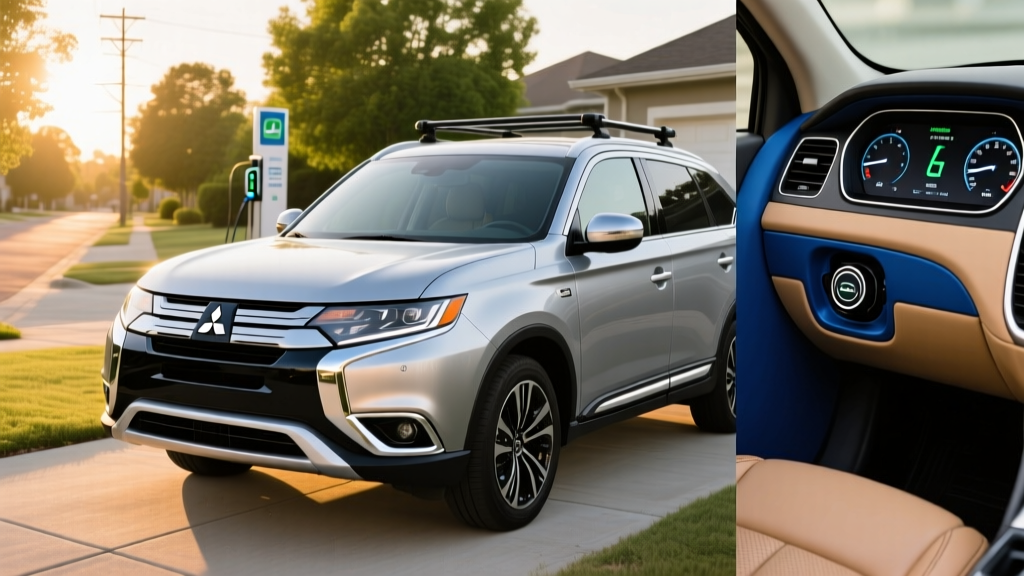
The 2019 Mitsubishi Outlander PHEV occupies a specific niche in the used plug-in hybrid market: it's one of the few affordable, all-wheel-drive PHEV crossovers you can pick up in 2026 for well under $20,000. With an EPA-rated 22 miles of electric-only range and 74 MPGe when running on its blended powertrain, it works as a daily commuter for shorter trips while offering gasoline backup for road trips. But buyers should understand exactly what they're getting — a 12.0 kWh battery (of which roughly 10.0 kWh is usable), a 2.0-liter four-cylinder engine paired with twin electric motors, and a CHAdeMO DC fast-charging port that's increasingly orphaned in a NACS-dominant charging landscape.
If your commute is under 20 miles round-trip and you can charge at home, the Outlander PHEV can run almost entirely on electricity most days. Stretch beyond that, and you're driving a moderately efficient hybrid crossover that returns about 25 MPG combined on gasoline. For the used buyer prioritizing budget and AWD capability over cutting-edge EV tech, it's worth a serious look — with caveats we'll detail below.
HEV vs PHEV: Where the Outlander Fits
Before diving into specs, it's worth clarifying the distinction between a conventional hybrid (HEV) and a plug-in hybrid (PHEV), since the Outlander nameplate has been sold in both configurations globally.
Conventional Hybrid (HEV)
- Small battery (~1-2 kWh), charged only by regenerative braking and the engine
- Never plugs in — no charging equipment needed
- Electric-only driving limited to very low speeds and short distances
- Example: Toyota RAV4 Hybrid
Plug-In Hybrid (PHEV)
- Larger battery (~10-20+ kWh), charged via plug or regenerative braking
- Plugs into Level 1 (120V) or Level 2 (240V) charging — some support DC fast charging
- Meaningful electric-only range (typically 20-40+ miles)
- Example: 2019 Mitsubishi Outlander PHEV (22 mi electric-only)
The 2019 Outlander PHEV is firmly in the PHEV camp. It has a 12.0 kWh lithium-ion battery pack that you plug in to recharge, delivering 22 miles of EPA-rated electric-only range before the gasoline engine takes over. Once the battery depletes, it operates as a series/parallel hybrid, blending engine and electric motor power.
Fuel Economy: EPA Ratings and Real-World MPG
The Outlander PHEV's efficiency story depends entirely on how you use it. The EPA provides two figures: MPGe (miles per gallon equivalent) for blended electric+gasoline operation, and standard MPG for gasoline-only (charge-sustaining) mode.
| Mode | City | Highway | Combined |
|---|---|---|---|
| Blended (MPGe) | — | — | 74 MPGe |
| Gasoline Only (MPG) | 25 | 26 | 25 |
Source: EPA fueleconomy.gov
Real-World MPG Expectations
EPA Combined (gas-only): 25 MPG — In practice, owners report 24-27 MPG in mixed driving once the battery is depleted. City driving with frequent regenerative braking opportunities can push this toward 27-28 MPG. Sustained highway speeds above 70 mph drop it to 22-24 MPG. Cold weather (below 30°F) reduces gas-mode efficiency by roughly 10-15% due to engine warm-up cycles and cabin heating demands.
The 74 MPGe figure is achievable only if you regularly charge and most of your driving falls within the 22-mile electric window. If you rarely plug in, expect the gas-only 25 MPG figure.
Electric-Only Range and Battery Specs
The heart of any PHEV is its battery pack and the electric range it provides. Here's what the 2019 Outlander PHEV delivers:
| Specification | Value |
|---|---|
| Battery Capacity (total) | 12.0 kWh |
| Battery Capacity (usable) | ~10.0 kWh |
| Battery Chemistry | Lithium-ion (NMC) |
| EPA Electric-Only Range | 22 miles |
| Real-World Electric Range | 18-22 mi (warm), 14-17 mi (cold) |
| Total Combined Range (electric + gas) | ~310 miles |
| Electric Top Speed | ~84 mph (EV priority mode) |
| Combined System Horsepower | 197 hp |
| Engine | 2.0L inline-4 (117 hp, 137 lb-ft) |
| Front Electric Motor | 80 hp / 101 lb-ft |
| Rear Electric Motor | 93 hp / 144 lb-ft |
| Drivetrain | AWD (twin-motor, no mechanical driveshaft) |
| 0-60 mph | ~9.5 seconds |
| Fuel Tank | 11.3 gallons |
The 22-mile EPA electric range is on the low end for PHEVs, even by 2019 standards. Competitors like the 2019 Toyota RAV4 Prime (when it launched for 2021) offered 42 miles, and the Chrysler Pacifica Hybrid delivered 32 miles. But the Outlander's AWD system — which uses the rear electric motor to drive the rear wheels without a mechanical connection to the engine — is genuinely capable in snow and light off-road conditions, a meaningful advantage in colder climates.
Real-world electric range varies significantly. In mild weather (50-75°F) with gentle driving, 20-22 miles is realistic. In winter conditions with cabin heat running, expect 14-17 miles. Highway-speed electric driving at 70+ mph also cuts range to roughly 16-18 miles.
Charging: Level 1, Level 2, and CHAdeMO DC Fast Charging
The 2019 Outlander PHEV offers three charging methods, and it's one of the very few PHEVs sold in the US that supports DC fast charging — though the connector standard it uses is now a significant liability.
| Charging Level | Power | Connector | 0-100% Time | Notes |
|---|---|---|---|---|
| Level 1 (120V household) | ~1.4 kW | J1772 | ~8 hours | Overnight charging; adequate for daily top-up |
| Level 2 (240V) | ~3.7 kW | J1772 | ~3.5 hours | Home wallbox or public Level 2 stations |
| DC Fast Charge | Up to ~22 kW | CHAdeMO | ~25 min (0-80%) | CHAdeMO infrastructure is declining in the US |
The CHAdeMO problem: The 2019 Outlander PHEV uses the CHAdeMO DC fast-charging standard. As of 2026, the North American charging landscape has overwhelmingly shifted to NACS (the Tesla connector, now adopted by Ford, GM, Rivian, Hyundai, and most major automakers) and CCS1. Electrify America, the largest non-Tesla DC network, still maintains some CHAdeMO connectors at existing stations, but new installations increasingly omit them. EVgo retains more CHAdeMO availability, but coverage is inconsistent. If DC fast charging is important to your routine, this is a meaningful limitation to weigh.
For most PHEV owners, home Level 1 or Level 2 charging covers daily needs. A standard 120V outlet delivers enough energy overnight to replenish the ~10 kWh usable battery in about 8 hours. A 240V Level 2 home charger cuts that to roughly 3.5 hours, making midday top-ups practical if you have a home charger or workplace charging access.
Powertrain Architecture: How the Twin-Motor AWD Works
The Outlander PHEV's powertrain is unconventional and worth understanding before buying. Unlike most PHEVs that use a traditional transmission, the Outlander operates in three modes depending on speed and load:
- EV Mode: Both axles driven by their respective electric motors. The gasoline engine stays off unless the battery depletes or you demand maximum acceleration.
- Series Hybrid Mode: The gasoline engine runs as a generator to produce electricity for the motors. The engine doesn't directly drive the wheels. This mode activates at lower speeds when the battery is depleted.
- Parallel Hybrid Mode: At higher speeds (typically above 40 mph), a clutch engages to connect the gasoline engine directly to the front wheels, which is more efficient than generating electricity at sustained highway speeds.
The result is 197 combined system horsepower, which sounds adequate on paper but translates to a leisurely 0-60 mph time of roughly 9.5 seconds. The Outlander PHEV is not quick. Its curb weight of approximately 4,200 pounds — due to carrying both a gasoline powertrain and a battery pack — works against acceleration and braking feel. This is a comfort-oriented family hauler, not a performance vehicle.
The AWD system, however, is a genuine strength. Because the rear wheels are driven exclusively by the rear electric motor, torque delivery to the rear axle is instant and independently controllable. Mitsubishi's S-AWC (Super All-Wheel Control) system manages torque vectoring between the front and rear motors, providing confident traction in snow, rain, and light off-road conditions. For buyers in northern climates, this is one of the Outlander PHEV's strongest selling points versus FWD-only PHEV competitors.
Reliability, Battery Longevity, and Warranty
For a used PHEV buyer, battery health is the single most important mechanical concern. Here's what you need to know about the Outlander PHEV's long-term reliability:
Factory Warranty Coverage (When New)
- Main Drive Battery: 10 years / 100,000 miles (capacity retention warranty)
- Powertrain: 10 years / 100,000 miles
- Bumper-to-Bumper: 5 years / 60,000 miles
- Roadside Assistance: 5 years / unlimited miles
Note: For a 2019 model purchased used in 2026, the original 10-year/100,000-mile battery and powertrain warranty may still be in effect if the vehicle has fewer than 100,000 miles. Always verify remaining warranty with a Mitsubishi dealer using the VIN.
Mitsubishi's battery warranty covers the main traction battery against falling below a specified capacity threshold (typically around 70% state of health). In practice, owner reports and fleet data suggest the Outlander PHEV's battery degrades slowly under normal use. Real-world degradation of 10-15% over 5-7 years is typical, meaning a 2019 model in 2026 might deliver 18-20 miles of electric range instead of the original 22 — a modest but noticeable reduction.
Battery replacement cost: If the battery pack fails outside of warranty, a full replacement runs approximately $6,000-$9,000 including parts and labor at a Mitsubishi dealership. This is a significant expense relative to the vehicle's used value (typically $14,000-$19,000 in 2026 depending on mileage and condition). Before purchasing, request a battery health diagnostic from a Mitsubishi dealer or use an OBD-II scanner app compatible with Mitsubishi PHEV systems to check the battery's state of health (SoH).
Overall reliability for the 2019 Outlander PHEV is mixed. The powertrain itself — particularly the electric motors and power electronics — has proven durable. However, the model has drawn criticism for interior build quality that doesn't match rivals, and some owners report issues with the infotainment system and cabin electronics. NHTSA recalls for the 2019 model year were minimal. Check the NHTSA recall database with a specific VIN before purchasing.
Pricing, Tax Credits, and Used Market Value
The 2019 Outlander PHEV was originally sold in three trims:
| Trim | Original MSRP (2019) | Estimated Used Price (2026) |
|---|---|---|
| SEL | $36,290 | $14,000 - $17,000 |
| SEL Touring | $38,290 | $15,500 - $18,000 |
| GT | $41,290 | $17,000 - $20,000 |
Used price ranges reflect typical private-party and dealer listings in early 2026 for vehicles with 50,000-90,000 miles. Actual prices vary by region, condition, and mileage.
Federal Tax Credit (Used EV/PHEV Credit — IRS §25E)
As of 2026, the IRS §25E used clean vehicle credit offers up to $4,000 or 30% of the sale price (whichever is less) for eligible used PHEVs and EVs purchased from a licensed dealer. Key eligibility requirements include:
- Sale price must be $25,000 or less (the Outlander PHEV easily qualifies)
- Buyer income caps: $75,000 single / $112,500 head of household / $150,000 joint (modified AGI)
- Vehicle must be at least two model years old (2019 qualifies)
- Must purchase from a licensed dealer (private-party sales don't qualify)
- Credit is non-refundable but can be transferred to the dealer as a point-of-sale discount
- Buyer can only claim one used clean vehicle credit per three-year period
At typical 2026 used prices of $14,000-$20,000, the credit would be 30% of the sale price — meaning $4,200-$6,000 calculated, but capped at $4,000 maximum. A buyer paying $16,000 from a dealer could potentially receive $4,000 as a point-of-sale reduction, bringing the effective price to $12,000. Always verify eligibility with a tax professional and the IRS §25E guidelines, as rules and dealer participation requirements may vary.
State Incentives
Some states offer additional rebates or tax credits for used PHEV purchases. California's CVRP program, Colorado's state tax credit, and various utility company rebates may apply. Check your state energy office or utility provider for current programs, as these change frequently.
Who Should Buy the 2019 Outlander PHEV (and Who Shouldn't)
Choose the 2019 Outlander PHEV if:
- Your daily commute is under 20 miles round-trip and you can charge at home
- You need AWD for snow, rain, or light off-road conditions
- You want a PHEV under $20,000 (potentially under $12,000 after the §25E credit)
- You regularly take road trips where a full EV's range would cause anxiety
- You value the remaining factory battery warranty (if under 100,000 miles)
Look elsewhere if:
- Your commute exceeds 25 miles — you'll burn gas daily and a longer-range PHEV (RAV4 Prime, Pacifica Hybrid) makes more sense
- You don't have access to home or workplace charging — without plugging in, you're just driving a 25 MPG hybrid
- You prioritize acceleration and driving dynamics — the 9.5-second 0-60 time is sluggish
- You rely on public DC fast charging — the CHAdeMO connector is increasingly unsupported
- You want a modern interior with current infotainment tech — the 2019 cabin feels dated
Pros
- Standard twin-motor AWD with genuine all-weather capability
- Affordable used pricing with potential $4,000 federal tax credit
- Remaining battery warranty may still apply (10yr/100k mi)
- DC fast charging capability (rare for PHEVs)
- Spacious cargo area (63.3 cu ft with rear seats folded)
- Simple, proven powertrain architecture
Cons
- Short 22-mile EPA electric range (less in cold weather)
- CHAdeMO connector is a declining standard
- Sluggish acceleration (9.5 sec 0-60)
- Dated interior materials and infotainment
- Level 2 AC charging limited to 3.7 kW (slow for a PHEV)
- Modest 25 MPG in gas-only mode for its size
Frequently Asked Questions
How many MPG does the 2019 Mitsubishi Outlander PHEV get?
The EPA rates the Outlander PHEV at 74 MPGe in blended electric+gasoline operation, and 25 MPG combined (25 city / 26 highway) once the battery is depleted and the vehicle runs on gasoline alone. Real-world gas-only MPG typically ranges from 24-27 depending on driving style and conditions. If you charge regularly and stay within the 22-mile electric window, your actual gasoline consumption will be minimal.
How far can the 2019 Outlander PHEV go on electric only?
The EPA rates it at 22 miles of electric-only range. In real-world driving at moderate temperatures, expect 18-22 miles. In cold weather (below 30°F) with cabin heating active, plan for 14-17 miles. Highway-speed electric driving at 70+ mph also reduces range to roughly 16-18 miles. The total combined range (electric plus a full 11.3-gallon tank) is approximately 310 miles.
Hybrid vs PHEV vs EV — which is right for me?
A conventional hybrid (HEV) like the Toyota RAV4 Hybrid never plugs in and offers no meaningful electric-only range — it simply improves fuel economy to roughly 40 MPG. A plug-in hybrid (PHEV) like the Outlander gives you 14-22 miles of electric driving for daily commuting, then switches to hybrid mode for longer trips — ideal if you have home charging but also take road trips. A full EV (BEV) like the Hyundai Ioniq 5 eliminates gasoline entirely with 250-300+ miles of range, but requires reliable charging access and a higher upfront budget. If you can charge at home and your daily driving is under 20 miles but you take occasional long trips, the PHEV offers the best of both worlds.
Is the 2019 Outlander PHEV reliable and what does a battery replacement cost?
The powertrain and electric motors have proven reliable over time, with the main concern being gradual battery degradation (typically 10-15% over 5-7 years). Mitsubishi's 10-year/100,000-mile battery warranty may still cover a 2019 model in 2026 if it's under the mileage threshold. Out-of-warranty battery replacement costs approximately $6,000-$9,000. Always check the battery's state of health before purchasing a used example, and verify remaining warranty coverage with a Mitsubishi dealer.
Does the 2019 Outlander PHEV qualify for any tax credit?
When new, the Outlander PHEV qualified for a partial federal tax credit (roughly $5,836 under the pre-2023 rules). In 2026, as a used vehicle, it may qualify for the IRS §25E used clean vehicle credit of up to $4,000 (30% of sale price, capped at $4,000) if purchased from a licensed dealer and the buyer meets income requirements ($75K single / $150K joint). The vehicle must sell for $25,000 or less, which it does at current used prices. Consult a tax professional and review IRS §25E guidelines to confirm eligibility.
Can I charge the Outlander PHEV at a Tesla Supercharger?
No. The 2019 Outlander PHEV uses a J1772 connector for Level 1/Level 2 AC charging and a CHAdeMO connector for DC fast charging. Tesla Superchargers use the NACS connector. While Tesla has begun opening some Supercharger stations to non-Tesla EVs via the Magic Dock adapter (which converts NACS to CCS1), CHAdeMO vehicles are not supported. You'll need to rely on ChargePoint, EVgo, Electrify America (where CHAdeMO connectors remain), or other networks with CHAdeMO compatibility for DC fast charging.
What's the difference between kW and kWh on this vehicle?
kW (kilowatts) measures power — the rate at which energy flows. The Outlander PHEV's Level 2 charger delivers up to 3.7 kW of power. kWh (kilowatt-hours) measures energy capacity — the size of the "fuel tank." The Outlander's battery holds 12.0 kWh total (~10.0 kWh usable). Think of kW as the speed of the hose filling a bucket, and kWh as the size of the bucket itself.