Quick Verdict: A Proven Luxury Hybrid With Minimal Risk
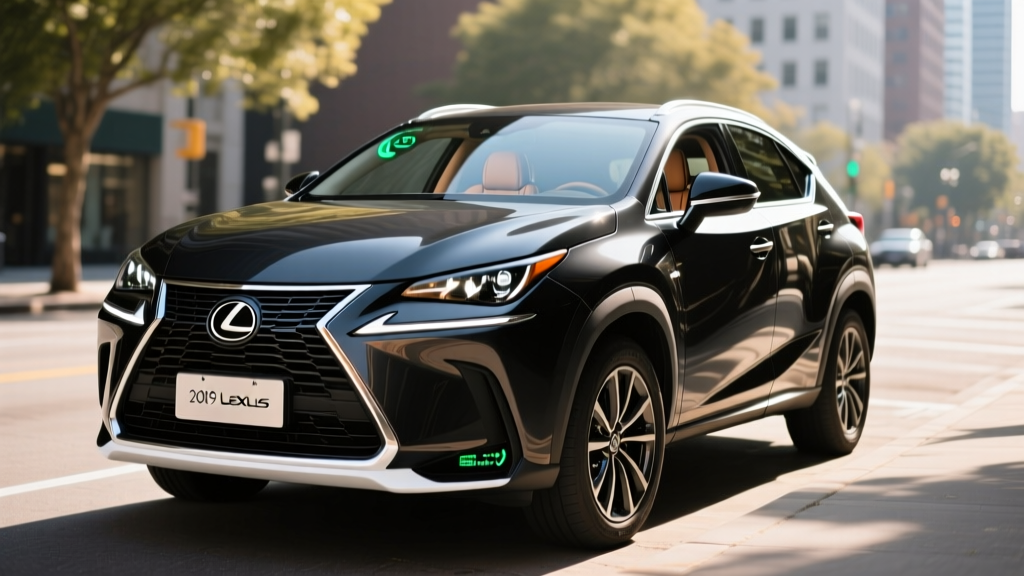
The 2019 Lexus NX 300h is a conventional hybrid electric vehicle (HEV) — not a plug-in — built on one of Toyota's most thoroughly validated hybrid powertrains. For used-car shoppers in 2026 who want luxury-badge efficiency without committing to a full battery-electric vehicle or worrying about charging infrastructure, the NX 300h occupies a narrow but defensible niche: 33 MPG combined from a compact crossover that carries Lexus reliability ratings and a hybrid battery warranty that, on a 2019 model, may still have years of coverage remaining.
This guide covers every number that matters — EPA fuel economy, real-world MPG observations, powertrain output, battery warranty specifics, replacement cost estimates, and whether any federal tax credits apply to a used hybrid purchase today.
HEV vs PHEV: What the 2019 NX 300h Actually Is
Conventional Hybrid (HEV) — 2019 Lexus NX 300h: The NX 300h is a self-charging hybrid. It has a small 1.6 kWh nickel-metal hydride (NiMH) traction battery that recovers energy from regenerative braking and the gasoline engine. You never plug it in. It cannot drive on electric power alone for meaningful distances (brief low-speed EV-mode only, under ~1 mile). All energy ultimately comes from gasoline.
Plug-in Hybrid (PHEV) — Not Offered for 2019 NX: Lexus did not offer a plug-in variant of the NX in 2019. The NX 450h+ (PHEV with ~37 miles electric-only range) arrived later with the redesigned 2022 NX generation. If you need electric-only commuting capability, the 2019 NX 300h will not provide it.
Full Battery Electric (BEV) — Different Category Entirely: Vehicles like the Tesla Model Y or Hyundai Ioniq 5 run solely on grid-charged battery packs (60–80+ kWh). They require home or public charging access and offer 250–330+ miles of EPA range. The NX 300h shares none of this architecture.
The distinction matters because buyers searching for a "2019 Lexus NX hybrid" sometimes assume plug-in capability. The NX 300h is strictly an HEV: fill the tank and drive. No charging cord, no range anxiety, no dependence on charging stations.
Fuel Economy: EPA Ratings and Real-World MPG
| Metric | EPA Rating | Real-World Expectation |
|---|---|---|
| City MPG | 33 MPG | 34–38 MPG (hybrids excel in stop-and-go) |
| Highway MPG | 30 MPG | 27–31 MPG (less regen benefit at steady speed) |
| Combined MPG | 31 MPG | 30–34 MPG depending on driving mix |
| Fuel Tank Capacity | 14.8 gallons | — |
| Total Driving Range | ~458 miles | ~430–500 miles |
Source: EPA Fuel Economy Guide — 2019 Lexus NX 300h AWD
Why real-world city MPG often exceeds the EPA sticker: Conventional hybrids like the NX 300h recapture kinetic energy during braking and deceleration, feeding it back into the battery to assist acceleration. City driving — with frequent stops, traffic lights, and low speeds — maximizes regenerative braking opportunities. The Atkinson-cycle 2.5-liter four-cylinder engine also operates more efficiently at the lower, variable loads typical of urban driving. Many NX 300h owners report 35–38 MPG in predominantly city commutes, particularly in mild climates where air conditioning load is moderate.
Highway reality check: At sustained 70–80 mph speeds, the hybrid system provides less benefit. The electric motor contributes less at high velocity, aerodynamic drag dominates, and regenerative braking opportunities are rare. Expect highway fuel economy to land around 27–30 MPG on flat terrain, dropping further in mountainous routes or with heavy cargo loads. This is normal hybrid behavior — the combined EPA figure of 31 MPG is a reasonable overall expectation for mixed driving.
Cold-weather impact: In winter conditions (below 30°F), expect a 5–12% fuel economy reduction. The engine runs more frequently to maintain cabin heat (since there's no large battery pack generating waste heat as in a BEV), and the battery's charge/discharge efficiency drops in cold temperatures. A 2019 NX 300h that achieves 32 MPG combined in summer may drop to 28–30 MPG in a northern winter.
Powertrain: Engine, Motors, and Combined Output
| Specification | 2019 Lexus NX 300h |
|---|---|
| Engine | 2.5L Atkinson-cycle inline-4 |
| Engine Output | 150 hp / 152 lb-ft torque |
| Electric Motors | Front motor (105 kW / 141 hp) + Rear motor (50 kW / 67 hp) |
| Net Combined System Power | 194 hp |
| Transmission | Electronically controlled CVT (eCVT) |
| Drivetrain | AWD (E-Four — electric rear axle, no mechanical driveshaft) |
| Hybrid Battery | 1.6 kWh NiMH (nickel-metal hydride) |
| 0–60 mph | ~9.0 seconds (manufacturer estimate) |
| Towing Capacity | Not rated for towing |
The NX 300h uses Toyota's well-established hybrid synergy drive system. The eCVT is not a belt-and-pulley CVT like those in some conventional cars — it's a planetary gearset that blends engine and motor power seamlessly, with no rubber-band acceleration feel. The rear axle is driven entirely by the rear electric motor (no mechanical connection to the engine), which provides all-wheel-drive traction on demand without the weight and friction losses of a traditional driveshaft and rear differential.
Performance context: At 194 net horsepower and roughly 9 seconds to 60 mph, the NX 300h is not a performance vehicle. It's adequate for merging and passing but noticeably slower than the non-hybrid 2019 NX 300 (turbocharged 2.0L, 235 hp, ~7.0 seconds to 60). Buyers choosing the 300h are explicitly trading acceleration for fuel economy and long-term powertrain durability.
Hybrid Battery Warranty, Lifespan, and Replacement Cost
Original Hybrid Battery Warranty: 8 years / 100,000 miles (whichever comes first) in most states. In California and states that adopted California Air Resources Board (CARB) emissions standards (including NY, MA, NJ, CT, RI, VT, ME, NH, OR, WA, MD, CO, and others), the hybrid battery warranty extends to 10 years / 150,000 miles.
For a 2019 model in 2026: The 8-year/100k-mile warranty expires in 2027 or at 100,000 miles. The 10-year/150k-mile CARB-state warranty expires in 2029 or at 150,000 miles. Many 2019 NX 300h vehicles with moderate mileage may still carry factory hybrid battery coverage — verify by VIN with a Lexus dealer.
Expected Battery Lifespan: Toyota/Lexus NiMH hybrid batteries have demonstrated exceptional longevity. Data from fleet and owner surveys shows most Prius and Lexus hybrid batteries lasting 150,000–200,000+ miles before significant degradation. The NX 300h's relatively small 1.6 kWh pack operates in a narrow state-of-charge window (roughly 40–80% SoC), which minimizes stress and extends cycle life. Failure before 120,000 miles is uncommon.
Battery Replacement Cost: A new OEM hybrid battery pack from Lexus runs approximately $3,000–$4,500 including parts and labor at a dealership. Reconditioned or refurbished NiMH packs are available from independent hybrid specialists for $1,500–$2,500 installed. Individual module replacement (only the degraded cells) can cost $500–$1,200 at a hybrid-specialty shop.
The battery longevity story is one of the NX 300h's strongest selling points on the used market. Unlike early BEV batteries that showed measurable degradation within 5–8 years, Toyota's conservative NiMH hybrid battery management — keeping the pack in a narrow charge window, avoiding deep cycles, and using proven chemistry — has yielded real-world lifespans that routinely exceed the vehicle's useful life. The risk of a $3,000+ battery replacement on a 2019 NX 300h with under 100,000 miles is low.
Does the 2019 NX 300h Qualify for Any Tax Credit?
Federal §30D New Vehicle Tax Credit: No. The IRS §30D Clean Vehicle Credit applies only to the purchase of new qualifying plug-in electric vehicles (BEVs and PHEVs with ≥7 kWh battery capacity). The 2019 NX 300h is a conventional hybrid with a 1.6 kWh NiMH battery — it never qualified for the federal credit when new, and it does not qualify now.
Used Clean Vehicle Credit (§25E): No. The §25E credit (up to $4,000 or 30% of sale price for qualifying used EVs/PHEVs) requires the vehicle to have a battery capacity of at least 7 kWh and to be a plug-in vehicle. The NX 300h's 1.6 kWh NiMH pack and lack of a charging port make it ineligible.
State and Local Incentives: Mostly No. A handful of states offer modest rebates or HOV-lane access for conventional hybrids, but these programs have largely sunset or shifted exclusively to plug-in vehicles. Check your state's energy office or Alternative Fuels Data Center for any remaining hybrid-specific incentives in your jurisdiction. As of 2026, most state incentive dollars flow to BEVs and PHEVs.
Bottom line: Do not expect any federal or state tax credit for purchasing a used 2019 Lexus NX 300h. The vehicle's value proposition rests on fuel savings, reliability, and low running costs — not incentive subsidies.
Reliability, Safety, and Ownership Costs
The 2019 NX 300h benefits from one of the automotive industry's most proven hybrid drivetrains. The Toyota/Lexus hybrid system has accumulated billions of real-world miles across the Prius, Camry Hybrid, RAV4 Hybrid, and Lexus CT, ES, RX, and NX lines. Major reliability aggregators consistently rate Lexus at or near the top of brand reliability rankings.
Safety ratings: The 2019 NX earned a 5-Star Overall Safety Rating from NHTSA and was an IIHS Top Safety Pick (with optional front crash prevention and acceptable-rated headlights on specific trims). Standard Lexus Safety System+ includes pre-collision braking, lane departure alert with steering assist, automatic high beams, and dynamic radar cruise control.
Ownership cost highlights:
- Fuel cost: At 31 MPG combined and $3.20/gallon (2026 national average for premium — the NX 300h requires recommended premium 91+ octane), annual fuel cost for 12,000 miles is approximately $1,240. A comparable non-hybrid luxury crossover at 24 MPG would cost roughly $1,600/year — a savings of ~$360 annually.
- Maintenance: Lexus offers complimentary scheduled maintenance for the first 2 years/20,000 miles on new vehicles; on a 2019 model, this has expired. Expect routine maintenance (oil changes, brake fluid, cabin filter) to run $400–$600/year at an independent shop. Hybrid-specific maintenance is minimal — the eCVT has no transmission fluid service interval in most conditions, and regenerative braking significantly extends brake pad life (many owners report 80,000+ miles on original pads).
- Insurance: The NX 300h carries moderate insurance premiums — typically $1,300–$1,800/year depending on state, driving record, and coverage level. No hybrid-specific surcharge applies.
- Depreciation: Lexus NX models hold value well. A 2019 NX 300h with ~60,000 miles in 2026 typically lists in the $24,000–$30,000 range depending on condition, trim, and market.
Who Should Choose the 2019 NX 300h vs. a Full EV or Gas Car?
Reasons to Choose the NX 300h
- No charging infrastructure needed — ideal for apartment dwellers or those without garage access
- Proven reliability with low battery-failure risk and possible remaining warranty
- 33 MPG city saves ~$360/year in fuel vs. a gas-only luxury crossover
- Lexus build quality, quiet cabin, and strong resale value
- AWD capability via electric rear axle with no mechanical drivetrain complexity
- No range anxiety — 458-mile total range, refuel in 3 minutes at any gas station
Reasons to Look Elsewhere
- No electric-only driving — all energy comes from gasoline
- No federal or state tax credit eligibility
- Modest 194 hp and ~9-second 0–60 time — not a performance vehicle
- Older infotainment system (touchpad controller, no native Apple CarPlay on early 2019 builds — added mid-year)
- Premium fuel recommended — erodes some fuel-cost savings
- Small cargo area (16.8 cu ft behind rear seats) vs. competitors
Choose the 2019 NX 300h if: You want a reliable, efficient luxury compact crossover, cannot charge at home, drive 10,000–15,000 miles/year in mixed city/highway conditions, and value low maintenance and strong resale. It's ideal as a second car, a commuter, or a bridge vehicle for buyers not yet ready for a full EV.
Choose a PHEV (like a 2022+ NX 450h+) if: You have home Level 2 charging, commute under 35 miles round-trip, and want electric-only daily driving with gas-engine flexibility for road trips. PHEVs also qualify for the §30D federal credit when purchased new.
Choose a full BEV (like a Tesla Model Y or Hyundai Ioniq 5) if: You have reliable home charging, want zero tailpipe emissions, seek the lowest per-mile energy cost (~$0.04–$0.06/mile on home electricity vs. ~$0.10/mile on gas in the NX 300h), and are comfortable with 250–330 mile range and DC fast charging for road trips.
Choose a gas-only compact luxury crossover if: You drive predominantly highway miles (where hybrid advantage shrinks), want maximum cargo space or towing capability, or find a compelling deal on a non-hybrid model where the fuel-cost penalty is offset by a lower purchase price.
Frequently Asked Questions
How many MPG does the 2019 Lexus NX 300h get?
The EPA rates the 2019 NX 300h AWD at 33 MPG city, 30 MPG highway, and 31 MPG combined. In real-world driving, city-heavy commutes often yield 34–38 MPG thanks to regenerative braking, while sustained highway driving at 75+ mph may return 27–30 MPG. Cold weather can reduce combined economy by 5–12%.
Can the 2019 NX 300h drive on electric power only?
Only trivially. The NX 300h has an EV mode button that allows very low-speed electric-only movement (under ~25 mph, for roughly 0.5–1 mile on a fully charged hybrid battery). This is useful for creeping through a parking garage or driveway but is not a practical electric commuting mode. The 1.6 kWh NiMH battery is far too small for meaningful electric-only range. If you need electric-only driving, you need a PHEV or BEV.
Is the 2019 Lexus NX Hybrid reliable?
Yes. The NX 300h uses Toyota's fourth-generation hybrid synergy drive, which has been deployed across millions of vehicles since 1997. Lexus consistently ranks at or near the top in J.D. Power Vehicle Dependability Studies and Consumer Reports reliability surveys. The eCVT planetary gearset has no belts, clutches, or bands to wear out. The NiMH hybrid battery typically lasts 150,000–200,000+ miles under normal use. Major mechanical failures are rare.
What does a replacement hybrid battery cost for the NX 300h?
A new OEM NiMH hybrid battery from Lexus costs approximately $3,000–$4,500 installed. Reconditioned packs from independent hybrid specialists run $1,500–$2,500. Individual module repairs (replacing only failed cells) can cost $500–$1,200. Given the battery's demonstrated longevity, most 2019 NX 300h buyers will never face this expense.
Does the 2019 NX 300h qualify for any tax credit in 2026?
No. The NX 300h is a conventional hybrid (HEV) with a 1.6 kWh battery and no plug-in capability. It does not qualify for the federal §30D new-vehicle credit, the §25E used-vehicle credit, or most state EV incentive programs. The vehicle's value is in its fuel efficiency and reliability, not tax subsidies.
Does the 2019 NX 300h require premium fuel?
Lexus recommends premium unleaded gasoline (91 octane or higher) for the NX 300h. The vehicle will run on regular 87 octane, but the engine control unit will retard timing to prevent knock, resulting in slightly reduced power and potentially marginally lower fuel economy. For optimal performance and efficiency, plan on purchasing premium.
How does the NX 300h compare to the RAV4 Hybrid?
The 2019 Toyota RAV4 Hybrid (redesigned for 2019) shares a similar hybrid powertrain architecture but delivers 41 MPG combined EPA — significantly better than the NX 300h's 31 MPG — due to a more aerodynamic body, lighter weight, and a more efficient 2.5L Dynamic Force engine with a lithium-ion battery pack. The RAV4 Hybrid also offers more cargo space (37.6 cu ft). The NX 300h's advantages are its luxury-brand interior materials, quieter cabin, and Lexus dealership experience. If fuel economy is your top priority, the RAV4 Hybrid is the more efficient choice.
What should I check when buying a used 2019 NX 300h?
Verify the hybrid battery state of health (SoH) via a Lexus dealer diagnostic scan or an independent hybrid shop. Check the remaining hybrid battery warranty by VIN — you may still have coverage through 2027 (8yr/100k) or 2029 (10yr/150k in CARB states). Review service records for regular oil changes (every 10,000 miles with synthetic). Inspect brake pad thickness — regenerative braking extends pad life, but pads should still be checked. Confirm whether the specific vehicle has Apple CarPlay (added to the NX mid-2019 model year via a software update on some builds, standard on later production units).