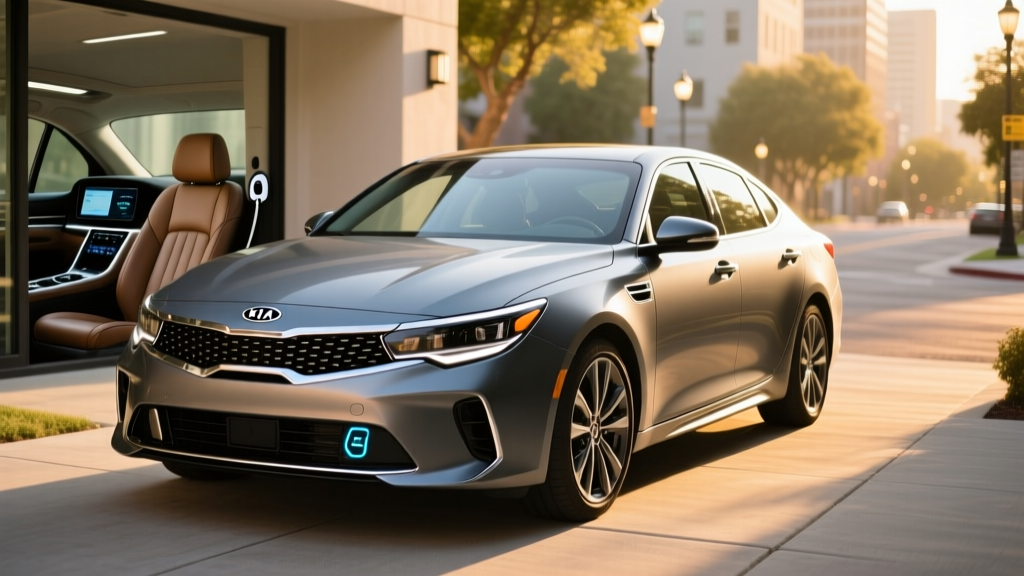
The midsize hybrid sedan market has shifted dramatically since the 2019 Kia Optima Hybrid debuted, but for used-car shoppers in 2026, this efficient sedan remains a compelling proposition. With an EPA-estimated 42 MPG combined, a proven 2.0-liter hybrid powertrain, and Kia's industry-leading warranty coverage (much of which may still apply to lower-mileage examples), the 2019 Optima Hybrid deserves a serious look for commuters prioritizing fuel savings without plugging in.
This guide breaks down everything you need to know before buying a used 2019 Kia Optima Hybrid — from real-world MPG expectations and powertrain specs to battery longevity, replacement costs, and how it stacks up against plug-in hybrids and full EVs on today's market.
2019 Kia Optima Hybrid: Quick Specs at a Glance
| Specification | 2019 Kia Optima Hybrid |
|---|---|
| Powertrain Type | Conventional Hybrid (HEV) |
| Engine | 2.0L 4-cylinder GDI + electric motor |
| Combined Horsepower | 192 hp |
| Transmission | 6-speed automatic |
| EPA MPG (City / Highway / Combined) | 40 / 45 / 42 |
| Fuel Tank Capacity | 18.5 gallons |
| Total Driving Range | ~777 miles |
| Hybrid Battery | 1.62 kWh lithium-ion polymer |
| Plug-In Required? | No — charges via regenerative braking & engine |
| 0-60 mph | ~7.8 seconds |
| Original MSRP (base Hybrid Premium) | $29,310 |
| Hybrid Battery Warranty | 10 years / 100,000 miles (original owner) |
Fuel Economy: EPA Numbers vs. Real-World MPG
The EPA rates the 2019 Kia Optima Hybrid at 40 MPG city, 45 MPG highway, and 42 MPG combined, according to fueleconomy.gov. These are strong figures for a midsize sedan, particularly the highway rating, which benefits from the hybrid system's ability to shut down the engine during coasting and low-load cruising.
HEV vs. PHEV: Understanding What the Optima Hybrid Is — and Isn't
A common point of confusion: Kia sold two electrified Optima variants for 2019 — the Optima Hybrid (HEV) and the Optima Plug-In Hybrid (PHEV). These are fundamentally different vehicles.
| Feature | 2019 Optima Hybrid (HEV) | 2019 Optima Plug-In Hybrid (PHEV) |
|---|---|---|
| Needs to be plugged in? | No | Yes |
| Electric-only range | N/A (motor assists engine) | ~28 miles (EPA) |
| Battery capacity | 1.62 kWh | 9.8 kWh |
| EPA combined MPG / MPGe | 42 MPG | 97 MPGe (electric) / 40 MPG (gas) |
| Level 2 charging time | N/A | ~3 hours (240V) |
| DC fast charging | N/A | No |
| Combined horsepower | 192 hp | 202 hp |
The critical distinction: The Optima Hybrid is a conventional HEV. It never plugs in. Its small 1.62 kWh battery charges entirely through regenerative braking and the gasoline engine. You drive it exactly like a normal car — just fill up at the gas station. The Optima PHEV, by contrast, can be plugged into a Level 2 (240V) home charger or public station to gain approximately 28 miles of electric-only driving before the gas engine kicks in. Neither version supports DC fast charging.
Powertrain: How the Hybrid System Works
The 2019 Optima Hybrid pairs a 154-hp, 2.0-liter four-cylinder GDI engine with a 51-hp permanent-magnet synchronous electric motor integrated into the transmission housing. Combined output is 192 horsepower, routed through a traditional 6-speed automatic transmission — not a CVT like many competitors (Toyota Camry Hybrid, Honda Accord Hybrid).
This transmission choice gives the Optima Hybrid a more natural, conventional driving feel compared to the rubber-band sensation some drivers dislike in CVT-equipped hybrids. Acceleration is adequate for daily driving, with a 0-60 mph time of approximately 7.8 seconds. The electric motor provides immediate torque fill at low speeds, making city acceleration feel punchier than the horsepower figure suggests.
The hybrid system operates in several modes seamlessly: EV mode at low speeds (brief electric-only bursts under ~1 mile), engine-only cruising, combined engine-and-motor under heavy acceleration, and regenerative braking that recovers kinetic energy during deceleration. The driver can select an "Eco" drive mode that prioritizes fuel efficiency by moderating throttle response and optimizing shift points.
Battery Longevity, Warranty, and Replacement Cost
How long do Optima Hybrid batteries actually last? Kia's lithium-ion polymer pack is designed for the life of the vehicle. Real-world data from Hyundai/Kia hybrid platforms (which share architecture) shows most packs retaining 85-90% capacity at 100,000 miles. Complete failures before 150,000 miles are uncommon. However, as 2019 models age into 2026, some higher-mileage examples (120,000+ miles) may begin showing reduced capacity — meaning slightly lower MPG and less electric-motor assist.
Battery replacement cost: If the hybrid battery does fail out of warranty, expect a replacement to cost between $2,500 and $4,000 for the battery pack itself, plus approximately $500-$800 in labor. Third-party refurbished packs are becoming more available as these vehicles age, potentially lowering costs to the $1,800-$2,500 range. This is significantly less expensive than full EV battery replacements, which can exceed $10,000-$15,000.
Pricing, Used Market Value, and Tax Credit Eligibility
The 2019 Kia Optima Hybrid originally started at an MSRP of $29,310 for the Premium trim and approximately $35,410 for the EX trim, according to Kia's original pricing. In the 2026 used market, expect to pay roughly $14,000-$20,000 depending on mileage, condition, and trim level.
Tax credit reality for 2026 buyers: The 2019 Optima Hybrid does not qualify for the federal §30D clean vehicle tax credit. That credit applies only to new plug-in vehicles (BEVs and PHEVs with sufficient battery capacity) meeting current battery-sourcing and critical-mineral requirements per IRS guidelines. The conventional Optima Hybrid never qualified even when new — it lacks the plug-in capability and minimum battery size the credit requires.
Some states may offer used-EV rebates or hybrid incentives that could apply, but these vary widely by jurisdiction. Check your state's energy office or department of environmental quality for current programs. The federal used clean vehicle credit (up to $4,000) also applies only to plug-in vehicles, not conventional hybrids.
Reliability and Ownership Costs
The 2019 Optima Hybrid benefits from Kia's mature hybrid system, which debuted in the 2011 Optima and was significantly refined for the 2017 redesign. By 2019, most early-generation teething issues had been resolved. The 6-speed automatic transmission is a conventional unit with a proven track record — no CVT belt or planetary-gear-set concerns.
Maintenance advantages: Hybrid ownership reduces certain maintenance costs. Regenerative braking significantly extends brake pad and rotor life — many hybrid owners report 70,000-100,000 miles on original brake pads. The engine runs less frequently than in a gas-only car, which can reduce oil degradation and extend intervals between oil changes (though you should still follow Kia's 7,500-mile recommended interval).
Insurance costs: Expect insurance premiums comparable to the gas-only Optima — hybrids don't typically carry the insurance surcharge that some full EVs do. Average annual premiums range from $1,400-$1,900 depending on your profile and state.
Total cost of ownership: At 42 MPG combined and $3.25/gallon gas (2026 national average), the Optima Hybrid costs approximately $1,005 per year in fuel for 13,000 miles of driving. A comparable gas-only midsize sedan at 28 MPG combined would cost roughly $1,508 per year — a savings of about $500 annually with the hybrid.
Who Should Choose the 2019 Optima Hybrid vs. Alternatives
- You want maximum MPG without changing your fueling habits
- You lack access to home or workplace charging (no plug needed)
- Your budget is under $20,000 for a fuel-efficient sedan
- You want a conventional driving feel (6-speed auto, no CVT)
- Your commute is city-heavy with frequent stops
- You have reliable home Level 2 charging and want electric-only commuting
- You want to qualify for federal or state tax credits (requires plug-in vehicle)
- Your daily commute is under 30 miles and you want zero gas use on most days
- You're buying new and want the latest safety tech and infotainment
- You want to eliminate gasoline costs entirely (full BEV)
Compared to rivals like the Toyota Camry Hybrid (52 MPG combined, CVT) and Honda Accord Hybrid (48 MPG combined, e-CVT), the Optima Hybrid trails on pure fuel economy but offers a more traditional driving experience and typically lower used-market pricing. The Camry Hybrid's higher MPG advantage translates to roughly $100-$130 in annual fuel savings over the Optima — meaningful over a decade of ownership.
Frequently Asked Questions
How many MPG does the 2019 Kia Optima Hybrid get?
The EPA rates it at 40 city / 45 highway / 42 combined MPG. Real-world owners typically see 38-44 MPG combined depending on driving conditions. City-heavy routes with stop-and-go traffic tend to produce the best results, while sustained high-speed highway driving and extreme cold reduce efficiency.
Does the 2019 Optima Hybrid need to be plugged in?
No. The Optima Hybrid is a conventional hybrid (HEV). Its battery charges entirely through regenerative braking and the gasoline engine. You refuel it at any gas station just like a regular car. If you want plug-in capability, look for the separately sold 2019 Optima Plug-In Hybrid (PHEV), which offers 28 miles of electric-only range.
Is the 2019 Optima Hybrid reliable?
Yes. Kia's hybrid powertrain has been in production since 2011, and the 2019 model benefits from years of refinement. The conventional 6-speed automatic transmission avoids CVT reliability concerns. The hybrid battery is warrantied for 10 years / 100,000 miles for original owners. Major issues are uncommon based on owner reports and reliability surveys.
What does it cost to replace the hybrid battery?
Out-of-warranty replacement costs approximately $2,500-$4,000 for the battery pack plus $500-$800 in labor. Refurbished aftermarket packs may reduce costs to $1,800-$2,500. However, most Kia hybrid batteries last well beyond 150,000 miles without requiring replacement.
Does the 2019 Optima Hybrid qualify for any tax credit?
No. The federal §30D clean vehicle credit applies only to plug-in electric vehicles (BEVs and PHEVs) meeting battery-sourcing requirements. The conventional Optima Hybrid never qualified. The federal used-EV credit (up to $4,000) also requires a plug-in vehicle. Check your state for any local hybrid incentives, but most have been phased out or target plug-in vehicles.
How does the Optima Hybrid compare to a full EV?
The Optima Hybrid saves fuel without requiring any lifestyle changes — no charging, no range planning, no home electrical upgrades. A full EV like a used Chevrolet Bolt or Nissan Leaf eliminates fuel costs entirely and has fewer moving parts, but requires reliable charging access and a higher upfront investment. For buyers without home charging or those who frequently drive 300+ miles in a day, the Optima Hybrid offers a practical middle ground.