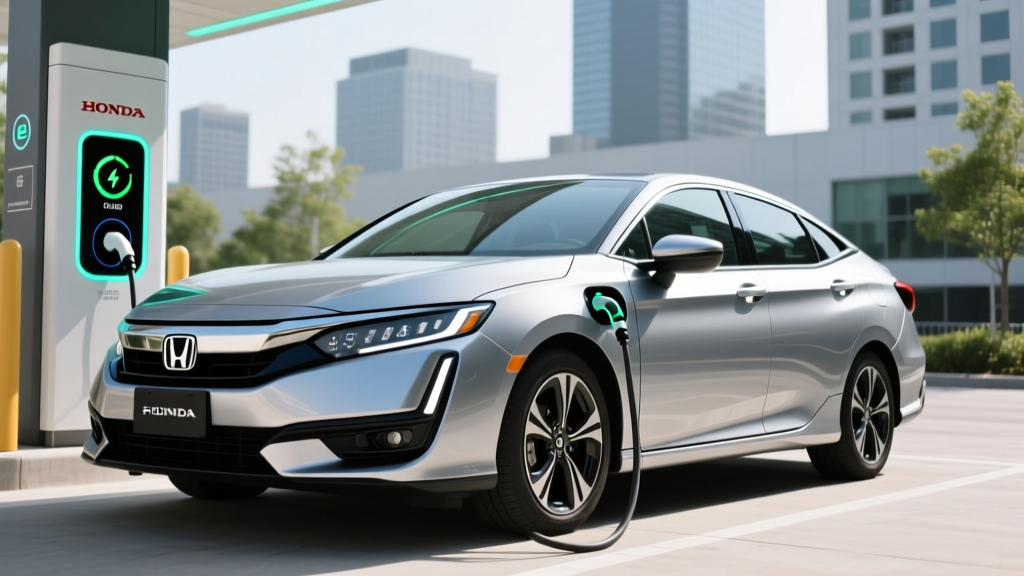
The 2019 Honda Clarity Plug-In Hybrid occupies a specific niche in the used electrified-vehicle market: a midsize sedan that delivers genuine electric-only commuting range while retaining a gasoline engine for longer trips. Honda discontinued the Clarity after the 2021 model year, but the 2019 version remains one of the most practical PHEVs available on the used market — especially for buyers who want EV-like daily driving without committing to a full battery-electric vehicle.
This guide breaks down the 2019 Honda Clarity Plug-In Hybrid's efficiency, electric range, powertrain specs, battery longevity, and ownership economics with the exact numbers you need to evaluate one today.
HEV vs PHEV: Where the Clarity Fits
Before diving into specs, it is critical to distinguish between the two types of hybrids Honda offered in the Clarity lineup:
- Conventional Hybrid (HEV): The Clarity Hybrid uses a small battery recharged exclusively by regenerative braking and the gasoline engine. It cannot be plugged in. Electric-only driving is limited to brief, low-speed bursts. Think of it as a more efficient gas car.
- Plug-In Hybrid (PHEV): The Clarity Plug-In Hybrid carries a much larger 17.0 kWh battery that you charge by plugging into a wall outlet or Level 2 charger. It delivers 47 miles of EPA-rated electric-only range before the gasoline engine engages. This is the model covered in this review.
Honda also offered a Clarity Electric (BEV) with 89 miles of range and a Clarity Fuel Cell (hydrogen) in limited markets. These are distinct vehicles — this article focuses exclusively on the PHEV variant.
Fuel Economy and Electric Range
The 2019 Clarity Plug-In Hybrid's headline numbers come from the EPA's dual-rating system for PHEVs, which measures both electric-mode efficiency and gasoline-mode fuel economy:
| Metric | EPA Rating | Real-World Expectation |
|---|---|---|
| Electric-only range | 47 miles | 38–45 mi (highway/cold weather) |
| MPGe (electric mode) | 110 MPGe combined | 95–115 MPGe depending on conditions |
| Gasoline MPG (city) | 44 MPG | 40–46 MPG |
| Gasoline MPG (highway) | 40 MPG | 37–42 MPG |
| Gasoline MPG (combined) | 42 MPG | 38–44 MPG |
| Total combined range | 340 miles | 300–340 mi |
| Fuel tank capacity | 7.0 gallons | — |
Real-world range note: The EPA's 47-mile electric range is achievable on mixed suburban driving in moderate temperatures. Expect 38–42 miles of electric range in sustained highway driving above 65 mph, and as low as 30–35 miles in freezing temperatures where battery chemistry is less efficient and cabin heating draws additional power. The gasoline-mode 42 MPG combined is conservative — many owners report 44–48 MPG in city driving where regenerative braking recaptures energy frequently.
For context, a driver with a 20-mile each-way commute who charges nightly may use almost zero gasoline on weekdays. Source: fueleconomy.gov — 2019 Honda Clarity PHEV.
Powertrain and Performance Specs
| Specification | 2019 Clarity Plug-In Hybrid |
|---|---|
| Engine | 1.5L Atkinson-cycle 4-cylinder |
| Engine output | 103 hp / 129 lb-ft torque |
| Electric motor output | 181 hp / 232 lb-ft torque |
| Combined system output | 212 hp |
| Transmission | Single-speed direct drive (no traditional gearbox) |
| Battery capacity (total / usable) | 17.0 kWh total / ~14.0 kWh usable |
| Battery chemistry | Lithium-ion (NMC) |
| 0–60 mph | ~7.5 seconds |
| Drivetrain | Front-wheel drive |
| Curb weight | 4,052 lbs |
The Clarity PHEV uses Honda's two-motor hybrid system, which operates primarily as a series hybrid at lower speeds — the gasoline engine generates electricity that feeds the drive motor rather than turning the wheels directly. At highway speeds (typically above 45–50 mph under light load), a lockup clutch connects the engine directly to the wheels for improved efficiency. The result is seamless, electric-feeling acceleration around town with efficient highway cruising.
The 181-hp electric motor provides strong initial torque, making the car feel quicker than its 7.5-second 0–60 time suggests in normal driving. The transition between electric and gasoline power is among the smoothest in the PHEV segment.
Charging: Speeds, Connectors, and Times
Charging capability is where many used PHEV buyers have questions. Here is exactly what the 2019 Clarity PHEV supports:
| Charging Level | Power (kW) | Connector | Full Charge Time (0–100%) | Availability |
|---|---|---|---|---|
| Level 1 (120V household) | ~1.4 kW | J1772 | ~12 hours | Included cord |
| Level 2 (240V home/public) | ~6.6 kW (onboard charger limit) | J1772 | ~2.5 hours | Home install or public stations |
| DC Fast Charging | Not supported | N/A | N/A | Not available |
Critical detail: The 2019 Clarity Plug-In Hybrid does not support DC fast charging. This is typical for PHEVs of this era — the battery is small enough that Level 2 charging fills it quickly, and Honda opted not to add DC fast-charge hardware (which adds weight and cost). A full Level 2 charge in approximately 2.5 hours means you can easily top up during a workday or while running errands.
The 6.6 kW onboard charger is a strong point. Many competing PHEVs from the same era (such as the Toyota Prius Prime) had slower 3.3 kW onboard chargers, meaning the Clarity charges twice as fast on Level 2.
Battery Longevity, Warranty, and Replacement Cost
Honda PHEV Battery Warranty (Original):
- Duration: 8 years / 100,000 miles (whichever comes first)
- Extended in CARB states: 10 years / 150,000 miles in California and states that follow California emissions standards
- Coverage threshold: Honda warrants the battery against capacity loss below approximately 60–70% of original capacity (specific threshold varies; confirm with dealer)
- What's covered: Battery pack, battery management system, related high-voltage components
For a 2019 model purchased in 2026, the standard 8-year/100,000-mile warranty is expiring or has expired for most vehicles. However, CARB-state vehicles retain coverage through 2029 or 150,000 miles. Honda's lithium-ion packs have demonstrated strong longevity in real-world use — NHTSA and owner forums report minimal degradation in Clarity PHEV batteries, with most owners seeing 90%+ capacity retention after 5 years of daily charging.
Battery replacement cost: If the battery does eventually need replacement outside warranty, expect approximately $3,500–$5,500 for the pack plus labor at a Honda dealer. Independent hybrid battery specialists may offer refurbished packs for $2,000–$3,500. Given the Clarity's modest 17.0 kWh pack (small compared to a full EV's 60–100 kWh battery), replacement costs are considerably lower than a BEV battery swap.
Degradation reality check: PHEV batteries experience more charge cycles than HEV batteries because they are regularly depleted and recharged. However, Honda's battery management system maintains a buffer (roughly 3 kWh of the 17.0 kWh total is reserved and inaccessible to the driver), which protects long-term health. Expect 1–2% capacity loss per year under normal use.
Used Pricing and Tax Credit Eligibility
The 2019 Clarity Plug-In Hybrid is available only on the used market. Pricing as of early 2026:
- Original MSRP (2019): $33,400 (base) / $36,620 (Touring)
- Used market price (2026): $16,000–$23,000 depending on mileage, condition, and trim
- Original federal tax credit: $7,500 under §30D (no longer available for new purchases since the vehicle is discontinued)
Used EV tax credit (§25E): The 2019 Clarity Plug-In Hybrid may qualify for the federal used clean vehicle credit, which provides up to $4,000 or 30% of the sale price (whichever is lower) when purchased from a licensed dealer. Requirements per IRS §25E rules:
- Sale price must be $25,000 or less
- Buyer income limits: $75,000 single / $112,500 head of household / $150,000 joint filers
- Vehicle must be at least 2 model years old (2019 qualifies)
- Must purchase from a licensed dealer (private sales excluded)
- Credit can be claimed once per buyer every 3 years
- Battery must have at least 4 kWh capacity (Clarity's 17.0 kWh qualifies)
A Clarity PHEV purchased for $20,000 from a dealer could yield a $4,000 credit (30% of $20,000 = $6,000, but the $4,000 cap applies). This effectively brings the net cost to $16,000 — a compelling value for a PHEV with this much electric range. Always confirm eligibility with a tax professional, as rules are subject to change.
Who Should Choose the Clarity PHEV vs a Full EV or Gas Car
Choose the 2019 Clarity Plug-In Hybrid if:
- Your daily round-trip commute is under 45 miles and you can charge at home overnight
- You take road trips beyond 200 miles several times per year and do not want to plan around DC fast-charging infrastructure
- You live in an apartment or area where reliable public charging is limited, but you can install or access Level 2 charging at home or work
- You want EV-like daily driving at a lower purchase price than a new BEV
- You want a spacious midsize sedan with a large trunk (15.5 cu ft) and comfortable rear seating
Choose a full EV (BEV) instead if:
- You have reliable home charging and rarely drive more than 250 miles in a single day
- You want minimal maintenance (no oil changes, no engine, no spark plugs)
- You want access to DC fast charging for road trips (200+ kW on modern BEVs)
- You want the newest ADAS technology and infotainment (the 2019 Clarity's Honda Sensing suite is functional but dated compared to 2025+ systems)
Choose a conventional hybrid (HEV) instead if:
- You cannot charge at home or work at all
- You want maximum simplicity — no plugs, no charging routines
- Your budget is tighter and you want a newer model year (HEVs like the Toyota Camry Hybrid or Honda Accord Hybrid are still in production)
Pros, Cons, and Ownership Realities
Pros
- 47-mile EPA electric range covers most commutes entirely on electricity
- 6.6 kW onboard charger fills the battery in ~2.5 hours on Level 2
- Spacious cabin with premium materials (especially Touring trim with leather and navigation)
- Smooth, quiet electric-first driving experience with strong low-end torque
- 42 MPG combined in gasoline mode is excellent for a midsize sedan
- Eligible for up to $4,000 used clean vehicle credit (income/sale-price dependent)
- Standard Honda Sensing safety suite (adaptive cruise, lane-keeping, forward collision warning)
Cons
- No DC fast charging — long road trips rely entirely on the gasoline engine
- Discontinued after 2021 — limited dealer familiarity and potential parts delays for PHEV-specific components
- Infotainment system is dated (no wireless CarPlay/Android Auto, small 8-inch screen)
- Cargo space reduced slightly by battery placement (15.5 cu ft vs. Accord's 16.7 cu ft)
- Ground clearance is low — the battery pack reduces underbody clearance
- Original 8-year battery warranty expiring for most 2019 models in 2027
- No all-wheel-drive option
Frequently Asked Questions
How many MPG does the 2019 Honda Clarity Plug-In Hybrid get?
The EPA rates it at 44 MPG city / 40 MPG highway / 42 MPG combined when running on gasoline. In electric mode, it achieves 110 MPGe combined. Real-world gasoline MPG often exceeds the EPA estimate in city driving (44–48 MPG) due to frequent regenerative braking, while sustained highway driving may yield 37–40 MPG.
How far can the 2019 Clarity PHEV go on electric only?
The EPA rates it at 47 miles of electric-only range. In real-world conditions, expect 38–45 miles on mixed driving, 35–40 miles on the highway, and as low as 30–35 miles in freezing temperatures. This range is sufficient for most daily commutes under 45 miles round-trip.
Is the 2019 Clarity Plug-In Hybrid reliable?
Honda's two-motor hybrid system has a strong reliability track record, and the Clarity's powertrain shares architecture with the well-proven Accord Hybrid. The lithium-ion battery pack has shown minimal degradation in owner reports. The primary reliability concern is long-term availability of PHEV-specific components since the model is discontinued. Overall, it rates as one of the more reliable used PHEVs available. Check IIHS safety ratings for crash-test performance.
Does the 2019 Clarity PHEV qualify for any tax credit in 2026?
It is no longer eligible for the new-vehicle §30D credit (the vehicle is discontinued). However, it may qualify for the used clean vehicle credit (§25E) — up to $4,000 or 30% of the sale price — if purchased from a licensed dealer for $25,000 or less, and the buyer meets income limits ($75K single / $150K joint). State incentives vary; check your state's energy office for additional rebates.
What is the battery replacement cost?
Approximately $3,500–$5,500 at a Honda dealer for a new pack, or $2,000–$3,500 for a refurbished pack from an independent hybrid specialist. The 17.0 kWh pack is smaller and less expensive to replace than a full EV battery. Most Clarity PHEV batteries show strong longevity with 90%+ capacity retention after 5 years.
Can the Clarity PHEV charge at Tesla Superchargers?
No. The Clarity PHEV uses a J1772 connector for Level 1 and Level 2 AC charging and does not support DC fast charging of any kind. It cannot use Tesla Superchargers, CCS stations, or CHAdeMO stations. It charges at any standard J1772 public Level 2 station (ChargePoint, EVgo Level 2, Blink, etc.).
Hybrid vs PHEV vs EV — which is right for me?
If you can charge at home and your daily driving is under 45 miles, the Clarity PHEV gives you EV-like commuting with gasoline backup for road trips. If you cannot charge at home, a conventional HEV is simpler. If you have home charging, rarely exceed 250 miles daily, and want the lowest operating costs, a full BEV eliminates gasoline entirely. The PHEV is the bridge option for drivers who want electric daily driving but are not ready to commit to full electrification.