Quick Verdict: The 2019 Fusion Hybrid Titanium in 2026
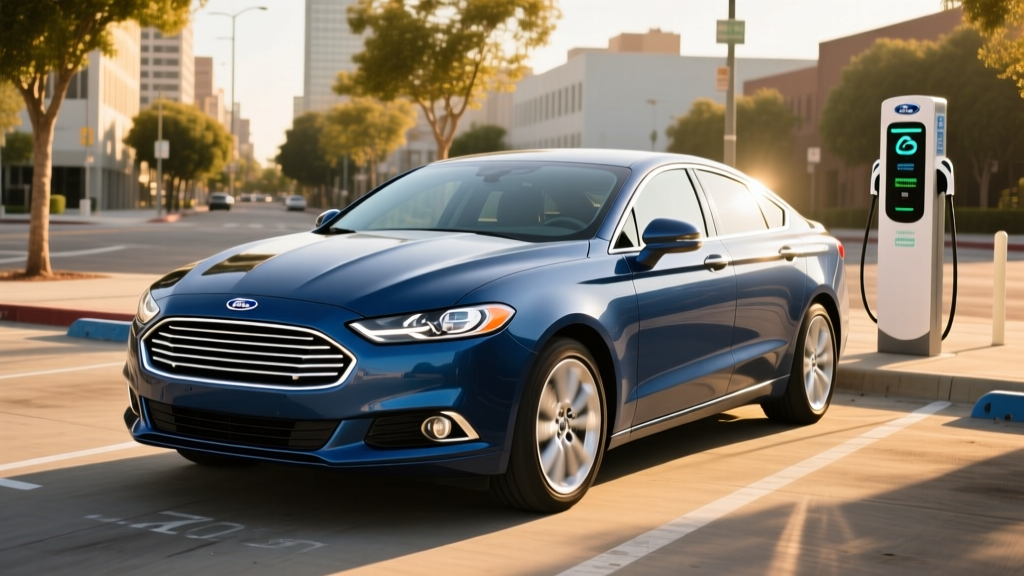
The 2019 Ford Fusion Hybrid Titanium remains one of the most compelling used midsize sedans for buyers who want hybrid efficiency without plugging in. Ford discontinued the Fusion after the 2020 model year, but the final-generation Hybrid Titanium — the top trim — packed a 2.0L Atkinson-cycle engine, a refined eCVT, and a premium cabin that still holds up. With an EPA rating of 42 MPG combined, real-world city driving often exceeds that figure thanks to aggressive regenerative braking and electric-only low-speed operation.
If you're shopping the used market in 2026, expect to pay between $14,000 and $20,000 depending on mileage and condition. The hybrid battery carries an 8-year/100,000-mile warranty from new, meaning most 2019 examples still have some factory coverage remaining through 2027. This is a conventional hybrid (HEV) — it charges its own battery through regenerative braking and the gasoline engine. You never plug it in.
HEV vs. PHEV: Which Fusion Did Ford Offer?
Ford sold two electrified Fusions in 2019: the Fusion Hybrid (HEV, no plug) and the Fusion Energi (PHEV, plug-in). This guide focuses on the Hybrid Titanium. Here's the core difference:
- HEV (Fusion Hybrid): 1.4 kWh battery, no plug, 42 MPG combined. The battery assists the engine and enables short electric-only bursts at low speed.
- PHEV (Fusion Energi): 7.6 kWh usable battery, plugs into a 120V or 240V outlet, 25 miles electric-only range, then 42 MPG as a hybrid. If you want the plug-in version, search specifically for "Fusion Energi."
Fuel Economy: EPA Ratings vs. Real-World MPG
| Metric | EPA Rating | Real-World Expectation |
|---|---|---|
| City MPG | 43 MPG | 44–48 MPG (hybrids excel in stop-and-go) |
| Highway MPG | 41 MPG | 37–40 MPG (sustained 70+ mph reduces regen benefit) |
| Combined MPG | 42 MPG | 40–45 MPG depending on driving mix |
According to fueleconomy.gov, the 2019 Fusion Hybrid achieves 43 city / 41 highway / 42 combined. Unlike gas cars, hybrids typically beat their EPA city rating because regenerative braking recovers energy that would otherwise be lost. In our experience and aggregated owner reports on forums like Ford Fusion Forum, drivers who commute primarily in urban traffic regularly see 45–48 MPG. Highway-heavy drivers should expect numbers closer to 37–40 MPG, especially above 70 mph where aerodynamic drag dominates and the electric motor provides less assistance.
Cold weather reduces fuel economy by roughly 5–10% in winter months due to engine warm-up cycles running richer and cabin heating demands. This is normal for all hybrids and less severe than the 20–30% range loss a full EV experiences in freezing temperatures.
Powertrain Specs: Engine, Motor, and Combined Output
| Specification | 2019 Fusion Hybrid Titanium |
|---|---|
| Engine | 2.0L Atkinson-cycle inline-4 |
| Engine Power | 141 hp @ 6,000 rpm |
| Electric Motor | Permanent-magnet AC synchronous |
| Motor Power | 120 hp (88 kW) |
| Combined System Output | 195 hp |
| Transmission | eCVT (planetary gearset, no fixed gears) |
| 0–60 mph | ~8.1 seconds |
| Drivetrain | Front-wheel drive |
| Hybrid Battery | 1.4 kWh lithium-ion (air-cooled) |
| Fuel Tank | 13.5 gallons |
| Total Driving Range | ~567 miles (EPA combined) |
The 2.0L Atkinson-cycle engine prioritizes thermal efficiency over raw power, while the 120 hp electric motor fills in torque at low RPMs — the result is seamless acceleration from stoplights and a combined 195 hp that's adequate for merging and passing. The eCVT isn't a traditional belt-and-pulley CVT; it's a planetary gearset that blends engine and motor power with no rubber-band effect. Most drivers find the powertrain refinement in the 2019 model year significantly improved over earlier Fusion Hybrids.
Hybrid Battery Warranty, Lifespan, and Replacement Cost
2019 Fusion Hybrid Battery Warranty
- Hybrid Battery: 8 years / 100,000 miles (whichever comes first) — covers capacity loss below a defined threshold and defects
- Hybrid Components: 8 years / 100,000 miles — includes inverter, eCVT, DC-DC converter
- Standard Powertrain: 5 years / 60,000 miles
- Warranty Transfer: Yes, the hybrid battery warranty transfers to subsequent owners automatically
For a 2019 model purchased in 2026, the hybrid battery warranty remains valid through the earlier of: the original in-service date + 8 years, or 100,000 miles on the odometer. A 2019 Fusion Hybrid with 65,000 miles still has battery coverage until its 8-year anniversary in 2027. Always verify the in-service date on the original window sticker or through a Ford dealer's OASIS system before purchasing.
Real-world battery lifespan: Ford's 1.4 kWh lithium-ion pack in the Fusion Hybrid is conservatively sized and rarely cycled to full depth — the hybrid system keeps the battery in a narrow state-of-charge window (roughly 40–60%) to maximize longevity. Owner reports and taxi fleet data suggest these batteries routinely exceed 150,000–200,000 miles before noticeable degradation. Unlike full EVs, the small battery doesn't determine your range; even with 20% degradation, the car still drives normally — you may simply see slightly lower MPG.
Replacement cost: If the battery does fail out of warranty, a new OEM replacement from Ford runs approximately $2,500–$3,500 installed at a dealership. Independent hybrid specialists and refurbished units can reduce that to $1,500–$2,200. This is significantly less than a full EV battery replacement and is rarely needed before the vehicle's natural end of life.
Titanium Trim: What You Get at the Top Level
The Titanium was the highest trim in the 2019 Fusion Hybrid lineup, sitting above the SE. Key features that distinguish it:
- Leather-trimmed heated and cooled front seats
- SYNC 3 infotainment with 8-inch touchscreen, Apple CarPlay, and Android Auto
- Sony premium audio system (12 speakers)
- Ambient interior lighting
- 10-way power driver seat with memory
- Adaptive cruise control with stop-and-go
- BLIS (Blind Spot Information System) with cross-traffic alert
- Lane-keeping system
- Auto high-beam headlamps
- 18-inch machine-finish aluminum wheels
The adaptive cruise control with stop-and-go is particularly useful in highway traffic — it's a Level 1 SAE driver-assist feature that handles speed and following distance but requires full driver steering input and attention at all times.
Tax Credits and Incentives in 2026
Important clarification: The 2019 Ford Fusion Hybrid (HEV) does not qualify for the federal §30D new clean vehicle tax credit. That credit applies only to plug-in electric vehicles (BEVs and PHEVs) meeting specific battery sourcing, MSRP, and buyer income requirements under current IRS rules.
The Fusion Energi (PHEV version) originally qualified for a $4,007 federal tax credit when new, but that credit was only available to the original purchaser. On the used market, the Used Clean Vehicle Credit under §25E offers up to $4,000 (or 30% of the sale price, whichever is less) for qualified used PHEVs and BEVs sold through a licensed dealer for $25,000 or less. However, the Fusion Energi's original MSRP and battery capacity may affect eligibility — verify with your tax professional and the IRS qualified vehicle list before purchasing.
Some states offer their own hybrid incentives or HOV lane access for hybrids. California's Clean Air Vehicle decal program, for example, previously included certain hybrids but now focuses on zero-emission vehicles. Check your state's DMV or energy office for current programs.
Who Should Buy the 2019 Fusion Hybrid Titanium?
Pros
- 42+ MPG combined with no plug-in requirement — works for apartment dwellers
- Premium Titanium cabin with leather, Sony audio, and advanced driver assists
- 567-mile total range eliminates fuel stops on long road trips
- Hybrid battery warranty may still be active through 2027
- Low maintenance costs — regenerative braking extends pad life to 80,000+ miles
- Smooth, quiet powertrain with no range anxiety
Cons
- Discontinued after 2020 — no new examples available
- 8.1-second 0–60 time is adequate but not quick
- 13.5-gallon fuel tank is smaller than gas Fusion (18 gal)
- Trunk space reduced slightly by hybrid battery placement (12.0 cu ft vs 16.0 cu ft)
- No DC fast charging capability (HEV — not applicable)
- Ford's hybrid parts supply may tighten as the fleet ages
Choose the Fusion Hybrid Titanium If:
- You want 40+ MPG without changing your fueling habits — just fill up at any gas station
- You don't have access to home or workplace charging (apartment, street parking)
- You drive a mix of city and highway and want a refined midsize sedan
- You want a premium cabin without paying luxury-brand prices
Consider a Full EV Instead If:
- You have reliable Level 2 home charging and want zero tailpipe emissions
- Your daily commute is under 40 miles round-trip (most modern EVs cover this easily)
- You want to eliminate oil changes and engine maintenance entirely
- You qualify for the full $7,500 federal tax credit on a new EV, narrowing the price gap
Consider a Gas Car Instead If:
- You drive predominantly highway miles (hybrids lose their advantage above 70 mph sustained)
- You're on a very tight budget and a comparable gas Fusion or Camry is $3,000–$5,000 cheaper
- You plan to keep the car only 2–3 years and want to minimize upfront cost
Frequently Asked Questions
How many MPG does the 2019 Ford Fusion Hybrid Titanium get?
The EPA rates it at 43 city / 41 highway / 42 combined. In real-world city driving with frequent stops, owners commonly report 44–48 MPG. Highway-only driving at 70+ mph typically yields 37–40 MPG.
Does the 2019 Fusion Hybrid need to be plugged in?
No. The Fusion Hybrid is a conventional HEV that charges its 1.4 kWh battery through regenerative braking and the gasoline engine. You never plug it in. If you want a plug-in Fusion, look for the Fusion Energi (PHEV), which offers 25 miles of electric-only range.
How far can the Fusion Hybrid go on electric only?
The conventional Fusion Hybrid can operate on electric power alone at very low speeds (typically under 25 mph) for roughly 1–2 miles in ideal conditions. This isn't designed for meaningful electric-only commuting — it assists the engine during stop-and-go traffic. For 25 miles of true electric-only driving, you'd need the Fusion Energi PHEV.
Is the 2019 Fusion Hybrid reliable?
The 2019 model year benefits from Ford's mature second-generation hybrid system, which had most early bugs resolved. Consumer Reports and owner surveys generally rate the Fusion Hybrid as average to above-average in reliability. The hybrid-specific components (battery, inverter, eCVT) have proven durable, with the battery designed to last the life of the vehicle under normal use. Common non-hybrid concerns include minor electrical gremlins with SYNC 3 and occasional brake actuator recalls — check NHTSA.gov for open recalls on any specific VIN.
What does it cost to replace the hybrid battery?
An OEM replacement battery from Ford costs approximately $2,500–$3,500 installed. Refurbished or aftermarket options from independent hybrid specialists run $1,500–$2,200. However, the 1.4 kWh pack is conservatively managed and rarely needs replacement before 150,000+ miles. Most 2019 examples still have factory hybrid warranty coverage through 2027.
Does the 2019 Fusion Hybrid qualify for any tax credit?
Not as a new vehicle purchase — the §30D federal credit applies only to plug-in vehicles (BEVs and PHEVs), and the Fusion Hybrid is a conventional HEV. On the used market, conventional hybrids also do not qualify for the §25E Used Clean Vehicle Credit, which is limited to plug-in vehicles. Some states may offer minor hybrid incentives, but these vary widely. Consult a tax professional for your specific situation.
What's the difference between the Fusion Hybrid SE and Titanium?
The Titanium adds leather seats (heated and cooled), Sony 12-speaker audio, adaptive cruise control with stop-and-go, ambient lighting, 10-way power driver seat with memory, auto high beams, and 18-inch wheels. The SE is well-equipped with cloth/leatherette seats, SYNC 3, and basic cruise control. Both share the identical 195 hp hybrid powertrain and 42 MPG combined rating.