Quick Verdict: A Proven Midsize Hybrid at a Used-Market Bargain
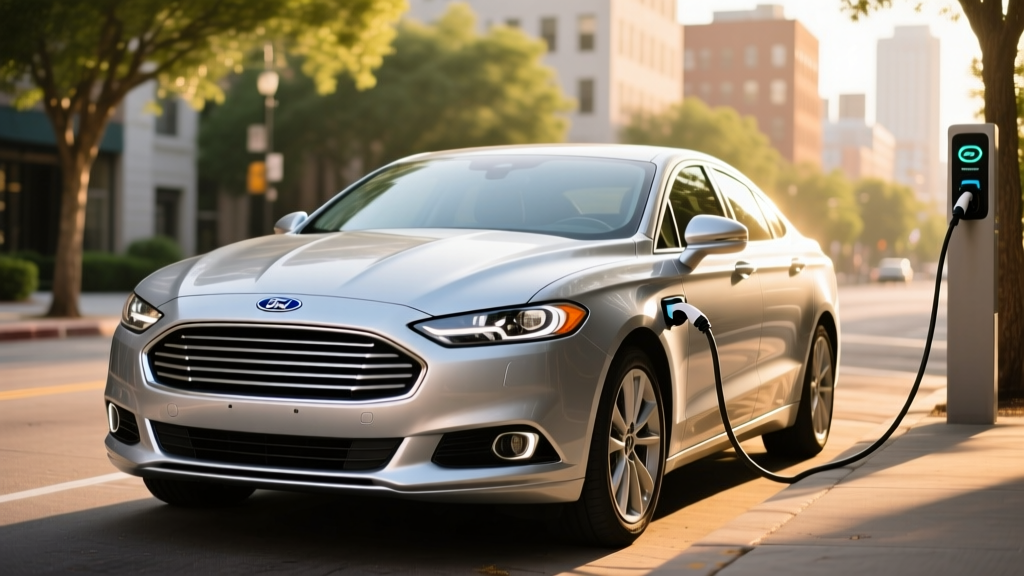
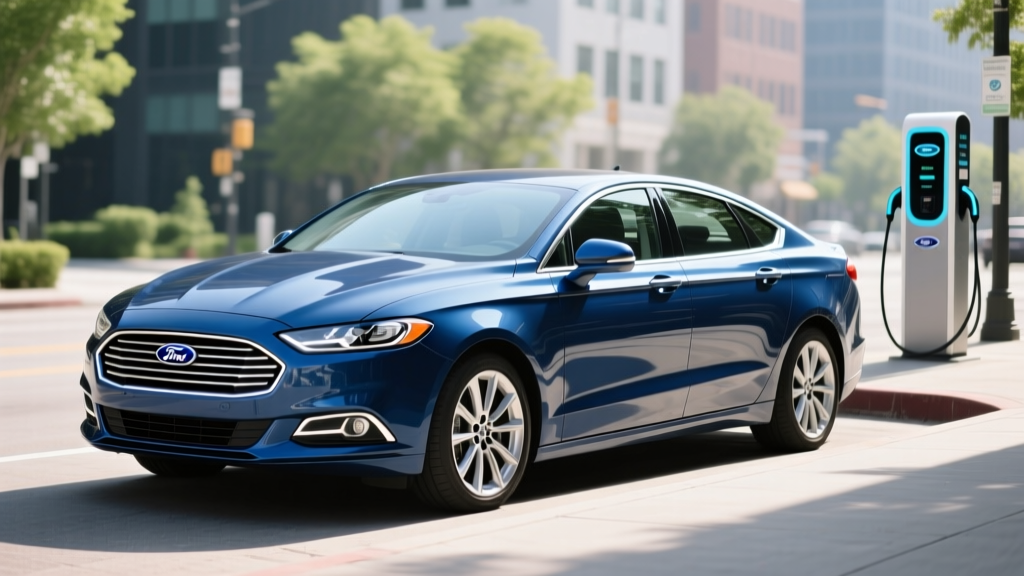
The 2019 Ford Fusion Hybrid was Ford's last full model year for the Fusion sedan before the automaker exited the car business in North America. That discontinuation is actually good news for used-car shoppers in 2026: depreciation has been steep, parts remain widely available, and the 2.0-liter Atkinson-cycle hybrid powertrain has proven durable well past 150,000 miles. With an EPA-rated 42 MPG combined and a comfortable, tech-forward cabin, the 2019 Fusion Hybrid remains one of the strongest used hybrid values in the midsize segment.
But before you sign the paperwork, you need to understand exactly what this car delivers — and what it doesn't. Below, we break down real-world fuel economy, the critical differences between the Hybrid (HEV) and the Energi (PHEV) variants, battery longevity expectations, and whether this car fits your driving profile in 2026.
HEV vs. PHEV: Which 2019 Fusion Did Ford Build?
Ford sold two electrified Fusion models for 2019, and confusing them is the single most common mistake used buyers make. Here's the essential split:
| Attribute | Fusion Hybrid (HEV) | Fusion Energi (PHEV) |
|---|---|---|
| Powertrain type | Conventional hybrid — no plug | Plug-in hybrid — charges from outlet |
| EPA combined MPG / MPGe | 42 MPG | 103 MPGe (electric) / 42 MPG (gas-only) |
| Electric-only range | N/A (motor assists engine) | 26 miles EPA |
| Battery capacity | 1.4 kWh (nickel-metal hydride) | 7.6 kWh (lithium-ion) |
| Plug-in charging | No — charges via regen & engine | Yes — Level 1 (120V) or Level 2 (240V) |
| DC fast charging | No | No |
| Trunk space | 12.0 cu ft | 8.2 cu ft (battery intrudes) |
| Federal tax credit (new) | None | Was eligible; expired for new purchases |
The Fusion Hybrid is a self-charging conventional hybrid. You never plug it in. A small 1.4 kWh battery captures energy from regenerative braking and the gasoline engine, then deploys it through an electric motor to assist acceleration and enable low-speed electric-only driving (typically under 1 mile at low speeds). The result is dramatically better fuel economy than a gas-only Fusion without any change to your fueling habits.
The Fusion Energi is the plug-in variant. Its larger 7.6 kWh lithium-ion battery delivers 26 miles of electric-only range — enough for many commutes — before the gasoline engine takes over. You charge it via a standard 120V outlet (roughly 7 hours for a full charge) or a 240V Level 2 charger (about 2.5 hours). The trade-off is reduced trunk space due to the larger battery pack.
Fuel Economy: EPA Ratings and Real-World MPG
For the 2019 Fusion Hybrid (HEV), the EPA publishes the following fuel-economy estimates via fueleconomy.gov:
| Driving Cycle | EPA Rating | Real-World Expectation |
|---|---|---|
| City | 43 MPG | 44–48 MPG (hybrids excel in stop-and-go) |
| Highway | 41 MPG | 36–39 MPG (aerodynamic drag, sustained speed) |
| Combined | 42 MPG | 39–44 MPG depending on driving mix |
Why real-world often beats EPA in the city: Conventional hybrids recapture kinetic energy during braking and deceleration through regenerative braking. The more you stop, the more energy the system recovers. In dense urban driving with frequent lights and traffic, many Fusion Hybrid owners report exceeding the 43 MPG city sticker by 2–5 MPG.
Why highway MPG falls short: At sustained 70–80 MPH speeds, the gasoline engine does nearly all the work. The electric motor provides minimal assistance, and aerodynamic drag increases with the square of velocity. Expect 36–39 MPG on long highway trips — still excellent for a midsize sedan, but below the EPA highway number.
Cold-weather impact: In temperatures below 30°F, expect a 5–10% fuel-economy reduction. The engine runs more frequently to generate cabin heat and maintain battery temperature. This is normal for all hybrids and is less severe than the 20–30% range loss that full battery-electric vehicles experience in cold weather.
Fusion Energi (PHEV) Fuel Economy
If you're considering the plug-in Energi variant, the EPA rates it at 103 MPGe when operating on battery power and 42 MPG combined once the battery is depleted and the gasoline engine takes over. The 26-mile electric-only range means a 30-mile round-trip commute could be completed almost entirely on electricity if you charge at home overnight. Total combined range (electric + gasoline) exceeds 600 miles.
Powertrain Specs and Driving Impressions
| Specification | 2019 Fusion Hybrid | 2019 Fusion Energi |
|---|---|---|
| Engine | 2.0L Atkinson-cycle I-4 | 2.0L Atkinson-cycle I-4 |
| Engine horsepower | 141 hp | 141 hp |
| Electric motor output | 120 hp (88 kW) | 120 hp (88 kW) |
| Combined system horsepower | 188 hp | 188 hp |
| Transmission | eCVT (planetary gearset) | eCVT (planetary gearset) |
| 0–60 mph | ~8.1 seconds | ~8.4 seconds (heavier) |
| Drivetrain | Front-wheel drive | Front-wheel drive |
| Curb weight | ~3,630 lbs | ~3,930 lbs |
The Fusion Hybrid uses Ford's third-generation hybrid system, which pairs the 2.0L four-cylinder with a permanent-magnet electric motor through an electronically controlled continuously variable transmission (eCVT). Unlike belt-driven CVTs found in some competitors, Ford's eCVT uses a planetary gearset — there's no rubber belt to wear out, and the system is inherently robust.
Acceleration is adequate rather than thrilling. The 188 combined horsepower moves the 3,630-pound sedan with confidence in merging situations, but this is not a performance car. The electric motor's instant torque provides responsive off-the-line feel at stoplights, which makes the car feel quicker than its 8.1-second 0–60 time suggests in everyday driving. The transition between electric and gasoline power is seamless — among the smoothest in the segment, rivaling Toyota's Hybrid Synergy Drive.
Ride quality is a genuine strength. The Fusion Hybrid rides on a fully independent rear suspension, delivering composed handling and a quiet, absorbent ride that outclasses many contemporaries. Road noise is well-suppressed, and the cabin feels solidly built.
Interior, Technology, and Daily Practicality
The 2019 model year benefited from Ford's updated SYNC 3 infotainment system, which includes an 8-inch touchscreen, Apple CarPlay, Android Auto, and two USB ports. The interface is responsive and logically organized — a meaningful improvement over the laggy SYNC 2 system in pre-2017 Fusions.
Available driver-assistance features include:
- Adaptive cruise control with stop-and-go (SAE Level 1 — driver must remain engaged)
- Lane-keeping system with lane-centering assist
- Blind-spot information system (BLIS) with cross-traffic alert
- Pre-collision assist with automatic emergency braking and pedestrian detection
- Evasive steering assist (available on Titanium trim)
These are SAE Level 1–2 driver-assistance features, not autonomous driving. The driver must keep hands on the wheel and eyes on the road at all times.
The primary practicality concern is trunk space. The Fusion Hybrid's 12.0 cu ft trunk is smaller than the gas-only Fusion's 16.0 cu ft because the hybrid battery occupies space behind the rear seats. The Energi's trunk is even smaller at 8.2 cu ft. For comparison, the Toyota Camry Hybrid offers 15.1 cu ft. If you regularly haul luggage for a family of four, the Fusion Hybrid's trunk will feel tight.
Battery Longevity, Warranty, and Replacement Cost
2019 Fusion Hybrid Battery Warranty (Original):
- Hybrid battery (HEV): 8 years / 100,000 miles (whichever comes first)
- Hybrid battery (Energi PHEV): 8 years / 100,000 miles
- Hybrid system components: 8 years / 100,000 miles (includes eCVT, DC-DC converter, electric motor)
- In CARB states (CA, NY, MA, and others): 10 years / 150,000 miles for hybrid battery
Real-world battery durability: The 2019 Fusion Hybrid uses a nickel-metal hydride (NiMH) battery pack in the HEV variant and a lithium-ion pack in the Energi. Ford's third-generation hybrid system has proven notably reliable. Taxi fleets running Fusion Hybrids have documented 200,000+ miles on original battery packs. The shallow charge-discharge cycles used in conventional hybrids (the system never fully depletes or fully charges the battery, maintaining a state-of-charge buffer) significantly extend cell life.
Battery replacement cost in 2026: If the hybrid battery does fail outside warranty, expect to pay between $2,000 and $3,500 for a replacement, including labor. Remanufactured battery packs are widely available from third-party suppliers for $1,200–$2,000, bringing total installed cost to roughly $2,000–$2,800 at an independent hybrid specialist. New OEM battery packs from Ford run $2,800–$3,500 installed at a dealership.
Used-buyer tip: Before purchasing, request a hybrid battery health report. A Ford dealer can pull the battery's state-of-health (SoH) data through the OBD-II system. Look for a capacity retention above 85%. Also check whether the original 8-year/100,000-mile warranty has remaining coverage — for a 2019 model, the factory warranty expires in 2027 or at 100,000 miles, whichever comes first, so many low-mileage examples still have coverage.
Pricing, Tax Credits, and Used-Market Value
The 2019 Fusion Hybrid was originally sold in three trims:
| Trim | Original MSRP (2019) | Estimated Used Price (2026) |
|---|---|---|
| S Hybrid | $23,555 | $11,000–$13,500 |
| SE Hybrid | $25,995 | $13,000–$16,500 |
| Titanium Hybrid | $31,995 | $16,000–$20,000 |
Prices vary significantly based on mileage, condition, and region. Low-mileage Titanium models with under 50,000 miles command the top of these ranges.
Tax Credit Eligibility
Federal tax credit (§30D): The 2019 Fusion Hybrid (HEV) never qualified for the federal plug-in electric vehicle tax credit because it is a conventional hybrid — it has no plug. The Fusion Energi (PHEV) was eligible for up to $4,007 in federal credits when purchased new, but that credit is no longer available for used purchases under current rules.
Used clean vehicle credit (§25E): Under current IRS rules, the §25E used clean vehicle credit provides up to $4,000 (or 30% of the sale price, whichever is less) for qualifying used plug-in electric vehicles purchased from a dealer for $25,000 or less. The Fusion Energi (PHEV) may qualify if the sale price is at or below $25,000 and the buyer meets income limits ($75,000 single / $150,000 married filing jointly). The conventional Fusion Hybrid (HEV) does not qualify for §25E because it is not a plug-in vehicle.
Always verify eligibility with a tax professional and check current IRS guidance, as credit rules and qualified vehicle lists can change.
Reliability Record and Ownership Costs
The 2019 Fusion Hybrid benefits from Ford's extensive hybrid experience — the company's hybrid systems have been in production since the 2005 Escape Hybrid. Key reliability notes:
- Hybrid system: Very reliable. The eCVT planetary gearset has no wear-prone belts or clutches. Electric motor failures are rare.
- Engine: The 2.0L Atkinson-cycle I-4 is a proven, low-stress design. Timing chain (not belt) eliminates a common maintenance item.
- Brakes: Regenerative braking significantly reduces wear on friction brakes. Many owners report 80,000–100,000 miles on original brake pads and rotors.
- 12V battery: Like all modern vehicles, the 12V auxiliary battery may need replacement every 4–6 years (~$150–$250). This is separate from the hybrid traction battery.
- Common complaints: Some owners report minor electrical gremlins with the SYNC 3 system (resolvable with software updates) and occasional EVAP system codes. Neither is costly to address.
Insurance costs are moderate — typically $1,200–$1,600 annually depending on driver profile and location, comparable to a gas-only midsize sedan. Maintenance costs are lower than gas-only vehicles due to reduced brake wear and no transmission fluid changes on the eCVT.
Who Should Buy the 2019 Fusion Hybrid — and Who Shouldn't
Choose the 2019 Fusion Hybrid if:
- You want a proven, comfortable midsize sedan with 40+ MPG and zero lifestyle changes (no charging required)
- Your budget is $12,000–$18,000 and you want maximum fuel savings per dollar spent
- You do a mix of city and highway driving, especially with significant stop-and-go commuting
- You value a quiet, composed ride and well-built interior over sporty dynamics
- You want to avoid range anxiety entirely — the Fusion Hybrid refuels at any gas station in 3 minutes
Choose the 2019 Fusion Energi (PHEV) instead if:
- Your daily commute is under 30 miles round-trip and you can charge at home overnight
- You want to drive primarily on electricity for daily driving while retaining gas flexibility for road trips
- You can find one priced at or below $25,000 to potentially qualify for the §25E used EV credit
- You don't mind sacrificing 3.8 cu ft of trunk space
Consider a full EV (BEV) instead if:
- You have reliable home charging (Level 2) and your daily driving is under 200 miles
- You want zero tailpipe emissions and minimal maintenance (no oil changes, no engine)
- You're eligible for the full $7,500 federal tax credit on a new or qualifying used EV
- You're willing to spend $25,000+ for a used Chevrolet Bolt EV, Tesla Model 3, or Hyundai Ioniq 5
Choose a gas-only car instead if:
- You drive primarily long highway miles at sustained speeds (hybrid advantage shrinks to ~5 MPG over efficient gas sedans)
- You need maximum trunk space for your work or lifestyle
- Your annual mileage is under 8,000 miles (fuel savings won't offset any price premium within a reasonable timeframe)
Pros
- 42 MPG EPA combined; often exceeds city rating in real-world stop-and-go driving
- Smooth, seamless hybrid powertrain with no plug-in requirement
- Comfortable ride quality and quiet cabin
- SYNC 3 with Apple CarPlay and Android Auto
- Strong used-market value — depreciation already absorbed by first owner
- Reduced brake wear from regenerative braking
- Hybrid battery warranty may still be active (through 2027)
Cons
- Small trunk (12.0 cu ft HEV / 8.2 cu ft PHEV) for a midsize sedan
- Discontinued — no new models available, long-term parts uncertainty beyond 10+ years
- Acceleration is adequate, not quick (~8.1 seconds to 60 mph)
- Hybrid battery replacement is a $2,000–$3,500 risk post-warranty
- No DC fast charging on Energi PHEV (Level 2 only)
- Conventional HEV does not qualify for any federal tax credit
Frequently Asked Questions
How many MPG does the 2019 Ford Fusion Hybrid get?
The EPA rates the 2019 Fusion Hybrid at 43 MPG city, 41 MPG highway, and 42 MPG combined. In real-world driving, many owners achieve 44–48 MPG in city conditions due to regenerative braking, while highway driving at 70+ MPH typically yields 36–39 MPG.
How far can the Fusion Energi go on electric only?
The 2019 Fusion Energi (PHEV) delivers 26 miles of EPA-rated electric-only range from its 7.6 kWh lithium-ion battery. After the battery is depleted, the gasoline engine takes over and the car operates as a conventional hybrid at 42 MPG combined. Total range exceeds 600 miles.
Do I need to plug in the Fusion Hybrid?
No. The conventional Fusion Hybrid (HEV) never needs to be plugged in. It charges its small 1.4 kWh battery through regenerative braking and the gasoline engine. Only the Fusion Energi (PHEV) variant requires plug-in charging to access its electric-only range.
Is the 2019 Fusion Hybrid reliable?
Yes. Ford's third-generation hybrid system has a strong reliability record, with many examples exceeding 150,000–200,000 miles on original hybrid batteries. The eCVT transmission uses a durable planetary gearset rather than a wear-prone belt. The main long-term risk is hybrid battery replacement at $2,000–$3,500 if it fails after the 8-year/100,000-mile warranty expires.
What does it cost to replace the hybrid battery?
Expect $2,000–$3,500 for a hybrid battery replacement in 2026, depending on whether you use a remanufactured pack ($1,200–$2,000 for the part) or a new OEM pack ($2,800–$3,500 including dealer labor). Independent hybrid specialists can typically perform the swap for less than a dealership. For a 2019 model, the original 8-year/100,000-mile warranty may still be active through 2027.
Does the 2019 Fusion Hybrid qualify for any tax credit?
The conventional Fusion Hybrid (HEV) does not qualify for any federal tax credit — it is not a plug-in vehicle. The Fusion Energi (PHEV) may qualify for the §25E used clean vehicle credit of up to $4,000 if purchased from a dealer for $25,000 or less and the buyer meets income limits ($75,000 single / $150,000 married filing jointly). Verify current eligibility at irs.gov and consult a tax professional.
How does the Fusion Hybrid compare to the Toyota Camry Hybrid?
The 2019 Camry Hybrid (LE) is EPA-rated at 52 MPG combined — 10 MPG better than the Fusion Hybrid. The Camry also offers a larger trunk (15.1 cu ft) and slightly higher reliability ratings. The Fusion Hybrid counters with a quieter cabin, more refined ride quality, available all-wheel drive was not offered (neither offered AWD in 2019), and typically lower used prices. If maximum fuel economy is the priority, the Camry wins. If ride comfort and interior refinement matter more, the Fusion is compelling.
Is the Fusion Hybrid a good first hybrid for someone switching from a gas car?
It's an excellent choice. Because the Fusion Hybrid requires no behavioral changes — no plugging in, no range planning, no different fueling — the transition from a gas car is seamless. You simply drive it like any other sedan and visit the same gas stations, less frequently. The fuel savings (roughly $600–$900 per year vs. a 25 MPG gas sedan at 15,000 miles/year and $3.50/gallon) begin immediately.