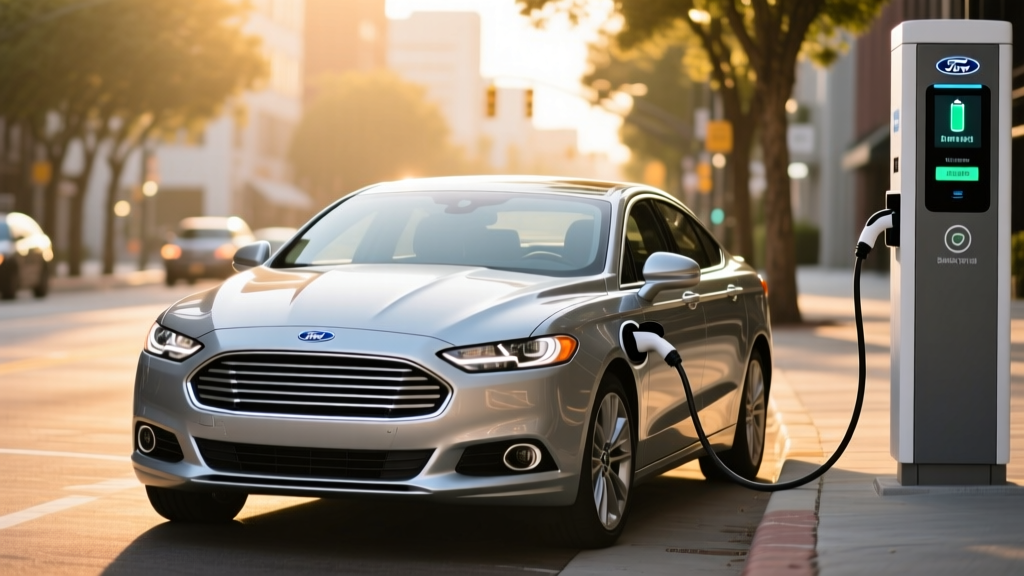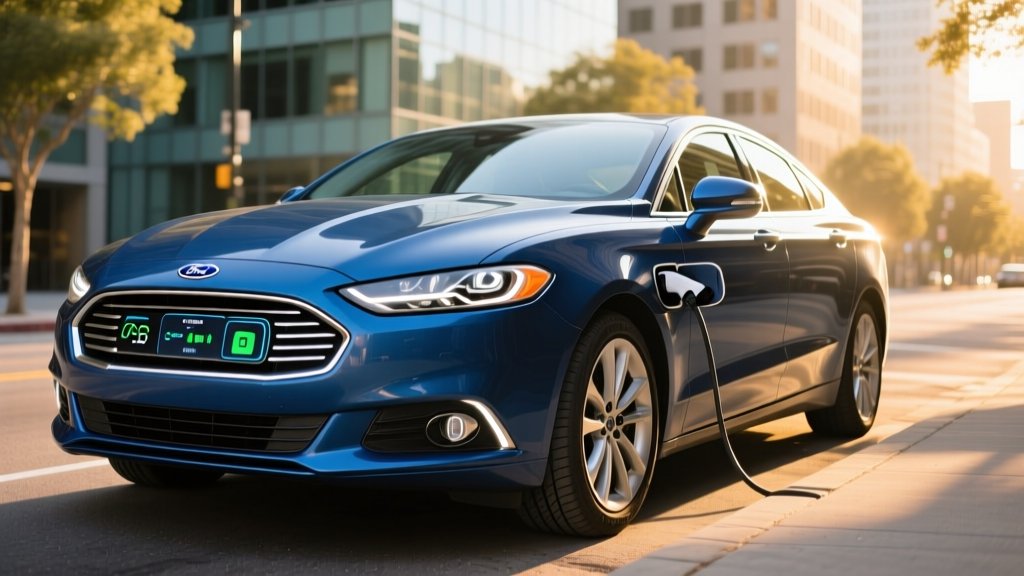
The Ford Fusion Hybrid was discontinued after the 2020 model year, but the 2019 Fusion Hybrid remains one of the most popular used midsize hybrid sedans on the market. With an EPA-estimated 42 MPG combined, a proven powertrain shared with the Toyota-influenced hybrid system Ford developed in-house, and a comfortable ride, it competes directly with the Toyota Camry Hybrid and Honda Accord Hybrid on the used lot. This guide breaks down the exact specs, real-world efficiency, battery longevity, and ownership economics you need before buying one in 2026.
HEV vs PHEV: Which 2019 Fusion Are We Talking About?
Ford sold two electrified Fusion variants for 2019. Understanding the distinction is essential because their powertrains, fuel economy, and ownership costs differ significantly.
| Spec | 2019 Fusion Hybrid (HEV) | 2019 Fusion Energi (PHEV) |
|---|---|---|
| Powertrain Type | Conventional Hybrid (no plug) | Plug-in Hybrid (plug-in capable) |
| Battery Capacity | 1.4 kWh (lithium-ion) | 7.6 kWh usable (lithium-ion) |
| Electric-Only Range | N/A (EV assist only, ~1 mi) | 25 miles (EPA) |
| EPA Combined MPG | 42 MPG | 42 MPG (hybrid mode) / 103 MPGe (EV+hybrid) |
| DC Fast Charging | No | No (Level 2 AC only) |
| Level 2 Charge Time (0–100%) | N/A (charges via engine/regen) | ~2.75 hours at 240V / 3.3 kW |
| Combined Horsepower | 188 hp | 188 hp |
| Engine | 2.0L Atkinson-cycle I4 | 2.0L Atkinson-cycle I4 |
| Transmission | eCVT (power-split device) | eCVT (power-split device) |
The conventional Fusion Hybrid never needs to be plugged in. Its small 1.4 kWh battery charges entirely through regenerative braking and the gasoline engine. The Fusion Energi is the plug-in variant — it offers 25 miles of electric-only driving before the hybrid system takes over, but it requires access to a Level 1 (120V) or Level 2 (240V) outlet to realize that benefit. If you cannot charge at home or work, the Energi's plug-in capability goes unused, and you are carrying 300+ extra pounds of battery for nothing.
Fuel Economy: EPA Numbers and Real-World MPG
| Driving Cycle | 2019 Fusion Hybrid (EPA) | 2019 Fusion Energi (EPA) |
|---|---|---|
| City | 43 MPG | 43 MPG (charge-sustaining) |
| Highway | 41 MPG | 41 MPG (charge-sustaining) |
| Combined | 42 MPG | 42 MPG (charge-sustaining) |
| MPGe (EV+Hybrid combined) | N/A | 103 MPGe |
Source: U.S. EPA / fueleconomy.gov
Real-World MPG: What Owners Actually Report
The Fusion Hybrid's Atkinson-cycle engine and power-split eCVT are optimized for city driving, where regenerative braking recovers energy and the electric motor handles low-speed loads. In real-world ownership, many drivers report 44–48 MPG in city and suburban driving during mild weather — exceeding the EPA city estimate. Highway driving at sustained 70–80 MPH typically yields 37–40 MPG, slightly below the EPA highway number, because the electric motor provides less assistance at high speeds and aerodynamic drag dominates.
Cold weather (below 32°F) reduces efficiency by roughly 5–10% due to increased engine idling for cabin heat and reduced battery efficiency. Expect 36–40 MPG combined in winter in northern climates. Owners using the cabin preheat feature while plugged in (Energis only) can mitigate some of this loss.
Real-World Fuel Economy Summary (2019 Fusion Hybrid HEV):
- City / suburban (mild weather): 44–48 MPG
- Highway (70–80 MPH): 37–40 MPG
- Cold weather combined: 36–40 MPG
- Annual fuel cost (15,000 mi at $3.30/gal): ~$1,179
Powertrain Deep Dive: 188 HP of Efficient, Not Exciting
The 2019 Fusion Hybrid pairs a 2.0-liter Atkinson-cycle four-cylinder engine (141 hp, 129 lb-ft torque) with a permanent-magnet electric motor integrated into the transaxle. Combined system output is 188 horsepower. The eCVT is not a traditional belt-and-pulley CVT — it is a planetary gearset (power-split device) that seamlessly blends engine and motor power without fixed gear ratios. This is the same proven architecture Ford has used since the second-generation Fusion Hybrid (2013), and it is exceptionally smooth.
Acceleration is adequate but unhurried: 0–60 MPH in approximately 7.8 seconds. The electric motor fills in torque at low RPMs, making city acceleration feel peppier than the number suggests. Highway passing requires planning — the engine drones noticeably under hard acceleration as the eCVT holds high RPM. This is a characteristic of all power-split hybrids, not a defect.
The Fusion Energi uses the identical powertrain but with a larger 7.6 kWh battery pack and a 3.3 kW onboard charger. Total system horsepower remains 188 hp.
Battery Longevity, Warranty, and Replacement Cost
2019 Fusion Hybrid Battery Warranty (Original):
- Hybrid battery: 8 years / 100,000 miles (whichever comes first)
- In CARB states (CA, NY, MA, and others): 10 years / 150,000 miles
- Hybrid system components (inverter, eCVT): 8 years / 100,000 miles
- Capacity retention threshold: Ford warrants the battery will retain sufficient capacity to power the hybrid system; no specific SoH percentage is published
Source: Ford Warranty Guide
How Long Does the Fusion Hybrid Battery Actually Last?
The Fusion Hybrid's 1.4 kWh lithium-ion pack is relatively small and conservatively managed — Ford uses a wide buffer (the battery never fully charges or fully discharges), which dramatically extends cycle life. Real-world data from fleet operators and high-mileage owners shows most Fusion Hybrid batteries last 150,000–200,000+ miles with minimal degradation. The hybrid system's regenerative braking strategy avoids the deep discharge cycles that accelerate wear.
For a 2019 model in 2026, the original 8-year/100,000-mile warranty has expired for most vehicles (unless in a CARB state with the 10-year extension and under 150,000 miles). This is a key negotiation point when buying used.
Battery Replacement Cost
If the hybrid battery does fail out of warranty, here is what to expect:
- New OEM replacement (dealer): $2,500–$4,000 including labor
- Remanufactured battery: $1,500–$2,500 including labor
- Used/salvage battery: $500–$1,200 (risky — unknown remaining life)
The Fusion Energi's larger 7.6 kWh PHEV battery is more expensive to replace: expect $4,000–$7,000 for a new OEM unit. This is a meaningful ownership risk for used Energi buyers at high mileage.
Used Pricing and Tax Credit Eligibility in 2026
| Trim / Model | Original MSRP (2019) | Used Price Range (2026 est.) |
|---|---|---|
| Fusion Hybrid S | $23,555 | $13,000–$16,000 |
| Fusion Hybrid SE | $26,120 | $15,000–$19,000 |
| Fusion Hybrid Titanium | $31,400 | $17,000–$22,000 |
| Fusion Energi SE | $33,075 | $14,000–$18,000 |
| Fusion Energi Titanium | $36,120 | $16,000–$21,000 |
Does the 2019 Fusion Hybrid Qualify for a Tax Credit?
No. The 2019 Fusion Hybrid (HEV) has never qualified for the federal §30D tax credit — conventional hybrids are not eligible. Only plug-in vehicles with a battery capacity of at least 4 kWh qualify, and even the Fusion Energi's credit status is complicated.
For the Fusion Energi (PHEV): it originally qualified for a $4,007 federal tax credit when new (based on its 7.6 kWh battery). However, under current IRS §30D rules, the used EV tax credit (§25E) may apply if you buy from a dealer. The §25E credit provides 30% of the sale price, up to $4,000, for used plug-in vehicles priced at $25,000 or less. Key requirements per IRS guidelines:
- Vehicle must be purchased from a licensed dealer (not private party)
- Sale price must be $25,000 or less
- Buyer income cap: $75,000 single / $150,000 married filing jointly
- Vehicle must be at least 2 model years old (2019 qualifies)
- Vehicle must have a battery capacity of at least 4 kWh (Energi's 7.6 kWh qualifies)
- Credit can be applied at point of sale (dealer must be registered with IRS)
This means a used 2019 Fusion Energi bought for $18,000 from a registered dealer could yield a $4,000 credit (30% × $18,000 = $5,400, capped at $4,000), bringing the effective cost to $14,000. Verify dealer registration and your income eligibility with a tax professional before relying on this credit.
Reliability, Safety, and Ownership Costs
The 2019 Fusion Hybrid benefits from a mature, well-tested powertrain. The eCVT power-split device has no belts, clutches, or friction bands to wear — it is one of the most durable transmissions in any vehicle, hybrid or conventional. Common maintenance items are limited to engine oil changes (every 7,500–10,000 miles on synthetic), brake pads (which last 80,000+ miles thanks to regenerative braking), and cabin air filters.
Safety ratings from the NHTSA gave the 2019 Fusion a 5-star overall rating. The IIHS rated it Good in all crashworthiness tests. Available driver-assist features include Ford's Co-Pilot360 suite: pre-collision assist with automatic emergency braking, blind-spot monitoring, lane-keeping system, and auto high beams. Note: these are SAE Level 1 driver-assistance features — the driver must remain fully engaged at all times.
According to NHTSA vehicle data, there are no outstanding high-priority recalls specific to the hybrid battery system for the 2019 model year. Always run the VIN through NHTSA's recall lookup before purchasing.
5-Year Ownership Cost Estimate (Used 2019 Fusion Hybrid SE)
| Category | 5-Year Estimate | Notes |
|---|---|---|
| Purchase Price | $17,000 | Average used SE, ~70k miles |
| Fuel (15,000 mi/yr) | $5,893 | 42 MPG avg, $3.30/gal |
| Insurance | $7,500 | $1,500/yr avg (varies by state/driver) |
| Maintenance | $2,200 | Oil, filters, brakes, tires over 5 yrs |
| Repairs (out of warranty) | $1,500 | Higher if hybrid battery needs service |
| Total 5-Year Cost | $34,093 | Excludes depreciation on used purchase |
Who Should Buy the 2019 Fusion Hybrid — and Who Shouldn't
Pros
- 42 MPG combined EPA; 44–48 MPG achievable in city driving
- Proven, durable eCVT powertrain with 150k+ mile battery life
- Comfortable ride, quiet cabin, spacious rear seat
- Strong safety ratings (5-star NHTSA, IIHS Good)
- Low maintenance costs (regen extends brake life 2–3×)
- No plug required — works with any lifestyle
- Used pricing well below $20k for most trims
Cons
- Discontinued after 2020 — no new parts pipeline from Ford sedan division
- 0–60 in 7.8 seconds — sluggish for highway merging
- eCVT drone under hard acceleration
- No DC fast charging (Energi PHEV limited to 3.3 kW Level 2)
- Original hybrid battery warranty expiring on most 2019 models in 2026
- Smaller trunk than non-hybrid Fusion (12.0 cu ft vs 16.0 cu ft due to battery)
- Infotainment (SYNC 3) feels dated vs 2026 standards
Decision Framework: Hybrid vs PHEV vs Full EV
Choose the 2019 Fusion Hybrid (HEV) if:
- You cannot charge at home or work (apartment, street parking)
- You want maximum MPG with zero behavior change
- Your budget is under $20,000 and you want a midsize sedan
- You drive 15,000+ miles/year and want to minimize fuel cost without range anxiety
Choose the 2019 Fusion Energi (PHEV) if:
- You can charge at home (Level 1 or 2) and your commute is under 25 miles round-trip
- You want electric-only daily driving with gas-engine flexibility for road trips
- You qualify for the $4,000 used EV tax credit (§25E)
Choose a full EV (e.g., used Tesla Model 3, Chevy Bolt) if:
- You have reliable home Level 2 charging
- You want zero engine maintenance (no oil, no spark plugs, no exhaust)
- Your daily driving is under 250 miles and you can plan road-trip charging
- You want the lowest per-mile fuel cost (electricity at $0.13/kWh ≈ $4.50 per "gallon equivalent")
Frequently Asked Questions
How many MPG does the 2019 Fusion Hybrid get?
The EPA rates the 2019 Fusion Hybrid at 43 city / 41 highway / 42 combined MPG. In real-world city driving, many owners achieve 44–48 MPG. Highway driving at 75+ MPH typically returns 37–40 MPG. Cold weather reduces combined MPG by 5–10%.
How far can the 2019 Fusion Energi go on electric only?
The EPA rates the Fusion Energi at 25 miles of electric-only range. In mild weather at city speeds, you may see 27–30 miles. Highway driving and cold weather reduce this to 18–22 miles. Once the battery is depleted, the car operates as a conventional hybrid at 42 MPG combined.
Is the 2019 Fusion Hybrid reliable?
Yes. The Fusion Hybrid uses Ford's third-generation hybrid powertrain, which has been in production since 2013 with minimal systemic issues. The eCVT is a planetary gearset with no wear components. The hybrid battery typically lasts 150,000–200,000+ miles. The main reliability concerns are standard Ford items: minor electrical gremlins in SYNC 3, and suspension wear at high mileage.
What does a Fusion Hybrid battery replacement cost?
A new OEM hybrid battery replacement costs $2,500–$4,000 installed at a dealer. Remanufactured batteries run $1,500–$2,500. The Fusion Energi's larger PHEV battery costs $4,000–$7,000 to replace. Most original batteries last well beyond 150,000 miles, so replacement is not a given.
Does the 2019 Fusion Hybrid qualify for any tax credit?
The conventional Fusion Hybrid (HEV) does not qualify for any federal tax credit. The Fusion Energi (PHEV) may qualify for the federal used EV credit (§25E) — up to $4,000 — if purchased from a registered dealer for $25,000 or less, subject to buyer income limits. Consult IRS guidelines and a tax professional.
Can I charge the regular Fusion Hybrid at home?
No. The conventional Fusion Hybrid (HEV) has no charging port. Its 1.4 kWh battery charges exclusively through regenerative braking and the gasoline engine. Only the Fusion Energi (PHEV) can be plugged in.
How does the Fusion Hybrid compare to the Camry Hybrid?
The 2019 Toyota Camry Hybrid LE achieves 52 MPG combined (EPA) — 10 MPG more than the Fusion Hybrid. However, the Fusion offers a more comfortable ride, quieter cabin, and typically lower used pricing. The Camry Hybrid commands a used-market premium. If maximum fuel economy is your priority, the Camry Hybrid wins. If ride comfort and value matter more, the Fusion Hybrid is the stronger pick.