Quick Verdict: The Only Plug-In Hybrid Minivan That Still Stands Alone
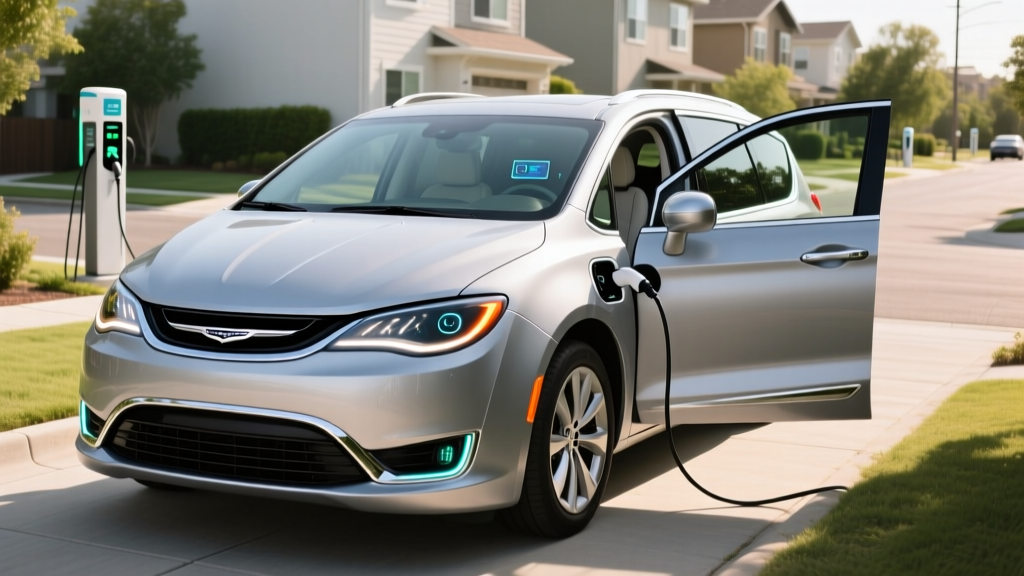
The 2019 Chrysler Pacifica Hybrid remains the sole plug-in hybrid minivan on the used market in 2026. With 32 miles of EPA-rated electric-only range, a combined 82 MPGe, and the flexibility of a gasoline engine for longer trips, it occupies a niche that neither full EVs nor conventional hybrids can match for large families. If you need three rows, a usable frunk-free cargo floor, and the ability to do school runs on battery alone, this is your vehicle. But at six years old, prospective buyers must scrutinize battery health, recall history, and the realities of owning a first-generation PHEV powertrain.
EPA electric-only range: 32 miles. In real-world mixed driving, expect 25–30 miles on a full charge in moderate temperatures. Highway-only driving at 70 mph reduces this to roughly 20–23 miles. In cold weather (below 32°F), plan on 18–22 miles of electric range due to cabin heating demands and reduced battery efficiency.
HEV vs. PHEV: What the Pacifica Hybrid Actually Is
Before evaluating this van, it's critical to understand that the Pacifica Hybrid is a plug-in hybrid (PHEV), not a conventional hybrid (HEV). Chrysler also sold a gas-only Pacifica in 2019, but there was no conventional hybrid variant. Here's the distinction:
Conventional Hybrid (HEV)
- Small battery (1–2 kWh)
- Cannot plug in — charges via regenerative braking and engine
- Electric-only driving: minimal (under 1 mile at low speeds)
- Example: Toyota Sienna Hybrid
Plug-In Hybrid (PHEV)
- Larger battery (16 kWh in the Pacifica)
- Plugs into a wall outlet or Level 2 charger
- Substantial electric-only range (32 miles EPA)
- Gas engine takes over when battery depletes
The Pacifica Hybrid's 16 kWh lithium-ion battery pack (NMC chemistry) is mounted under the second-row floor, which means you lose the Stow 'n Go second-row seating found on the gas Pacifica. The second-row captain's chairs are removable but do not fold into the floor. This is a real trade-off for cargo flexibility.
Fuel Economy and Electric Efficiency: The Numbers
| Metric | EPA Rating | Real-World Expectation |
|---|---|---|
| Combined MPGe (electric + gas) | 82 MPGe | 72–85 MPGe |
| Combined MPG (gas only, battery depleted) | 30 MPG | 27–32 MPG |
| City MPG (gas only) | 29 MPG | 28–33 MPG |
| Highway MPG (gas only) | 30 MPG | 26–29 MPG |
| Electric energy consumption | 32 kWh/100 mi | 30–36 kWh/100 mi |
Source: fueleconomy.gov — 2019 Chrysler Pacifica Hybrid
The 30 MPG gas-only figure is impressive for a 5,000-pound minivan. When the battery is depleted, the 3.6L V6 and two electric motors operate as a conventional hybrid system, recapturing energy through regenerative braking. In city driving with frequent stops, some owners report exceeding 32 MPG on gas alone because regen braking is most effective at lower speeds.
Powertrain and Performance Specifications
| Specification | 2019 Pacifica Hybrid |
|---|---|
| Engine | 3.6L Atkinson-cycle V6 |
| Electric Motors | Two integrated motors (via Si-EVT) |
| Combined System Horsepower | 260 HP |
| Battery Capacity | 16 kWh (NMC lithium-ion) |
| Usable Battery Capacity | ~13 kWh (buffer protects longevity) |
| Electric-Only Range (EPA) | 32 miles |
| Total Combined Range | ~520 miles (full tank + full battery) |
| 0–60 mph | ~7.1 seconds |
| Drivetrain | Front-wheel drive |
| Fuel Tank | 14.0 gallons |
| Towing Capacity | 1,750 lbs (reduced from gas model) |
The Pacifica Hybrid uses Chrysler's Si-EVT (Single Input — Electrically Variable Transmission), which integrates two electric motors into the transmission housing. There is no traditional stepped-gear automatic. This system is fundamentally different from Toyota's Hybrid Synergy Drive but achieves similar seamless blending of electric and gas power. The 260 combined horsepower provides adequate acceleration for merging and passing, though the van feels its weight when fully loaded with passengers and cargo.
Charging: Level 1, Level 2, and No DC Fast Charging
The 2019 Pacifica Hybrid accepts AC charging only. There is no DC fast charging capability — a significant limitation compared to newer PHEVs like the Toyota RAV4 Prime or Jeep Wrangler 4xe. Here's what charging looks like in practice:
| Charging Level | Power | 0–100% Time | Practical Notes |
|---|---|---|---|
| Level 1 (120V household outlet) | 1.4 kW | ~14 hours | Included cord; adequate for overnight if you drive <20 mi/day |
| Level 2 (240V, 16A) | 3.3 kW | ~4.5 hours | Requires 240V outlet; home wall charger recommended |
| Level 2 (240V, 32A) | 6.6 kW | ~2 hours | Onboard charger max; fastest AC charge possible |
| DC Fast Charging | N/A | N/A | No DC port — J1772 connector only |
The onboard charger maxes out at 6.6 kW, meaning even if you plug into a 48-amp Level 2 station, the van will only draw 6.6 kW. For most owners, a basic 240V/32A home Level 2 charger ($350–$600 for equipment, plus electrician installation) is the sweet spot, fully replenishing the battery in about two hours. This means you can realistically charge mid-day and have a full battery for an afternoon errand run.
The charge port uses a standard J1772 connector (the universal AC connector for non-Tesla EVs). No adapter is needed for any public Level 2 station.
Battery Health, Warranty, and Replacement Costs
Hybrid Component Warranty: 8 years / 100,000 miles on the power inverter, electric motors, and Si-EVT transmission.
Battery Replacement Cost (out of warranty): $7,000–$9,500 for the 16 kWh pack, plus $500–$1,200 labor. Chrysler has offered refurbished packs at lower cost through dealerships.
For a used 2019 Pacifica Hybrid buyer in 2026, the remaining factory battery warranty is one of the strongest selling points. A seven-year-old vehicle with three years of battery coverage remaining is unusual. However, you should verify warranty transferability with a Chrysler dealer — the federal mandate requires hybrid battery warranties to transfer to subsequent owners, but confirming this with the VIN in hand avoids surprises.
Real-world degradation data on the Pacifica Hybrid battery is encouraging. Owner forums and NHTSA complaint records show relatively few battery failure reports for the 2017–2019 model years. Most high-mileage examples (80,000+ miles) retain 85–92% of original battery capacity, which translates to roughly 27–29 miles of electric range instead of the original 32. This is acceptable degradation for a six-year-old NMC pack.
Reliability, Recalls, and Ownership Costs
The 2019 Pacifica Hybrid has a mixed reliability record. The PHEV powertrain itself is robust, but the vehicle has been subject to several recalls that used buyers must verify have been addressed:
- Fire risk recall (2022–2023): Certain 2017–2021 Pacifica Hybrids were recalled for a potential 12V battery short circuit that could cause a fire, even when parked. Chrysler issued a software update and 12V battery replacement. Verify this recall was completed on any used example.
- Stow 'n Go seat latch recall: Second-row seat latches were recalled on some units — less common on Hybrid trims but worth checking.
- Electrical gremlins: Uconnect infotainment freezes and instrument cluster resets are the most common owner complaints on NHTSA. These are typically resolved with software updates at a dealer.
Insurance costs run 10–18% higher than the gas-only Pacifica, reflecting the high-voltage battery replacement risk. Expect annual premiums of $1,600–$2,200 depending on your profile and state.
Used Pricing and Tax Credit Eligibility in 2026
The 2019 Chrysler Pacifica Hybrid originally started at $41,240 MSRP (Touring trim) and ranged up to approximately $47,000 for the Limited trim. In 2026, used examples typically sell for:
- Touring (base): $18,000–$23,000
- Touring L: $20,000–$25,000
- Limited: $23,000–$28,000
Prices vary significantly by mileage, battery health, and regional demand. California and Pacific Northwest listings command a premium.
- Sale price must be $25,000 or less
- Buyer AGI must not exceed $75,000 (single) / $112,500 (head of household) / $150,000 (joint)
- Vehicle must be at least two model years old (2019 qualifies)
- Must purchase from a licensed dealer (private-party sales do not qualify)
- Vehicle must have at least 16 kWh of battery capacity (Pacifica Hybrid qualifies)
- Credit can be transferred to the dealer at point of sale as a price reduction
Pacifica Hybrid vs. Full EV vs. Conventional Hybrid: Which Fits You?
Choose the Pacifica Hybrid (PHEV) if:
- You need a minivan but want to eliminate gas for short daily trips (under 30 miles)
- You can charge at home (Level 1 or Level 2) overnight
- You take occasional long road trips and don't want to plan around DC fast chargers
- You want the $4,000 used-EV tax credit on a family vehicle under $25K
Choose a Full EV (e.g., Kia EV9, Tesla Model X) if:
- You have reliable home Level 2 charging and access to DC fast chargers for road trips
- You want zero tailpipe emissions and minimal maintenance (no oil changes, no gas engine)
- Your daily driving is predictable and within the EV's range
- Budget allows $45,000+ for a new or recent used three-row EV
Choose a Conventional Hybrid (e.g., Toyota Sienna Hybrid) if:
- You cannot charge at home (apartment, no garage, no 240V access)
- You want hybrid efficiency without the complexity of plugging in
- You prefer a newer vehicle with a full factory warranty (Sienna Hybrid starts ~$38K new)
- You need Stow 'n Go or equivalent flat-floor cargo flexibility
Pros and Cons at a Glance
✓ Pros
- 32 miles electric-only covers most school runs and errands
- 30 MPG gas-only is excellent for a minivan
- 520+ mile total range eliminates range anxiety on road trips
- Remaining factory battery warranty (through ~2029)
- Eligible for up to $4,000 used-EV federal tax credit
- Smooth, quiet electric driving in EV mode
- Standard safety features: automatic emergency braking, lane departure warning
✗ Cons
- No DC fast charging — Level 2 only
- Second-row seats don't fold into the floor (no Stow 'n Go)
- Reduced towing capacity (1,750 lbs vs. 3,600 lbs gas model)
- Fire-risk recall must be verified as completed
- Uconnect infotainment can be sluggish and prone to freezes
- FWD only — no AWD option (unlike Toyota Sienna Hybrid)
- 6.6 kW onboard charger is slow compared to newer PHEVs
Frequently Asked Questions
How many MPG does the 2019 Chrysler Pacifica Hybrid get?
The EPA rates it at 82 MPGe combined when operating in electric-gas blend mode, and 30 MPG combined (29 city / 30 highway) when the battery is depleted and it runs as a conventional hybrid. In real-world city driving with regenerative braking, some owners see 32–33 MPG on gas alone.
How far can the 2019 Pacifica Hybrid go on electric only?
The EPA rates it at 32 miles of electric-only range. Real-world expectations are 25–30 miles in moderate weather, 20–23 miles on the highway, and 18–22 miles in freezing temperatures. After the battery depletes, the gas engine takes over seamlessly with no driver intervention required.
Is the 2019 Pacifica Hybrid reliable, and what does battery replacement cost?
The PHEV powertrain is generally reliable, though the vehicle has been subject to a fire-risk recall (12V battery short circuit) that must be verified as completed. Out-of-warranty high-voltage battery replacement costs $7,000–$9,500 plus labor, but the 10-year/100,000-mile factory battery warranty means most 2019 models in 2026 are still covered. Check the VIN with a Chrysler dealer to confirm remaining warranty.
Does the 2019 Pacifica Hybrid qualify for any tax credit in 2026?
It no longer qualifies for the new-vehicle §30D credit (that applies only to new purchases). However, it may qualify for the used clean vehicle credit (§25E), which provides up to $4,000 if the sale price is $25,000 or less, you buy from a licensed dealer, and your income falls below IRS thresholds ($75K single / $150K joint). The credit can be transferred to the dealer at point of sale as an instant price reduction. Always verify current rules on IRS.gov and consult a tax professional.
Can the 2019 Pacifica Hybrid DC fast charge?
No. The Pacifica Hybrid only accepts AC charging via a J1772 connector, at a maximum rate of 6.6 kW. A full charge from empty takes approximately 2 hours on a 240V/32A Level 2 charger, or about 14 hours on a standard 120V household outlet. There is no DC fast charge port on this vehicle.
How does the Pacifica Hybrid compare to the Toyota Sienna Hybrid?
The Toyota Sienna Hybrid (introduced for 2021) is a conventional HEV — it cannot plug in and has no electric-only range. It achieves 36 MPG combined and offers AWD, but you can never drive on electricity alone. The Pacifica Hybrid gives you 32 miles of zero-emission driving if you can charge at home, but its gas-only MPG (30) is lower than the Sienna's, and it lacks AWD. If you can charge at home, the Pacifica Hybrid saves more fuel on short trips. If you can't charge, the Sienna Hybrid is the more practical choice.
Sources: EPA fueleconomy.gov, NHTSA Recall Database, IRS Used Clean Vehicle Credit (§25E)