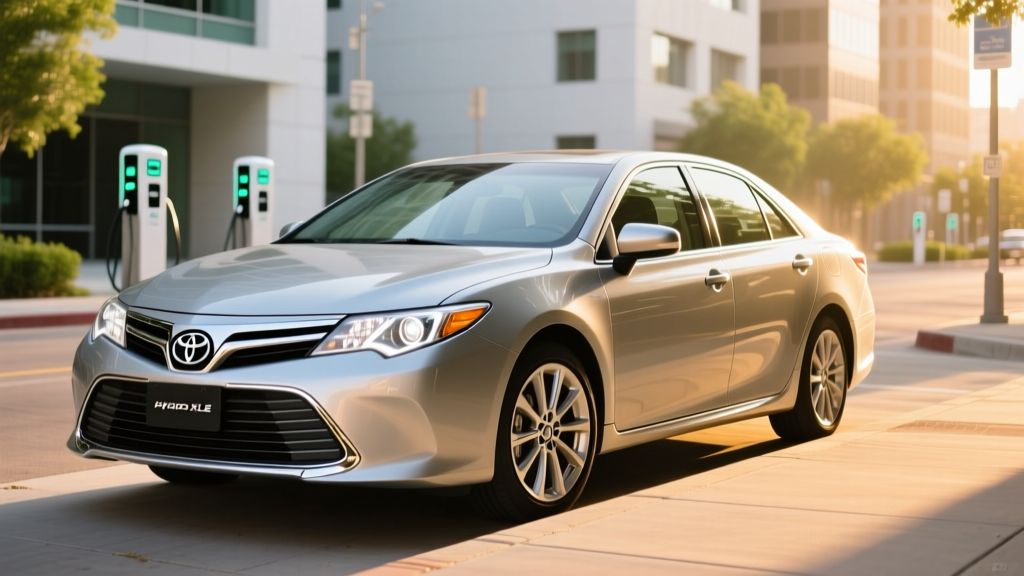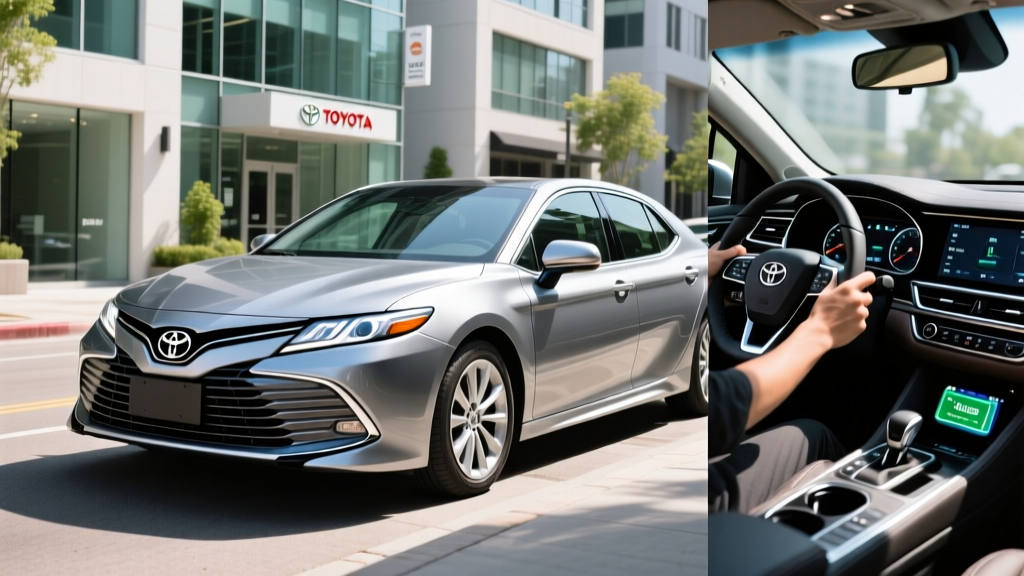
The 2019 Toyota Camry Hybrid remains one of the most compelling used midsize sedans on the market in 2026. Built on Toyota's TNGA-K platform and powered by the fourth-generation Hybrid Synergy Drive, it delivers EPA-rated fuel economy that still rivals or beats many newer hybrids — all without ever needing a plug. If you're shopping the used market and considering a 2019 Camry Hybrid, this guide covers every number that matters: real-world MPG, battery longevity, replacement costs, and how it stacks up against plug-in hybrids and full EVs.
2019 Camry Hybrid Powertrain and Performance Specs
The 2019 Camry Hybrid pairs a 2.5-liter Dynamic Force four-cylinder engine (A25A-FXS) with an electric motor-generator and a sealed nickel-metal hydride (NiMH) traction battery. The system sends power to the front wheels through an electronically controlled continuously variable transmission (eCVT). Here's the full spec breakdown:
| Specification | Value |
|---|---|
| Combined System Horsepower | 208 hp (net) |
| Gas Engine | 2.5L I4, 176 hp / 163 lb-ft |
| Electric Motor Output | 118 hp / 149 lb-ft |
| Traction Battery | 1.6 kWh (gross), NiMH chemistry |
| Transmission | eCVT (planetary gearset) |
| Drivetrain | Front-wheel drive |
| 0–60 mph | ~7.5 seconds |
| Curb Weight | ~3,572 lbs (LE trim) |
| Cargo Volume | 15.1 cu ft |
| Fuel Tank Capacity | 13.2 gallons |
| Total Driving Range | ~686 miles (EPA combined) |
The 1.6 kWh battery is small by EV standards — and that's intentional. This is a conventional hybrid (HEV), meaning the battery charges exclusively through regenerative braking and the gasoline engine. There is no plug, no charging port, and no electric-only driving mode beyond very low-speed, short-distance creeping (roughly 0.5–1 mile at under 25 mph under ideal conditions). The electric motor's primary role is to supplement the gas engine during acceleration, enable engine-off coasting, and recapture energy during braking.
Fuel Economy: EPA Ratings vs. Real-World MPG
The 2019 Camry Hybrid was offered in three trims — LE, SE, and XLE — and EPA fuel economy varies slightly by trim due to wheel size and weight differences. The LE trim, equipped with low-rolling-resistance tires on 16-inch wheels, achieves the best numbers:
| Trim | City MPG | Highway MPG | Combined MPG |
|---|---|---|---|
| LE | 51 | 53 | 52 |
| SE | 44 | 47 | 46 |
| XLE | 44 | 47 | 46 |
Source: EPA / fueleconomy.gov
Real-World MPG: What Owners Actually See
The Camry Hybrid's EPA numbers are among the most achievable in the segment because Toyota's hybrid system excels in the exact conditions where EPA city testing favors it — frequent stops, low-speed driving, and regenerative braking recovery. In real-world ownership:
- City driving (LE): Many owners report matching or slightly exceeding the 51 MPG city sticker, particularly in moderate climates (60–80°F). The hybrid system shuts off the engine at stops and uses electric-only propulsion at low speeds, making city efficiency genuinely outstanding.
- Highway driving (LE): Expect 46–50 MPG in real-world 70–75 mph highway cruising. Hybrid efficiency drops at sustained high speeds because the gasoline engine runs continuously and aerodynamic drag dominates. The LE's 53 MPG highway EPA figure is optimistic for fast interstate travel but achievable at 60–65 mph on flat terrain.
- Cold weather penalty: In sub-freezing temperatures (below 32°F), expect a 10–20% MPG reduction. The engine runs more frequently to maintain cabin heat and battery temperature, reducing electric motor assist time. Winter city MPG in the LE may drop to 40–45 MPG.
- SE/XLE trims: The larger 18-inch wheels and wider tires on SE and XLE trims increase rolling resistance and weight, accounting for the ~6 MPG combined drop. Real-world figures for these trims cluster around 42–44 MPG combined.
HEV vs. PHEV vs. EV: Which Powertrain Fits You?
The 2019 Camry Hybrid is a conventional hybrid (HEV). Toyota did not offer a Camry Plug-in Hybrid in the US market for the 2019 model year — the Camry PHEV was only sold in limited markets overseas. If you're cross-shopping, here's how the three electrified powertrain types compare:
| Factor | HEV (e.g., Camry Hybrid) | PHEV (e.g., Prius Prime) | BEV (e.g., Tesla Model 3) |
|---|---|---|---|
| Plug-in Required? | No — gas only | Yes — for EV range | Yes — always |
| Electric-Only Range | ~0.5 mi (low-speed only) | 25–44 mi (typical) | 250–360+ mi |
| Total Range | 600–680 mi | 580–660 mi (EV + gas) | 250–360 mi |
| Home Charging Needed? | No | Recommended (Level 1/2) | Essential (Level 2) |
| Fuel Cost Per Mile | ~$0.07–0.09 (gas) | ~$0.03–0.05 (electric) + gas | ~$0.03–0.06 (electric) |
| Federal Tax Credit (§30D) | Not eligible | Up to $7,500 (if eligible) | Up to $7,500 (if eligible) |
| Upfront Price (Used) | $16,000–$24,000 | $20,000–$32,000 | $18,000–$40,000+ |
| Best For | No charging access, long trips | Short EV commutes + road trips | Home charging, daily driving |
Who Should Choose the 2019 Camry Hybrid?
The Camry HEV is the right call if you:
- Don't have access to home or workplace charging (apartment, street parking, no garage outlet)
- Drive long highway distances regularly and don't want to plan around charging stops
- Want maximum fuel efficiency with zero behavioral change — just fill up with gas as normal
- Need a proven, low-risk powertrain with abundant dealer service support nationwide
- Are buying on a budget in the $16,000–$24,000 used range
Consider a PHEV or full EV instead if you have reliable Level 2 home charging and a daily commute under 40 miles — the per-mile energy cost drops dramatically when most driving happens on grid electricity.
Battery Longevity, Warranty, and Replacement Cost
Hybrid battery durability is the single most common concern for used hybrid buyers. The 2019 Camry Hybrid uses a 1.6 kWh NiMH (nickel-metal hydride) pack — a mature, well-understood chemistry that Toyota has refined over two decades of hybrid production since the original 1997 Prius.
How Long Do Camry Hybrid Batteries Actually Last?
Based on fleet data, owner surveys, and taxi/rideshare usage patterns:
- Typical lifespan: 150,000–200,000+ miles before significant capacity loss. Many first-generation and second-generation Camry Hybrids (2007–2017) are still running on their original battery packs well past 200,000 miles.
- Failure rate: Toyota's NiMH hybrid batteries have a low outright failure rate. More commonly, individual cells degrade unevenly over time, reducing overall pack performance gradually rather than failing suddenly.
- Age factor: Calendar aging matters alongside mileage. NiMH batteries slowly lose capacity even in low-mileage vehicles. A 2019 Camry Hybrid with only 30,000 miles may still experience some degradation simply due to its 7-year age, though this typically manifests as a modest MPG reduction (2–4 MPG) rather than a failure.
Battery Replacement Cost (2026 Estimates)
If the hybrid battery does need replacement outside of warranty:
- New OEM battery from Toyota: $2,500–$4,000 (parts) + $500–$1,000 (labor) = roughly $3,000–$5,000 total at a dealership
- Remanufactured/refurbished battery: $1,200–$2,200 installed at an independent hybrid specialist shop
- Individual cell/module replacement: Some hybrid specialists can replace only the degraded modules within the pack for $600–$1,200, extending battery life at a fraction of full-pack cost
For context, the Camry Hybrid's engine, eCVT, and power electronics have proven equally robust. The eCVT in particular uses a planetary gearset with no belts, clutches, or bands to wear — it's one of the most reliable transmission designs in any vehicle, electrified or not.
Reliability, Safety, and Ownership Costs
The 2019 Camry Hybrid benefits from Toyota's strong reliability reputation and excellent safety ratings. Key data points:
- IIHS Rating: The 2019 Camry earned the IIHS Top Safety Pick+ award with acceptable or good ratings across all crashworthiness tests.
- NHTSA Rating: 5-star overall safety rating from NHTSA.
- Consumer Reports: The 2019 Camry Hybrid has received above-average reliability scores, consistent with Toyota's hybrid lineup track record.
- Maintenance costs: Lower than a conventional Camry in some respects — regenerative braking extends brake pad life significantly (many owners report 80,000–100,000+ miles on original pads). No timing belt (the A25A-FXS uses a timing chain). Oil change intervals are standard at 10,000 miles with synthetic.
- Insurance: Typically 5–10% less expensive to insure than comparable EVs, and similar to the gas Camry. Average annual premiums run $1,200–$1,600 depending on state and driver profile.
Used Pricing in 2026
As of early 2026, the 2019 Camry Hybrid trades in the used market at approximately:
- LE trim (40,000–70,000 mi): $17,500–$21,000
- SE trim (40,000–70,000 mi): $19,000–$22,500
- XLE trim (40,000–70,000 mi): $20,500–$24,000
Lower-mileage examples (under 30,000 miles) command a premium and may reach $25,000+ for an XLE. Higher-mileage examples (90,000+ miles) can be found in the $14,000–$17,000 range — still with substantial remaining battery warranty in many cases.
Federal and State Tax Credit Eligibility
This is a frequent question for used hybrid buyers. Here's the definitive answer for the 2019 Camry Hybrid:
- Federal §30D New EV Credit: Not eligible. The Camry Hybrid is a conventional HEV, not a plug-in vehicle. The IRS §30D credit applies only to plug-in electric vehicles (PHEVs and BEVs) with a minimum battery capacity of 7 kWh. The Camry Hybrid's 1.6 kWh NiMH pack does not qualify.
- Used EV Credit (§25E): Not eligible. The up-to-$4,000 used EV credit also requires a plug-in vehicle with at least 7 kWh of battery capacity.
- State incentives: A small number of states have offered hybrid-specific rebates or HOV lane access in the past, but most have shifted incentive programs toward PHEVs and BEVs. Check your state's current energy or DMV website for any remaining programs.
For the latest federal incentive rules, consult the IRS clean vehicle credits page. Tax credit eligibility involves income caps, MSRP limits, battery sourcing requirements, and point-of-sale transfer options that vary by vehicle type and tax year — always verify with a tax professional before purchasing.
Pros and Cons of the 2019 Camry Hybrid
Pros
- Outstanding 52 MPG combined (LE) — among the best in any midsize sedan
- No plug needed — zero charging infrastructure required
- Proven Toyota hybrid reliability with 20+ years of engineering refinement
- Remaining factory hybrid battery warranty on most 2019 examples
- Top Safety Pick+ from IIHS, 5-star NHTSA
- Strong resale value; low depreciation curve for a 7-year-old vehicle
- ~686-mile total range eliminates range anxiety entirely
- Low brake wear from regenerative braking saves on maintenance
Cons
- SE/XLE trims drop to 46 MPG combined — a meaningful 6 MPG penalty
- NiMH battery chemistry is older tech; less energy-dense than modern lithium-ion
- No electric-only highway driving; engine always runs at sustained speed
- No federal tax credit eligibility (HEV, not PHEV)
- Infotainment system feels dated by 2026 standards (no wireless CarPlay on 2019)
- CVT drone under hard acceleration — typical of planetary eCVT designs
- All-wheel drive not available (AWD-e arrived for 2020 model year)
Frequently Asked Questions
How many MPG does the 2019 Camry Hybrid get?
The EPA rates the LE trim at 51 city / 53 highway / 52 combined MPG. The SE and XLE trims are rated at 44 city / 47 highway / 46 combined. Real-world city driving in the LE often matches or slightly exceeds the EPA city figure, while highway driving at 75+ mph typically yields 46–50 MPG. Cold weather (below freezing) reduces efficiency by roughly 10–20%.
Does the 2019 Camry Hybrid need to be plugged in?
No. The 2019 Camry Hybrid is a conventional hybrid (HEV), not a plug-in hybrid (PHEV). It charges its 1.6 kWh battery entirely through regenerative braking and the gasoline engine. There is no charging port. You simply fill it with gasoline like any other car.
Is the 2019 Camry Hybrid reliable, and what does a battery replacement cost?
Yes — the Camry Hybrid is among the most reliable vehicles in its class, backed by Toyota's long track record with hybrid powertrains. The NiMH traction battery is covered by an 8-year/100,000-mile warranty (10-year/150,000-mile in CARB states), and most batteries last 150,000–200,000+ miles. If replacement is needed outside warranty, expect $3,000–$5,000 for a new OEM pack at a dealer, or $1,200–$2,200 for a remanufactured unit at a hybrid specialist.
Does the 2019 Camry Hybrid qualify for any federal tax credit?
No. The federal §30D clean vehicle credit and the §25E used EV credit both require plug-in electric vehicles with at least 7 kWh of battery capacity. The Camry Hybrid is a conventional HEV with a 1.6 kWh battery and no plug, so it does not qualify for any federal EV tax incentive. Check your state's programs for any hybrid-specific rebates.
How does the Camry Hybrid compare to a PHEV like the Prius Prime?
The Camry Hybrid offers superior total range (~680 miles) and requires no charging infrastructure, making it ideal for drivers without home charging access or those who take frequent long road trips. A PHEV like the 2019 Prius Prime offers about 25 miles of electric-only range for daily commuting on grid electricity (lower per-mile cost) plus a gasoline engine for longer trips. If you can charge at home and your daily driving is under 25 miles, a PHEV will save more on fuel. If you can't charge or drive longer distances daily, the Camry HEV is the simpler, more practical choice.
What should I check when buying a used 2019 Camry Hybrid?
Prioritize these items during inspection: (1) Check the hybrid battery State of Health via a Toyota dealer diagnostic scan or an OBD-II app like Dr. Prius — look for less than 15% capacity loss. (2) Verify remaining hybrid warranty by VIN through Toyota. (3) Inspect brake pad thickness — regen braking preserves pads, but original pads at 80,000+ miles may still need replacement. (4) Check for any outstanding recalls or TSBs related to the hybrid system or 12V auxiliary battery. (5) Confirm the vehicle wasn't flood-damaged, as water intrusion can destroy hybrid electronics.