Quick Verdict: Still a Benchmark Used Hybrid SUV
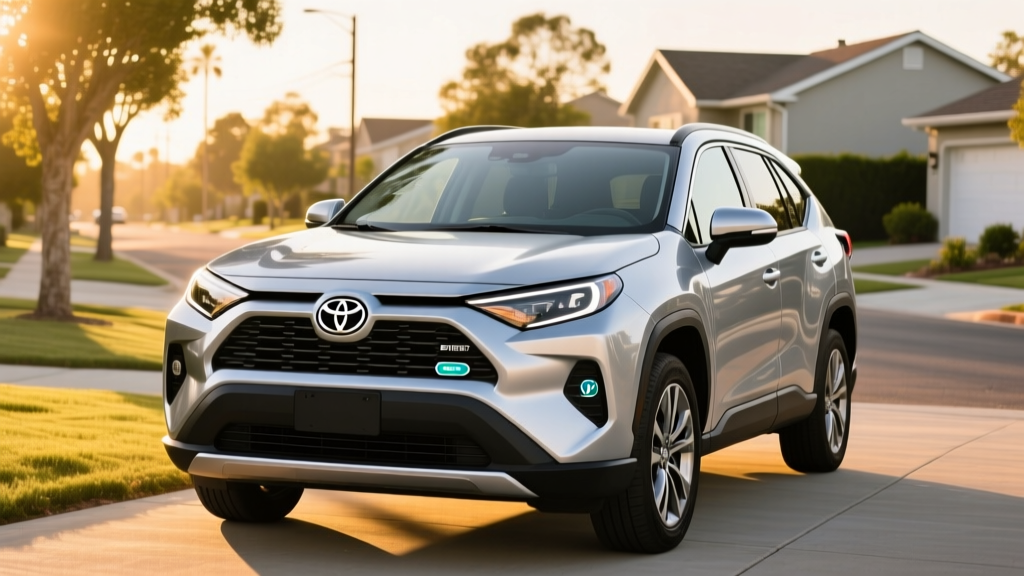
The 2018 Toyota RAV4 Hybrid occupies a specific and increasingly valuable niche in the used SUV market: it's a conventional hybrid electric vehicle (HEV) that requires no plug, no behavior change, and no charging infrastructure — yet delivers measurable fuel savings over its gas-only counterpart. With an EPA-estimated 32 MPG combined and Toyota's proven hybrid synergy drive system, the 2018 RAV4 Hybrid remains one of the most practical used crossovers for buyers who want electrified efficiency without the complexity of a plug-in hybrid or full battery electric vehicle.
This was the final model year of the third-generation RAV4 before Toyota's 2019 redesign, which means it benefits from years of powertrain refinement. The hybrid system pairs a 2.5-liter Atkinson-cycle four-cylinder engine with front and rear electric motors for standard all-wheel drive (AWD-i). If you're shopping the used market and searching for a Toyota RAV4 2018 hybrid, this guide covers everything you need: real-world MPG, battery longevity, ownership costs, and how it compares to newer alternatives.
HEV vs PHEV: What the 2018 RAV4 Hybrid Actually Is
Conventional Hybrid (HEV) — This vehicle: The 2018 RAV4 Hybrid is a self-charging hybrid. It captures energy through regenerative braking and the gasoline engine to charge a small 1.6 kWh nickel-metal hydride (NiMH) traction battery. You never plug it in. It uses the electric motor to assist acceleration, enable low-speed electric-only driving, and recapture braking energy. The result is better fuel economy with zero change to your fueling routine.
Plug-in Hybrid (PHEV) — Not this vehicle: Toyota did not offer a RAV4 Prime (PHEV) until the 2021 model year. A PHEV has a much larger battery (18.1 kWh in the RAV4 Prime), can be plugged into a wall outlet or charger, and offers 42 miles of electric-only range before the gas engine engages. If you want plug-in capability in a RAV4, you'll need a 2021 or newer RAV4 Prime.
This distinction matters because used-car listings sometimes conflate "hybrid" and "plug-in hybrid." The 2018 RAV4 Hybrid has no charging port, no electric-only highway range, and no eligibility for federal EV tax credits. It's a traditional hybrid — and that's precisely why many buyers prefer it.
Fuel Economy: EPA Ratings and Real-World MPG
| Driving Condition | EPA Estimate | Real-World Expectation |
|---|---|---|
| City | 34 MPG | 33–37 MPG (hybrids often exceed EPA in stop-and-go) |
| Highway | 30 MPG | 28–32 MPG (less regen benefit at sustained speed) |
| Combined | 32 MPG | 30–34 MPG depending on driving mix |
Source: EPA Fuel Economy
The 2018 RAV4 Hybrid's 32 MPG combined represents a meaningful improvement over the gas-only 2018 RAV4 AWD, which is rated at 25 MPG combined — a 28% fuel-economy advantage. Where the hybrid truly shines is city driving. The electric motor handles low-speed propulsion, regenerative braking recaptures energy at every stop, and the engine shuts off at idle. Many owners report exceeding the 34 MPG city EPA estimate in heavy traffic, which is the opposite of what happens with conventional gasoline vehicles.
Highway driving narrows the gap. At 70+ MPH, the RAV4 Hybrid operates primarily on its gasoline engine, and the added weight of the hybrid system (~175 lbs over the gas model) slightly offsets the electric assist. Expect 28–30 MPG on sustained highway trips, particularly in colder weather where the engine runs more frequently to maintain cabin heat and battery temperature.
Powertrain and Performance Specs
| Specification | 2018 RAV4 Hybrid |
|---|---|
| Engine | 2.5L Atkinson-cycle 4-cylinder |
| Engine Output | 150 HP / 139 lb-ft torque |
| Front Electric Motor | 105 kW (141 HP) |
| Rear Electric Motor | 50 kW (67 HP) — AWD-i |
| Net Combined Horsepower | 194 HP |
| 0–60 MPH | 7.8 seconds (est.) |
| Drivetrain | Electronic AWD (AWD-i, standard) |
| Transmission | eCVT (electronically controlled) |
| Traction Battery | 1.6 kWh NiMH (sealed) |
| Fuel Tank | 14.8 gallons |
| Total Driving Range | ~470 miles |
| Towing Capacity | 1,750 lbs |
The hybrid powertrain delivers its 194 combined horsepower through Toyota's Hybrid Synergy Drive system. Unlike a traditional transmission, the eCVT uses a planetary gearset to seamlessly blend engine and motor power. There are no fixed gear ratios and no shift shock — just smooth, continuous acceleration. The rear electric motor activates automatically when the front wheels lose traction, providing electronic AWD without a mechanical driveshaft. This system adds negligible weight and no drivetrain friction compared to mechanical AWD systems.
Performance is adequate rather than exciting. The 7.8-second 0–60 time is competitive with other compact crossovers, and the instant electric torque makes the RAV4 Hybrid feel responsive around town. The eCVT does produce the characteristic "rubber-band" drone under hard acceleration, but it's less pronounced than in earlier Toyota hybrids.
Hybrid Battery: Warranty, Lifespan, and Replacement Cost
Original Warranty: Toyota warranted the 2018 RAV4 Hybrid's traction battery for 8 years / 100,000 miles (10 years / 150,000 miles in California and states adopting CARB emissions standards). As of 2026, most 2018 models have aged out of the standard 8-year coverage unless they were registered in CARB states and remain under 150,000 miles.
Real-World Battery Longevity: Toyota's NiMH hybrid batteries have an exceptional track record. Data from fleet operators and owner communities shows most RAV4 Hybrid batteries retain 80%+ capacity well beyond 150,000 miles. The Prius, which uses similar NiMH chemistry, regularly exceeds 200,000 miles on the original battery. The 2018 RAV4 Hybrid's battery is conservatively sized and never deeply cycled — Toyota's battery management system keeps the state of charge between roughly 40% and 80%, which dramatically reduces degradation.
Replacement Cost: A new OEM replacement hybrid battery from Toyota runs approximately $3,000–$4,500 installed. Third-party refurbished NiMH batteries are available for $1,500–$2,500 installed. Individual cell modules can sometimes be replaced by specialists for $500–$1,200 if only a few cells have failed.
Battery anxiety is the number-one concern for used hybrid buyers, but the data is reassuring. The 2018 RAV4 Hybrid's NiMH battery is one of the most proven and durable components in the vehicle. Unlike full EV batteries that cycle deeply every day, the RAV4 Hybrid's battery operates in a narrow state-of-charge window, avoiding the high-stress deep cycles that accelerate degradation in lithium-ion packs. The failure rate for Toyota hybrid batteries under 150,000 miles is well under 5%.
Ownership Costs and Tax Credit Eligibility
Federal Tax Credit: The 2018 Toyota RAV4 Hybrid does not qualify for the federal §30D Clean Vehicle Credit. That credit applies only to plug-in electric vehicles (BEVs and PHEVs) with sufficient battery capacity. Conventional hybrids like the RAV4 Hybrid have been ineligible since the original §30D program was restructured. There is no federal tax incentive for purchasing a used HEV.
State Incentives: A handful of states offer minor incentives for hybrid vehicles, but these are increasingly rare and typically target new PHEV or BEV purchases. Check your state's energy office or AFDC state incentive database for current programs.
Used Market Pricing (2026): The 2018 RAV4 Hybrid was offered in XLE and Limited trims. Used pricing as of early 2026:
- XLE (base hybrid trim): $16,000–$20,000 depending on mileage and condition
- Limited (premium hybrid trim): $19,000–$24,000 depending on mileage and condition
These prices reflect a modest premium over equivalent gas-only 2018 RAV4 models, typically $1,500–$3,000 more. That premium is recoverable through fuel savings. At 15,000 miles per year and $3.30/gallon fuel, the hybrid saves approximately $400–$550 annually in fuel costs versus the 25 MPG gas AWD model, meaning the price premium pays for itself in 3–6 years.
| Cost Factor | 2018 RAV4 Hybrid AWD | 2018 RAV4 Gas AWD |
|---|---|---|
| Avg. Used Purchase Price | $18,500 | $16,000 |
| Annual Fuel Cost (15K mi/yr) | $1,550 | $1,980 |
| 5-Year Fuel Cost | $7,750 | $9,900 |
| Insurance (avg. annual) | $1,450 | $1,400 |
| Maintenance (5-yr est.) | $2,800 | $2,800 |
| 5-Year Total Cost | ~$36,300 | ~$37,100 |
Over five years of ownership, the hybrid's fuel savings effectively erase its higher purchase price. Maintenance costs are nearly identical — the hybrid requires the same oil changes, tire rotations, and brake service (actually less brake wear due to regenerative braking). There's no hybrid-specific maintenance item.
Reliability and Safety Record
The 2018 RAV4 Hybrid benefits from Toyota's reputation for conservative engineering and long-term durability. The Hybrid Synergy Drive system has been in production since 1997 (Prius), and by 2018 it was a mature, well-understood platform. Common reliability concerns are minimal:
- Hybrid system: Very low failure rate. Inverter and transaxle are proven components.
- AWD-i rear motor: Sealed unit, rarely fails. No driveshaft or differential to service.
- Brakes: Regenerative braking reduces pad wear significantly. Many owners report 80,000+ miles on original brake pads.
- 12V auxiliary battery: Like any Toyota, the 12V battery may need replacement every 4–6 years. This is a standard maintenance item unrelated to the hybrid system.
Safety ratings were strong. The 2018 RAV4 earned an IIHS Top Safety Pick designation when equipped with the optional front crash prevention package. Toyota Safety Sense-P (TSS-P) was standard on all 2018 RAV4 trims, including pre-collision system with pedestrian detection, lane departure alert, automatic high beams, and full-speed dynamic radar cruise control. For details, see the IIHS 2018 RAV4 ratings page.
Hybrid vs PHEV vs EV: Which Fits Your Situation?
Choose the 2018 RAV4 Hybrid (HEV) if:
- You don't have access to home or workplace charging
- You want fuel savings with zero change to your routine
- Your budget is $16,000–$24,000 for a used compact SUV
- You drive a mix of city and highway and want strong city MPG
- You want a proven, low-risk ownership experience
Choose a RAV4 Prime (PHEV, 2021+) if:
- You can install a Level 2 home charger
- Your daily commute is under 42 miles (electric-only range)
- You want the option of electric-only driving with gas-engine backup
- You have a higher budget ($30,000+ used)
Choose a full EV (e.g., Tesla Model Y, Hyundai Ioniq 5) if:
- You have reliable home Level 2 charging
- Your daily driving is under 250 miles
- You want to eliminate gasoline entirely and minimize maintenance
- You qualify for federal/state EV tax credits on a new purchase
- You have a higher budget and are comfortable with public charging for road trips
The 2018 RAV4 Hybrid's appeal is its simplicity. It asks nothing of you — no charging cables, no route planning, no app management. You fuel it like any other car and it returns 30–34 MPG in mixed driving. For buyers who lack charging access or who want a risk-free entry into electrified driving, it remains one of the smartest used-vehicle purchases available.
Pros and Cons at a Glance
Pros
- 32 MPG combined with no plug-in required
- Standard AWD-i (electronic all-wheel drive)
- Toyota Safety Sense-P standard on all trims
- Proven hybrid system with exceptional reliability data
- Strong city MPG (often exceeds EPA estimate)
- Lower brake wear from regenerative braking
- No hybrid-specific maintenance required
Cons
- Highway MPG less impressive (28–30 real-world)
- eCVT drone under hard acceleration
- Modest 194 HP — adequate, not quick
- Outdated infotainment (no Apple CarPlay/Android Auto)
- 1,750-lb towing limit (lower than gas RAV4)
- No federal tax credit eligibility
- Original 8-year hybrid battery warranty expiring for most units
Frequently Asked Questions
How many MPG does the 2018 Toyota RAV4 Hybrid get?
The EPA rates the 2018 RAV4 Hybrid at 34 MPG city, 30 MPG highway, and 32 MPG combined. In real-world driving, many owners report 33–37 MPG in city conditions and 28–30 MPG on the highway. Total range on a full 14.8-gallon tank is approximately 470 miles.
Does the 2018 RAV4 Hybrid need to be plugged in?
No. The 2018 RAV4 Hybrid is a conventional hybrid (HEV) that charges its battery through regenerative braking and the gasoline engine. There is no plug and no charging port. You fuel it exclusively at gas stations.
Is the 2018 RAV4 Hybrid reliable, and what does a battery replacement cost?
Yes, it has an excellent reliability record. Toyota's hybrid system is one of the most proven in the industry. The NiMH traction battery typically lasts well beyond 150,000 miles. If replacement is needed, expect $3,000–$4,500 for a new OEM battery or $1,500–$2,500 for a refurbished unit.
Does the 2018 RAV4 Hybrid qualify for any tax credit?
No. Federal §30D tax credits apply only to plug-in vehicles (BEVs and PHEVs). The 2018 RAV4 Hybrid is a conventional HEV and does not qualify for federal or most state EV incentives. Some states may offer minor hybrid incentives — check the AFDC database.
How does the 2018 RAV4 Hybrid compare to the newer RAV4 Prime PHEV?
The RAV4 Prime (introduced in 2021) is a plug-in hybrid with 42 miles of electric-only range, 302 combined HP, and a much larger 18.1 kWh lithium-ion battery. It requires home charging to realize its benefits and costs significantly more on the used market ($30,000+). The 2018 RAV4 Hybrid is a simpler, more affordable option that requires no plug and delivers consistent 32 MPG combined.
What trim levels were available for the 2018 RAV4 Hybrid?
Toyota offered the 2018 RAV4 Hybrid in two trims: XLE (base) and Limited (premium). Both came standard with AWD-i, Toyota Safety Sense-P, and the full hybrid powertrain. The Limited added features like SofTex seats, JBL audio, and a power liftgate.
Should I buy a used 2018 RAV4 Hybrid in 2026?
If you want an affordable, efficient, all-wheel-drive compact SUV with minimal ownership risk, the 2018 RAV4 Hybrid is a strong choice. Check the hybrid battery health (a dealer can read the battery state-of-health via OBD-II), verify maintenance records, and confirm whether the remaining CARB-state battery warranty applies. At $16,000–$24,000, it offers excellent value with fuel savings that offset the hybrid premium over time.